

Constipation, a pervasive and often unspoken health concern, is drawing renewed attention as natural remedies like prunes and figs are put to the test against a backdrop of widespread medical visits and the limitations of conventional treatments. The act of defecation, deeply private and shrouded in cultural taboos, is frequently overlooked in everyday discourse and even by medical professionals. However, its significance is underscored by staggering statistics: constipation accounts for three million annual doctor visits and 800,000 emergency room visits in the United States alone. Depending on the definition employed, estimates suggest that up to 80% of the population may experience this condition. Even individuals who do not perceive themselves as constipated might, by clinical standards, be suffering. A quarter of supposedly healthy study participants have reported sensations of "incomplete emptying," with approximately half indicating increased straining during bowel movements. Alarmingly, more than half of these individuals have discovered blood on their toilet paper within the past year, a symptom that warrants medical evaluation. In severe instances, the spike in blood pressure associated with forceful straining can precipitate serious cardiovascular events, including heart attacks and strokes, highlighting the critical need for effective and accessible relief.
The Limitations of Pharmaceutical Interventions
While pharmaceutical solutions for constipation are readily available, they often come with a litany of undesirable side effects. Patients frequently report nausea, diarrhea, headaches, and abdominal pain, leading to dissatisfaction with these treatments. This reality prompts a critical examination of the prevailing approach, shifting focus from symptom management to addressing the root causes of chronic constipation.
Lifestyle and Dietary Interventions: A Preferred Approach
Medical consensus increasingly favors non-pharmacological interventions as the preferred method for constipation relief. Common underlying causes of chronic constipation are directly linked to lifestyle and dietary habits, specifically a lack of sufficient fiber from whole plant foods and inadequate water intake. Consequently, altering diet and lifestyle are recognized as primary strategies for managing this condition. Clinically effective interventions in this realm include consistent physical activity, with recommendations typically around 30 minutes of exercise per day.
The Efficacy of Aerobic Exercise
Scientific literature supports the role of physical activity in alleviating constipation. A comprehensive systematic review and meta-analysis indicated that aerobic exercise interventions can be beneficial, with studies often involving approximately 140 minutes of activity per week. This consistent engagement in physical movement aids in stimulating bowel motility and promoting regular bowel function.
Whole Plant Foods: Nature’s Constipation Fighters
Complementing physical activity is a diet centered on whole plant foods, which are the only naturally concentrated sources of dietary fiber. Fiber plays a crucial role in digestive health by adding bulk to stool and facilitating its passage through the intestines. The type and quantity of plant-based foods consumed are key factors in their effectiveness.
Prunes: A Time-Tested Remedy Under Scrutiny
Among the array of natural remedies, prunes (dried plums) have a long-standing reputation for their ability to combat constipation. Historically, they have been employed as both a laxative and an antidiarrheal agent, demonstrating a unique duality in their impact on digestive regularity.
Early Evidence and the Placebo Effect
Initial research into the efficacy of prunes often involved observing elderly women with severe constipation who consumed approximately a dozen prunes daily. These studies frequently reported significant improvements within the first week of intervention. However, a critical challenge in evaluating such interventions is the potential for the placebo effect. In early studies where a control group was not given a specific intervention, it was difficult to isolate the physiological impact of prunes from the psychological expectation of improvement. The placebo response in constipation trials can be substantial, sometimes accounting for up to 44% of reported improvements, meaning a significant portion of participants given a sugar pill might claim relief simply due to the belief that the treatment is working.
Rigorous Study Design: Isolating the Prune’s Power
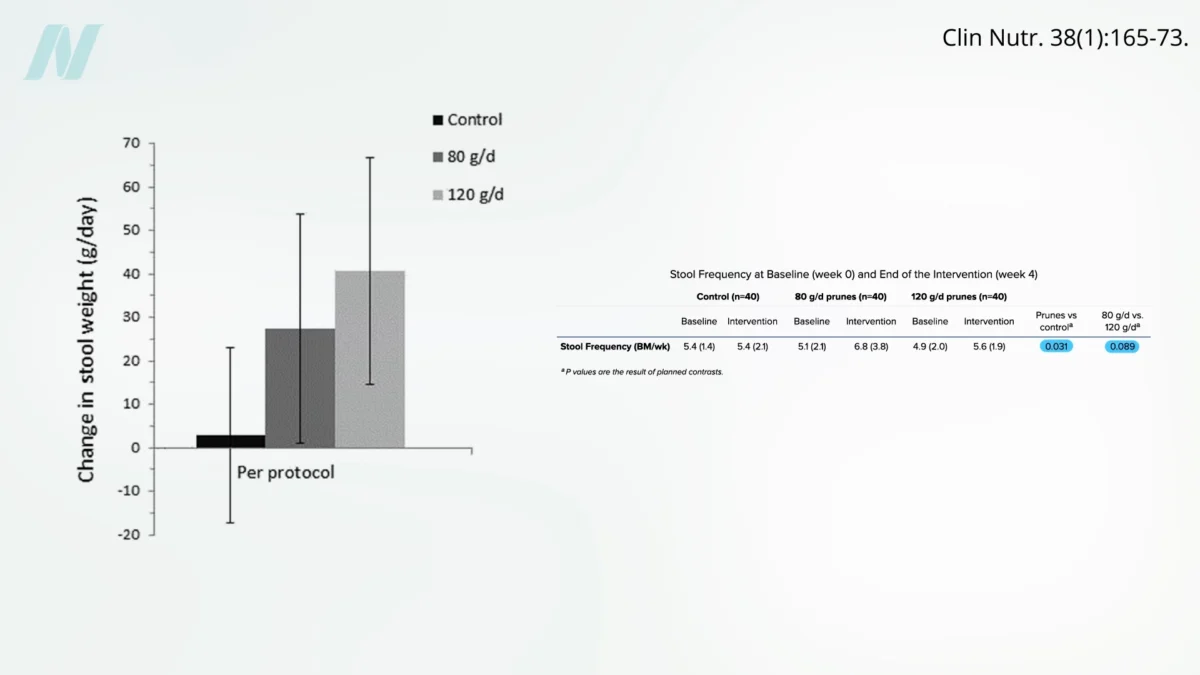
To address the limitations of earlier research, more robust study designs have been employed. In a notable randomized trial, participants were assigned to different groups: one receiving about eight prunes daily with a large glass of water, another receiving twelve prunes with water, and a control group receiving only water. This design is crucial because even the control group received an intervention (water), which itself can aid in alleviating constipation. Previous studies often used around ten prunes, prompting researchers to investigate whether higher or lower quantities offered distinct benefits.
The findings from this more controlled study revealed a significant improvement in stool bulk and a notable increase in bowel movement frequency among participants consuming prunes. Interestingly, there was no substantial difference in outcomes between the group consuming eight prunes and the group consuming twelve prunes, suggesting that approximately eight prunes per day may be a sufficient and effective dose for many individuals.
Prunes vs. Psyllium: A Comparative Analysis
Further research has directly compared the effectiveness of prunes to common over-the-counter fiber supplements. In one study, prunes were found to be superior to psyllium, the active ingredient in products like Metamucil, in improving both stool frequency and consistency. This finding is significant, as it positions prunes as a potentially more effective natural alternative for managing constipation compared to some widely used pharmaceutical aids.
Beyond Fiber: The Role of Sorbitol
While the high fiber content of prunes is undoubtedly a contributing factor to their effectiveness, scientific inquiry has also explored other active components. Prune juice, for instance, has demonstrated efficacy even after the fiber has been removed, suggesting that other compounds are at play. One such component identified is sorbitol, a natural sugar alcohol commonly found in sugar-free gums and candies. Sorbitol acts as a mild laxative by drawing water into the intestines, thereby softening stool and promoting bowel movements. However, it is important to note that excessive consumption of sorbitol, which can occur with the intake of more than a dozen large prunes daily, may lead to laxative effects in susceptible individuals, underscoring the importance of moderation.
Prunes for General Well-being
The question of whether individuals without constipation should avoid prunes has also been investigated. Studies suggest that most people can consume around a dozen prunes a day without experiencing adverse effects. This indicates that prunes can be safely incorporated into the diet of the general population as a preventive measure or for overall digestive health.

Dried Figs: Another Ancient Remedy Under the Microscope
Dried figs, another fruit with a rich historical and cultural significance, often mentioned in religious texts, have also been examined for their potential to alleviate constipation.
Early Investigations in IBS Patients
Researchers have explored the impact of figs on individuals suffering from Irritable Bowel Syndrome (IBS) characterized by constipation. In one study, patients with this condition were randomized to consume one fig with breakfast and another with lunch, each accompanied by a glass of water. Compared to a control group that continued their normal diet without special intervention, the fig-consuming group experienced a significant improvement in defecation frequency and a notable reduction in the frequency of hard stools.
The Challenge of Placebo in IBS Research
As with general constipation studies, research on IBS is particularly susceptible to the placebo effect. The subjective nature of IBS symptoms means that the perceived benefits of any intervention can be significantly influenced by psychological factors. In IBS trials, placebo responses can be remarkably high, with some studies reporting that up to 72% of participants given a fake sugar pill claim to feel better. This phenomenon necessitates the use of rigorous study designs to differentiate true therapeutic effects from placebo responses.
Rigorous Trial Design: The Fig Paste Placebo
To overcome the placebo challenge, a randomized, double-blind, placebo-controlled trial was conducted using figs. In this study, researchers developed a carefully crafted fake fig paste that mimicked the taste, smell, and appearance of real figs. Participants were divided into groups receiving either the real figs (approximately six per day) or the placebo paste.
The results indicated that those who consumed the real figs experienced a significant reduction in colon transit time, a significant improvement in stool consistency, and a notable decrease in abdominal discomfort compared to the placebo group. Colon transit time was measured by having participants ingest small beads that could be tracked via X-rays, allowing researchers to monitor the passage of food through the digestive system. The study found that real figs accelerated gut movement by a full 24 hours.
However, the study’s findings were not uniformly positive across all measured outcomes. While stool consistency and abdominal discomfort showed improvement, the frequency of defecation per week did not significantly outperform the placebo. This highlights the complexity of evaluating interventions and the possibility that some positive results might be attributed to statistical fluctuations when numerous outcomes are examined. Ultimately, the comparison suggests that while figs offer benefits, prunes may emerge as a more consistently effective treatment choice based on the totality of evidence.
Implications for Public Health and Future Research
The findings from these studies carry significant implications for public health recommendations and the future of constipation management. The prevalence of constipation and the limitations of pharmaceutical treatments underscore the need for accessible, safe, and effective natural alternatives.
Broader Impact:
The validation of prunes and figs as natural remedies offers individuals a tangible and evidence-based approach to managing a common and often distressing health issue. This empowers patients to make informed dietary choices that can positively impact their well-being without the risk of adverse drug reactions.
Future Directions:
Further research could delve deeper into the synergistic effects of combining dietary interventions with exercise. Exploring personalized approaches based on individual gut microbiome profiles and genetic predispositions could also lead to more targeted and effective treatments for constipation. Additionally, continued investigation into the specific bioactive compounds within these fruits and their mechanisms of action will further refine our understanding and potential therapeutic applications.
Doctor’s Note:
Beyond prunes and figs, other dietary interventions are being explored. For instance, the efficacy of carbonated drinks for stomach pain and constipation has been a subject of separate inquiry, with findings available for review. Previously, comparisons between prunes, Metamucil, and vegan diets have also been discussed, offering a broader perspective on dietary strategies. Furthermore, the potential benefits of prunes extend beyond digestive health, with research indicating their positive effects on bone health, specifically for osteoporosis. For those managing Irritable Bowel Syndrome (IBS), a range of related interventions and lifestyle adjustments are continuously being investigated, with ongoing research providing new insights into holistic management strategies.

