

Constipation, a pervasive and often uncomfortable digestive issue, affects millions globally, leading to significant healthcare utilization and impacting quality of life. While pharmaceutical interventions exist, they frequently come with undesirable side effects, prompting a growing interest in natural, lifestyle-based solutions. Emerging research is shedding light on the efficacy of dietary staples like prunes and figs, alongside established recommendations for increased physical activity, as potent natural remedies for this common ailment.
The Hidden Epidemic of Constipation
The act of defecation, a fundamental bodily function, is shrouded in cultural taboos, leading to its infrequent discussion even within medical circles. However, the statistics reveal a stark reality: constipation is far from a minor inconvenience. In the United States alone, it accounts for approximately three million annual physician visits and a staggering 800,000 emergency room consultations. The definition of constipation itself can be broad, with some estimates suggesting that up to 80% of the population may experience it in some form.
Even individuals who do not perceive themselves as constipated may be clinically experiencing symptoms. A significant proportion of individuals who consider themselves healthy have reported feelings of incomplete bowel emptying or increased straining during defecation. Disturbingly, more than half of such individuals have noted blood on their toilet paper within the past year, a symptom that warrants medical attention. In severe instances, the extreme straining associated with difficult bowel movements can lead to a dangerous spike in blood pressure, with potentially life-threatening consequences such as heart attack or stroke. This underscores the critical need for effective and accessible management strategies.
The Limitations of Pharmaceutical Approaches
The medical landscape offers various pharmaceutical drugs designed to combat constipation. However, these medications often come with a litany of side effects, including nausea, diarrhea, headaches, and abdominal pain. This constellation of adverse reactions frequently leaves patients dissatisfied and seeking alternative solutions. The inherent challenges in managing constipation through medication highlight the importance of addressing its root causes through dietary and lifestyle modifications.
Lifestyle Interventions: The Foundation of Relief
Medical consensus increasingly points towards addressing the underlying causes of chronic constipation, which are often linked to insufficient intake of dietary fiber from whole plant foods and inadequate hydration. Consequently, dietary adjustments and lifestyle changes are recognized as the preferred methods for achieving constipation relief. Non-pharmacological interventions, supported by clinical evidence, include consistent physical activity. Engaging in moderate physical activity for approximately 30 minutes daily has been shown to promote regular bowel function.
The Efficacy of Aerobic Exercise
A comprehensive systematic review and meta-analysis of existing research has confirmed the benefits of aerobic exercise in managing constipation. The findings indicate that interventions involving aerobic exercise, typically spanning around 140 minutes per week, can significantly improve bowel regularity. This aligns with the broader understanding that physical activity stimulates intestinal motility, facilitating the passage of stool.
Whole Plant Foods: Nature’s Fiber Powerhouses
Complementing physical activity, a diet rich in whole plant foods is paramount. These foods are naturally concentrated sources of dietary fiber, a crucial component for healthy digestion. Fiber adds bulk to stool, making it easier to pass, and also supports a healthy gut microbiome. While a general emphasis on plant-based foods is beneficial, specific fruits have garnered particular attention for their remarkable effects on constipation.
Prunes: A Time-Tested Remedy Validated by Science
For centuries, prunes have been recognized for their digestive benefits. Recent scientific studies have begun to quantify and validate these traditional uses. In one notable study involving elderly women experiencing severe constipation, the daily consumption of approximately a dozen prunes led to significant improvements within the first week.
However, early studies sometimes faced challenges in isolating the true effect of the intervention from the placebo effect. The placebo effect, particularly in constipation trials, can be substantial, with some studies reporting improvements in up to 44% of participants who received a placebo, such as a sugar pill. This phenomenon underscores the importance of rigorous study designs that account for psychological influences.
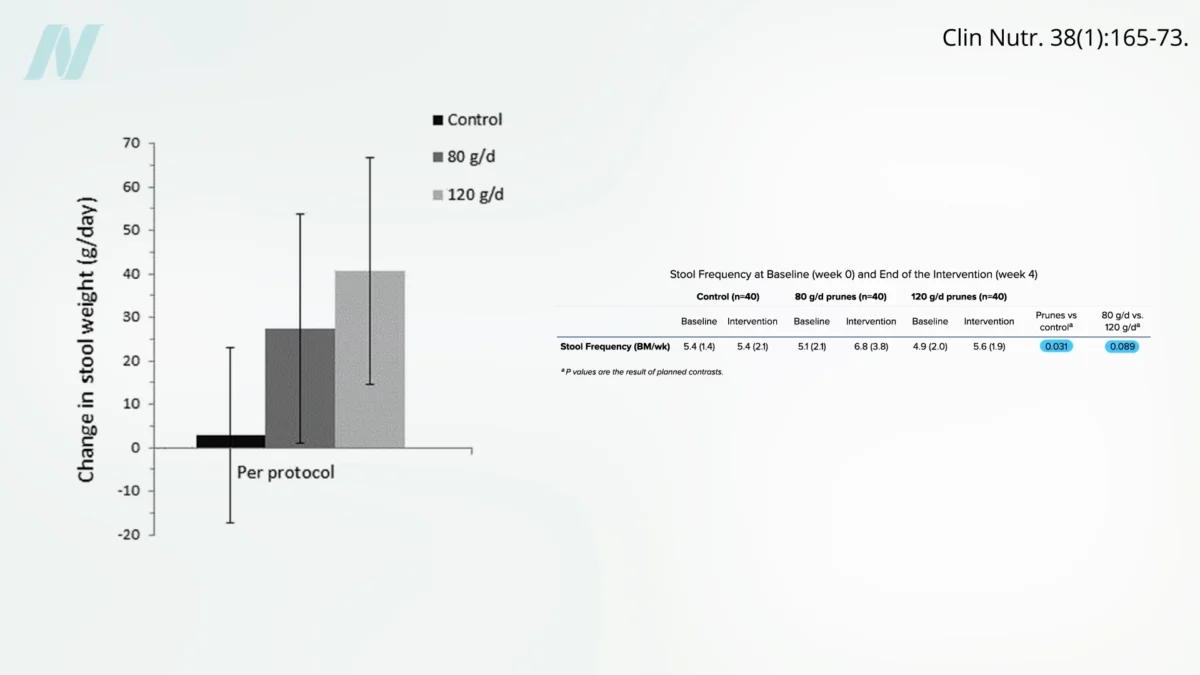
To address these limitations, more controlled studies have been conducted. In a randomized trial, participants were assigned to consume varying amounts of prunes (eight or twelve per day) along with a glass of water, or simply water alone as a control. Even the control group received an intervention (water), which itself can contribute to constipation relief. This design allowed researchers to isolate the specific impact of prunes. The study observed a significant increase in stool bulk and bowel movement frequency in the groups consuming prunes, with no substantial difference noted between the eight and twelve prune regimens. This suggests that approximately eight prunes per day may be a sufficient and effective dose for many individuals.

Further research has even positioned prunes as superior to psyllium, a common fiber supplement sold as Metamucil. Studies comparing prunes to psyllium have shown prunes to be more effective in improving stool frequency and consistency.
The mechanism behind prune’s efficacy is multifaceted. While the fiber content is a significant factor, prune juice, which has had most of its fiber removed, has also demonstrated effectiveness. This suggests the presence of other active components. One such component is sorbitol, a natural sugar alcohol found in prunes, known for its mild laxative properties. While beneficial in moderate amounts, consuming excessively large quantities of prunes (more than a dozen or so large prunes daily) could lead to laxative effects due to a high sorbitol intake, particularly in sensitive individuals, warranting careful consumption.
Interestingly, studies have indicated that even individuals without constipation can generally consume about a dozen prunes daily without adverse effects. Historically, prunes have been utilized as both a laxative and an antidiarrheal remedy, showcasing their complex role in digestive regulation.
Dried Figs: A Biblical Remedy Under Scrutiny
Dried figs, fruits with a rich history and explicit mention in biblical texts as a medicinal plant, have also been investigated for their digestive properties. Research involving patients with constipation-predominant Irritable Bowel Syndrome (IBS) has shown promising results. In one study, participants who consumed one fig with breakfast and another with lunch, each accompanied by a glass of water, experienced significant improvements in defecation frequency and a reduction in the occurrence of hard stools compared to a control group that maintained their normal diet.
However, the high placebo response rate in IBS studies, where up to 72% of participants receiving a placebo may report feeling better, necessitates robust research designs. To overcome this, a randomized, double-blind, placebo-controlled trial was conducted. Researchers developed a "gross-sounding" fake fig paste placebo designed to mimic the taste, smell, and appearance of real figs. Participants consuming approximately six real figs per day reported a significant reduction in colon transit time and notable improvements in stool consistency and abdominal discomfort compared to the placebo group.
The study employed an innovative method to measure transit time by having participants ingest small beads that would appear on X-rays, allowing researchers to track their passage through the digestive system. Those who ate real figs experienced a substantial acceleration of their gut transit time, by a full 24 hours. While defecation frequency per week did not statistically outperform the placebo, the significant improvements in other key markers like stool consistency and abdominal discomfort suggest a tangible benefit. Nevertheless, the researchers acknowledge that the sheer number of outcomes tested means some results might be attributed to statistical chance. Currently, the evidence suggests prunes may hold a slight edge over figs in overall effectiveness for constipation management.
Implications for Public Health and Individual Well-being
The growing body of evidence supporting the efficacy of prunes and figs, alongside exercise, offers a powerful alternative to pharmaceutical interventions for constipation. This shift towards natural remedies has several significant implications:
- Reduced Healthcare Costs: By empowering individuals to manage constipation through diet and lifestyle, the reliance on costly doctor visits and emergency room care could be reduced.
- Improved Patient Satisfaction: Natural remedies with fewer side effects are likely to lead to higher patient adherence and overall satisfaction with treatment outcomes.
- Enhanced Quality of Life: Constipation can significantly impair daily life. Effective, natural management can restore comfort and well-being for millions.
- Promotion of Healthy Eating Habits: The emphasis on whole plant foods encourages broader dietary improvements, contributing to overall health and potentially preventing other diet-related chronic diseases.
The scientific validation of these traditional remedies provides a strong foundation for public health recommendations. As research continues to refine our understanding of these interventions, individuals seeking relief from constipation have increasingly effective and accessible natural options at their disposal.
Doctor’s Notes and Further Exploration
The conversation around digestive health extends beyond prunes and figs. Related inquiries have led to investigations into other potential remedies. The efficacy of carbonated beverages, such as club soda, for stomach pain and constipation has been explored, with findings detailed in separate discussions.
Furthermore, the multifaceted benefits of prunes are an ongoing area of research. Their role in promoting bone health, specifically in combating osteoporosis, has been a subject of previous exploration.
For individuals managing Irritable Bowel Syndrome (IBS), particularly the constipation-predominant subtype, a range of related strategies and interventions are continuously being investigated and discussed within the medical community. The focus remains on providing evidence-based, patient-centered approaches to improve digestive health and overall well-being.

