

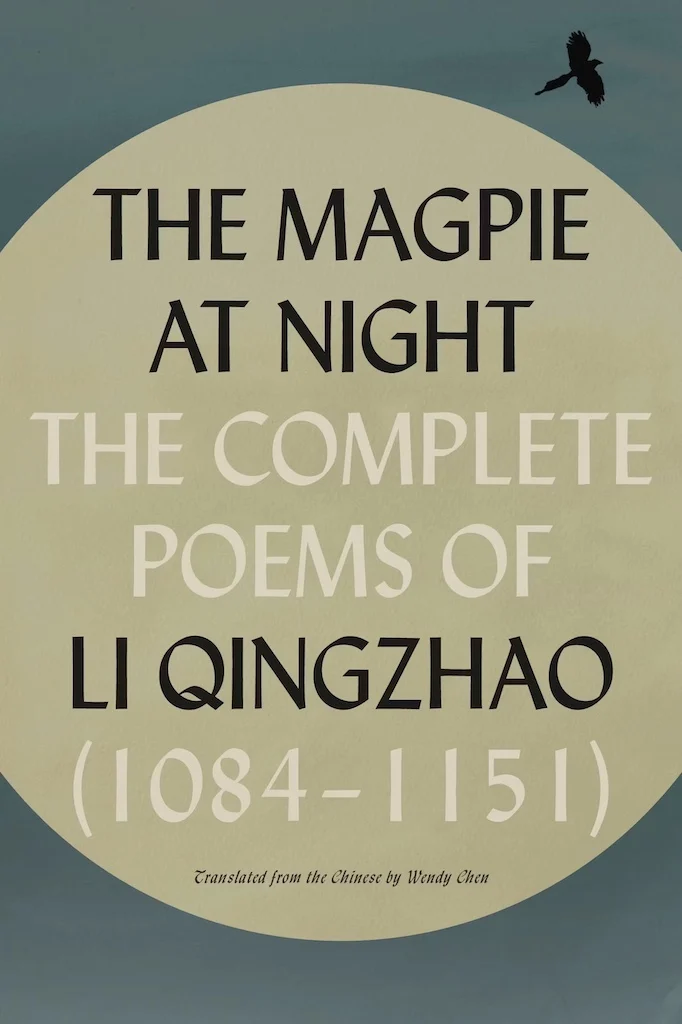
The reintroduction of Li Qingzhao’s profound lyrical poetry to a Western audience, through Wendy Chen’s meticulous translation, marks a significant cultural moment, illuminating the enduring power of a voice that has resonated across centuries. Often hailed as China’s greatest female poet, Li Qingzhao’s work, characterized by its "intense Dickinsonian clarity and vision," has historically remained less accessible in the West than her male contemporaries. Chen’s effort, culminating in The Magpie at Night: The Complete Poems of Li Qingzhao, seeks to rectify this oversight, presenting a comprehensive collection that showcases the breadth and depth of Li Qingzhao’s literary genius.
Li Qingzhao, a luminary of the Song Dynasty (960–1279 CE), defied the stringent societal norms that largely confined women to domestic spheres. Her mastery extended across multiple poetic forms, including ci (lyrics set to music), scholarly wen (prose essays), and critical shi (literary poems). This multifaceted approach to literary expression was exceptionally rare for women of her era, who faced systemic barriers to education, publication, and critical recognition. The historical preservation of women’s literary contributions in China has also been a precarious undertaking, with works often lost due to inadequate archival practices and a pervasive undervaluation compared to those of male writers.
A Legacy Rediscovered and Recontextualized
Wendy Chen’s personal connection to Li Qingzhao’s poetry, sparked by an early encounter with its resonant imagery, fueled a decades-long dedication to translation. Chen describes her initial arrest by the "power of her imagery," noting how Li Qingzhao "effortlessly offers up surprises to delight the reader." This sentiment is vividly illustrated in lines such as "thinner than a yellow flower" from "Drunk in the Shade of Flowers" or the evocative depiction of moonlight on pear blossoms: "[t]he pear blossoms are dipped / in the moon’s first / slanting light" from "Complaint Against a Prince: Spring Ends (1)." These fragments hint at a poet capable of capturing the full spectrum of human experience, from youthful joy to the profound despair of displacement and loss.
Beyond personal reflection, Li Qingzhao’s boldness extended to her willingness to engage with politically charged themes, a move considered audacious for any writer of her time, and particularly so for a woman who lacked the social protections afforded to men. This willingness to challenge conventions underscores her intellectual courage and artistic integrity.
Breaking Barriers in a Patriarchal Literary Landscape
The Song Dynasty was a period of significant cultural and intellectual flourishing, yet the literary world remained heavily dominated by men. Li Qingzhao’s ascent within this environment is a testament to her exceptional talent and the supportive, albeit unusual, upbringing she received from her scholar-official parents. By her teenage years, her talent was recognized, and her works were admired and performed by established male poets. This early acclaim suggests a precocious ability to not only compose but also to engage with the established literary circles of her time.
Her decision to publish under the pseudonym Yi’an Jushi ("the easily contented dweller") might be seen as a strategic move to navigate societal expectations, while still allowing her work to reach a wider audience. Despite this, she gained renown for her shi and wen, including a significant essay on the ci form. Today, her ci are particularly celebrated for their "elegant immediacy and freshness," lyrics meticulously crafted to fit existing musical structures and meters. While the original musical scores for many of these songs have been lost to time, the emotional resonance and "indomitable voice" of Li Qingzhao’s lyrics continue to speak powerfully.
The Translator’s Vision: Reclaiming Chinese Voices
Wendy Chen’s translation endeavor is deeply intertwined with a broader project of reclaiming and re-centering Chinese and Chinese American voices in the landscape of English translations. She notes that upon beginning her teenage translation efforts, only one English translation of Li Qingzhao’s complete works remained in print: Li Ching-chao: Complete Poems (1979), by Kenneth Rexroth and Ling Chung. This scarcity highlights a historical imbalance in translation, where "the field of translation in the United States has long been dominated by white men translating other men." Chen’s commitment to Li Qingzhao is therefore not merely an artistic pursuit but also an act of cultural correction, aiming to foster greater appreciation for the contributions of Chinese women writers throughout history.
The act of translation itself is presented as a deeply personal and imaginative process. Chen reflects on fellow poet Zhou Hui’s account of Li Qingzhao’s dedication: "at every snowstorm, [Li Qingzhao] would wear a bamboo hat and cloak of reeds and climb on top of the city walls, looking into the distance in search of poems." Chen conjures this image, imagining Li Qingzhao "standing on the edge of the city walls, braced against the fury of the storm, the snow swirling around her." This vivid mental picture informs Chen’s translation approach, as she endeavors to "capture this very spirit."
Li Qingzhao’s Enduring Relevance: A Dialogue Across Centuries
Li Qingzhao’s poetry transcends its historical context by infusing a "real, lived persona" into spaces previously confined to generalized female interiority. Her ability to document a life marked by hardship and grief through her creative power offers a timeless connection to readers. The poem "Butterflies Long for the Flowers: Parting Feelings" poses a poignant question: "Who will drink with me / from wine and poems?" Chen interprets this as an invitation, an "oracular voice" drawing readers into Li Qingzhao’s inner world. The profound impact of her work, and her unique perspective on the world, create a sense of immediacy, as if her poems were written "just for us—just yesterday."
Thematic Exploration in Translated Works
The translated poems presented offer a glimpse into Li Qingzhao’s lyrical universe, exploring themes of nature, solitude, longing, and the passage of time.
-
Silk-Washing Stream: This poem evokes a serene yet melancholic atmosphere. The deepening colors of spring, the shadowed interior of a room, and the quiet act of playing the jade qin create a sense of introspection. The arrival of misty rain and the wilting pear blossoms introduce a subtle undercurrent of transience and the poet’s inability to halt the inevitable decay of beauty, mirroring perhaps the ephemeral nature of happiness or youth. The imagery of "clouds from distant caves" hastening the dusk suggests a yearning for something beyond the immediate, while the wilting blossoms represent a poignant acceptance of impermanence.
-
Fragrant Courtyard: Fading Plum Blossoms: Here, Li Qingzhao paints a picture of isolation and introspective sorrow. The "little house" that "hides the spring" and the "dark, endlessly deep" painted hall convey a sense of confinement and subdued emotion. The fading plum blossoms, a symbol of resilience and beauty in winter, are subjected to the "relentless rain" and "raking wind," paralleling the poet’s own vulnerability to external hardships. The distant sound of a flute amplifies the pervasive "heavy sorrow." Yet, a glimmer of hope emerges with the assertion: "Have faith feelings will remain / when all traces are swept away." The poem concludes with the moving observation that the "scattered shadows" of the blossoms, stirred against the "beautiful window and pale moon," profoundly affect the poet, highlighting the deep connection between the natural world and her inner emotional landscape.
-
Offering Incense: This poem captures the poignant beauty of autumn and the vastness of human longing. The cry of crickets startling the wutong leaves into falling sets a tone of melancholic transition. The concept of "longing saturates the human world, the heavens," speaks to a universal human condition. The imagery of a "stair of clouds to the moon" and "a thousand locked gates" emphasizes the immense distance and barriers that often separate individuals and desires. The allusion to the Magpie Bridge, a mythical structure enabling the Cowherd and Weaving Girl to meet once a year, underscores the rarity of connection and the pain of separation. The poem culminates in a profound realization of this enduring sorrow, punctuated by the sudden arrival of rain and wind, elemental forces that mirror the overwhelming nature of grief.
-
The Fisherman’s Pride: Dream Notes: This poem offers a more aspirational and perhaps escapist turn. The merging of clouds and fog, and the dancing sails on the "River of Stars," create a dreamlike, cosmic setting. The poet’s soul appears before the "Emperor of Heaven," seeking a path forward. The acknowledgment of a "long journey" and the "sun setting" suggests a life lived, with perhaps unfulfilled ambitions. The phrase "I have studied poetry / and attempted startling phrases / to no use" reveals a moment of self-doubt or a critique of the limitations of artistic endeavor in achieving ultimate liberation. The poem concludes with a powerful invocation: "Let the roc raise a wind / of ninety thousand li." This reference to a mythical giant bird in Chinese mythology symbolizes a boundless aspiration for transcendence, a plea for a powerful force to carry the poet’s boat "to the islands of immortals," representing a desire for spiritual freedom and eternal peace.
The publication of The Magpie at Night is more than just a literary event; it is an act of cultural preservation and a testament to the enduring power of poetry to transcend time and borders. Wendy Chen’s translation offers a vital bridge, allowing contemporary readers to engage directly with the voice of a poet whose insights into the human condition remain remarkably relevant. The collection serves as a crucial reminder of the rich literary heritage of China and the importance of amplifying voices that have been historically marginalized.

