

The word "mindfulness" often conjures images of arduous practice and deliberate effort, a state to be painstakingly achieved. However, according to Venerable Ajahn Sumedho, a respected Buddhist monk and former abbot of Amaravati Buddhist Monastery, this perception fundamentally misunderstands its essence. Mindfulness, he contends, is not an acquired skill but a natural and inherent way of receptive being, often overlooked in our pursuit of self-improvement.
Ajahn Sumedho’s reflections, drawn from decades of monastic life and teaching, particularly within the Thai Forest Tradition, challenge common interpretations of mindfulness. He argues that the very act of trying to "get" mindfulness can paradoxically lead to heedlessness, a focus on the idea of mindfulness rather than its lived reality. This perspective offers a profound re-evaluation for individuals and institutions seeking to cultivate greater presence and awareness in an increasingly complex world.
The Natural State of Mindful Awareness
The most accessible example of natural mindfulness, Ajahn Sumedho points out, is the act of driving. "When we drive a car we have to be mindful, unless we are drunk or in a really terrible state," he explains. "We don’t think, ‘I’ve got to try to be mindful.’ If we are not a very disturbed, heedless, and foolish kind of person, we just are mindful, because it is quite apparent that when driving a car we have a dangerous machine under our control." This inherent mindfulness, he suggests, stems from a basic sense of self-preservation and respect for the safety of oneself and others. The potential for harm—a collision, injury, or worse—automatically engages a state of awareness that doesn’t require conscious effort to cultivate. This suggests that mindfulness is not an exotic practice but a fundamental aspect of responsible engagement with the world.
Misconceptions in Monastic Practice
Within monastic settings, the tendency to view mindfulness as something to be "developed" can lead to a cycle of striving and self-criticism. Ajahn Sumedho illustrates this with personal anecdotes from his time at Wat Pah Pong, a forest monastery in Thailand. He recounts instances where a rigid focus on "being mindful" led to overlooking crucial details.
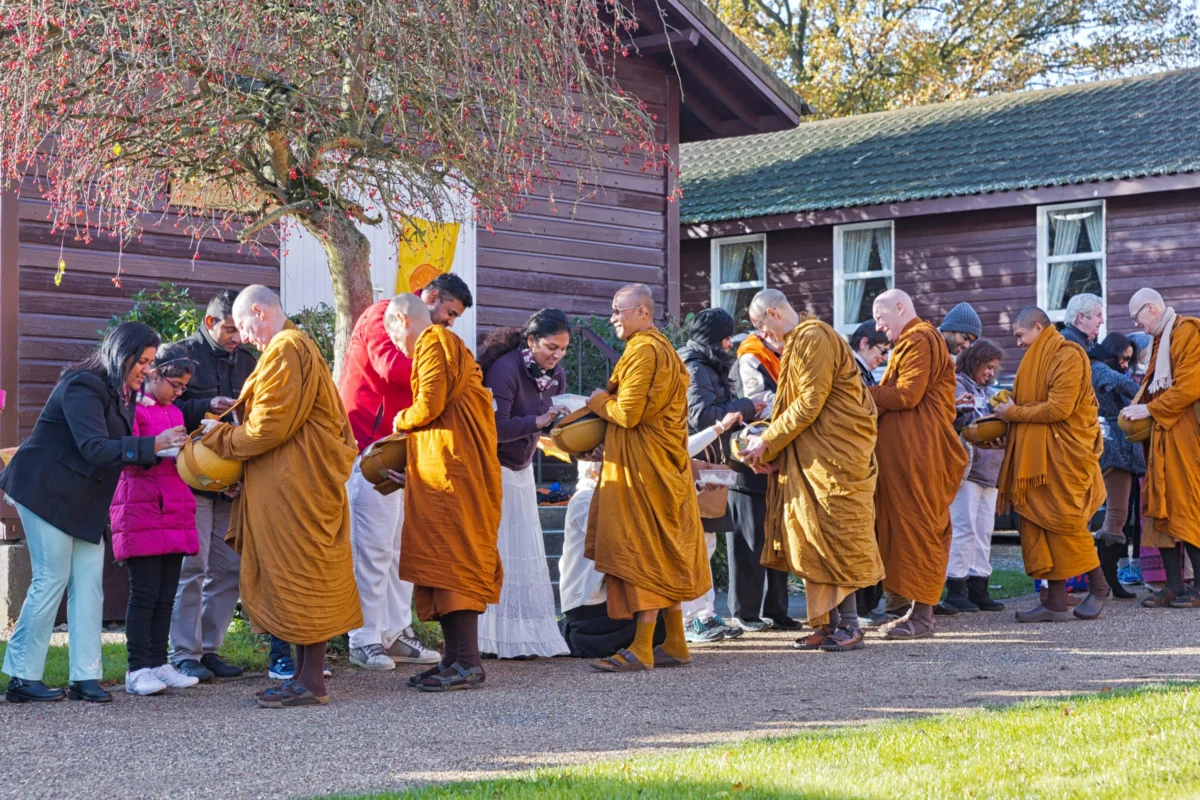
One such experience involved an alms round (Thai: pindapaht) where, anticipating rain, he took an umbrella. After leaving it outside the village, he sternly reminded himself, "You must be mindful, Sumedho, and when you come back from your alms-round you must remember your umbrella." Despite this intense self-instruction, upon returning to the monastery, he discovered he had forgotten it. "I had concentrated and was maybe very composed while on my alms-round, but I was not terribly mindful about other things," he observes. This highlights a critical distinction: concentration on a specific task or posture is not synonymous with mindfulness, which encompasses a broader awareness of context and surroundings.
The Pitfalls of Fixed Views and Willpower
Further illustrating the dangers of a fixed, effort-based approach to mindfulness, Ajahn Sumedho shares another vivid account from his barefoot alms rounds at Tum Saeng Pet, a notoriously rocky and root-strewn path. He repeatedly admonished himself, "You must be mindful while walking, Sumedho!" His intense focus on mindful walking, however, ironically led to him stubbing his toe multiple times with excruciating pain. In his self-recrimination, he declared, "You’re not being mindful at all! You’re just a hopeless case!" This scenario underscores how an overemphasis on the idea of mindfulness can distract from the actual experience and create unnecessary suffering.
This tendency, Ajahn Sumedho notes, is not confined to monastic life. "People don’t wisely consider their limits and what mindfulness and wisdom really amount to," he states. "They develop fixed ideas about following certain meditation techniques or special practices, and do not take into account the nature of the human body with its limitations, or the time and the place."
Wisdom Over Willpower: The Importance of Context
The pursuit of mindfulness can become rigid and impractical when divorced from wisdom and an understanding of context. Ajahn Sumedho recounts an experience at a meditation monastery where practitioners were encouraged to perform all actions with extreme slowness. While this might foster a certain kind of mindful presence, it proved problematic when an important meeting was scheduled.
"Everyone was to congregate at two o’clock in the monastery meeting hall (Thai: sala)," he explains. "I arrived on time, but then we had to wait for forty-five minutes—because some people were walking slowly and the rest of us had to wait for them." This, he argues, was neither wise nor considerate. A more appropriate approach would involve assessing the specific situation: "If one wants to walk slowly then maybe it’s best to set off well in advance. Or you can walk at a normal pace just for that occasion—in order to arrive [on] time." Such discernment, he emphasizes, requires wisdom—the ability to contemplate "what is appropriate, what is beautiful, what is kind"—rather than mere willpower or a rigid adherence to a singular practice.
Community and the Practice of Generosity
Ajahn Sumedho extends this understanding of mindful engagement to community life, particularly within the monastic sangha (community of monks). He stresses the importance of being mindful of vinaya (monastic discipline), customs, and traditions. In a community, he states, "One doesn’t make up one’s own rules or go one’s own way." The commitment to communal living involves agreeing to a shared way of life.
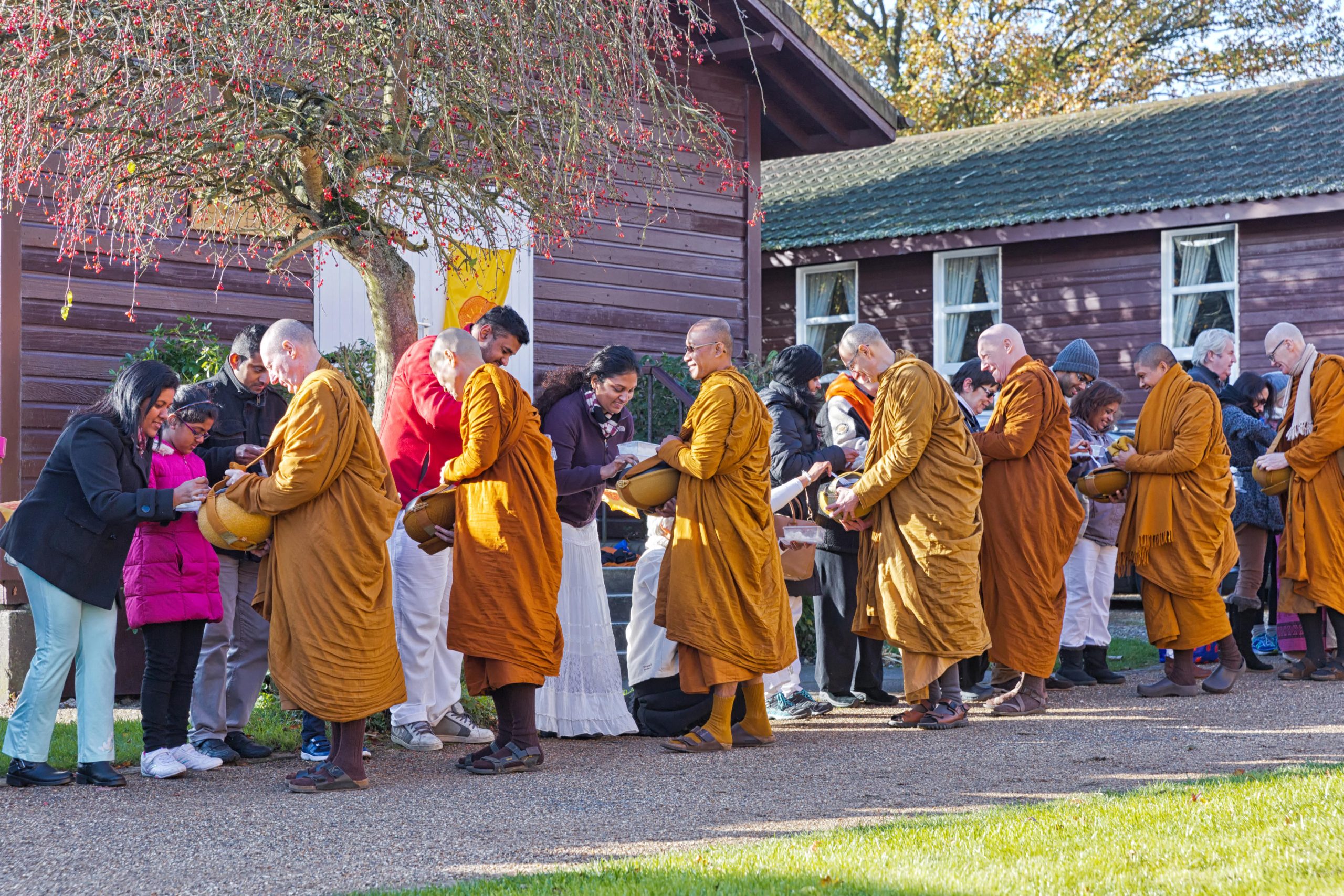
The true benefit of community, he argues, lies in cultivating sensitivity, care, consideration, and thoughtfulness towards others. "A life without generosity, respect, and giving to others is a joyless life," he asserts. Conversely, "Nothing is more joyless than selfishness." The self-centered pursuit of personal desires, even within a spiritual context, leads to a lack of inner peace and fulfillment. This is particularly relevant in communities where seniority can be perceived as a license for self-assertion. Ajahn Sumedho observes that as individuals gain seniority, the focus should shift towards supporting and guiding juniors, rather than solely pursuing personal enlightenment. The frustration of dealing with individuals who lack self-awareness and a willingness to contribute underscores the importance of a mature, community-oriented approach.
The Journey from Selfishness to Service
Ajahn Sumedho’s personal journey offers a powerful testament to the transformative power of shifting from self-concern to service. He recounts his initial romantic notions of monastic life, envisioning solitary retreats in caves or the Himalayas, free from the perceived burdens of responsibility. "Having to think about somebody else was not something I found very attractive," he admits. Even within monastic life in Thailand, he was praised for his solitary practices, which he now recognizes as a form of refined selfishness.
It was through the guidance of his teacher, Ajahn Chah, that Ajahn Sumedho was gradually led to embrace responsibility. "Life sometimes forces us to look in different directions," he reflects. Ajahn Chah’s influence pressured him to recognize that a purely self-focused path would lead to misery. This realization spurred a fundamental shift in perspective: "How can I help? What can I do?"
A pivotal moment occurred during his visit to India in 1974, where he experienced a profound sense of gratitude (kataveda) towards the Buddha, Ajahn Chah, Thailand, and the lay supporters. Despite numerous attractive invitations to stay in idyllic locations, his overwhelming desire was to return to Thailand and serve Ajahn Chah. He recognized his unique ability to translate between Ajahn Chah and the growing number of Westerners arriving at Wat Pah Pong.
He resolved to become a "non-complaining monk," willing to undertake any task or reside in any monastery, regardless of its difficulty, to support his teacher. He even volunteered for Wat Suan Gluay, known for its challenging conditions and lack of appeal, in an effort to be of service where he was most needed. Although initially refused, this willingness to embrace hardship eventually led him to take responsibility for establishing Amaravati Buddhist Monastery in England.
The Collective Responsibility of a Community
The well-being and effectiveness of any community, Ajahn Sumedho emphasizes, depend on the collective contribution of its members. "A community is as good as its members," he states. "One person can’t make this community good by himself." Cultivating a truly flourishing monastery requires each individual to "give ourselves to it by opening our hearts and taking on responsibilities." This involves being sensitive to the needs of others, the specific context of time and place, and the prevailing culture. This holistic awareness, he reiterates, is an integral part of mindful practice.
Leadership and Service: A Different Perspective
Ajahn Sumedho contrasts the true spirit of leadership with tyranny. As abbot of Amaravati, he reflects on how to use his position for the welfare of the entire community, rather than for personal gain or asserting authority. "A tyrant is like that, but not an abbot," he asserts. This principle extends to all members, from the most senior monks to the newest novices and guests. "In my position, what can I do for the welfare and happiness of the community?" is the essential question for everyone. This mindset fosters harmony and mutual support.
The mature spiritual practitioner, Ajahn Sumedho explains, moves beyond demanding rights and privileges and instead focuses on offering service. The question shifts from "What are my rights?" to "How can I best help and serve this community?" This spirit of selfless contribution is the foundation of a truly vibrant and harmonious spiritual community.
Moving Beyond Selfish Grievances
The tradition of monks undertaking a period of wandering practice (tudong) after five years, while not inherently problematic, can become a hindrance if it fosters a sense of entitlement or a justification for avoiding responsibility. Ajahn Sumedho cautions against clinging to such ideas without critical self-examination. "To be dishonest with oneself, demand rights, and follow one’s own views and opinions is not the way to nibbana."
Ultimately, Ajahn Sumedho’s teachings offer a profound reorientation of our understanding of mindfulness. By moving away from a self-focused, effort-driven approach and embracing wisdom, compassion, and selfless service, we can cultivate a more authentic and fulfilling way of being, both individually and collectively. The true essence of mindfulness, he suggests, is not a strenuous pursuit but a natural unfolding of awareness that arises when we are genuinely present, considerate, and engaged with the world and those around us. The realization of this natural state, free from the painful grip of selfishness and grasping, is the ultimate aim—the path to peace, clarity, and the cessation of suffering.

