

The landscape of the professional fitness industry is witnessing a notable shift as long-term practitioners and facility owners re-evaluate the boundaries between their professional environments and personal training spaces. Tony Gentilcore, a fitness coach with over two decades of experience and co-founder of the renowned Cressey Sports Performance, recently announced a significant departure from his established routine: the acquisition of a commercial gym membership. This move, the first of its kind in over 25 years of Gentilcore’s professional career, highlights a growing trend among elite strength and conditioning specialists who are seeking to decouple their labor from their personal physical development.
For a professional who has spent the better part of three decades either working in, managing, or owning high-performance athletic facilities, the decision to enter a commercial "big box" gym represents more than a simple change in location. It signifies a strategic response to the psychological and physiological demands of the fitness industry. By examining the chronology of Gentilcore’s career alongside broader industry data, the implications of this shift become clear for both fitness professionals and the commercial gym market at large.
A Chronological Overview of Training Environment Transitions
The trajectory of a fitness professional often mirrors the evolution of the industry itself. Gentilcore’s history provides a case study in the transition from rudimentary home setups to specialized high-performance centers, and finally, back to the diversified commercial model.
The Foundational Era (1990–1995)
The journey began in the early 1990s, an era characterized by the rise of home fitness and the democratization of weightlifting equipment. Like many of his contemporaries, Gentilcore’s entry point was a basic plastic-coated cement weight set—a staple of department stores like K-Mart. This period transitioned into the high school weight room environment, which, while often lacking in modern ergonomics, provided the essential "dungeon" atmosphere necessary for foundational strength development. These facilities were typically characterized by "universal gyms," basic power racks, and rudimentary barbell setups.
The Commercial Introduction and Professional Entry (1996–2006)
In 1996, the emergence of commercial gyms in rural and suburban areas began to change the accessibility of specialized equipment. For many aspiring professionals, these facilities offered the first exposure to a wider array of resistance machines and cardiovascular equipment. Gentilcore’s professional entry into the industry in 2002 saw him operating within various gym menageries, including a significant tenure at South Side Barbell in Stratford, Connecticut—a specialized powerlifting facility that emphasized heavy compound movements and high-intensity training.
The Boutique and High-Performance Era (2007–Present)
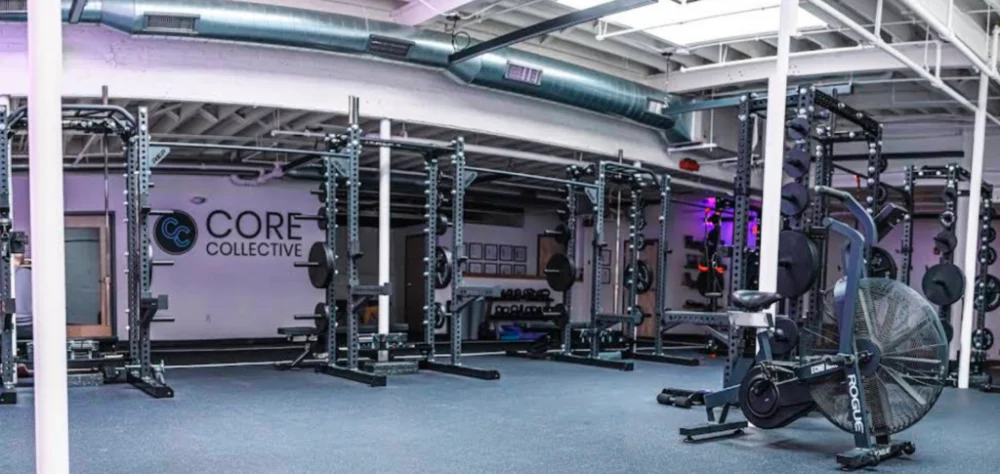
The founding of Cressey Sports Performance in 2007 marked a pivotal moment in the "boutique" fitness revolution. This era saw a shift toward specialized strength and conditioning bubbles, where the focus was on functional range of motion, heavy deadlifts, and athletic performance. For 17 years, Gentilcore operated within these elite environments, eventually moving to his current facility, CORE Collective in Brookline, Massachusetts. These spaces are optimized for coaching but often lack the mechanical variety found in larger commercial establishments.
The Psychological Necessity of the Third Space
One of the primary drivers behind fitness professionals seeking external gym memberships is the "separation of church and state"—the psychological need to distance one’s personal training from their place of employment. In the professional coaching world, the workplace is an environment of constant output. Coaches are responsible for client safety, technical cues, program adjustments, and facility maintenance.

When a professional trains in the same facility where they work, the "recovery" aspect of exercise is often compromised. Industry analysts suggest that "environmental monotony" can lead to burnout. By joining a commercial gym, Gentilcore effectively creates a "third space"—a concept in sociology referring to a social environment separate from the two usual social environments of home ("first space") and the workplace ("second space").
For Gentilcore, the commercial gym provides a "welcome jolt" and a "change of scenery" that allows for a disconnect from professional responsibilities. This separation allows for a singular focus on personal training goals without the distractions of administrative duties or the urge to "coach" while on the clock.
The Technical Argument for Equipment Diversification
While high-performance facilities excel in barbell training and functional movements, they often lack the specialized machinery found in commercial gyms. The "strength and conditioning bubble" frequently prioritizes free weights, yet there is a significant physiological argument for the inclusion of machines such as the leg press, Hammer Strength rows, and the pec deck.
Hypertrophy and Mechanical Tension
Modern sports science emphasizes that while compound movements are essential for systemic strength, machines offer unique advantages for hypertrophy (muscle growth). Machines provide:
- Guided Paths of Motion: Allowing for greater focus on the target muscle group without the limiting factor of stability.
- Constant Tension: Cable-based functional trainers and cam-driven machines maintain tension throughout the entire range of motion.
- Safety at Failure: Equipment like the leg press allows athletes to push to muscular failure with a lower risk of injury compared to a free-weight squat.
Gentilcore noted that his current facility, while excellent for strength, lacked specific machines like the functional trainer and the leg press. The decision to join a commercial gym was, in part, a technical decision to fill these "programming gaps."
Market Trends and Industry Implications
The return of industry veterans to commercial gyms reflects broader trends in the $96 billion global fitness industry. According to reports from the International Health, Racquet & Sportsclub Association (IHRSA), commercial gyms have seen a resurgence in membership as they diversify their offerings to compete with boutique studios.
The Hybrid Training Model
There is an increasing trend toward "hybrid training," where individuals maintain a primary membership at a specialized facility (like a CrossFit box or a powerlifting gym) but supplement it with a low-cost commercial membership (such as Planet Fitness or Gold’s Gym). This allows for a comprehensive approach to fitness that balances high-intensity performance with accessory hypertrophy work.
Data on Professional Burnout
Studies within the National Strength and Conditioning Association (NSCA) have highlighted that fitness professionals are at a high risk for burnout due to the emotional labor of coaching. The "monotony" Gentilcore described is a recognized precursor to professional fatigue. Providing coaches with the autonomy to train in varied environments is increasingly seen as a retention strategy for high-level talent in the industry.

Official Responses and Peer Analysis
While Gentilcore’s decision is personal, it has resonated with peers across the industry. Many strength coaches have privately echoed the sentiment that training in one’s own facility can feel like "working overtime."
Industry analyst Mark Jenkins notes, "When a coach of Gentilcore’s caliber joins a commercial gym, it validates the idea that variety is not just for novices. It’s a strategic move to preserve the ‘love of the game.’ The commercial gym, with all its ‘peacocking’ and ‘techno music,’ offers a level of anonymity that a famous coach cannot find in their own facility."
Furthermore, the "silent camaraderie" mentioned by Gentilcore suggests that even for elite professionals, the social atmosphere of a general-population gym can be refreshing. It removes the pressure of being the "expert in the room," allowing the professional to simply be another trainee.
Broader Impact on Facility Design
This trend may influence how future high-performance facilities are designed. We may see a shift away from purely "minimalist" strength warehouses toward more "hybrid" designs that incorporate a selection of high-quality machines. Facility owners are beginning to realize that even the most dedicated powerlifters and athletes benefit from the mechanical variety and psychological break provided by diverse equipment.
The integration of "commercial" elements into "private" spaces—or the utilization of both—represents a maturing of the fitness industry. It acknowledges that the human body and mind thrive on novelty, and that professional expertise does not exempt one from the basic psychological need for a change of pace.
Conclusion
Tony Gentilcore’s acquisition of a commercial gym membership after a 25-year hiatus is a landmark moment that reflects the evolving needs of the modern fitness professional. It highlights the importance of psychological boundaries, the technical benefits of equipment variety, and the ongoing shift in the global gym market toward hybrid training models. As the industry continues to grow, the separation of professional labor from personal physical practice may become a standard recommendation for ensuring career longevity and personal well-being among the world’s leading coaches.

