

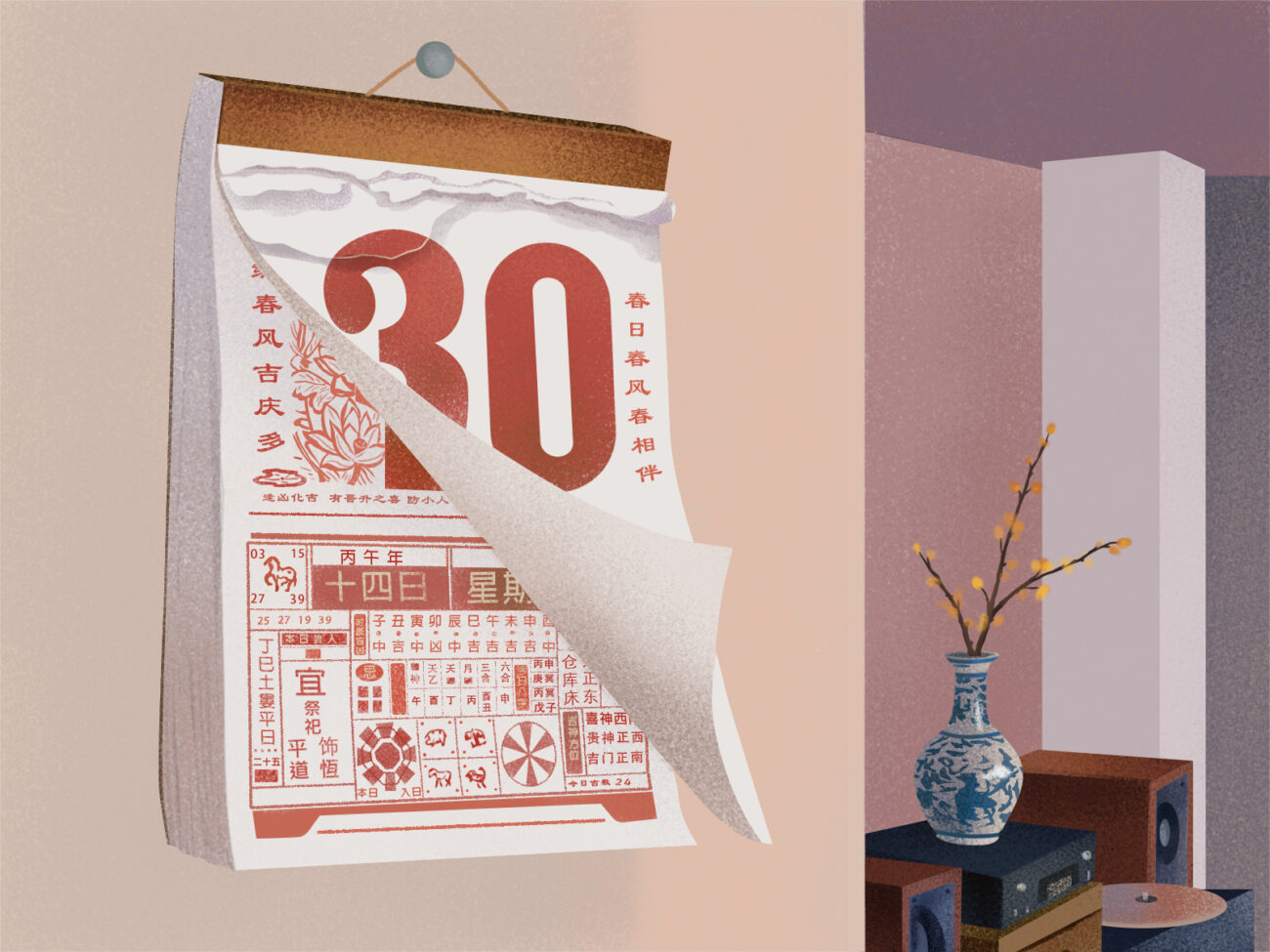
The transition from one year to the next has long been a fertile ground for artistic and philosophical contemplation. In the realm of haiku, the theme of "the old year" offers a unique lens through which poets explore the passage of time, memory, and the human condition. The Tricycle Haiku Challenge, a recurring event that invites poets to capture the essence of specific seasonal words, recently concluded its exploration of "The Old Year," yielding a collection of poignant and thought-provoking haiku. This year’s submissions, particularly the winning entry and honorable mentions, have set a new benchmark for the nuanced expression of year-end sentiments within the concise 5-7-5 syllable structure.
The challenge, which encourages participants to focus on a single moment and remain close to the season word, has consistently drawn attention to the subtle yet profound ways in which we perceive time’s flow. While the immediate experience of New Year’s Eve or New Year’s Day is tangible and present, "the old year" exists solely in retrospect. It is a concept that is gone, yet not entirely absent from our consciousness, a paradox that haiku poets adeptly capture.
The Winning Haiku: A Silent Heist of Time
Margaret Stawowy’s winning haiku, "I was sound asleep / when the old year was replaced / with a replica," offers a striking metaphor for the unnoticed theft of time. The poem evokes a sense of quiet drama, akin to a sophisticated heist where the invaluable is taken without detection. In this instance, the stolen commodity is not material wealth but an entire year.
The analysis of this haiku delves into the personification of Time as the unseen perpetrator. Unlike the gradual erosion of minutes or days, the loss of a full year is often marked by significant life events such as birthdays, anniversaries, or the definitive turning of a calendar page. Stawowy’s poem crystallizes this universal experience, resonating emotionally with its audience. The notion of the new year as a "replica" suggests a cyclical, perhaps even monotonous, progression of time, where one year bears a striking resemblance to another. This subtly questions the uniqueness of each temporal unit, implying that from a certain perspective, years are indeed interchangeable.
The emotional undercurrent of resentment towards Time’s relentless progression is palpable yet handled with a light touch. The poet awakens to a fait accompli, the old year vanished as if it were a dream, replaced by a fresh, albeit potentially identical, successor. This realization can provoke a wry smile, a recognition of the ephemeral nature of existence and the inevitability of time’s passage. The poem’s power lies in its ability to encapsulate both the wonder of time’s forward momentum and the quiet sorrow of years receding into the past, all within the confines of seventeen syllables. The delicate balance between potential gain and inevitable loss, a hallmark of profound haiku, is masterfully achieved here.
Honorable Mentions: Echoes of Departure and Accumulation
The honorable mentions further illuminate the diverse emotional landscapes associated with "the old year." Noga Shemer’s haiku, "the old year passes / the train slips from the station / lights and people—gone," employs the powerful imagery of a departing train. This metaphor vividly captures the sense of finality and the poignant visual of a receding world, filled with the familiar "lights and people," disappearing into the darkness. It speaks to the feeling of being left behind, or of witnessing something precious move irrevocably out of sight.
Nancy Winkler’s contribution, "starting to teeter / another old year added / to the growing pile," presents a more somber and perhaps slightly burdened perspective. The image of "teetering" suggests instability and a precariousness that comes with the accumulation of years. The "growing pile" of past years can feel overwhelming, a testament to the relentless march of time and the increasing weight of experience. This haiku taps into the anxiety that can accompany aging and the cumulative impact of lived history.
The Broader Context: Haiku and the Season Word Tradition
The Tricycle Haiku Challenge draws upon a rich tradition of Japanese haiku, where specific "season words" (kigo) are integral to the form. These words not only indicate the time of year but also imbue the poem with a particular mood and set of associations. The concept of a "fifth season," known as "The New Year," is particularly relevant here. Unlike the more naturalistic kigo of spring, summer, autumn, and winter, New Year’s season words often focus on human customs, rituals, and emotional states.
In Japanese culture, the "firsts" of the New Year—first calligraphy, first smile, first dream—held significant symbolic meaning, with dreams believed to offer prophecies for the year ahead. While many of these specific terms do not translate directly or carry the same cultural weight in English-speaking contexts, the underlying sentiment of renewal and introspection remains universal.
English-speaking haiku poets have adapted this tradition, developing their own set of New Year’s season words that reflect contemporary experiences. Terms like "countdown," "popping the cork," and "making resolutions" capture the celebratory and anticipatory aspects of the transition. However, "The Old Year," as explored in this challenge, occupies a unique space. It is not an event to be experienced in the present but a retrospective concept, inherently linked to reflection and remembrance.
The Allegory of Seasons and the Departure of the Old Year
The exploration of "The Old Year" also touches upon a long-standing Western allegorical tradition. The personification of the old year as an aged figure departing to make way for the youthful new year is a powerful archetype, echoing "The Allegory of the Seasons." This allegory typically maps spring to birth and childhood, summer to adolescence, autumn to maturity, and winter to old age and death. The departure of the old year, therefore, symbolizes the cyclical nature of life, death, and rebirth, a continuous process of renewal.
The excerpt from John Clare’s poem, "The Old Year’s gone away / To nothingness and night," further illustrates this theme of complete disappearance. Clare’s lines emphasize the ephemeral and traceless nature of the past year, a sentiment that haiku poets often grapple with. The challenge lies in capturing the paradox of something that is both gone and yet still vividly present in memory and reflection. The old year is described as "heavy, but also weightless. Gone, but somehow still present to the mind," a duality that offers fertile ground for poetic exploration.
Implications for Contemporary Haiku Practice
The Tricycle Haiku Challenge serves as a vital platform for contemporary haiku poets to engage with traditional themes through a modern lens. By focusing on a specific season word like "The Old Year," the challenge encourages a deep dive into a particular facet of human experience. The success of the recent submissions suggests a growing sophistication in English-language haiku, demonstrating poets’ ability to navigate complex emotions and philosophical ideas within the strict constraints of the form.
The event also highlights the adaptability of haiku as a literary form. While rooted in Japanese tradition, it has evolved to encompass a wide range of subjects and cultural contexts. The active community fostered by the Tricycle Haiku Challenge, particularly its presence on Facebook, underscores the collaborative and educational aspects of modern haiku practice.
Looking Ahead: Submissions and Future Challenges
The Tricycle Haiku Challenge continues to invite submissions for its ongoing initiatives. Aspiring poets are encouraged to visit the Tricycle website and its Facebook group to learn more about current themes and submission guidelines. The success of the "The Old Year" challenge serves as an inspiration for future explorations, promising further insights into the subtle yet profound ways in which haiku can illuminate our understanding of the world and our place within it. The ability of these seventeen-syllable poems to encapsulate such depth of feeling and thought underscores the enduring power of concise, evocative language in capturing the essence of human experience. The ongoing dialogue between tradition and innovation within the haiku community ensures that this ancient art form will continue to thrive and offer fresh perspectives on timeless themes.

