

Re-evaluating Caffeine’s Role in Panic Disorder: A Paradigm Shift
For decades, caffeine has been a primary suspect in exacerbating symptoms for individuals diagnosed with panic disorder. The stimulant, known for its ability to increase alertness and energy, was often perceived as a direct trigger for panic attacks due to its physiological effects that mimic early signs of anxiety, such as increased heart rate and heightened arousal. This perception has historically led to widespread advice for individuals with panic disorder to completely abstain from caffeine in all its forms. The latest research, a randomized crossover trial conducted by Hoppe et al., offers a significant recalibration of this understanding, suggesting that the relationship between caffeine and panic disorder is far more complex and dose-dependent than previously assumed for moderate consumption levels.
Panic disorder, as defined by the Diagnostic and Statistical Manual of Mental Disorders (DSM-5), is a debilitating anxiety disorder characterized by recurrent, unexpected panic attacks. These attacks are abrupt surges of intense fear or discomfort that reach a peak within minutes, often accompanied by a range of physical and cognitive symptoms such as palpitations, sweating, trembling, shortness of breath, chest pain, dizziness, feelings of unreality, fear of losing control, or fear of dying. Beyond the attacks themselves, individuals with panic disorder typically experience anticipatory fear of future attacks and often develop significant avoidance behaviors, leading to substantial impairment in daily functioning, social interactions, and occupational stability. The lifetime prevalence of panic disorder is estimated to be around 2-3% of the adult population, making it a significant public health concern.
A core component of panic disorder often involves distorted interoception, which is the attention to internal body signals such as heartbeat, breathing rate, dizziness, or chest tightness. For individuals with panic disorder, these normal physiological fluctuations can be catastrophically misinterpreted as signs of impending danger or a severe medical event, thereby escalating anxiety into a full-blown panic attack. Given caffeine’s known effects on the cardiovascular system and central nervous system, it was logically hypothesized that even moderate doses could trigger this interoceptive misinterpretation and subsequent panic in vulnerable individuals.
The Hoppe et al. Study: Methodology and Design
The study, a rigorous randomized, placebo-controlled, double-blind crossover trial, aimed to precisely evaluate the immediate effects of a moderate dose of caffeine on individuals with panic disorder. This design is considered a gold standard in clinical research, as it minimizes bias by ensuring that neither participants nor researchers know who is receiving caffeine or placebo, and by having each participant serve as their own control (receiving both caffeine and placebo at different times). This latter aspect is particularly powerful as it accounts for individual variability in anxiety levels, personality traits, and physiological reactivity, allowing for a more direct comparison of the substance’s effect within the same person.
Hoppe and colleagues enrolled 29 patients formally diagnosed with panic disorder and 53 healthy control participants. A crucial inclusion criterion was that participants normally consumed no more than 300 mg of caffeine per week, ensuring that they were not highly habituated to caffeine and thus more likely to show a clear response. Prior to each experimental session, all participants underwent a 36-hour caffeine abstinence period to wash out any residual caffeine from their systems, further standardizing the baseline.
During the study, participants attended two sessions, separated by 2 to 14 days, where they received either a 150 mg dose of caffeine or a placebo capsule. To put 150 mg into perspective, this amount is roughly equivalent to the caffeine content in a strong 8-ounce cup of brewed coffee, a standard energy drink, or two cans of cola. This dose was specifically chosen to represent a common, ordinary intake level, distinguishing it from the much higher "challenge" doses used in earlier, seminal studies.
The primary outcome measured was subjective anxiety, assessed through validated self-report scales. Beyond this, researchers also measured interoceptive attention and anxiety specifically related to body sensations. To capture a broader picture of caffeine’s impact, the study incorporated objective physiological measures, such as skin conductance response (an indicator of sympathetic nervous system arousal), and behavioral tasks designed to assess cognitive function and decision-making, including tasks involving emotional reactivity, costly avoidance, and attention problems.
Unexpected Findings: Subjective Calm Amidst Physiological Stirrings
Contrary to the prevailing hypothesis and the researchers’ own expectations, the 150 mg dose of caffeine did not lead to a statistically significant increase in subjective anxiety in patients with panic disorder compared to the placebo. This null effect also extended to interoceptive attention and the anxiety derived from internal body signals. While panic disorder patients, as expected, exhibited higher baseline anxiety levels than controls, and anxiety naturally rose during demanding cognitive and emotional tasks, caffeine did not create the predicted "extra" panic-disorder-specific anxiety effect at this moderate dose.
This finding directly challenges the notion that even a modest amount of caffeine will reliably provoke panic or heighten subjective fear in individuals prone to panic attacks. It suggests that the immediate, perceived experience of anxiety may not be as sensitive to typical caffeine doses as previously believed for this specific population.
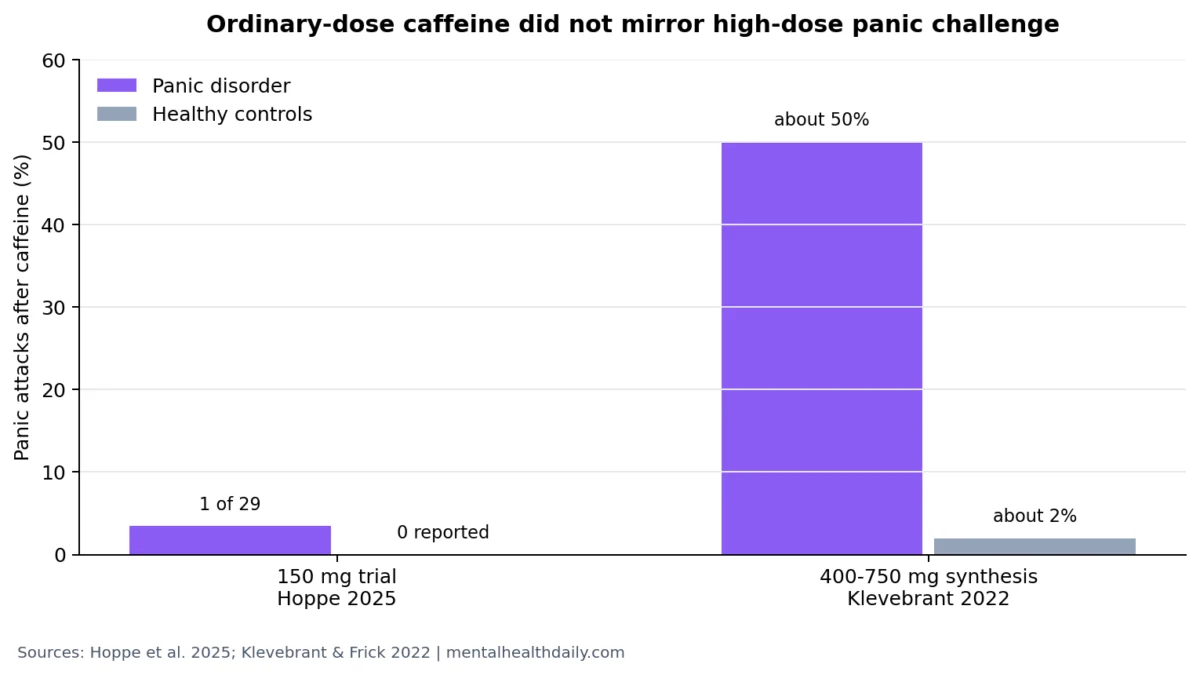
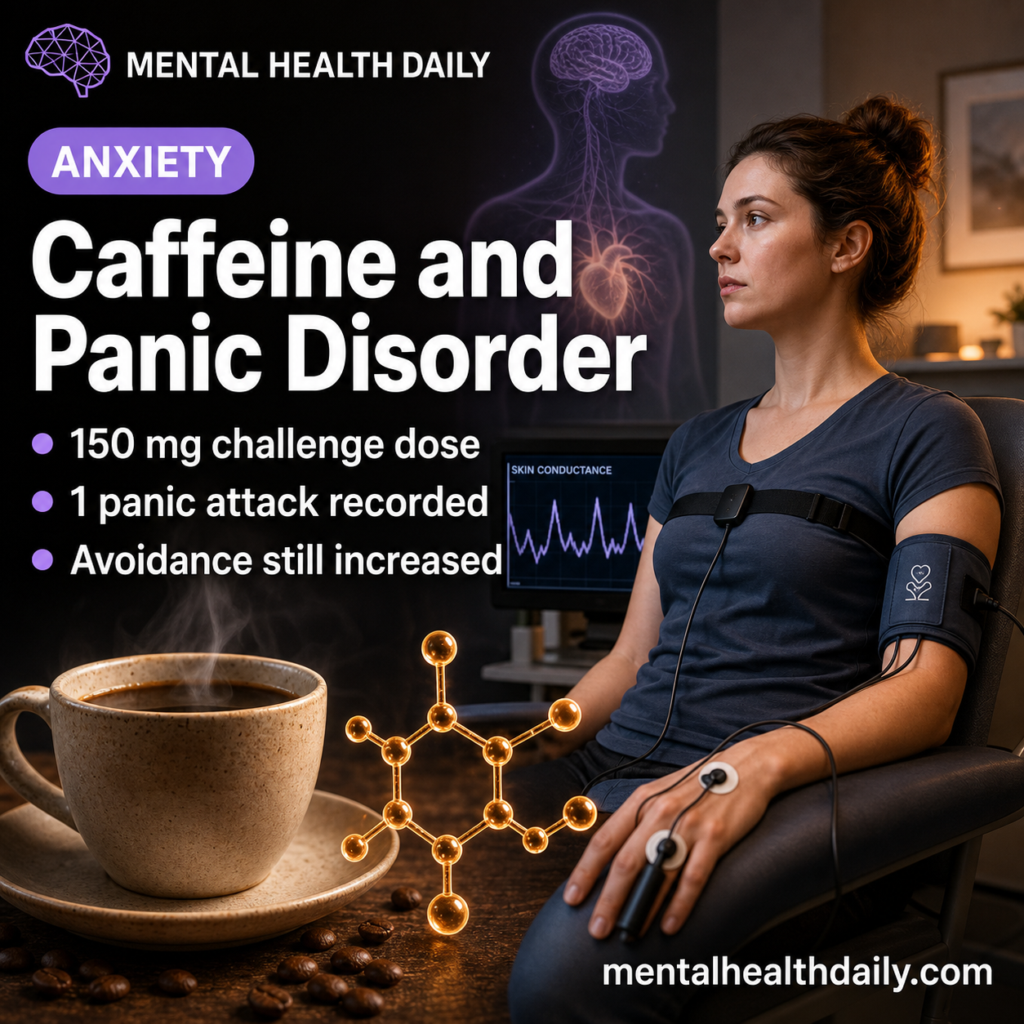
However, the study was quick to clarify that this absence of subjective panic did not equate to caffeine being entirely benign. A more granular analysis revealed that caffeine still exerted tangible effects on the body and behavior. Only one panic attack occurred across the entire trial, in a panic disorder participant after caffeine during an emotional-reactivity task. While this single event is noteworthy, it is statistically too rare to conclude that 150 mg caffeine is generally panicogenic for the group as a whole.
The "narrower story" emerged from physiological data. Skin conductance response, a measure of electrical conductivity of the skin reflecting sweat gland activity and thus sympathetic arousal, significantly increased after caffeine intake. This increase was observed in response to neutral, fearful, and happy faces, indicating that caffeine made the body more reactive to various stimuli, even when participants did not report feeling subjectively more anxious. This physiological arousal, while not translating to panic in this specific context, still signals an altered state of readiness in the body.
Furthermore, caffeine also influenced behavior, particularly in what researchers termed "costly avoidance." This refers to avoiding an option even when that avoidance entails sacrificing a reward. Caffeine increased costly avoidance in both panic disorder patients and healthy controls. Crucially, this effect was not more pronounced or "caffeine-sensitive" in the panic disorder group. This calibrated interpretation suggests that while 150 mg caffeine did not act as a panic trigger, it did subtly nudge both arousal and avoidance systems, indicating a more complex interplay than a simple "safe or unsafe" dichotomy.
Historical Context: The Critical Role of Dose
To fully appreciate the significance of the Hoppe et al. study, it is essential to place it within the broader historical context of caffeine research in panic disorder. The long-standing recommendation for caffeine abstinence largely stems from earlier, foundational studies that utilized much higher "pharmacological challenge" doses of caffeine.
One of the most frequently cited reviews is a meta-analysis by Klevebrant and Frick, which synthesized findings from numerous placebo-controlled studies. Their work reported that caffeine doses roughly equivalent to 4-5 cups of strong coffee, typically ranging from 400 mg to 750 mg, induced panic attacks in approximately 50% of panic disorder participants. In contrast, only about 2% of healthy controls experienced panic attacks at these extreme doses, clearly demonstrating a unique vulnerability in the panic disorder population. Pioneering work by researchers like Charney et al. further solidified the understanding that caffeine could have strong anxiogenic effects in panic disorder patients under these high-dose challenge conditions. It was these compelling findings that firmly established caffeine as a potent panic-provocateur in susceptible individuals and subsequently led to the common clinical advice for complete abstinence.
The new trial by Hoppe et al. does not invalidate this historical evidence but rather refines it. It draws a crucial distinction between an "ordinary dose" (150 mg) and a "pharmacological challenge" (400-750 mg). The evidence, therefore, should not be collapsed across these vastly different exposure levels. A single 150 mg dose is akin to a typical morning coffee, whereas 400-750 mg represents consuming several strong coffees or high-caffeine energy products within a short window. Clinical advice that fails to differentiate between these exposure levels risks being overly broad or unnecessarily restrictive.
This dose-dependent understanding is paramount for practical clinical application. A panic disorder patient who consumes one moderate coffee in the morning and experiences no noticeable symptoms is operating within a different evidence category than a patient who regularly consumes multiple high-caffeine beverages, energy drinks, or caffeine tablets, particularly before entering a crowded, emotionally demanding, or otherwise stressful situation.
Beyond Subjective Anxiety: The Subtle Impact of Arousal and Avoidance
The findings of Hoppe et al. resonate with earlier research, such as that by Totten and France, who administered 200 mg of caffeine or placebo to individuals with panic disorder and controls before various stressors (emotional, physical, cognitive). They similarly reported caffeine-related increases in skin conductance during stressors, without clear evidence of unique vulnerability in panic disorder patients for subjective panic.
This pattern—where subjective panic anxiety remains stable, but physiological arousal and task-related behavior shift—holds significant implications for real-world advice. A person might not feel dramatically more anxious or panicky, yet their body could be more reactive, and their behavior might subtly lean towards avoidance under emotionally loaded conditions. This subtle shift could still contribute to the insidious cycle of panic disorder, where ordinary arousal is misinterpreted as danger, leading to further avoidance and perpetuating the condition.
The fact that these arousal effects manifested during tasks involving processing emotional faces, making approach-avoidance choices, and performing attention tasks is particularly relevant. These activities mirror common daily life scenarios where panic disorder often becomes disabling – during social interactions, travel, work, or moments of conflict. A caffeine effect that increases physiological arousal without immediately triggering resting anxiety can still be clinically significant if it subtly pushes an individual’s behavior towards avoidance, thereby reinforcing the very patterns that maintain panic disorder.
The crossover design of the study further strengthens these insights. Since each participant experienced both caffeine and placebo, stable individual traits like general anxiety levels, panic history, or personality could not fully account for the observed substance effects. The strongest interpretation is therefore a split-level effect: 150 mg caffeine did not increase subjective panic anxiety in the expected manner, but it did alter physiological and behavioral channels that are highly relevant to the development and maintenance of panic-related avoidance.
Implications for Clinical Practice and Patient Guidance
The Hoppe et al. study ushers in a more nuanced approach to caffeine management for individuals with panic disorder, moving away from a rigid "forbidden" stance to a graded, individualized assessment.
Dose as the Primary Boundary: The most critical takeaway is that dose remains the central variable. The reassuring findings of this trial apply specifically to 150 mg of caffeine, a moderate, typical coffee dose, under controlled conditions. These findings should not be extrapolated to high-dose challenge studies (400-750 mg), concentrated energy drinks, caffeine pills, or situations involving repeated use during periods of sleep deprivation. The older, high-dose literature still robustly supports caution for panic-prone patients regarding excessive caffeine intake.
Individualized Assessment Over Universal Prohibitions: Clinicians and patients can now view caffeine as a graded exposure variable. Rather than imposing categorical abstinence, a more evidence-aligned approach involves individual assessment. If a patient with panic disorder notices reliable caffeine-triggered symptoms, their personal experience should be taken seriously, and dose reduction or cessation is warranted. However, if caffeine does not reliably worsen symptoms at ordinary doses, the current evidence does not mandate blanket avoidance.
Practical Experimentation and Symptom Tracking: For patients curious about their own caffeine sensitivity, a practical, controlled experiment, in consultation with a healthcare provider, might involve comparing:
- Complete caffeine abstinence.
- A small dose of caffeine (e.g., 50-75 mg) taken with food.
- A normal dose (e.g., 150 mg) on low-stress days.
During these experiments, it is crucial for individuals to diligently track panic symptoms, avoidance behaviors, sleep quality, and any rebound anxiety. Symptom diaries are invaluable tools, providing more objective data than retrospective memory, especially after a particularly stressful or panic-prone week.
Beyond Immediate Panic: The Role of Sleep: It is also vital to consider the timing of caffeine intake. Late-day caffeine consumption can disrupt sleep, leading to insomnia. Poor sleep, in turn, is a known amplifier of next-day anxiety and can increase vulnerability to panic attacks, not through a direct immediate panic mechanism of caffeine, but through its indirect effect on sleep architecture and subsequent mood regulation. Tracking sleep timing and quality alongside caffeine intake can uncover these delayed, sleep-mediated anxiety patterns.
Context Matters: The overall context in which caffeine is consumed also plays a role. A moderate dose consumed calmly in the morning with breakfast is likely to have a different impact than the same dose consumed rapidly before a highly stressful meeting or a situation known to trigger anxiety.
Study Limitations and Future Directions
While robust in its design, the Hoppe et al. study, like all research, has its limitations. The participants were generally young, habitually consumed low amounts of caffeine, and received a single acute 150 mg dose after a period of abstinence. Therefore, the trial cannot definitively answer questions regarding:
- Chronic caffeine use: How daily, long-term consumption affects panic disorder.
- Caffeine withdrawal effects: The impact of discontinuing regular caffeine use.
- Higher doses from energy drinks or other sources: The effects of highly concentrated caffeine products.
- Older patients: Caffeine metabolism and effects can differ with age.
- Comorbid substance use: Interactions with other medications or substances.
- Pregnancy: The safety of caffeine during pregnancy, especially for those with panic disorder.
- Individuals who already know caffeine reliably provokes their panic symptoms: For these individuals, personal experience should still override group-level statistical findings.
Future research could explore these areas, providing an even more comprehensive understanding of caffeine’s multifaceted relationship with panic disorder. Longitudinal studies examining chronic caffeine intake and its impact on symptom severity, as well as studies focusing on specific vulnerable subgroups, would be particularly valuable.
Conclusion: A Calibrated Perspective
The Hoppe et al. study represents a significant step forward in understanding the complex interplay between caffeine and panic disorder. It provides compelling evidence that a moderate, typical dose of caffeine (150 mg) does not immediately increase subjective anxiety or trigger panic attacks in a general population of individuals with panic disorder, challenging a long-standing clinical dogma. However, the study simultaneously highlights that caffeine is not inert, increasing physiological arousal and subtly influencing avoidance behaviors.
This nuanced finding mandates a shift in clinical advice: from a categorical prohibition to a calibrated, individualized approach that prioritizes dose, personal sensitivity, and overall context. While high-dose caffeine remains a concern for panic-prone individuals, patients and clinicians can now engage in more informed discussions, potentially allowing for moderate caffeine consumption if it does not exacerbate symptoms, while always prioritizing individual well-being and symptom management. This re-evaluation underscores the importance of ongoing research in refining our understanding of mental health conditions and developing evidence-based, patient-centered care strategies.

