

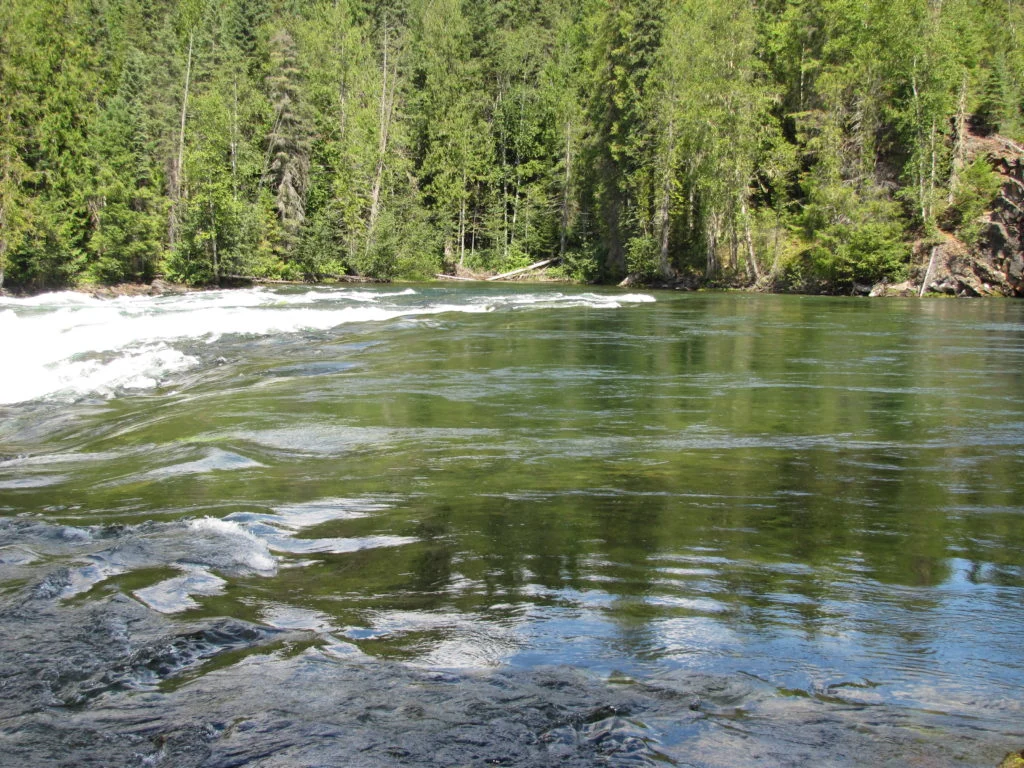
Wells Gray Provincial Park, a vast expanse of protected wilderness nestled within the Caribou Mountains of British Columbia, Canada, stands as a testament to the raw, untamed beauty of the natural world. This sprawling sanctuary, covering an area of approximately 5,250 square kilometers (2,027 square miles), is a dramatic landscape sculpted by millennia of geological activity. It is a realm characterized by rugged mountains, pristine lakes, winding rivers, and dense coniferous forests, all teeming with a remarkable diversity of wildlife. While visitors might encounter iconic inhabitants such as black bears, grizzly bears, moose, elk, and a rich tapestry of avian and aquatic life, the park also harbors a less visible, yet equally abundant, population – over 30 species of mosquitoes, a reminder of the park’s vibrant and complex ecosystem.
However, it is the park’s extraordinary abundance of waterfalls that truly defines its identity and draws visitors from across the globe. Wells Gray is often referred to as the "Land of Waterfalls," a moniker earned through its unique geological history, which has resulted in approximately 39 named major waterfalls and countless smaller, unnamed cascades. Among these natural wonders, Helmcken Falls stands as a particularly awe-inspiring spectacle. Plunging an astonishing 141 meters (463 feet), it proudly holds the distinction of being the fourth-largest waterfall in Canada, dwarfing even the world-renowned Niagara Falls, which stands at approximately 51 meters (167 feet). The sheer volume and power of water thundering over the precipice at Helmcken Falls create a sensory experience that is both humbling and exhilarating.
The Geological Tapestry of Wells Gray
The genesis of Wells Gray Park’s spectacular waterfall concentration can be traced back to the region’s volcanic past. Millions of years ago, successive lava flows from ancient volcanoes formed a thick basalt plateau. As glaciers retreated following the last ice age, they carved deep valleys and canyons into this plateau. Rivers, fed by glacial meltwater, then flowed across these carved landscapes. Where these rivers encountered the edges of the basalt layers, they found themselves with nowhere to go but down, creating the dramatic cascades that characterize the park. This geological legacy has gifted Wells Gray with an exceptional density of waterfalls, each with its own unique charm and character, from the thunderous roar of Helmcken Falls to the delicate spray of smaller, more secluded cataracts.
Helmcken Falls: A Monument to Natural Power
Helmcken Falls, the park’s most iconic feature, is a powerful demonstration of nature’s artistry and force. The water from the Murtle River plunges over a sheer cliff face, its descent creating a perpetual mist that can be seen and felt from considerable distances. The sheer scale of the falls is difficult to comprehend until one stands before it, dwarfed by its immensity. The constant roar of the water, the cool spray that envelops onlookers, and the breathtaking visual spectacle combine to create an unforgettable experience. The falls are particularly dramatic in the spring and early summer when snowmelt swells the Murtle River, maximizing the water flow and amplifying the power of the cascade. In winter, the scene transforms into a frozen wonderland, with ice formations creating intricate sculptures around the cliff face.
Lessons from the Cascade: The Ephemeral Nature of Existence
Beyond their aesthetic grandeur, waterfalls offer profound insights into the fundamental nature of existence. Observing the wild cascade of a river, breathing in the cool mist, and feeling the ground tremble with the force of the water, one can begin to perceive a waterfall not merely as a geological phenomenon, but as a living entity. The very word "waterfall" speaks to a dynamic relationship: it is the event of a specific river arriving at a particular location, the immensely powerful and beautiful shape water assumes for a fleeting moment in its ceaseless journey downstream.
This observation can be extended to a broader philosophical contemplation of time and form. If we expand our temporal perspective, it becomes evident that all phenomena, including ourselves, are essentially temporary events, much like a waterfall. Just as a waterfall represents a momentary configuration of water, a tree can be seen as the shape that sunlight, water, and certain chemical elements take for a few centuries. Similarly, animals, including humans, represent the transient forms that food, water, and air assume for less than a century. In this context, a waterfall becomes a potent metaphor for the story of life itself, written in an instant of perpetual motion and change.
The Deceptive Calm Before the Storm
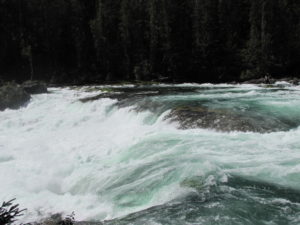
A striking characteristic observed at many waterfalls is the deceptive stillness of the water preceding the precipice. Often, the water upstream appears placid, smooth, and calm, offering little indication of the dramatic and chaotic spectacle that awaits just beyond. The current accelerates subtly, almost imperceptibly, until the river suddenly surrenders to the fall in a paroxysm of energy, chaos, and raw beauty.
This phenomenon can serve as a powerful analogy for various aspects of human experience, both individual and societal. In personal lives, as we navigate the passage of time and the process of aging, life can often proceed with a sense of smooth continuity. However, without warning, unforeseen challenges such as illness or the gradual decline of old age can disrupt this equilibrium, leading to an accelerating rate of systemic failure and increasing difficulty.
On a societal level, the analogy holds equally true. The pace of technological advancement and social change can gradually and smoothly accelerate, much like the river approaching a waterfall. However, there is a point at which a threshold may be crossed, leading to unforeseen consequences and societal upheaval, a state of emergent chaos. Individuals positioned further upstream, so to speak, might still perceive their circumstances as stable and predictable. Meanwhile, those closer to the edge may already be caught in the maelstrom.
The Importance of Vigilance and Attuned Awareness
The lesson embedded in this natural observation is the critical importance of vigilance and attuned awareness. Just as a swimmer downstream might not perceive the imminent danger until it is too late, a society or an individual failing to recognize the subtle acceleration of change and the approaching thresholds risks being overwhelmed. The ability to "listen with an alert mind," as the original text suggests, means being sensitive to the early signs of impending shifts, even when outward appearances remain calm. This proactive awareness allows for the possibility of navigating towards safety, of "swimming to the bank" before being swept away by the torrent.
The existence of these natural lessons within the park underscores the profound connection between humanity and the natural world. Wells Gray Provincial Park, with its majestic waterfalls and diverse ecosystems, provides not only a sanctuary for wildlife but also a vital space for human introspection and learning.
Broader Impact and Implications
The preservation of areas like Wells Gray Provincial Park has far-reaching implications. These protected zones serve as critical reservoirs of biodiversity, housing species that might otherwise face extinction due to habitat loss and human encroachment. The ecological services provided by these vast natural areas, such as carbon sequestration, water purification, and climate regulation, are invaluable.
Furthermore, these landscapes offer unparalleled opportunities for scientific research. Geologists study the volcanic and glacial history to understand Earth’s processes, biologists monitor wildlife populations and ecosystem health, and climatologists analyze long-term environmental changes. The data collected from such pristine environments provides essential benchmarks for understanding the impact of human activities on the global environment.
For individuals and communities, these natural spaces offer crucial benefits for physical and mental well-being. The restorative power of nature, the opportunity for recreation, and the sense of connection to something larger than oneself are increasingly recognized as vital components of a healthy society. The philosophical insights derived from contemplating natural phenomena, as exemplified by the lessons of the waterfalls, contribute to a deeper understanding of our place in the universe and our responsibilities towards it.
Future Considerations and Management
Effective management of such a vast and ecologically sensitive area as Wells Gray Provincial Park requires a delicate balance. Parks Canada and provincial park authorities continuously work to mitigate threats such as climate change, invasive species, and the impacts of increasing visitor numbers. Strategies often include designated trail systems to minimize erosion and habitat disturbance, educational programs to foster environmental stewardship, and ongoing research to inform adaptive management practices.
The ongoing challenge lies in ensuring that the park’s natural integrity is maintained for future generations while also allowing for public access and enjoyment. The "lessons in nature" that Wells Gray offers are not static; they are dynamic reflections of processes that are constantly unfolding. By preserving these landscapes, we preserve not only the physical beauty but also the profound wisdom they hold. The roar of Helmcken Falls, the deceptive calm of the Murtle River upstream, and the rich biodiversity of the surrounding forests all contribute to a powerful narrative about the interconnectedness of life, the inevitability of change, and the enduring importance of mindful observation.

