

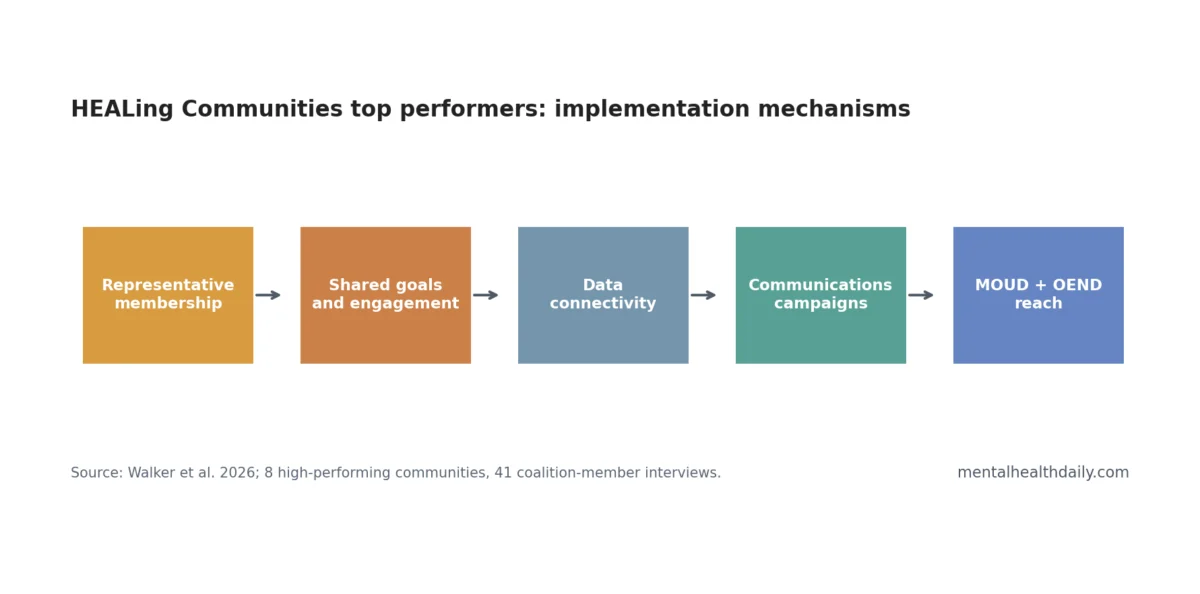
A groundbreaking 2026 qualitative case study, examining eight high-performing communities within the extensive HEALing Communities Study, has unveiled critical operational mechanisms for successful opioid-response implementation, shifting focus from simple urban-versus-rural distinctions to actionable collaborative strategies. This pivotal research underscores that effective coalitions thrive when their collaborative efforts are meticulously translated into tangible service reach for Medication for Opioid Use Disorder (MOUD) and comprehensive Overdose Education and Naloxone Distribution (OEND). The findings, published amidst ongoing national efforts to combat the opioid crisis, offer a vital playbook for communities striving to enhance their public health interventions.
The Enduring Challenge of the Opioid Crisis and the HEAL Initiative
The United States has grappled with a devastating opioid crisis for over two decades, a public health emergency that has claimed hundreds of thousands of lives and profoundly impacted communities nationwide. According to the Centers for Disease Control and Prevention (CDC), drug overdose deaths, largely driven by opioids, continue to be a leading cause of injury-related mortality, with recent years seeing staggering numbers that underscore the urgency of effective prevention and treatment strategies. In 2022, for instance, provisional data indicated over 107,000 drug overdose deaths, with opioids implicated in the vast majority. This relentless toll necessitated a robust, coordinated national response, leading to the establishment of initiatives like the National Institutes of Health (NIH) HEAL (Helping to End Addiction Long-term) Initiative. Launched in 2018, the HEAL Initiative is a multi-agency effort designed to speed scientific solutions to stem the national opioid public health crisis, focusing on improving prevention and treatment strategies for opioid misuse and addiction, and enhancing pain management.
The HEALing Communities Study (HCS), a cornerstone of the broader HEAL Initiative, was specifically designed to test the impact of a community-based intervention to reduce opioid overdose deaths across highly affected states, including Kentucky, Massachusetts, New York, and Ohio. This ambitious study engaged over 67 communities, employing a stepped-wedge cluster randomized trial design to evaluate the effectiveness of an evidence-based intervention package. The package aimed to increase the uptake of proven interventions like MOUD and OEND, recognizing that while the efficacy of these treatments is well-established, their widespread implementation remains a significant challenge. MOUD encompasses evidence-based medications such as buprenorphine, methadone, or extended-release naltrexone, which are proven to reduce opioid-use-disorder morbidity and mortality. OEND involves training individuals to recognize an opioid overdose and distributing naloxone, the life-saving opioid-overdose reversal medication. The real-world hurdle lies in making these critical interventions available, acceptable, and accessible across disparate health systems, correctional facilities, emergency services, harm-reduction programs, and local community organizations.
A Deep Dive into Top-Performing Communities: Methodology and Selection
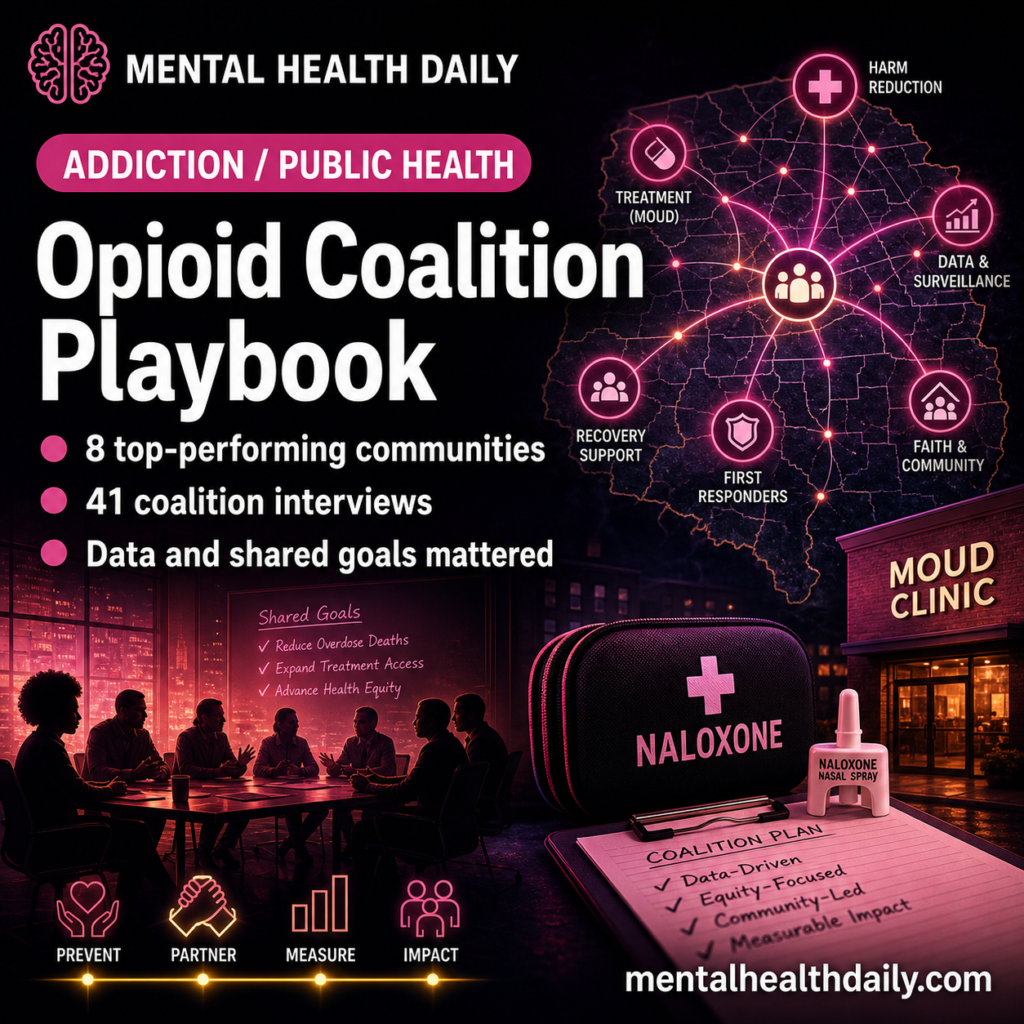
The 2026 qualitative case study, led by Walker et al., adopted a "positive deviance" design, a research methodology that focuses on identifying unique behaviors and strategies employed by unusually successful individuals or groups within a community who achieve better outcomes than their peers, despite facing similar challenges. Rather than averaging across all cases, this approach zeroes in on outliers to uncover actionable insights. For this study, researchers meticulously selected eight high-performing waitlist-control communities from the larger HEALing Communities Study cohort. This selection was strategic, ensuring representation from both urban and rural settings, with the top-performing urban and rural community chosen from each of the four study sites (Kentucky, Massachusetts, New York, Ohio).
Performance was rigorously assessed based on an average ranking across four crucial implementation metrics: the percentage of selected OEND strategies successfully implemented, the percentage of selected MOUD strategies successfully implemented, the population-adjusted reach of OEND, and the population-adjusted reach of MOUD. This comprehensive evaluation ensured that the selected communities were indeed exemplary in translating strategic intent into measurable public health impact. To gather qualitative data, the research team conducted 41 in-depth interviews with coalition members from these top-performing communities. These interviews captured diverse perspectives, with 17 interviewees representing rural communities and 24 from urban environments. It is important to note the demographic profile of the interviewees: predominantly female, non-Hispanic, White, and college-educated. While providing rich insights from those directly involved in coalition leadership, this demographic composition is a crucial factor for interpreting the study’s findings regarding broader community representativeness and potential blind spots.
Four Pillars of Success: Key Implementation Mechanisms Identified
The in-depth analysis of interview data revealed four overarching internal themes or "implementation mechanisms" that were consistently present in the high-performing communities, transcending geographical distinctions:
-
Representative Membership and High Engagement: The first and most critical mechanism identified was the formation of coalitions with truly representative membership, coupled with high engagement aligned with the coalition’s overarching goals. This was not merely a superficial nod to diversity but a deeply functional aspect of their success. Interviewees detailed coalitions that strategically included a wide array of stakeholders: physicians, leaders from shelters and churches, hospital administrators, housing service providers, law enforcement agencies, emergency medical services (EMS) personnel, public health department officials, and crucially, individuals with lived experience or direct connections to local substance-use-disorder work. This breadth of representation proved vital because the pathways for delivering MOUD and naloxone are multifaceted and complex. Naloxone distribution, for example, requires engagement with pharmacies, jails, emergency responders, syringe-service programs, homeless shelters, and informal family networks. Similarly, MOUD implementation necessitates collaboration with prescribers, robust referral systems, transportation solutions, targeted stigma reduction campaigns, and consistent follow-up care. The practical implication of such representative membership was profound: it granted the coalition unparalleled access to diverse community settings, fostered essential inter-agency relationships, and provided a rich reservoir of practical, ground-level knowledge about where service delivery faced bottlenecks or could be most effectively expanded.
-
Shared Goals and Coordinated Vision: The second internal theme highlighted the power of genuine collaboration and a unified vision in reducing fragmentation across agencies. Coalition members consistently described an environment of limited friction and a collective understanding that individual, evidence-based practices were not isolated projects but integral components of a larger, structural response to the opioid crisis. This distinction is paramount in opioid-response work, where a community might technically possess naloxone distribution boxes, MOUD prescribers, jail-based programs, peer outreach initiatives, and media campaigns, yet still fail to make a significant impact if these efforts operate in silos. Shared goals provided a clear roadmap, making the entire system "legible": defining who was responsible for what, identifying which populations were being reached, establishing clear referral pathways, and pinpointing remaining service gaps. The tangible value of this coordination was evident: if EMS distributed naloxone but lacked robust connections to treatment referral, overdose reversals would become disconnected from long-term continuing care. If MOUD capacity existed but community stigma blocked uptake, that capacity would not translate into actual patient utilization. Shared goals ensured that each piece of the puzzle contributed to a coherent, effective whole.
-
Data Connectivity Driving Strategic Decisions: The HEALing Communities Study process itself emphasized facilitation, data-driven decision-making, and communications campaigns. The qualitative study further revealed that top-performing communities distinguished themselves by their sophisticated use of structured data connectivity and data sharing to dynamically guide strategy selection. Data connectivity extended far beyond simply having a dashboard; it meant that coalitions possessed the analytical capacity to visualize where overdoses were occurring, where service gaps persisted, the reach of naloxone distribution, points of referral bottlenecks, and the actual penetration of MOUD within their populations. Critically, they used this real-time data to adjust and refine their strategies in response. This mechanism explains why mere coalition enthusiasm, while positive, is often insufficient. Without actionable data, a coalition might inadvertently choose visible but ultimately low-yield activities. With usable, integrated data, however, resources could be precisely aimed toward the specific settings and demographic groups where MOUD or OEND reach was demonstrably lacking, maximizing impact and efficiency.
-
Strategic Communications Campaigns as Implementation Support: The fourth intervention-linked theme was the consistent deployment of multi-channel communications campaigns. These campaigns were far from "soft add-ons"; they were integral tools that significantly increased awareness, acceptance, and uptake of opioid-use-disorder and MOUD services. In the context of opioid work, communications campaigns possess the unique ability to fundamentally alter the operating environment. Communities need to be informed about where naloxone is available, which organizations provide legitimate treatment, the efficacy and safety of MOUD as evidence-based care, and whether local services are safe and welcoming to approach. Effective campaigns demystified MOUD, countered stigma, and disseminated vital information about access points, thereby breaking down barriers to care and fostering a more supportive public perception of addiction treatment and harm reduction.
Beyond the Urban-Rural Divide: A Nuanced Perspective
A significant finding from the study challenged conventional wisdom regarding geographical divisions in public health interventions. Despite including both urban and rural high-performing communities, the researchers reported no major thematic differences linked to the urban-rural dichotomy. While geography undeniably shapes the practicalities of implementation—affecting transportation, resource distribution, and community structure—the common mechanisms identified in top performers cut across this traditional label. The study authors cautioned, however, that the binary classification might obscure subtle cultural and practical variations. Some communities designated as "urban" might have relatively small populations or function more akin to rural environments in terms of service delivery challenges. For future implementation planning, the study suggests that "service topology"—the specific configuration and interconnectedness of services within a given area—may be a more salient factor than a simplistic urban/rural code. The operational takeaway is clear: rather than assuming geographical dictates implementation capacity, communities should focus on ensuring their coalitions possess the right members, shared goals, data access, robust service partnerships, and effective communication channels.
Implications for Policy, Practice, and Future Research
The findings of this 2026 qualitative study carry significant implications for policymakers, public health practitioners, and researchers dedicated to combating the opioid crisis. For policy makers, these insights suggest that federal and state funding mechanisms should increasingly prioritize and incentivize the development of multi-sectoral coalitions that demonstrate representative membership, clear shared goals, robust data-sharing infrastructure, and strategic communication capabilities. Funding should move beyond simply supporting individual programs to fostering integrated, data-driven delivery systems.
For public health practitioners and community leaders, the study provides a pragmatic blueprint. It underscores the importance of intentional coalition building—not just gathering stakeholders, but actively cultivating shared vision, fostering trust, and ensuring that diverse voices, including those with lived experience, are at the table and actively engaged. The emphasis on data connectivity highlights the need for user-friendly data systems that can track key metrics, identify gaps, and inform real-time adjustments.
However, the researchers also offered a critical perspective on the study’s evidence strength and limitations. As a qualitative analysis of top performers, it can identify plausible implementation mechanisms and transferable design principles, serving as a "playbook generator." It cannot, however, definitively prove that any single coalition feature caused higher MOUD or OEND reach, nor can it demonstrate whether lower-performing communities uniformly lacked these themes. The demographic profile of interviewees—mostly non-Hispanic White, highly educated, and coalition-connected—means the analysis might underrepresent the perspectives of people with opioid use disorder, their families, unaffiliated community members, or those who avoid services due to stigma or past negative experiences.
These limitations do not diminish the practical utility of the findings but rather reinforce the need for continued vigilance regarding equity of access. A seemingly well-organized coalition might still inadvertently overlook individuals at the highest risk of overdose who face systemic barriers such as transportation gaps, restrictive clinic hours, fear of law enforcement contact, or medication stigma. Future implementation audits must therefore directly measure whether coalition membership correlates with actual MOUD initiation rates, naloxone receipt, and ongoing reachability for individuals after an overdose event.
Furthermore, the study emphasizes the importance of outcome discipline. Naloxone distribution, MOUD referrals, treatment starts, retention rates, and ultimately, reductions in overdose deaths are related but distinct outcomes. A coalition might excel at one step while faltering at another. The most effective model tracks the entire "pathway to recovery and prevention," ensuring that outreach successes do not mask initiation gaps, and treatment starts do not obscure poor follow-up or retention challenges. This comprehensive pathway view is precisely why the qualitative themes are so valuable: they pinpoint potential breaking points across referral, initiation, medication access, follow-up, and overdose-prevention handoffs. Each critical handoff, the study concludes, requires a designated owner, a measurable metric, and a proactive repair plan.
A Checklist for Opioid Coalition Implementation
In conclusion, the 2026 qualitative study offers a calibrated claim: coalitions do not automatically work, but they become highly effective delivery systems for evidence-based practices when specific conditions are met. The safest and most actionable takeaway is a clear checklist of essential implementation conditions for any community coalition aiming to make a tangible impact on the opioid crisis:
- Representative and Engaged Membership: Does the coalition include a diverse array of stakeholders from health systems, social services, law enforcement, and crucially, individuals with lived experience, all actively working towards shared goals?
- Shared Vision and Goals: Is there a clear, unified understanding among members about their collective objectives, ensuring that individual efforts contribute to a cohesive, coordinated strategy rather than fragmented projects?
- Robust Data Connectivity: Does the coalition have access to timely, actionable data on overdoses, service gaps, intervention reach, and referral bottlenecks, and is this data actively used to inform and adjust strategies?
- Strategic Communications Campaigns: Are multi-channel communication efforts in place to raise awareness, reduce stigma, and clearly inform the community about the availability, legitimacy, and safety of MOUD and OEND services?
- Defined Service Partners and Pathways: Are clear partnerships established across all necessary sectors (e.g., pharmacies, jails, EMS, treatment centers) to ensure seamless referrals and access to MOUD and naloxone?
- Outcome-Oriented Tracking: Is the coalition tracking the entire pathway of care, from initial outreach and referral to treatment initiation, retention, and sustained overdose prevention, with mechanisms to identify and address bottlenecks at each stage?
This study serves as a powerful testament to the idea that operational excellence, driven by thoughtful collaboration and data-informed decision-making, is the true determinant of success in the complex fight against the opioid epidemic, rather than simplistic geographical labels.

