

The scientific community, and the public alike, are often presented with a common critique of nutrition research: that observational studies, which form a significant basis for dietary recommendations, are inherently unreliable due to their questionable credibility. This assertion, frequently amplified by industry-funded reports, raises crucial questions about how we form our understanding of diet and disease, and whether the standards applied to pharmaceutical interventions are appropriately transferred to the complex realm of food and health.
The Challenge of Dietary Research
Randomized controlled trials (RCTs) are widely considered the gold standard for evaluating interventions, particularly in medicine. Their ability to isolate variables and establish causality makes them highly reliable for assessing the efficacy of drugs. However, applying this rigorous methodology to diet presents significant logistical and ethical hurdles.
Dietary diseases, such as cardiovascular disease and certain cancers, often develop over decades. This necessitates long-term studies, which are challenging to conduct with dietary interventions. Unlike pharmaceuticals, where a placebo can be administered, it is virtually impossible to create a convincing "placebo food" that participants can consume without knowing their assigned diet. Furthermore, maintaining adherence to specific dietary regimens over many years, especially when dealing with complex dietary patterns, proves to be an exceptionally difficult task for participants.
Given these constraints, researchers must rely on observational studies. These studies involve monitoring large populations over extended periods, meticulously recording their dietary habits and tracking the incidence of various diseases. By identifying correlations between specific foods or dietary patterns and health outcomes, these studies provide valuable insights into potential dietary influences on health.
Bridging the Evidence Gap: Observational vs. Randomized Data
Despite the inherent limitations of observational studies, a notable body of research suggests that their findings are not as divergent from RCTs as critics often imply. A comprehensive comparison of data obtained from population-based observational studies and randomized trials indicates a striking degree of concordance. On average, the effects observed were not only in the same direction but also of a similar magnitude in approximately 90% of the treatments examined. This suggests that, despite methodological differences, observational data often reflects the underlying truth of dietary impacts.
However, historical discrepancies have fueled skepticism. The case of hormone replacement therapy (HRT), specifically Premarin, serves as a pertinent example. Initial observational studies indicated that women taking Premarin experienced fewer heart attacks. In contrast, subsequent randomized controlled trials revealed the opposite, suggesting an increased risk of heart disease. A closer examination of the data revealed that the discrepancies were largely attributable to the timing of Premarin initiation relative to the women’s menopausal status. Once these confounding factors were accounted for, the findings from both types of studies converged, demonstrating a more consistent picture.
The Differential Burden of Proof: Drugs vs. Diet
Even if observational trials are considered to provide a lower quality of evidence compared to RCTs, the necessity for the same level of certainty in dietary recommendations may not be warranted. When deciding whether to prescribe a drug, the stakes are exceptionally high. Prescription drugs are a leading cause of death in both Europe and the United States, contributing to an estimated 100,000 American deaths annually from side effects, even when taken as directed. The immense risks associated with pharmaceuticals demand robust, randomized, double-blind, placebo-controlled trials to ensure that benefits unequivocally outweigh the potential harms. The principle of "playing with fire" necessitates absolute certainty when prescribing such potent interventions.
In contrast, advising individuals to consume more broccoli or reduce their intake of soda carries a fundamentally different risk profile. The potential for harm from these dietary suggestions is minimal, while the potential for benefit is significant. Therefore, a less stringent level of proof, achievable through well-conducted observational studies, may be sufficient to guide public health recommendations in the realm of nutrition.
The Influence of Industry: Undermining Dietary Guidelines
The critique of observational studies often serves as a strategic tool to undermine established dietary guidelines. A prime example is a paper funded by the sugar industry, which concluded that dietary guidelines advising reduced sugar consumption were untrustworthy due to their reliance on "low-quality evidence." This approach exemplifies what critics describe as "the inappropriate use of the drug trial paradigm in nutrition research."
While proponents of this critique might argue that adherence to established frameworks like the GRADE (Grading of Recommendations Assessment, Development and Evaluation) system, which is widely used to assess the quality of evidence for clinical practice guidelines, justifies their conclusions, alternative tools exist. Systems like NutriGrade have been developed specifically to evaluate the evidence base in nutrition research. NutriGrade uniquely incorporates a consideration for funding bias, systematically downgrading studies with industry sponsorship. This suggests that the choice to employ a drug-centric evaluation method might be less about scientific rigor and more about achieving a predetermined outcome favorable to industry interests.
Innovative Frameworks for Nutrition Evidence
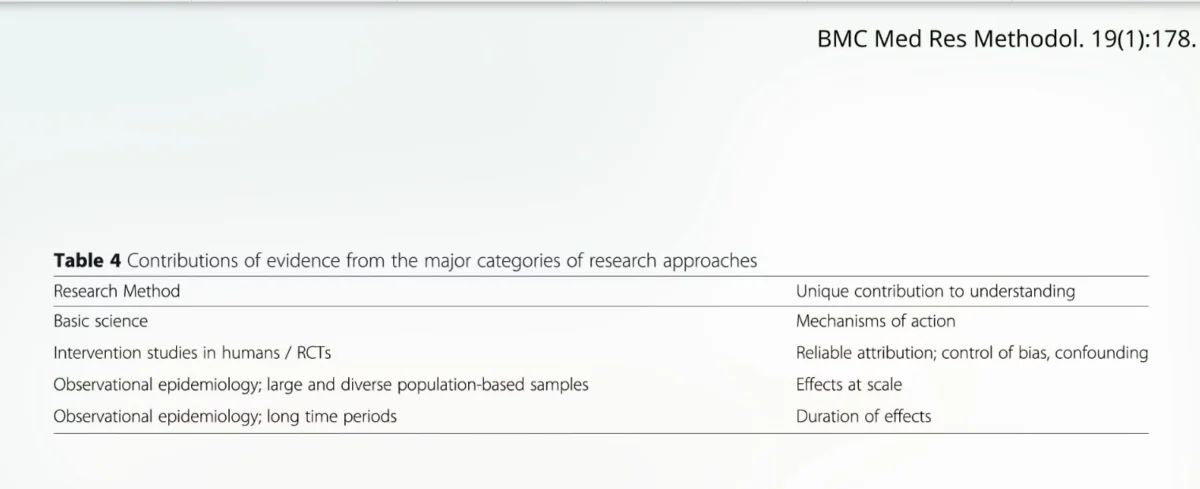
Beyond NutriGrade, other frameworks are emerging to address the unique challenges of evaluating nutritional evidence. HEALM (Hierarchies of Evidence Applied to Lifestyle Medicine) is one such initiative. It was developed precisely because existing tools, such as GRADE, are not optimally suited for questions that cannot be definitively answered through randomized controlled trials. HEALM acknowledges that each research methodology offers distinct contributions, and a comprehensive understanding requires integrating insights from various sources.

The synergy between different research methods is crucial. Laboratory studies can elucidate precise biological mechanisms, RCTs can establish cause-and-effect relationships, and large-scale population studies can track the long-term health trajectories of hundreds of thousands of individuals. This multi-faceted approach is essential for building a robust understanding of nutrition’s role in health.
The Trans Fat Success Story: A Testament to Combined Evidence
The successful campaign against trans fats offers a compelling illustration of how diverse research methodologies can converge to drive significant public health improvements. Randomized controlled trials provided evidence that trans fats exacerbate risk factors for heart disease. Simultaneously, large observational studies demonstrated a clear association between higher trans fat consumption and increased rates of heart disease within populations.
The combined weight of this evidence built an irrefutable case against the widespread consumption of trans fats. This led to their substantial removal from the U.S. food supply, a public health victory credited with preventing an estimated 200,000 heart attacks annually. While it is true that definitive RCTs examining hard endpoints like heart attacks and mortality from trans fat consumption were not feasible—as it would have required ethically dubious long-term trials of people consuming large quantities of trans fats—the available evidence was more than sufficient to justify decisive action. This scenario underscores the principle that "you can’t let the perfect be the enemy of the good when there are tens of thousands of lives at stake."
Setting Public Health Standards: Beyond Ideal Evidence
Public health officials often must navigate complex decisions based on the best available balance of evidence, even when that evidence is not perfect. Consider the establishment of tolerable upper limits for environmental toxins like lead and PCBs. These standards are not derived from randomized trials where children are deliberately exposed to varying levels of lead to observe the extent of subsequent cognitive impairment. Such experiments are ethically unconscionable. Instead, public health decisions are informed by a synthesis of evidence from multiple sources, including observational studies, animal models, and case reports, to create the most accurate approximation of risk.
Industry Tactics: Mimicking Drug Critiques for Dietary Guidelines
The pattern of industry-funded research seeking to discredit dietary guidelines is not limited to sugar. The meat industry has also employed similar tactics. A meat industry-funded institution hired the same individual who was instrumental in the design of the sugar industry-funded study. This individual subsequently became the lead author of a paper that, using the GRADE methodology, concluded that the evidence supporting dietary guidelines to reduce red and processed meat consumption was of "low quality." This predictable outcome, despite current guidelines recommending meat limitation, highlights a potential bias in applying a framework designed for pharmaceuticals to the nuances of dietary recommendations.
The Irony of Sugar Industry Arguments
An ironic aspect of the sugar industry-funded paper lies in its use of the historical inconsistency of sugar consumption recommendations over a 20-year period to question the quality of current guidelines. While guidelines are expected to evolve as scientific understanding advances, the paper conveniently overlooked the fact that significant funding for a key outlier guideline in 2002—which suggested a quarter of the diet could be sugar without leading to deficiencies—came from an institute funded by major sugar-producing and processed food companies. This same industry group then used the perceived inconsistencies, partly influenced by their own funding, to argue that the guidelines are unreliable. This represents a self-serving manipulation of evidence to cast doubt on public health advice.
Broader Implications for Public Health and Consumer Trust
The persistent attempts by industries to discredit nutrition science through critiques of observational studies have significant implications for public health and consumer trust. By demanding an unattainable level of certainty for dietary recommendations, these industries create confusion and erode confidence in established health advice. This can lead to individuals making dietary choices that are detrimental to their long-term health, potentially increasing the burden of chronic diseases.
The discourse surrounding the credibility of nutritional evidence is thus a critical battleground. It highlights the need for:
- Nuanced Evaluation Frameworks: Developing and utilizing assessment tools specifically designed for nutrition research, like NutriGrade and HEALM, that account for the unique challenges and strengths of different study designs.
- Transparency in Funding: Greater transparency regarding the funding sources of scientific research is essential to identify and mitigate potential conflicts of interest.
- Public Education: Educating the public about the nature of scientific evidence, the different types of studies, and the limitations of applying pharmaceutical standards to dietary recommendations.
- Vigilance Against Misinformation: Public health organizations and media outlets must remain vigilant in identifying and counteracting industry-driven misinformation campaigns that seek to distort scientific consensus.
The debate over observational studies in nutrition is not merely an academic exercise; it directly impacts the health and well-being of populations worldwide. Understanding the motivations behind critiques and employing appropriate evaluation methods are crucial steps in ensuring that dietary guidance remains evidence-based and serves the public interest.
This article is the third in an eight-part series exploring the impact of various industries on dietary and health guidelines. Previous installments include "The Corporate Playbook behind Undermining Dietary Guidelines" and "Big Sugar Twists the Science behind the Dietary Guidelines." Future articles will delve into the recent analyses of meat consumption and their implications.

