

"Consciousness is the only valuable thing. Money is not," states Chinese electronic musician Howie Lee, his words carrying the weight of profound realization. Our conversation unfolds on a tranquil bench in the urban garden of Paris’s Bois de Vincennes, overlooking the serene Lac Daumesnil. Behind us, nestled beyond a verdant expanse of tall grass and ancient oaks, stands the Kagyu-Dzong center – a fitting sanctuary for a producer whose latest LP, At The Drolma Wesel-Ling Monastery, emerged from the remote mountains of northeastern Tibet. Released in April 2024, the album, infused with the potent vibrations of Vajrayana mantras, irrevocably reshaped Lee’s artistic identity.
Lee’s philosophy echoes the Buddhist concept of "original mind," or "buddha-nature," suggesting that true understanding is not about acquiring new knowledge but about uncovering what already resides within. "I think Buddhist teachings are like, you open a little narrow door, then you look inside. There is always so much you find," he muses. "Then you go, you become, but in the end, you figure out there’s actually no new knowledge gained. You’ve already had the knowledge all along." This journey of unlearning, of clearing the veils that obscure innate purity, is akin to the transient clouds parting to reveal the steadfast sun.
For two decades prior to this transformative experience, Lee had delved into the philosophical depths of Buddhism and Daoism, a journey that ran parallel to the development of his distinctive electronic music voice. Texts such as the Heart Sutra offered profound insights: "There is nothing you can really grab hold of. It’s all ever-changing, and nothing is solid," he explains. His engagement with these traditions remained largely intellectual until the COVID-19 pandemic ushered in an unexpected opportunity. Nyema, a Tibetan photographer and designer with whom Lee had a prior connection, reached out during this period of global uncertainty. She proposed a visit to Drolma Wesel-Ling, a monastery where she had previously undertaken a residency, extending an invitation that Lee describes as "sort of magic."
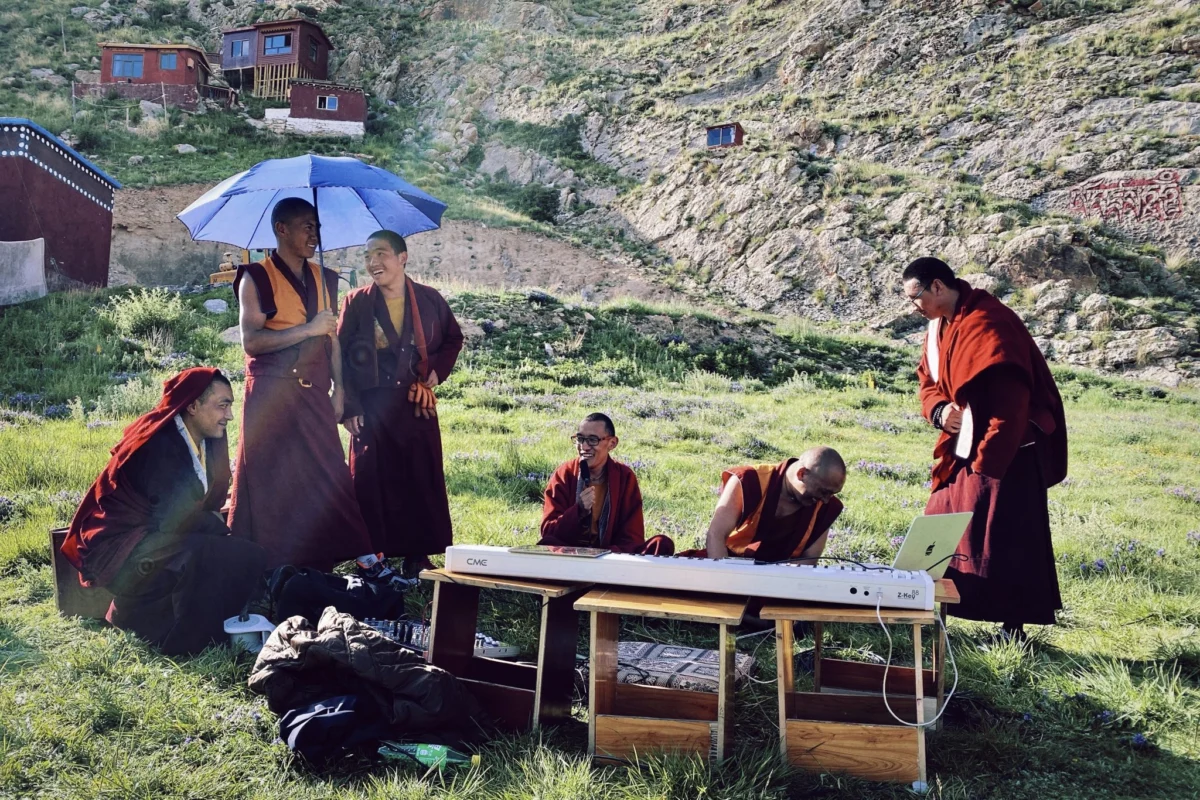
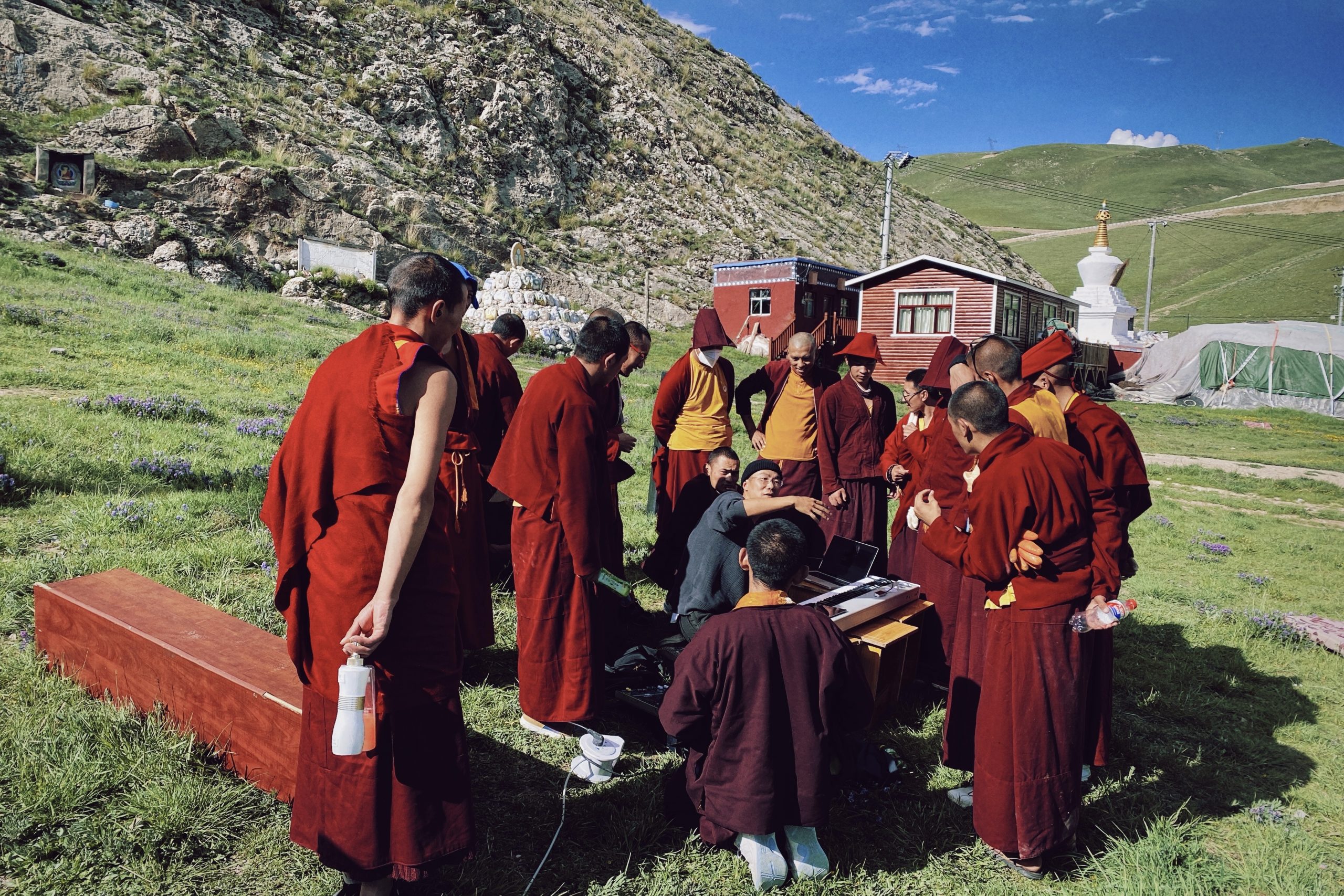
The serendipitous nature of his arrival at the monastery was underscored by the visual evidence Lee shared: videos depicting the serene religious site nestled at the foot of a dramatic, mist-shrouded mountain peak. In one poignant clip, eighteen monastics gather, their faces alight with curiosity and joy as they engage with a makeshift synthesizer and laptop set up in the open air. They take turns improvising, their laughter mingling with the electronic sounds, creating a spontaneous symphony. This collaborative exchange highlights a reciprocal relationship: as much as an artist shapes their work, the work, in turn, shapes the artist. The two weeks spent at Drolma Wesel-Ling marked a pivotal point, initiating a deeper exploration of Buddhist principles within Lee’s own life.
Approximately a year later, Lee embarked on another significant journey to Indonesia with a Kagyu lama. The occasion was Vesak, the celebration of Buddha’s birth. While visiting the ruins of a Buddhist academy, once the intellectual crucible of the 11th-century master Atisha, Lee was presented with the profound opportunity to take refuge vows. This ceremony marked his formal entry into Buddhism, a path he felt intrinsically connected to. He reaffirmed this commitment the following year at Mount Jizu in Dali, joining a local master during a fortuitous refuge ceremony. It was during this time that he received the dharma name Wú (無), a Chinese character translating to "none" or "nothing," a fitting appellation for an artist exploring the ephemeral nature of existence and sound.
The resultant album, At The Drolma Wesel-Ling Monastery, is a masterful fusion of ancient incantations and the propulsive energy of footwork. Lee’s unique approach hybridizes the Chicago-born genre with Tibetan mantras and a distinctly Chinese club sensibility, birthing a contemporary spiritual soundscape that is unequivocally his own. The album’s release marked a significant shift in Lee’s career trajectory. He has since consciously moved away from the demanding cycles of touring and DJing, prioritizing immersive, impermanent ritual music experiences. Notable among these are a recent live performance at the historic Scripture Hall of Kiyomizu-dera in Kyoto and a collaboration with KUKII (formerly Lafawndah) at the LAS Art Foundation’s finissage, both events underscoring his evolving artistic philosophy.
Embracing the Quietude: A New Creative Phase
Currently, Lee describes himself as being in a phase of profound quietude. "I’m being very quiet," he asserts, explaining his dedication to finding a harmonious balance between improvisation, ceremony, and the concert experiences that have defined his artistic output. "I started to realize that creating a secret moment is more important than anything else." This pursuit of intimate, resonant experiences signifies a deliberate departure from the high-octane demands of his previous career.
Unexpected Encounters: Monastic Life and Modernity
The interview delved into Lee’s initial impressions of monastic life at Drolma Wesel-Ling. "I was very surprised," he admits. The monastery, home to 300 nuns and 100 monks, presented a vibrant community. "These Tibetan monks are very down-to-earth. They are quite young. Most of the monks are between the ages of 18 and 25. They are university-aged students, and also very open-minded and very curious about everything because that’s the nature of what they study." This inherent curiosity, he notes, is a common thread among many Buddhists, challenging the stereotype of rigid adherence to rules. Lee observed a remarkable flexibility: "They were playing computer games after school, although the second time I went to the monastery, the master had banned that." The monks’ engagement with contemporary culture extended to music, with one monk eagerly inquiring about popular Chinese rappers, demonstrating a keen awareness of current trends.
The Rhythmic Soul of Contemplation
Addressing the nature of his music, particularly the juxtaposition of high-energy genres like footwork with sacred chanting, Lee explained the unique context of the pandemic in China. "In China, the pandemic was playing out very differently from what was happening in the West." While he had previously explored ambient and soundscape music, his roots lay in club culture. The pandemic, paradoxically, reignited his connection to this scene. "Parties during that time were so fun; we set everything up three days before because everything was so uncertain." The shared experience of navigating uncertainty fostered a sense of community and purpose, influencing his approach to the At The Drolma Wesel-Ling Monastery album.

"These were my tools," he states, referring to the rhythmic foundations of footwork and bass music. Before the album, he had experimented with playing chanting recordings without beats in his DJ sets. The label owner, Mais Um, recognized the inherent musicality in the monks’ chants, likening them to "MCs" and their "raps" to something extraordinary. Lee concurs, highlighting the exceptional quality of their voices: "I think mountain people have the best voices."
The Echoes of the Mountains: Timbre, Loneliness, and Song
Lee elaborated on his theory regarding the unique vocalizations of mountain dwellers. "There are a lot of caves in Tibet, and, in the ancient times, a lot of communications had to move through the curves of the mountain, and so they had to sing." This necessity, he suggests, led to the development of a distinctive, high-pitched timbre not commonly found in other folk music traditions. Furthermore, the profound sense of isolation inherent in mountainous environments fosters a deep connection with the physical self. "Mountains also give an environment this loneliness as well. This loneliness drives you to use your body as a vibrator. You have to vibrate with your body to conquer this great loneliness, especially in Tibet, because its environment can be harsh." The challenging conditions—cold winters, lower oxygen levels, and scarcity of food—contribute to the natural inclination towards vocal expression as a means of connection and resilience. "I think that’s why the chanting comes naturally, because all the music is not just coming from nowhere."
Confronting Mortality and the Illusion of Life
The pandemic era brought many face-to-face with their own mortality. Lee shared a deeply personal experience: "Two of my very close family members passed away during the pandemic, but not from the virus. It was because of the hospital system; it was overpacked at the time." Witnessing the profound physical transformation of his loved ones in their final moments left an indelible mark. "I think that’s also why I started questioning whether this life is an illusion, but I was always questioning that. It all just gave me this understanding that, OK, they all will pass away. All of us will pass away." This confrontation with the impermanence of life, a core tenet of Buddhist philosophy, undoubtedly resonated with his artistic exploration of ephemeral sounds and experiences.
The Musical Vision of Tuga Rinpoche and the Essence of Tibetan Chant
The conversation turned to Tuga Rinpoche, the founder of the Drolma Wesel-Ling Monastery, who was also an amateur musician. Lee explained that Rinpoche, a practitioner of the Kagyu lineage and a Tibetan doctor, approached music differently from Western notions of artistry. "I think most of the people there that are considered musicians are not like what we consider musicians or artists. I don’t think they have a particular artistic vision. They just want to write songs." He observed that many Tibetan rappers and rinpoches he encounters aim to express devotion and goodwill towards their teachers and the Buddha through their music, a continuation of ancestral traditions of Tibetan folk song creation.
Regarding the diverse chanting styles within Buddhism, Lee focused on the specific tradition at Drolma Wesel-Ling. He described the visual beauty of Tibetan musical notation, known as dao ge, which features intricate syllables and melodies that "slope up and down, like the curves of mountains." This form of notation, he noted, is "very beautiful. It’s like calligraphy in a way," emphasizing the aesthetic and spiritual integration of sound and form.

The Resonance of Sacred Sound and the Evolution of Practice
The impact of his time at the monastery and the creation of the album on Lee’s understanding of mantras was profound. He drew a compelling parallel between the immersive experience of sacred sound in a monastery and the powerful acoustics of a renowned club like Berghain. "A dharma instrument and a great sound system can give you the same kind of feeling. You come to this place, and it’s such a God-ish thing; the sound is coming to you, and no matter if you are in a monastery or in a temple doing the ceremonies, you get this wall of sound, the wall of these patterns." This observation highlights the universal power of sound to evoke profound emotional and spiritual responses, transcending cultural and contextual boundaries.
Since the release of At The Drolma Wesel-Ling Monastery, Lee has actively integrated his Buddhist learnings into his creative practice through explorations of ritual and ceremonial music. He views his artistic endeavors as a continuous return to his core practice: sound. "The deep lesson is to be able to capture even the subtlest sound, and these are my new ceremonies." He describes engaging in improvisational ceremonies through his gestures, creating what he terms "body music" played at an extremely quiet volume. The guiding principle is that the performance is a collective experience, where the listeners’ focused consciousness enables the improviser’s expression. When minds are attuned, a profound quietude can emerge, revealing the subtle vibrations of existence.
The Invisible Path and the Folk Singer Within
Lee’s artistic evolution leads him to a profound realization: "All this thing, my music, my production, my electronic approach, is all going back to my own body. Then you go back to being invisible. The true way is always invisible." This emphasis on introspection and the essential nature of the self suggests a return to fundamental principles, stripping away external adornments to find meaning in the core of being. He further connects this to the concept of collective consciousness: "You start to listen to the body of your surroundings, your heart rate, other people’s heart rates, then you can try to synchronize it all together." This idea of synchronization, of a collective rhythm, is what he sees in the role of a DJ, who must "read the crowd to react and to synchronize with the crowd." However, in his current philosophy, the crowd’s behavior is seen as a self-synchronizing phenomenon.
Ultimately, Howie Lee increasingly identifies as a folk singer. "There’s nothing you need, nothing else." This self-appellation signifies a profound simplification and a return to the elemental nature of expression, mirroring the ancient traditions of storytelling and sonic transmission that have resonated through human history. His journey from the pulsating beats of electronic music to the subtle vibrations of consciousness and the quietude of existence represents a compelling evolution, a testament to the enduring power of spiritual inquiry to reshape artistic vision and human understanding.

