

Wisdom, the bedrock of sound life choices and a well-lived existence, is not an arcane secret reserved for a select few. It resides, rather, in the common and the ordinary, accessible to all who seek it. This fundamental principle underpins the teachings of Zen Buddhism, where ancient Chinese masters, including the renowned Chao-chou, utilized accessible means like folk songs, stories, and everyday language to illuminate the path to enlightenment. Yet, if this wisdom is so ubiquitous, why does its realization demand such persistent effort and repeated contemplation? This question is at the heart of Zen koans, paradoxical riddles designed to push practitioners beyond intellectual understanding into direct experience.
One of the most profound and enduring of these koans is Case 37 from the Gateless Barrier, titled "Chao-chou’s Oak Tree in the Front Garden." This koan, featuring the exchange between the esteemed Zen teacher Chao-chou (778-897 CE) and a monk, offers a potent opportunity to grapple with the highest teachings of the Buddhadharma.
The Monk’s Profound Question and Chao-chou’s Enigmatic Reply
The koan presents a seemingly simple dialogue:
A monk asked Chao-chou, "What is the meaning of Bodhidharma’s coming from the West?"
Chao-chou replied, "The oak tree in the front garden."
This exchange, while brief, has resonated through centuries of Zen practice. The monk’s question is not a casual inquiry. "Bodhidharma’s coming from the West" is a traditional Zen cipher for the core essence of the Buddha’s teachings, the fundamental purpose of Zen practice. It probes the very reason for Bodhidharma, an Indian prince, undertaking a perilous sea voyage to China, risking his life to transmit what was considered a revolutionary understanding of the spiritual path. The monk is, in essence, asking: "What is so vital, so transformative, that one would willingly face death to share it?"
Chao-chou’s response, "The oak tree in the front garden," is deliberately direct and seemingly unrelated to the philosophical depth of the question. It is this very ordinariness, this grounding in the mundane, that makes the koan so potent.
Wu-men’s Commentary and Verse: Illuminating the Path
The compilers of the Gateless Barrier, particularly Wu-men (1183-1260 CE), recognized the profound implications of Chao-chou’s reply. Wu-men’s commentary on this case states: "If you can see intimately into the essence of Chao-chou’s response, there is no Shakyamuni in the past and no Maitreya in the future." This statement suggests that true understanding transcends historical figures and future aspirations, pointing towards a timeless realization.
Wu-men’s accompanying verse further elaborates on the limitations of language in conveying ultimate truth:
Words do not convey the fact;
Phrases do not embody the spirit of the mind.
Attached to words, your life is lost;
Blocked by phrases, you are bewildered.
This verse highlights a central tenet of Zen: that intellectualization and conceptualization are barriers to direct experience. The profound reality of existence cannot be neatly packaged into linguistic formulations.
The Historical Context: Bodhidharma’s Journey and the Rise of Zen
To grasp the significance of Bodhidharma’s journey, it’s crucial to understand the state of Buddhism in China around the 5th and 6th centuries CE. Buddhism had been present in China for several centuries, with established practices like mindfulness, meditation, chanting, sutra study, and devotional acts. However, Bodhidharma is credited with introducing a more direct, experiential approach to awakening.
Originating from Southern India, Bodhidharma is traditionally believed to have arrived in China around 500 CE. His lineage traces back to the Buddha himself, and his mission was to transmit the "Buddha Mind Seal"—a direct transmission of awakening beyond scripture. This was a radical departure from the more scholarly and ritualistic forms of Buddhism prevalent at the time. His teaching emphasized direct experience of the mind, famously encapsulated in the phrase: "Without dependence on special texts, words, or letters, pointing directly to Mind itself, becoming Buddha, just as you are."
This revolutionary approach, often referred to as Chan Buddhism (derived from the Sanskrit word dhyana, meaning meditation), did not always receive a warm welcome. Legend has it that some Buddhist teachers in China felt threatened by Bodhidharma’s "new thing" and even attempted to poison him. His first successor, Huike, is said to have famously cut off his arm to prove his sincerity and commitment to Bodhidharma’s teachings. This extreme act underscores the perceived value and radical nature of the truth Bodhidharma brought.
The "Oak Tree" as a Catalyst for Direct Experience
Chao-chou’s response, "The oak tree in the front garden," serves as a powerful catalyst for practitioners to move beyond abstract concepts. The question about Bodhidharma’s purpose is a profound inquiry into the nature of reality and the path to liberation. By responding with a tangible, everyday object, Chao-chou redirects the monk’s attention from intellectual speculation to direct sensory experience and present moment awareness.
Consider the anecdote shared by a Zen practitioner who, after two decades of practice, asked his teacher, "Roshi, this Zen thing; what’s the point? Why do we do it?" The Roshi’s initial response was "Happiness." He then refined it, explaining that while many find happiness in life’s simple pleasures, Zen offers a path to a deeper, more enduring peace, especially in the face of impermanence. This mirrors the essence of the "oak tree" koan: the answer is not a grand philosophical pronouncement, but a grounding in the immediate reality of existence.
The Radical Nature of Zen and the Pursuit of Happiness
The koan touches upon the inherent challenges of our times, marked by suffering, greed, anger, ignorance, and systemic injustices like climate change, fascism, misogyny, and racism. In such a context, the pursuit of happiness can seem radical, even escapist. Yet, the Buddha himself, having encountered the reality of impermanence, famously smiled upon his awakening. This smile, not of denial but of profound realization, suggests that true happiness is not contingent on the absence of suffering but on a deep inner peace and liberation.
The monk’s question, echoing the Buddha’s own journey, seeks this fundamental truth. What is this "highest teaching" that drove Bodhidharma across treacherous seas and compelled Huike to such extreme measures? Is it compassion, extending even to the inanimate oak tree? Or is it a more radical assertion that the oak tree is Buddha, that all things are manifestations of the same fundamental reality?
However, as the author notes, settling for these conceptual interpretations, however profound, misses the point. These are still intellectual frameworks, concepts that can crumble under pressure. Bodhidharma risked his life for something that cannot be simply written down or explained away.
The Essence of "Chan" and "Zen"
The term "Chan" in China, and later "Zen" in Japan, derives from dhyana, meaning meditation. This signifies a practice focused on direct experience rather than solely on scriptural study. Bodhidharma’s contribution was to strip away the philosophical layers of Indian Buddhism and present the core practice of awakening itself. His lineage emphasized direct pointing to the mind, a realization of one’s inherent Buddha-nature.
The question of Bodhidharma’s journey also carries a dual meaning for Chinese Buddhists. "The West" was not only India, the birthplace of Buddhism, but also the Western Paradise of Amitabha Buddha, the Buddha of Boundless Light. This adds another layer to the inquiry: why would Bodhidharma, an emanation of the Bodhisattva of Compassion, descend from a heavenly realm to a world fraught with conflict and turmoil?
The "Vast Emptiness, Nothing to be Called Holy" Encounter
The first case of the Blue Cliff Record, another collection of Zen koans, recounts Emperor Wu of Liang’s encounter with Bodhidharma. The Emperor, seeking the highest teaching, was told, "Vast emptiness. Nothing to be called holy." When asked, "Who are you?" Bodhidharma famously replied, "I don’t know." This enigmatic exchange, which led Bodhidharma to retreat for nine years of wall-gazing meditation, highlights the non-conceptual nature of the ultimate truth. Prince Chih later revealed Bodhidharma as the Bodhisattva Avalokitesvara transmitting the Buddha Mind Seal, emphasizing his divine origin and purpose.
The Enduring Power of the Oak Tree Koan
Chao-chou, a master who achieved profound realization and taught for over a century, employed subtle methods. His responses, like "The oak tree in the front garden," were quiet yet delivered the essence of the teaching. His insight was so profound that he was called "the Ancient Buddha." Wu-men’s commentary on the oak tree koan, stating that "If you can see intimately into the essence of Chao-chou’s response, there is no Shakyamuni in the past and no Maitreya in the future," urges practitioners to move beyond veneration of historical figures and future hopes. Intimacy, in this context, means direct, unmediated experience.
Wu-men’s verse, "Words do not convey the fact; Language is not an expedient," reiterates this point. The word "water" does not quench thirst; the word "tree" offers no shade. Our attachment to words and concepts traps us in a dualistic world, separating the self from the rest of existence. Chao-chou’s oak tree, rooted in the "Original Garden," represents this non-dualistic reality, a return to the placeless place we have never truly left.
Beyond Logic: The Koan as a Doorway
Being "blocked by phrases" or stuck on a koan is not necessarily a failure. It can be an opportunity to step beyond the limitations of logical thought and enter a space of direct experience. Through diligent practice, such as counting breaths or focusing on the koan, practitioners can reach a point where intellectual constructs dissolve, leading to a profound realization: "oak tree in the front garden."
The koan’s enduring life is evident in later dialogues. When asked if the oak tree has Buddha-nature, Chao-chou affirmed it. When questioned about when it would attain Buddhahood, he responded, "When the great universe collapses." And when asked when that would be, he simply said, "When the oak tree attains Buddhahood." This cyclical, paradoxical exchange dissolves the perceived separation between ordinary things and ultimate realization, often leading to laughter born of liberation.
The Unspeakable Fact and the Present Moment
The question of whether Chao-chou actually uttered the phrase about the oak tree highlights the way in which the essence of a teaching can become paramount, even if the literal words are debated. Wu-men’s insistence that "attached to words our life is lost, blocked by phrases we are bewildered" remains the core message. The "primal fact" is that which cannot be conveyed by words.
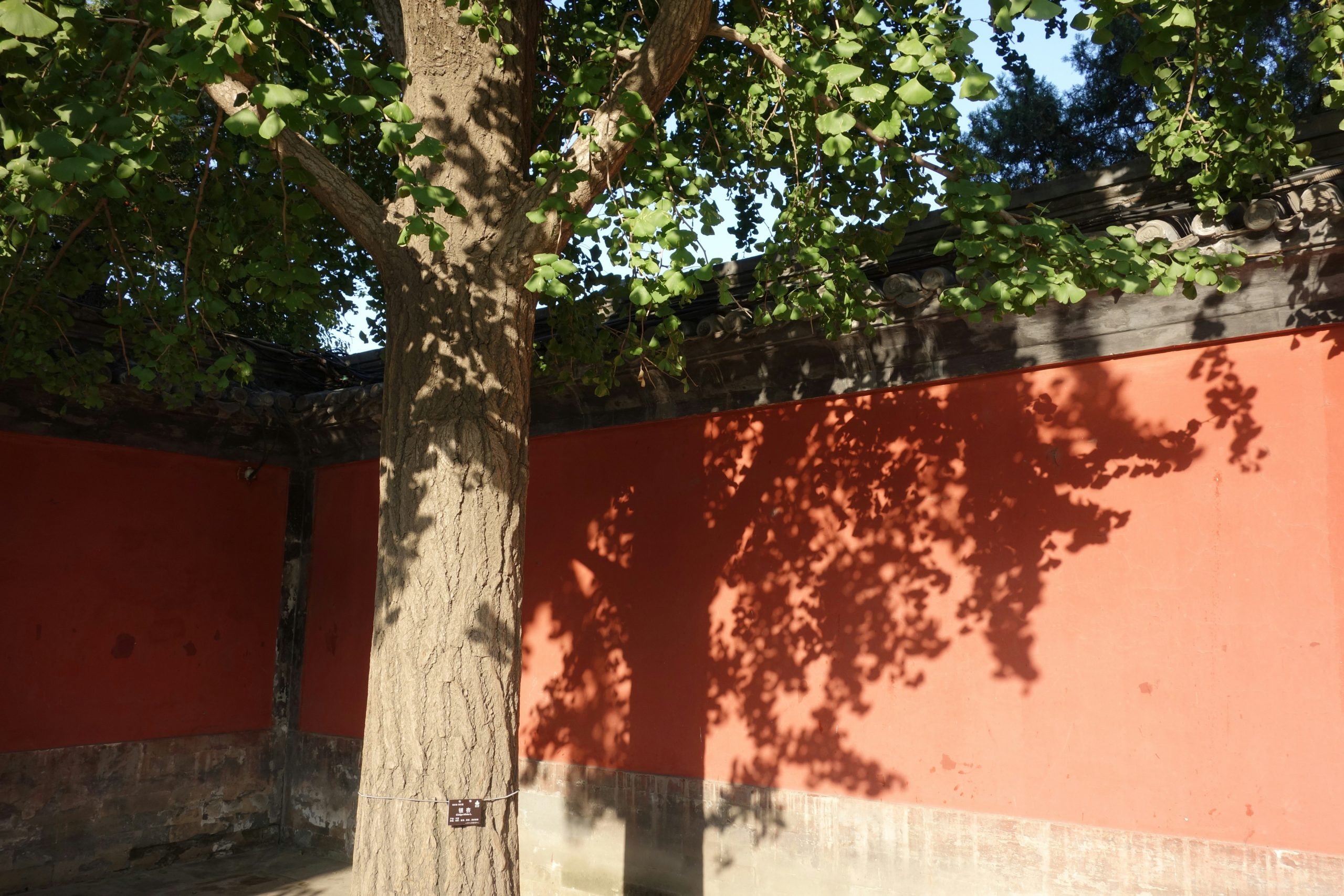
The author’s pilgrimage to Chao-chou’s monastery in China, where they saw the living oak tree, underscores the tangible reality that inspired the koan. The question then becomes how to make Chao-chou’s answer our own, how to live "intimately."
The "Oak Tree" and the Journey to Happiness
The continuing dialogue surrounding the koan, where Chao-chou insists he is "not teaching using an object" even when pointing to the oak tree, suggests that the tree itself is not the point, but rather the gateway it represents. Zen Master John Daido Loori observes that the oak tree is neither in the world of phenomena nor emptiness, challenging us to search for it beyond conventional understanding.
The Zen student’s recitation of the "Wondrous is the robe of liberation" verse before zazen speaks to this transcendence of form and emptiness. The robe, like the oak tree, is beyond these dualities.
Ultimately, Chao-chou’s oak tree, despite its seeming simplicity, stands as a powerful invitation to embrace Zen’s deeply rooted path to happiness. It encourages us to see the world not as a collection of objects, but as a vibrant, interconnected whole, a realization that brings a profound smile in the face of life’s inherent impermanence and challenges. This is the true essence of what Bodhidharma brought from the West, and what Chao-chou, through a humble oak tree, continues to offer.

