

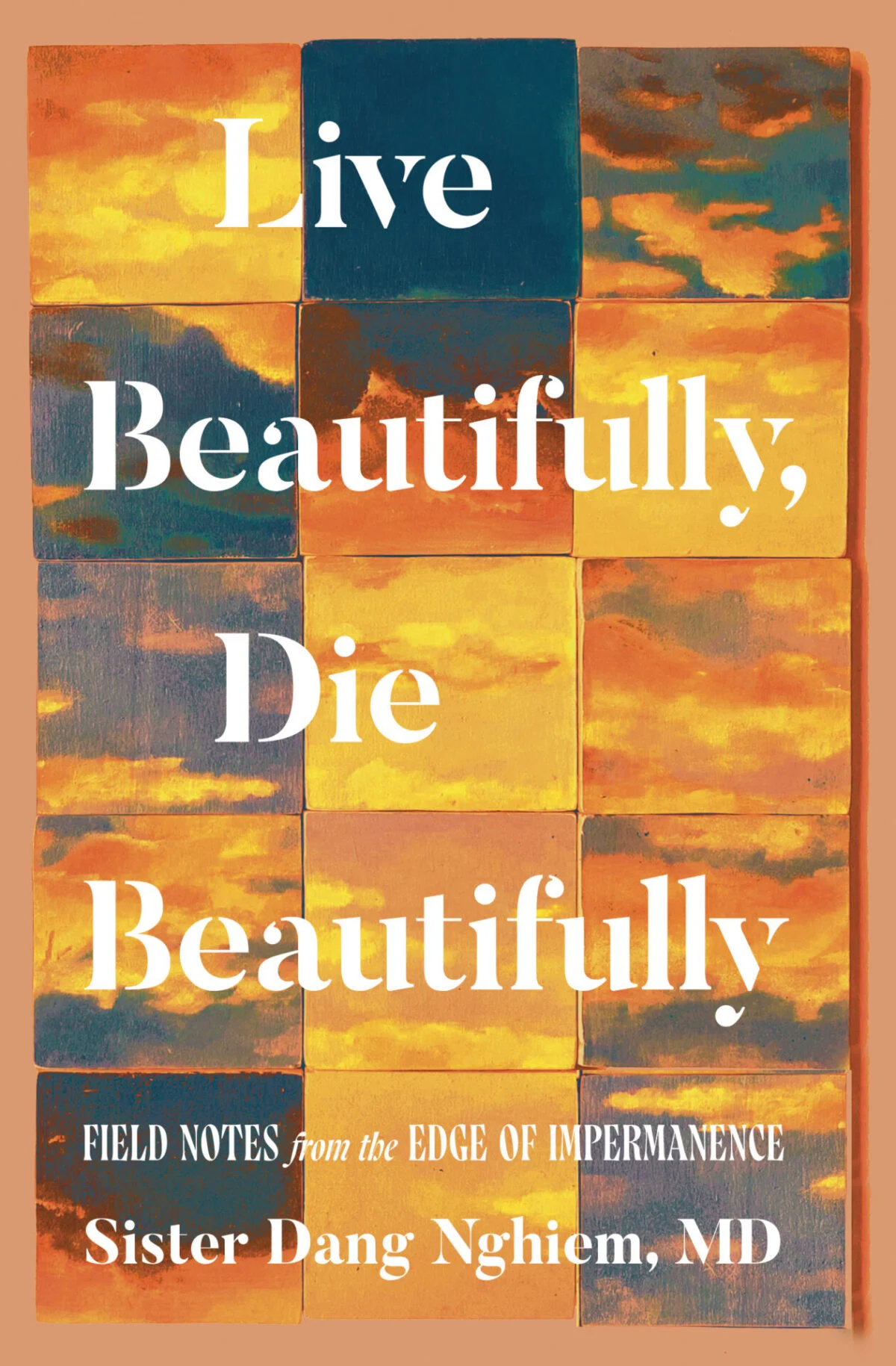
The profound realization of life’s transient nature struck Sister Dang Nghiem with the force of a falling oleander bud. As she walked towards her morning meditation, a bud, not yet in full bloom, detached from its branch. This seemingly small event triggered a deep internal shift, a vivid reminder that cessation can occur at any stage of existence. This personal epiphany, however, was the culmination of a life marked by profound loss and a transformative journey from the demanding world of medicine to the serene discipline of monastic life. Her story, detailed in "Live Beautifully, Die Beautifully," offers a powerful testament to finding peace amidst suffering and embracing the present moment.
From Medicine to Monasticism: A Path Forged by Loss
Sister Dang Nghiem’s early life was shadowed by absence. The disappearance of her mother at the tender age of twelve, followed by the death of her grandmother, who had been her anchor, instilled an early, albeit not fully understood, awareness of impermanence. However, it was the sudden, tragic loss of her partner, John, that irrevocably shattered her perceived stability and propelled her toward a radical re-evaluation of her existence.
Before embarking on this spiritual path, Sister Dang Nghiem was a practicing physician. The demands of her profession, particularly her work at an HIV clinic, were immense. Beneath a veneer of professional competence, she grappled with personal struggles, including depression and the lingering impact of past trauma. This internal landscape was subtly influencing her daily life, creating an unspoken distance in her relationship with John.
The pivotal moment arrived unexpectedly during a conversation at the clinic. An attending physician, without prior knowledge of her spiritual inclinations, casually mentioned an upcoming retreat led by the renowned Buddhist monk, Thich Nhat Hanh. A pamphlet was handed to her, an act that seemed to set in motion a series of events that felt preordained. Sister Dang Nghiem requested five days off from her demanding medical schedule, fully anticipating rejection. To her surprise, approval was granted the following day. A subsequent visit to Parallax Press, the publishing house associated with Thich Nhat Hanh’s Plum Village community, led to an arrangement where she could offset retreat costs through volunteer work. Each step felt guided, as if the path itself was choosing her.
Her partner, John, drove her to the airport for the retreat. Their relationship, though loving, was strained by Sister Dang Nghiem’s increasing emotional withdrawal, a pattern she had yet to fully comprehend. She conveyed to John the critical nature of this retreat, stating, "This retreat will decide the direction of my life," a sentiment she couldn’t fully articulate at the time.
The Retreat and the Dawn of Understanding
At the retreat, Sister Dang Nghiem immersed herself in the structured schedule. While she had read Thich Nhat Hanh’s popular book, "Peace Is Every Step," she was new to formal meditation practice. Thich Nhat Hanh’s gentle demeanor, reminiscent of her grandmother, moved her deeply, and his dharma talks brought her to tears. A profound realization dawned as he expounded on the Four Noble Truths: despite being a victim of past abuse, her own thought patterns, speech, and habitual reactions—her tendency to "run and fight"—had become active participants in her ongoing suffering. The inescapable truth was that "wherever I went, there I was."
The walking meditations along the sea were particularly impactful. During one such walk, behind Thich Nhat Hanh, a fleeting thought arose: "I can walk like him!" This familiar urge to compare herself to others was quickly supplanted by a deeper appreciation for the profound peace emanating from his mindful steps. With humility and gratitude, she began to follow his lead. By the retreat’s end, she had taken the Five Mindfulness Trainings and received the monastic name, Joyful Service of the Heart.
Upon her return, her feelings for John resurfaced with renewed clarity and tenderness. However, the third mindfulness training, emphasizing commitment before intimacy, created a significant internal conflict. She informed John that she could no longer share their bed, moving her pillow to the couch. This decision, born from her newfound spiritual commitment, confused and hurt him, widening the existing rift. The old patterns of rigidity, self-righteousness, and depression began to resurface, threatening to engulf her. Within two weeks, despite the profound insights gained at the retreat, she felt herself slipping back into the familiar grip of despair.
A Sudden Loss and a Life-Altering Decision
As her birthday approached, John proposed a celebration. Sister Dang Nghiem, however, was on call the night before and uncertain of her availability. While driving to Oakland on a crisp, sunlit morning, she felt a resurgence of love for John and promised herself she would see him the following day. The city was unexpectedly enveloped in a thick fog, a stark metaphor for the sudden uncertainty that life could present, even when the underlying sun of potential remained.
That evening, while working in the emergency room, her pager alerted her. It was her best friend, Jennifer. The moment she heard her voice, a chilling certainty washed over her. John had gone swimming at Half Moon Bay and had never returned. His car remained in the parking lot, his clothes were found on the beach, and a Coast Guard search had yielded no trace.
Driven by an overwhelming grief, she drove to the ocean, calling out for John, her cries swallowed by the crashing waves. She felt an unbearable smallness, her only recourse a silent prayer. In her heart, she knew she would never see him again.
On the drive home, she confided in Jennifer, "I’m not going back to medicine." Something within her had irrevocably broken open. The realization was stark: no amount of professional success or personal love could fill the void of unresolved suffering within her. Her grandmother’s long-dismissed wish for her to become a nun resurfaced with startling clarity, presenting itself as the only viable path other than succumbing to death.
Returning to their apartment, she found it imbued with a surprising warmth and tenderness, as if John had left a final blessing. He had done the laundry and folded her clothes. In the quiet of the space, she lit incense and knelt before an altar adorned with images of Avalokiteshvara, the bodhisattva of compassion, her grandmother, and her mother. A strange calm settled over her. As the incense burned out, she stood and gazed out at the city. The morning sun, reflecting off distant windows, formed the silhouette of a giant anatomical heart. "I see you, John!" she cried out, a profound acknowledgment of his presence and their enduring connection.
The following morning, her birthday, they returned to the beach. A foil balloon, bearing the inscription "Happy Birthday," drifted across the water and landed near her, an almost surreal final message from John. John’s mother and sister soon arrived. Sister Dang Nghiem asked for little, only his poncho and sleeping bag. When she finally slept, she dreamed of floating on a vast, silent ocean, an experience of profound peace and infinity, certain that John, who had always expressed a wish to die at sea, had found his release.
Navigating the Aftermath: Grief and Transformation
In the two months following John’s death, Sister Dang Nghiem began the process of preparing for her departure to Plum Village. She divested herself of nearly all her possessions, experiencing those weeks as a liminal space, a corridor between two distinct lives. She slept on the floor of the now-bare apartment, wrapped in John’s sleeping bag. The pervasive sense of grief was so profound that she felt like a ghost herself, her physical form continuing while her spirit lagged far behind.
For days, the despair was so overwhelming that she found herself driving along Highway 1, staring at the dramatic cliffs and the crashing waves below. The road, once a symbol of shared joy and exploration with John, now represented the precipice of oblivion. The constant temptation to veer off the edge was met by an internal resistance, a refusal to let her brother, Sonny, witness her succumbing. Instead, she would turn around, return to the apartment, and cry herself to sleep in John’s sleeping bag. The raw despair became her sustenance, the memory of food a distant concept.
One morning, she drove to the hospital to tender her resignation from her medical residency. Hospital administrators and colleagues offered empathy and kindness, though their understanding was limited. Questions like, "Will you really shave off your beautiful hair?" and "What if you realize you made the wrong decision?" were posed. She responded with a provisional five-year commitment to monastic life, but internally, she knew this was not a career change; it was an act of profound self-preservation.
During this period, life felt precariously perilous. Strangers seemed to sense her vulnerability, some with kindness, others with predatory intent. She navigated unsettling encounters—a man driving her down a deserted road, a mechanic attempting to pressure her into a clandestine meeting, colleagues professing their love. Each time, an inner current of courage, intuition, or protection carried her through, a testament to her burgeoning inner strength and her unwavering pursuit of true peace.
The final step was her departure. Her brother, Sonny, flew to San Francisco to be with her on the forty-ninth day after John’s passing, a significant day in Buddhist tradition for memorial ceremonies. Sonny, unable to accept her decision to become a nun, sat alone in his car outside the temple during John’s ceremonies, fearing he was losing his sister as he had already lost his parents at a young age. Sister Dang Nghiem, who had always been a stable presence for her brother, now felt the weight of his apprehension.
She packed only what she could carry in a backpack: a few changes of clothes, John’s sleeping bag and poncho, and the Teva sandals he had gifted her. Upon arriving at Plum Village, she was raw and fractured by grief, stripped of her former direction. The profound quietude of the monastery was both unsettling and deeply consoling. The monks and nuns moved with deliberate slowness, each step a testament to mindful presence. She wrote a letter to Thich Nhat Hanh, pouring out her despair, her near-suicidal drives along Highway 1, the nights spent wrapped in John’s sleeping bag, the hollow ache of losing every plan she had meticulously made. Above all, she confessed her inability to comprehend how to continue living.
Thich Nhat Hanh’s response was not in words of advice or explanation, but in his presence: the deliberate way he drank his tea, his gentle smile, the shared rhythm of the sangha’s breathing in silence. It was a collective whisper, a profound reassurance: "You are safe now. Stay. Breathe!" Gradually, her breath returned, not without tears, but one moment at a time.
Embracing Daily Death: The Path to Full Living
John’s death, while devastating, had opened a portal within her, a door she was determined not to close again. At Plum Village, Thich Nhat Hanh began guiding her in confronting death, not with despair, but with clarity. The lessons learned there have since permeated every aspect of her life.
To face death, she discovered, is not merely to confront the final cessation of bodily functions. It is to embrace the truth of impermanence in each breath, each step, each moment of letting go. "Learning to die daily is how we learn to live fully," she explains. Through diligent practice, one begins to understand that nothing can be grasped—not our bodies, not our thoughts, not even the people we love. This acceptance fosters a unique tenderness, liberating individuals from the destructive cycle of sacrificing health for wealth and then wealth for health. Recognizing the inevitability of death dismantles the anxiety about the future, allowing for the full appreciation of the present moment. The wisdom gained is profound: "If we stop living as if we will never die, then we will not die without having lived."
A simple practice of "dying daily" involves maintaining order in one’s surroundings. Replacing a cup lid, tidying a room, making a bed—these small acts serve as constant reminders that true ownership is an illusion and that departure from this body can occur at any moment. The expectation of waking each morning is tempered by the awareness that it may not happen. Similarly, travel carries the uncertainty of return. This awareness, far from being morbid, is profoundly liberating.
The Buddha identified the simple awareness of impermanence as the source of the greatest merit among all wholesome deeds. Everything is in flux: joys and sorrows, youth and strength. Even the earth itself is impermanent. Forgetting this truth leads to clinging to the past or chasing an elusive future. Remembering impermanence, however, frees one from the perpetual state of waiting for life to begin. It shifts focus to the present: the breath, health, relationships, community, and the capacity for practice. Gratitude then becomes an inexhaustible wellspring of energy and joy.
Many individuals become so absorbed in their ambitions and external pursuits that they neglect their bodies and minds. When life deviates from their imagined trajectory, they succumb to despair and self-doubt. The constant outward battles leave them estranged from themselves when they finally turn inward. This underscores the critical importance of daily practice.
Each breath is a miniature cycle of life and death: the in-breath necessitates the release of the out-breath, and vice versa. Mindfulness becomes a rehearsal for dying with dignity and without fear—a practice of letting go, loosening our grip, and opening the heart. In Buddhism, death transcends the mere cessation of respiration; it encompasses the closing down of craving, fear, or despair. This deeper sense of dying is any moment of lost clarity, capacity for love, or kindness. Wrong views, such as craving, fear, and hatred, are akin to forms of dying, while awareness, presence, and understanding represent forms of birth.
The Buddha likened people to "fresh young grass, cut and laid out in the sun to dry"—vibrant with potential, yet quickly withering when consumed by regret for the past, fear of the future, or distraction in the present. This description resonates with the experience of a young man who confessed to feeling like he was dying, overwhelmed by anxiety and an inability to live his life. He was like that grass, outwardly vibrant but inwardly withering due to fear, longing, and restlessness. The advice offered is to visualize oneself as that grass, witnessing the rapid dissipation of life when not rooted in the present moment, and then to gently return to the breath.
Just as a flower, upon withering, transforms into fragrance, compost, and nourishment for new seeds, so too does dying become a continuation rather than an end. To live fully, one must learn to "die" in each moment—letting go of what no longer serves, softening fixed ideas, and releasing the grasp on loved ones. In this way, life becomes real, precious, and truly possible.
Adapted from "Live Beautifully, Die Beautifully: Field Notes from the Edge of Impermanence" by Sister Dang Nghiem © 2026. Reprinted with permission from Parallax Press, parallax.org.

