

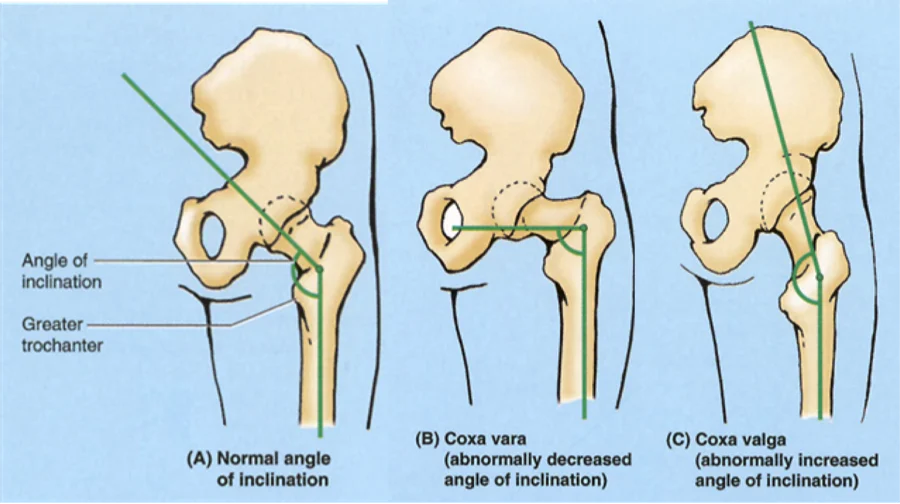
The long-standing paradigm in sports science and physical therapy that prioritizes bilateral symmetry as the gold standard for human movement is undergoing a significant reassessment by leading biomechanists and strength coaches. For decades, the prevailing wisdom suggested that achieving perfect symmetry in both static posture and dynamic movement was essential for injury prevention and optimal performance. However, contemporary research and clinical evidence now suggest that the human body is inherently asymmetrical and that forcing individuals into symmetrical patterns, particularly during heavy compound lifts like squats and deadlifts, may actually increase the risk of musculoskeletal strain.
This shift in perspective acknowledges that the human form is not a mirrored machine but a complex biological system with significant internal and structural variances. Experts in the field, including representatives from the Postural Restoration Institute (PRI) and renowned spinal researchers, argue that the "one-size-fits-all" approach to movement ignores the fundamental reality of human anatomy. By moving away from the "symmetry myth," practitioners are finding that individualizing movement patterns to accommodate an athlete’s unique bony structure leads to better outcomes in both power output and long-term joint health.
The Chronology of Biomechanical Theory and the Rise of Asymmetry
The history of strength and conditioning has often been tethered to the "corrective exercise" movement of the late 1990s and early 2000s. During this period, the industry focused heavily on identifying "dysfunctions"—defined largely as any deviation from a perfectly balanced, symmetrical posture. If a trainee’s right shoulder sat lower than the left, or if their feet flared at different angles during a squat, it was viewed as a pathology requiring immediate correction.
The tide began to turn in the mid-2010s as the work of the Postural Restoration Institute (PRI) gained mainstream attention in professional sports. In workshops held at elite training centers such as Cressey Sports Performance, educators like Neil Rampe and Michael Mullin introduced coaches to the concept of the "Left AIC/Right BC" pattern. This theory posits that because humans have asymmetrical internal organs—such as a large liver on the right and a heart on the left—the diaphragm and pelvis naturally orient themselves in a way that favors one side.
By 2017, prominent figures in the industry, including Dean Somerset, Dr. Ryan DeBell, and Dr. Stuart McGill, began more vocalizing the necessity of "anatomical individualization." Dr. McGill’s research into spinal mechanics and hip morphology provided a clinical backbone to the argument that structural differences, rather than lack of effort or mobility, often dictate how a person should move. This led to the development of workshops like the "Complete Shoulder & Hip Blueprint," which sought to codify the assessment of individual variances.
Anatomical Data: Why Symmetry is Biologically Rare
The argument for accepting asymmetry is rooted in hard anatomical data. Studies in orthopedic medicine have shown that human skeletal structures are rarely identical from left to right. This is particularly evident in the hip joint, which serves as the primary engine for most athletic movements.

Research into femoral anteversion and retroversion—the angle at which the neck of the femur meets the hip socket—reveals that these angles can differ by several degrees between a person’s left and right legs. Furthermore, the shape and depth of the acetabulum (the hip socket) are subject to immense variation. A 2001 study by Maruyama et al. found significant differences in the orientation of the acetabulum across different populations, and even within individuals, the sockets are rarely positioned with perfect bilateral consistency.
Beyond skeletal structure, the human neurological system is inherently lateralized. Most humans have a dominant hand, eye, and leg, leading to asymmetrical neurological drive and muscle recruitment patterns. Forcing a person with a retroverted right hip and an anteverted left hip to stand with perfectly parallel, forward-facing feet during a squat creates a mechanical "impingement" at the joint. In this scenario, the pursuit of symmetry causes the femur to strike the rim of the acetabulum prematurely, leading to labral tears or chronic inflammation.
The Mechanical Fallacy: Humans vs. Machines
One of the most common counterarguments for symmetry is the "car alignment" analogy. Critics often suggest that just as a car requires precise alignment to prevent tire wear, a human requires symmetry to prevent joint wear. However, biomechanists argue this is a false equivalency.
A vehicle is a closed system manufactured by machines to reach specific tolerances; it lacks the biological capacity for adaptation. In contrast, the human body is an open, biological system that adapts to the stresses placed upon it. Unlike a Volvo or a Ford, the human body can redistribute loads across various tissues. When a coach forces a "symmetrical" stance on an "asymmetrical" skeleton, they are not aligning the machine; they are creating artificial stress points that the body cannot easily adapt to.
In certain specialized fields, such as aesthetic bodybuilding or classical ballet, visual symmetry remains a primary objective. In these disciplines, the goal is the appearance of balance for judging or artistic expression. However, for the general population and for athletes focused on performance, the objective is "functional efficiency." Functional efficiency recognizes that the most powerful and safest way for an individual to move is the way their specific skeleton allows.
Clinical Assessment and Official Responses
To address these findings, the industry has moved toward more sophisticated assessment protocols. Dr. Stuart McGill, a leading expert in spine biomechanics, frequently utilizes the "hip scour" test to determine an individual’s optimal squat depth and stance width. This test allows the practitioner to feel where the femur moves most freely within the socket, often revealing that one foot needs to be flared more than the other or that a slightly staggered stance is required to keep the pelvis neutral.
Coaches like Dean Somerset have championed the "optometrist approach" to movement. Similar to how an eye doctor flips through different lenses to find the one that provides the clearest vision, coaches are now encouraged to test various foot positions and stances to find the one that feels most stable and powerful for the client.

The reaction from the professional community has been largely positive, though it requires a significant unlearning of traditional coaching cues. "The human body is all sorts of [varied]," Somerset has noted in various seminars, emphasizing that the goal of a coach should be to "set up clients for success based on their bony structure, not a textbook diagram."
Broader Impact and Industry Implications
The shift toward acknowledging asymmetry has profound implications for the future of fitness and rehabilitation. Firstly, it reduces the psychological burden on trainees. Many individuals have been told for years that they are "broken" or "out of alignment" because they cannot achieve a textbook-perfect squat. Removing this stigma encourages more consistent participation in strength training.
Secondly, this paradigm shift is likely to lead to a decrease in overuse injuries. By allowing for a "staggered" or "asymmetrical" stance, coaches can help athletes avoid the repetitive micro-trauma associated with forcing joints into unnatural positions. This is particularly relevant in high-volume training environments, such as CrossFit or collegiate strength programs, where the "standardized" movement model has historically dominated.
Finally, the education of future fitness professionals is being redesigned. Major certifying bodies are beginning to integrate more nuance into their curricula, moving away from rigid "points of performance" toward a more flexible, assessment-based model of coaching. As the industry continues to embrace the reality of human biological diversity, the "symmetry myth" is expected to be relegated to the history of sports science, replaced by a more sophisticated understanding of individual biomechanics.
In conclusion, the movement toward accepting and even embracing asymmetry represents a maturation of the fitness industry. By acknowledging that the human body is designed with inherent variances, practitioners can provide safer, more effective, and more personalized training interventions. The goal is no longer to make every athlete look the same, but to help every athlete move in a way that is most harmonious with their unique biological blueprint.

