

A series of studies published in the Annals of Internal Medicine in late 2019 generated significant controversy within the scientific and public health communities. These studies, collectively referred to as the "NutriRECS" (Nutrition and Lifestyle Evidence Consortium) guidelines, concluded that individuals should largely maintain their current consumption of red and processed meats, a stance that directly contradicted numerous established dietary recommendations worldwide. This assertion, despite the authors’ own findings indicating a statistically significant association between lower meat consumption and improved health outcomes, has ignited debate over the methodology, interpretation, and potential influence behind these controversial guidelines.
Background: A Challenging of Conventional Wisdom
For decades, major health organizations, including the World Health Organization (WHO) and the American Heart Association, have advised limiting the intake of red and processed meats due to their links with increased risks of cardiovascular disease, certain cancers, and overall mortality. These recommendations are typically based on a broad consensus of scientific evidence from observational studies and randomized controlled trials.
The NutriRECS panel, however, adopted a different approach. The panel’s publications in the Annals of Internal Medicine presented a stark contrast to the prevailing dietary advice. While acknowledging a statistical association between reduced red and processed meat consumption and lower total mortality, cardiovascular disease mortality, and cancer mortality, the authors ultimately recommended no change in meat consumption for the general population. This conclusion, perceived by many as a dismissal of decades of research, immediately drew sharp criticism from a wide array of public health experts and researchers.
The NutriRECS Panel’s Justifications and Criticisms
The authors of the NutriRECS guidelines offered three primary justifications for their conclusions, each of which has been met with significant scrutiny:
1. The Prerogative of Taste Preference
One of the most widely criticized justifications was the emphasis placed on taste preference. The panel suggested that because many people enjoy eating meat, this enjoyment should be a significant factor in formulating dietary guidelines. Critics argue that personal preference should not override established scientific evidence regarding public health. This argument draws a parallel to other health behaviors, such as exercise, smoking cessation, or reduced alcohol consumption, where personal enjoyment or habit often conflicts with health recommendations. The scientific consensus on these matters remains unchanged, irrespective of individual preferences.
2. The Application of the GRADE Methodology
A second key justification was the panel’s use of the GRADE (Grading of Recommendations, Assessment, Development, and Evaluation) system. The authors contended that other dietary guidelines did not adequately employ this methodology, and their adherence to GRADE led to their differing conclusions. However, critics point out that the GRADE system was primarily developed and validated for evaluating evidence from drug trials and may not be the most appropriate tool for assessing the complex and multifactorial nature of dietary and lifestyle research. The panel’s decision to apply GRADE to dietary recommendations has been questioned as potentially misapplied, with concerns that it could be misused to undermine recommendations on various health issues, including secondhand smoke, air pollution, trans fats, and physical inactivity.
3. The "Very Small Magnitude" of Meat’s Effects
The third and perhaps most contentious justification was the panel’s assertion that the observed health effects of meat consumption were of a "very small magnitude." In essence, the researchers argued that even if red and processed meats contribute to diseases like heart disease, cancer, and diabetes, the number of attributable cases or deaths was not significant enough to warrant a change in dietary guidelines, especially when weighed against the pleasure derived from consuming these foods.
This argument has been met with strong counterarguments highlighting the cumulative impact of small effect sizes on a population level. Critics contend that ignoring or downplaying the "magnitude" of these effects is a dangerous misrepresentation of public health.
Examining the Evidence: Omissions and Exclusions
A central theme in the criticism of the NutriRECS guidelines is the alleged selective inclusion and exclusion of scientific studies. Multiple analyses suggest that the panel may have omitted or disregarded substantial bodies of evidence that contradicted their predetermined conclusions.

- Exclusion of Major Trials: Critics have pointed to the exclusion of significant randomized controlled trials (RCTs) that demonstrated clear health benefits from reducing meat intake. For example, the PREDIMED trial, a large-scale study on the Mediterranean diet, and numerous RCTs investigating the DASH (Dietary Approaches to Stop Hypertension) diet, which emphasizes fruits, vegetables, and whole grains while limiting red meat, were reportedly not included in the NutriRECS analysis.
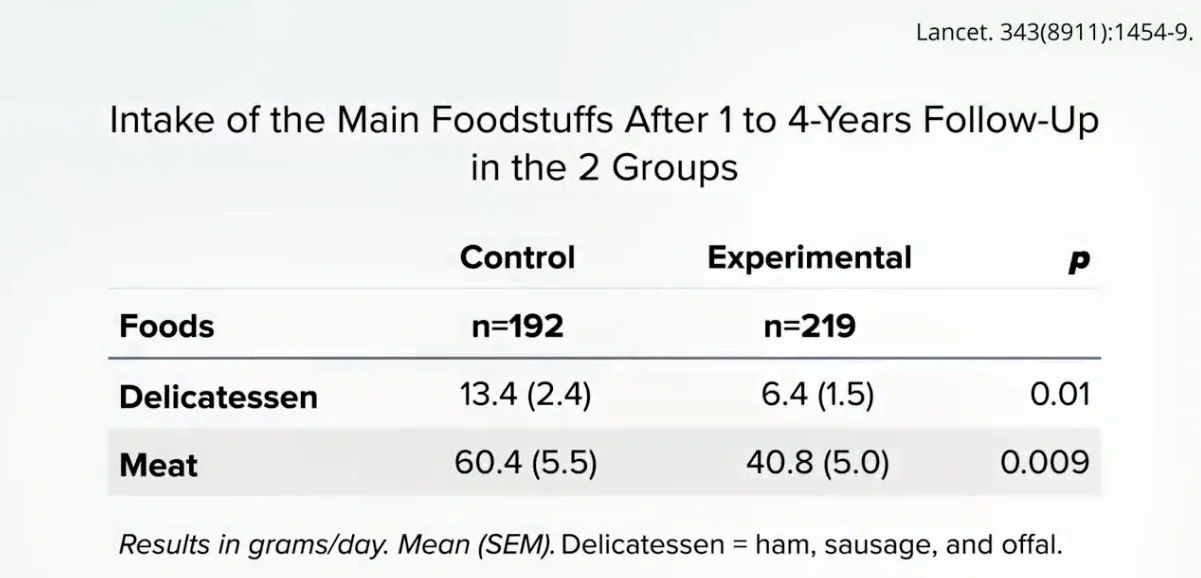
- The Lyon Diet Heart Study: The Lyon Diet Heart Study, a landmark trial published in the late 1990s, is frequently cited as a prime example of excluded evidence. This study randomized participants to a Mediterranean-style diet, which significantly reduced meat consumption. The results showed a remarkable 70% reduction in all-cause mortality in the intervention group compared to the control group. The NutriRECS panel reportedly excluded this study, citing an "implausibly large treatment effect," which critics interpret as the study being disregarded because its findings were too beneficial for the panel’s agenda.
- Focus on "Realistic Decreases": The panel’s stated interest in "realistic decreases in meat consumption" further fueled concerns. They focused on studies where meat reduction was minimal, such as the Women’s Health Initiative, which found only a modest reduction in breast cancer mortality with a slight decrease in meat intake. This approach, critics argue, deliberately sets a low bar for demonstrating benefits, thereby making it easier to conclude that significant dietary changes are unnecessary. This is akin to suggesting that modest reductions in smoking yield only modest health benefits and therefore, there is "no need to reduce tobacco use for good health."
The Influence of Industry Funding
Another significant aspect of the controversy involves the potential influence of industry funding. The NutriRECS panel was reportedly partnered with and had individuals on the payroll of Texas A&M AgriLife. This institution receives substantial funding from the meat industry. This financial connection has raised serious questions about the impartiality of the panel’s findings and whether industry interests may have played a role in shaping the guidelines.
The exclusion of research comparing the health outcomes of vegetarians to meat-eaters further supports the notion that the panel may have sought to avoid evidence that strongly favored reduced meat consumption.
Quantifying the Impact: Beyond "Small" Effects
The debate over the "magnitude" of meat’s health effects is central to the controversy. While the NutriRECS panel characterized these effects as small, independent analyses based on the same cohort data paint a different picture.
- Significant Reductions in Mortality and Disease: Meta-analyses of large cohort studies, even when considering moderate reductions in red and processed meat consumption, have indicated substantial health benefits. These include an estimated:
- 13% reduction in total mortality.
- 14% reduction in cardiovascular disease mortality.
- 11% reduction in cancer mortality.
- 24% reduced risk of type 2 diabetes.
These figures represent significant public health gains, comparable to the impact of widely adopted interventions like statin drugs for heart disease. However, unlike statins, which can have adverse effects like increasing the risk of type 2 diabetes and little impact on cancer, a reduction in meat consumption appears to offer broad-spectrum health benefits.
- Preventing Deaths Annually: Experts, such as the chair of nutrition at Harvard, estimate that moderately reducing red meat consumption could prevent approximately 200,000 deaths annually in the United States alone. While the NutriRECS panel may dismiss this as a "very small effect" in the context of millions of deaths, it represents a substantial loss of life for the families affected.
The Smoking Analogy: A Stark Comparison
The controversy surrounding the NutriRECS guidelines has frequently been compared to the historical debate over the health risks of smoking. This analogy highlights the flawed logic that can arise when scientific evidence is selectively interpreted or dismissed:
- Selective Study Inclusion: Imagine researchers focusing only on studies with extremely small differences in the number of cigarettes smoked per week and deliberately avoiding comparisons between smokers and non-smokers.
- Downplaying Benefits of Cessation: They might find that even small reductions in smoking lead to clear and consistent benefits.
- Methodological Bias: If they then apply grading methods that heavily favor randomized trials (of which there are few for smoking cessation), they could conclude with "very low confidence" in their findings.
- Erroneous Guidelines: Based on this flawed reasoning, they could then issue guidelines recommending that the public "simply continue to smoke," citing that "people who smoke like smoking."
This hypothetical scenario, critics argue, accurately reflects the approach taken by the NutriRECS panel regarding meat consumption. The panel’s methodology, in essence, mirrors the tactics once employed to obscure the dangers of tobacco.
The Enduring Legacy of Evidence Manipulation
The situation echoes a sentiment from a 1959 paper that compiled evidence linking smoking and lung cancer. The authors noted that if the extensive evidence they found had concerned a new agent, one to which hundreds of millions were not already addicted and that did not support a large industry skilled in mass persuasion, the evidence of its hazardous nature would be "generally regarded as beyond dispute." This observation remains profoundly relevant to the ongoing discussion surrounding the health impacts of red and processed meats and the industry’s role in shaping public health narratives.
The implications of the NutriRECS guidelines extend beyond dietary advice. They raise critical questions about transparency in scientific research, the influence of industry funding on public health policy, and the responsibility of the scientific community to present evidence objectively, even when it challenges deeply ingrained habits and powerful economic interests. The debate underscores the vital need for rigorous, unbiased scientific inquiry and for robust public health guidelines that prioritize long-term well-being over short-term preferences or economic considerations.
The continued analysis of this controversial panel and its findings is essential for safeguarding public health and ensuring that dietary recommendations are grounded in sound, comprehensive scientific evidence, not in the selective interpretation of data or the influence of vested interests. The ongoing discourse serves as a reminder that the pursuit of robust health outcomes requires a commitment to scientific integrity and a willingness to confront potentially uncomfortable truths, much like the historical battles fought against the widespread acceptance of smoking. The ultimate impact of these guidelines on public health will depend on how effectively the scientific community and regulatory bodies address the criticisms and uphold the principles of evidence-based decision-making.

