

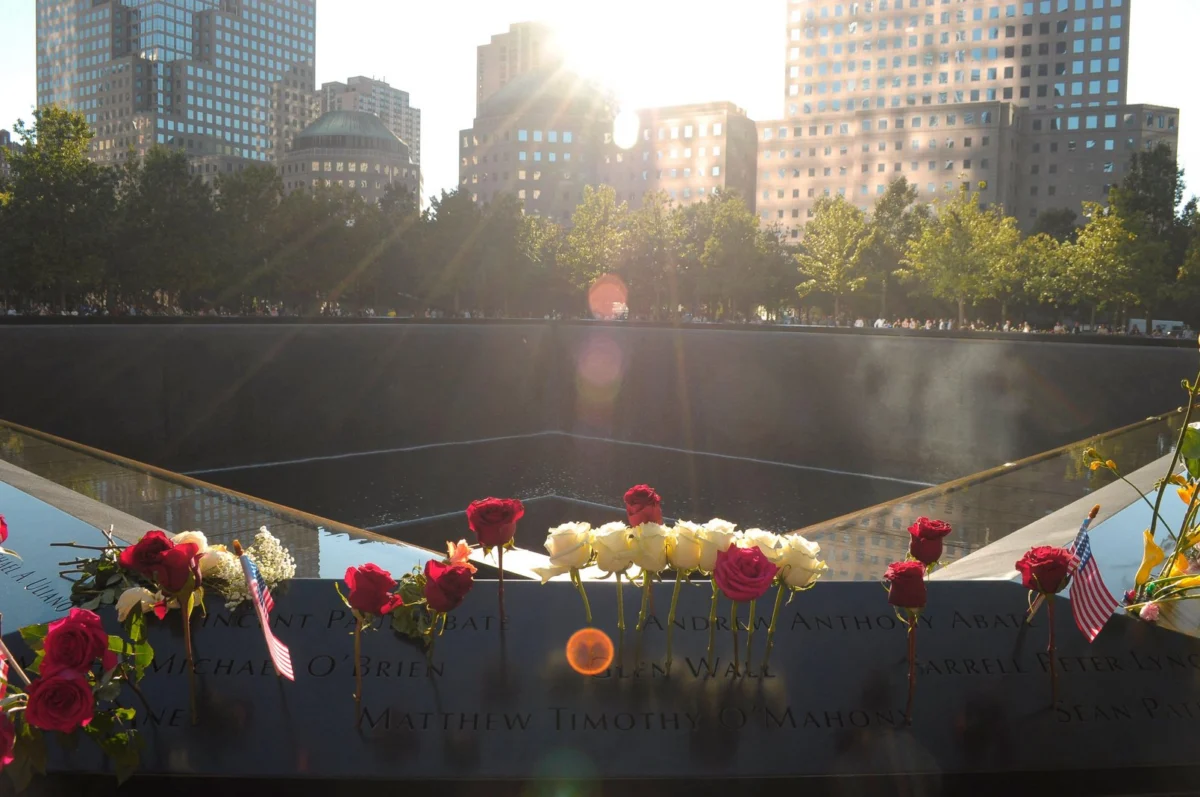
September 2001 began like any other month for many Americans, a period of routine and perceived stability. For a 40-year-old art director in Manhattan, life was a familiar rhythm of early morning meditation, the commute through bustling subways, and a career in advertising. This seemingly ordinary existence was shattered on the morning of September 11th, an event that not only irrevocably altered personal trajectories but also fundamentally reshaped the global landscape. The attacks on the World Trade Center and the Pentagon, orchestrated by the terrorist group al-Qaeda, were an unprecedented assault on American soil, leaving a profound and lasting impact on individuals, communities, and the nation’s psyche.
The Unfolding Tragedy in Manhattan
The narrator’s account vividly captures the surreal disorientation of that Tuesday morning. As the subway train approached Union Square, whispers of extraordinary events above ground escalated into urgent exchanges. Upon exiting the train, the familiar Manhattan skyline was obscured by billowing plumes of black smoke, a stark and horrifying visual that immediately signaled a catastrophic event. The iconic Twin Towers, once symbols of American economic might and architectural prowess, were under attack.
The construction of the World Trade Center, completed in the early 1970s, had been a monumental undertaking, transforming the Lower Manhattan skyline. While initially perceived by some as utilitarian, they had become deeply ingrained in the city’s identity. The sight of their destruction, broadcast on large outdoor screens in Times Square, elicited gasps, screams, and a chilling realization of the human cost. The narrator’s dazed state, a dissociative response to overwhelming trauma, blurred the edges of reality, rendering the world in a muted, watercolor-like haze. Sounds became muffled, the ground felt unstable, and the inability to speak mirrored the paralysis experienced in nightmares.
The Immediate Aftermath and Personal Reckoning
The closure of subways and bridges, with the exception of the 59th Street Bridge, forced a long, contemplative walk back to Brooklyn for many, including the narrator. The usual office chatter about deadlines and clients became painfully irrelevant, replaced by hushed whispers and a shared sense of profound shock. This period marked the beginning of a deep personal crisis, exacerbated by the narrator’s six years of sobriety within a Twelve Step community.
While many sought solace in alcohol to numb the pain, this avenue was closed to the narrator. Instead, the trauma triggered a "post-traumatic episode," as diagnosed by a psychiatrist, leaving raw nerves exposed. This state of heightened vulnerability unexpectedly unearthed long-repressed memories from a childhood marked by domestic violence. The helplessness and fear of the present day reactivated the terror of a child witnessing his parents’ violent arguments, the sounds of breaking glass and physical altercations echoing from three decades prior.
The narrator’s wife found him in a state of acute panic, shaking, sweating, and struggling to breathe. The mental landscape was a terrifying montage of isolation, unlovedness, and cosmic indifference. The illusion of certainty and safety that had underpinned his life was stripped away, revealing a world where everything, including the seemingly unshakeable towers, could vanish in an instant. This existential crisis led to a profound questioning of his career in advertising, perceived as a profession built on crafting "lies about happiness in bottles and boxes."
Navigating Grief and Rediscovering Self
The months following September 11th were a period of intense emotional turmoil, oscillating between numbness and self-hatred. The narrator sought solace in established support systems: weekly visits to Buddhist centers, daily Twelve Step meetings, and morning meditations. However, the profound shock of the event had shaken his foundations so thoroughly that these routines, while offering some comfort, felt insufficient to bridge the chasm of pain.
He found himself retreating to his office, seeking refuge from a world that seemed to be moving on too quickly, a world that felt fundamentally changed yet outwardly preserved its normalcy. The superficiality of his advertising work, creating campaigns for products nobody needed and crafting slogans for a world seemingly engulfed in crisis, became starkly apparent. He questioned the purpose of his life, the hollowness of his career, and the disconnect between his professional efforts and the profound suffering he witnessed.
The Buddhist Path as a Lifeline
The narrator’s spiritual journey intensified as he grappled with his trauma. He found that his meditation practice, once a tool for steadying his mind, was being used as a means of avoidance, a "spiritual bypass" rather than a way to confront his deepest fears and self-shaming voices. This realization led him to seek a more profound engagement with Buddhist teachings.
He began working with a Buddhist therapist, creating a safe space to explore deeply buried emotions and the physical manifestations of anxiety. Through this process, he learned to connect with the terrified child within, offering the comfort and security he had lacked as a boy. Rekindled studies in Buddhist philosophy and retreats with monks provided a much-needed sense of kindness and balance. He also found a community of like-minded individuals within Buddhist circles, many of whom had similar backgrounds in punk culture, substance recovery, and a desire to understand the world on a deeper level. This sense of belonging was crucial, transforming his history from something to be hidden into a foundational element of his path.
Re-evaluating Identity and Purpose
For fifteen years, the narrator had dedicated himself to the marketing profession, crafting campaigns that fostered a culture of consumerism and manufactured desire. He held titles like "associate creative director" and "brand strategist," but the events of 9/11 had stripped these labels of their perceived significance. The screens that once displayed advertisements for soda and SUVs now broadcast images of suffering, prompting a fundamental shift in his values.
The question "Does any of this matter?" became a persistent refrain. Inspired by the Buddha’s renunciation of a palace, he felt compelled to leave behind his career, a decision that felt as radical as any profound spiritual departure. Even the act of "quiet quitting" became an act of rebellion against the pervasive lie he had helped perpetuate. This internal struggle marked the beginning of a process of disentangling himself from a life built on perceived security and external validation.
Embracing a Life of Purpose Over Profit
The process of "quiet quitting" was fraught with fear, as financial security had long been his primary anchor. However, a stronger current of purpose pulled him forward. He began to live with less, selling his car, relinquishing his garage, and taking on fewer remote gigs that hollowed out his soul. This voluntary simplification created space for something new to grow.
His days transformed, now shaped by a sense of purpose rather than profit. He began teaching mindfulness to parolees from Rikers Island, volunteering at afterschool programs, and mentoring recovering addicts. These endeavors, while offering minimal or no financial compensation, provided a profound sense of nourishment and connection. He was building relationships based on authenticity, a stark contrast to the transactional exchanges of his former life. Explaining his new role as a Buddhist teacher in a title-obsessed world proved challenging, but the core of his work was helping others discover their own potential.
The Deconstruction of Self and the Emergence of a New Identity
The narrator’s transformation involved a deep exploration of identity. He realized his previous sense of self had been constructed as a "fortress against uncertainty," built on job titles, relationship status, political views, and a carefully curated online persona. These labels, while comforting, were ultimately limiting. The ancient wisdom of thinkers like Heraclitus, Laozi, and the Buddha emphasized that clinging to unreliable constructs leads to suffering.
He recognized that his deeply ingrained self-narratives, such as "I’m creative" or "I’m bad with numbers," were merely stories, not immutable facts. These narratives, while sometimes boosting confidence, could also serve as excuses for not meeting expectations. The space between his old self and whatever came next was where a profound form of "ego death" occurred – a terrifying, disorienting free-fall.
However, this process, as experienced by many throughout history, also offered profound freedom. Indigenous vision quests, the psychedelic explorations of the 1960s, and modern-day retreats into therapy or spiritual communities all represent attempts to break free from rigid identities and discover something larger than the individual self.
While some methods, like the use of psychedelics, can offer rapid, albeit often transient, insights, Buddhism offers a gentler, more sustainable path. Instead of demolishing the ego with explosive force, Buddhist practices allow for a gradual seeing through of the self-concept, brick by transparent brick. Through consistent meditation and visualization, the narrator learned to observe the ever-changing nature of his body, feelings, and thoughts. He realized there was no static, unchanging core to his identity.
The ego, he concluded, was not annihilated but became transparent – a useful fiction, a convenient shorthand, but not an ultimate truth. He learned to hold his labels and roles lightly, as helpful tools rather than absolute truths. This shift allowed him to navigate life’s inevitable changes with fluidity, like water finding a new channel to the sea, rather than shattering with the dissolution of his old identity. The events of September 11th, 2001, served as the catalyst for this profound personal revolution, demonstrating that even the most seemingly solid structures – both physical and psychological – can be fundamentally transformed.

