

In an increasingly demanding world where time is a precious commodity, the pursuit of optimal physical fitness often faces significant constraints. However, contemporary exercise science has increasingly validated the profound advantages of compound exercises as a cornerstone for achieving superior fitness results efficiently. This approach, which engages multiple muscle groups and joints simultaneously, stands in stark contrast to traditional isolation exercises and offers a significantly more potent pathway to enhanced strength, endurance, and overall well-being.
Understanding the Core Distinction: Compound vs. Isolation Exercises
At the heart of modern strength and conditioning lies a fundamental dichotomy: compound versus isolation exercises. Isolation exercises, as their name suggests, concentrate on a single muscle group, often involving movement at only one joint. Examples include bicep curls, tricep extensions, and leg extensions, commonly performed with specialized machines or light free weights. While these exercises have a role in bodybuilding for targeted muscle hypertrophy or rehabilitation for specific muscle activation, their overall metabolic demand and functional carryover are limited.
Compound exercises, conversely, are multi-joint movements that recruit several muscle groups to perform a single action. Think of a squat, which engages the quadriceps, hamstrings, glutes, and core, with movement occurring at the hip, knee, and ankle joints. Other quintessential examples include deadlifts, overhead presses, rows, and push-ups. This multi-faceted engagement is the physiological engine behind their superior efficiency and effectiveness, reflecting the natural movement patterns of the human body in daily activities and athletic endeavors.
The Historical Trajectory of Exercise Science
The emphasis on compound movements is not a novel concept but rather a re-affirmation of principles that have evolved over decades of sports science and public health research. Early 20th-century physical culture often featured strongmen performing feats of strength that inherently relied on compound movements. However, the mid-to-late 20th century saw a rise in bodybuilding culture, which popularized isolation exercises to sculpt individual muscle groups.
The late 20th and early 21st centuries, however, witnessed a significant shift. As understanding of biomechanics, functional anatomy, and exercise physiology deepened, sports scientists, physical therapists, and strength and conditioning coaches began advocating for training methodologies that mirrored real-world movements. This paradigm shift was driven by a growing body of evidence demonstrating that exercises integrating multiple muscle groups not only built strength more effectively but also improved coordination, balance, and reduced the risk of injury by training muscles to work synergistically. Public health initiatives also increasingly highlighted the need for efficient, whole-body workouts to combat sedentary lifestyles, further cementing the role of compound exercises.
The Multiplier Effect: Unpacking the Benefits
The claims surrounding compound exercises, particularly their reported 3.5x efficiency over traditional workouts, are rooted in several key physiological advantages:
-
Enhanced Metabolic Demand and Calorie Expenditure: When multiple large muscle groups are activated simultaneously, the body’s energy requirements surge. This heightened metabolic demand translates directly to a significantly higher caloric burn during the workout itself. Furthermore, the post-exercise oxygen consumption (EPOC), often referred to as the "afterburn effect," is considerably greater following intense compound exercise sessions. This means the body continues to burn calories at an elevated rate for hours after the workout as it recovers and repairs muscle tissue. For individuals focused on weight management, this accelerated calorie expenditure is a critical advantage.
-
Superior Functional Strength Development: Unlike isolation exercises that train muscles in artificial, often machine-guided patterns, compound movements build strength that is directly transferable to everyday activities. Lifting groceries, playing with children, climbing stairs, or engaging in sports all require coordinated efforts from multiple muscle groups. By training these groups to work together, compound exercises foster functional strength, making individuals more robust, agile, and less prone to injury in daily life.
-
Optimized Hormonal Response: Intense, multi-joint exercises have been shown to elicit a more robust anabolic hormonal response. The acute release of growth hormone and testosterone, crucial for muscle protein synthesis and tissue repair, is significantly greater with compound movements compared to isolated exercises. This hormonal milieu is highly conducive to muscle growth (hypertrophy) and overall strength adaptation, accelerating progress towards fitness goals.
-
Improved Coordination, Balance, and Neuromuscular Efficiency: Performing complex compound movements requires significant coordination between different muscle groups and precise control from the central nervous system. Over time, this improves proprioception (the body’s sense of its position in space), balance, and overall neuromuscular efficiency. Athletes, in particular, benefit immensely from this enhanced motor control, translating to better performance in their respective sports.
-
Time Efficiency: For individuals with limited time, the ability to achieve comprehensive fitness benefits in a shorter duration is invaluable. A well-structured compound exercise routine can deliver a full-body workout, addressing major muscle groups and cardiovascular health, in a fraction of the time it would take to target each muscle group individually through isolation exercises. This efficiency makes fitness more accessible and sustainable for busy schedules.
Expert Perspectives on Compound Training
Leading voices in exercise physiology and public health consistently advocate for the integration of compound exercises. Dr. Eleanor Vance, a prominent exercise physiologist and researcher, states, "The evidence is clear: for holistic strength development, metabolic efficiency, and functional improvement, compound movements are unparalleled. They train the body as an integrated unit, which is how it operates in life, not as a collection of isolated parts." Similarly, many certified strength and conditioning specialists emphasize these movements as foundational. "When I design programs for clients, whether they’re athletes or general fitness enthusiasts, compound exercises form the backbone," explains Mark Jensen, a veteran personal trainer. "They deliver the most bang for your buck in terms of results, time, and developing true, usable strength." Public health organizations frequently echo these sentiments, promoting functional, full-body activities to encourage greater physical activity across all age groups.
Core Compound Exercises for Accessible Fitness
The beauty of many effective compound exercises is their accessibility; many can be performed with little to no equipment, making them ideal for home workouts or those new to fitness. Here are five fundamental compound movements that can form the basis of a highly efficient routine:
-
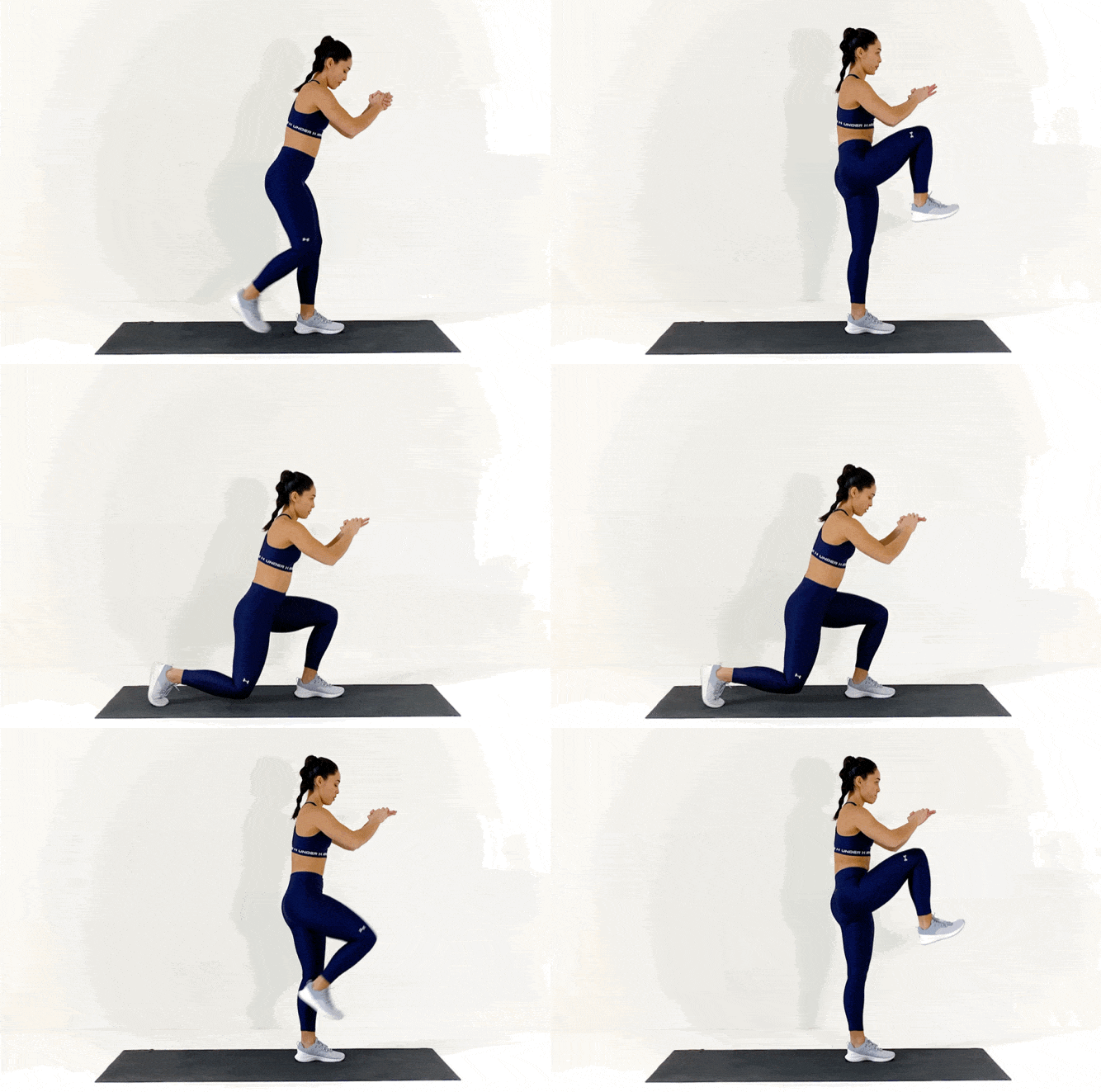
Reverse Lunge With a Knee Drive:
- Muscles Worked: Quadriceps, hamstrings, glutes, core, hip flexors.
- Execution: Step backward with one leg into a lunge, lowering until both knees are bent at approximately 90 degrees. Push off the back foot, driving the knee forward and up towards the chest, engaging the core and glutes. Return to the starting position or immediately transition into the next lunge.
- Benefit: Combines lower body strength with dynamic balance and a cardiovascular element. Adding dumbbells increases intensity.
-
Burpees:
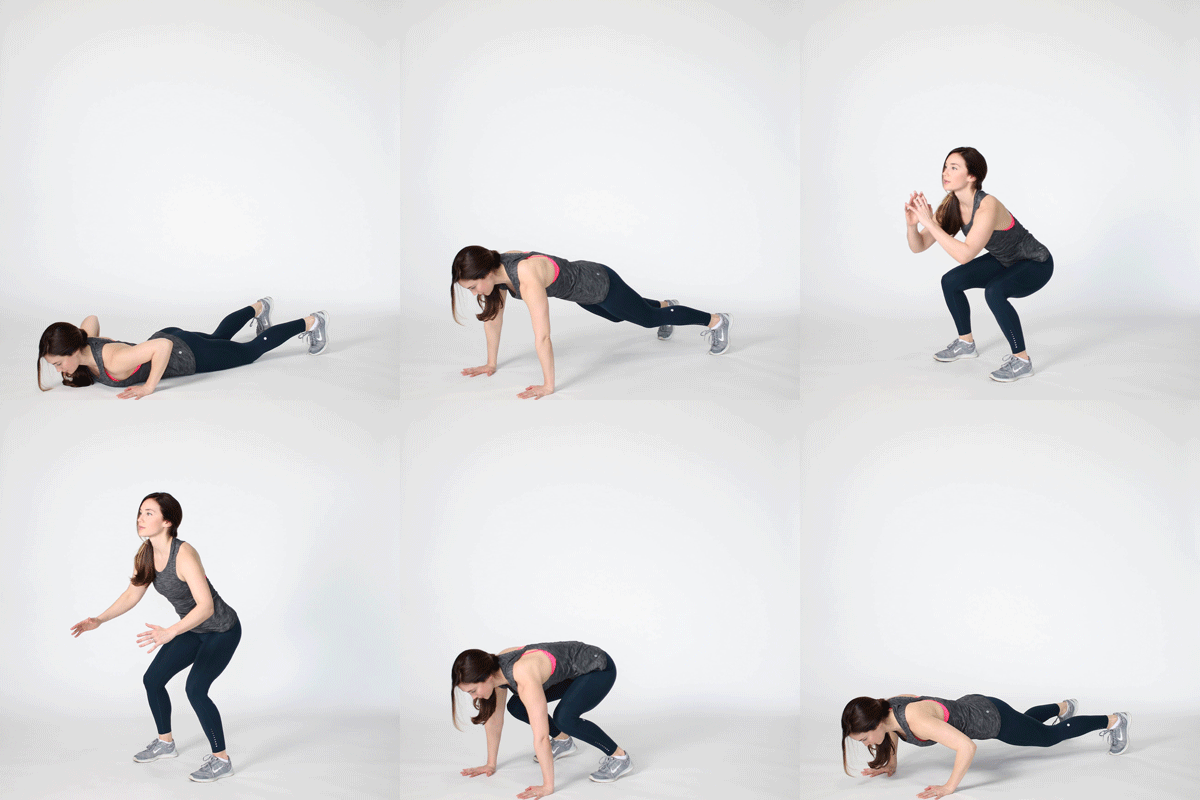
- Muscles Worked: Entire body – chest, shoulders, triceps, quadriceps, hamstrings, glutes, core.
- Execution: Begin standing. Squat down and place hands on the floor. Kick feet back into a plank position. Perform a push-up. Jump feet back to hands. Explode upward into a jump, reaching arms overhead.
- Benefit: A high-intensity, full-body conditioning exercise that significantly elevates heart rate and builds explosive power and endurance. Maintaining core engagement throughout is crucial for proper form and maximizing benefits.
-
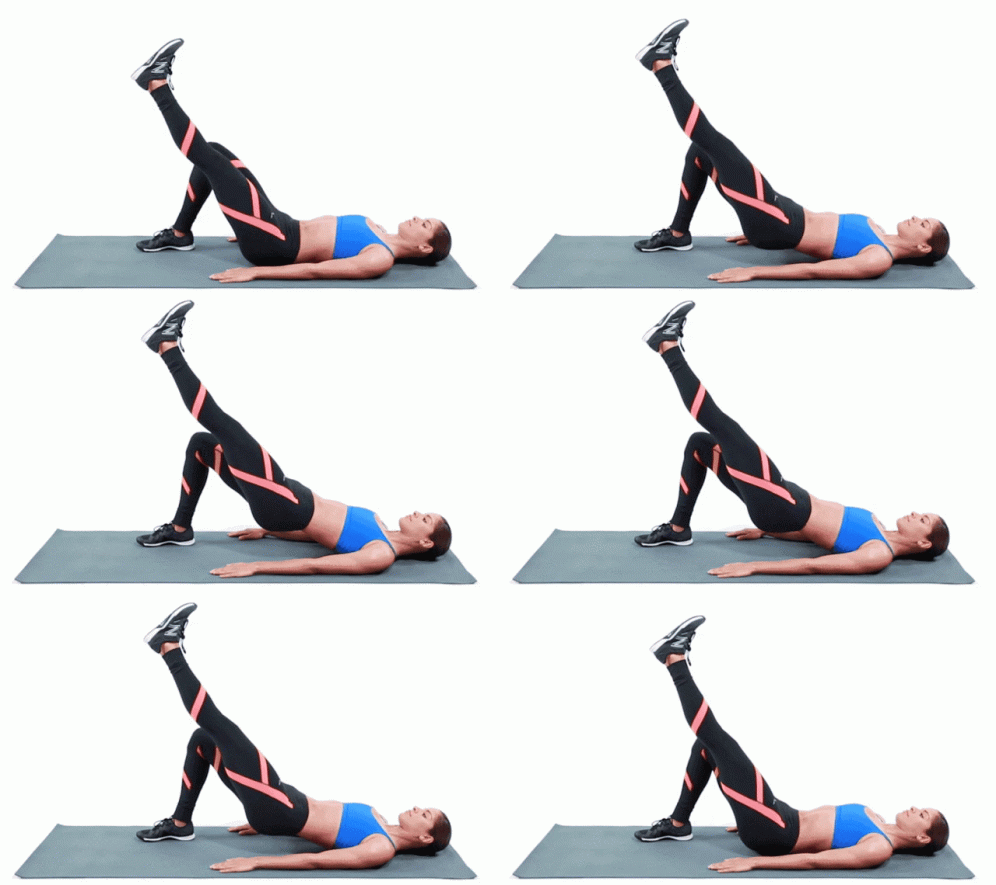
Single-Leg Bridge:
- Muscles Worked: Glutes, hamstrings, lower back, core.
- Execution: Lie on your back with knees bent, feet flat on the floor close to your glutes. Extend one leg straight up towards the ceiling. Press through the heel of the grounded foot, lifting your hips off the floor until your body forms a straight line from shoulders to the lifted knee. Hold briefly, then slowly lower.
- Benefit: Excellent for unilateral strength, addressing muscle imbalances, and strengthening the posterior chain and core. Aim for 10-12 repetitions per side.
-
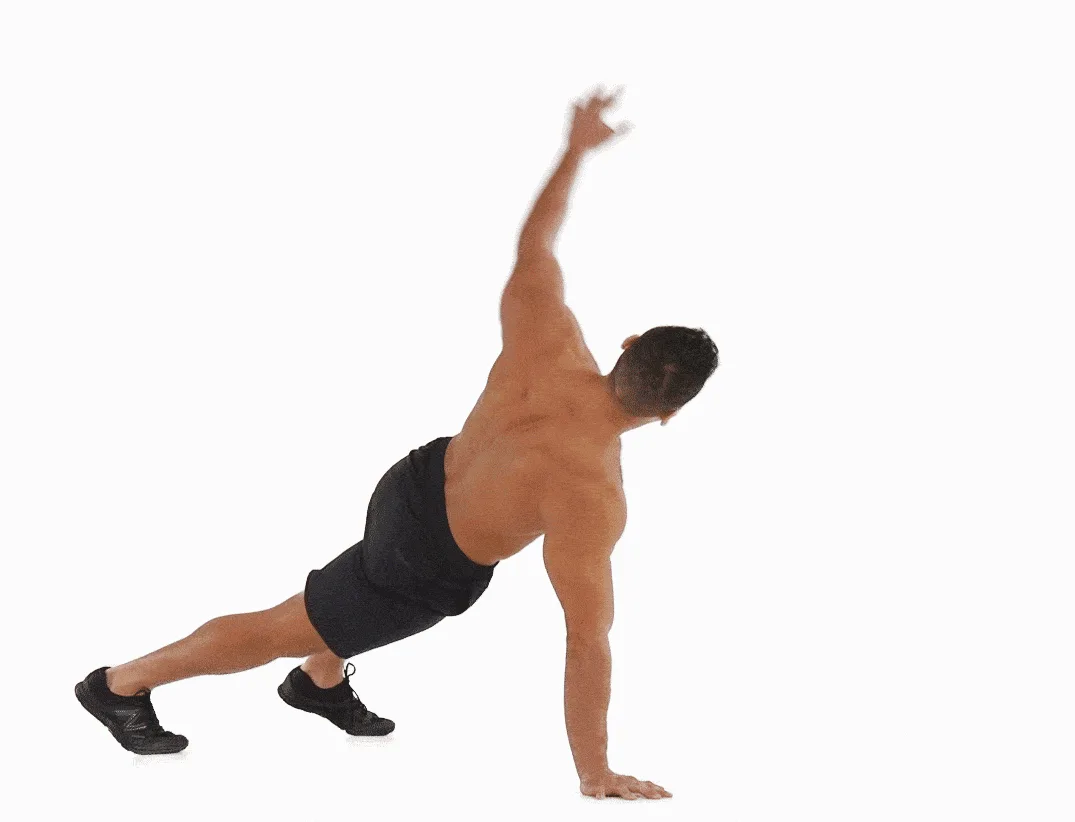
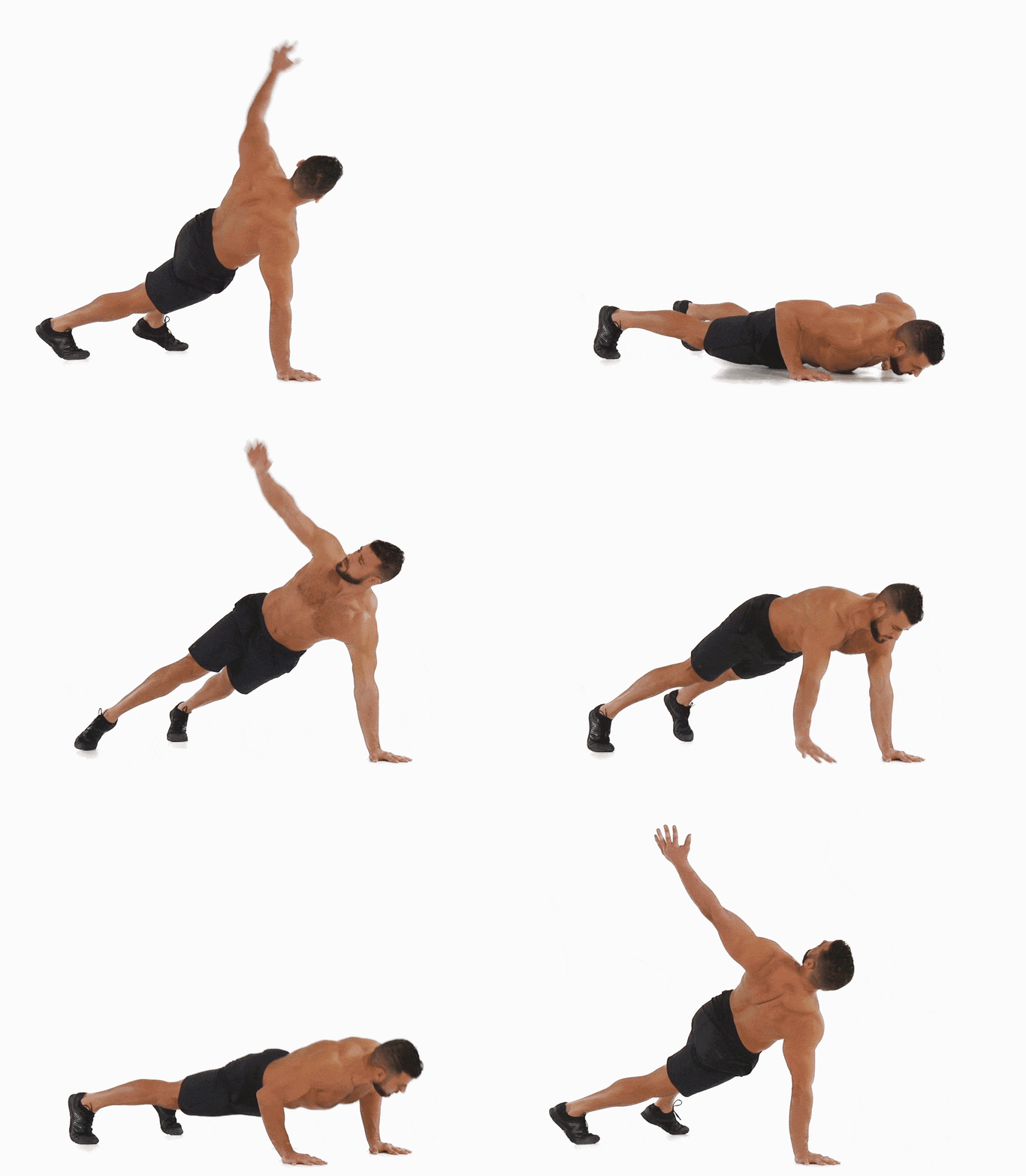
Push-Up and Rotate:
- Muscles Worked: Chest, shoulders, triceps, core, obliques.
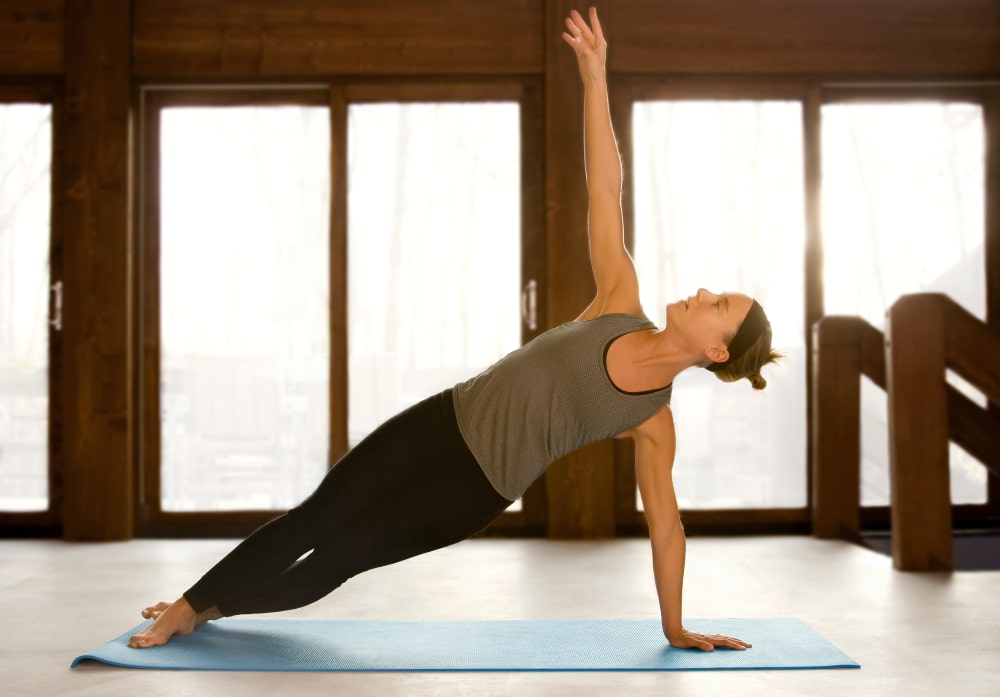
- Execution: Start in a push-up position. Perform a push-up. As you push back up, shift your weight to one hand and rotate your torso, extending the other arm straight up towards the ceiling in a side plank position. Return to the push-up position and repeat on the other side.
- Benefit: Integrates upper body pushing strength with rotational core stability, enhancing overall trunk strength and anti-rotational control. Focus on controlled movements and a tight core.
-
Air Squat:
- Muscles Worked: Quadriceps, hamstrings, glutes, lower back, core.
- Execution: Stand with feet shoulder-width apart, toes slightly pointed out. Keep your chest up, core engaged, and gaze forward. Hinge at your hips and bend your knees, lowering your body as if sitting into a chair. Ensure knees track over toes. Lower until thighs are parallel to the ground or as deep as comfortable with good form. Push through your heels to return to standing.
- Benefit: A fundamental lower body movement that builds leg strength and improves hip mobility. Deep squats, performed correctly, maximize muscle recruitment.
Structuring Your Compound Workout
To maximize the benefits, these exercises can be incorporated into a circuit training format, performing each movement back-to-back with minimal rest, or as part of a traditional strength training routine with sets and repetitions. A 15-minute high-intensity circuit incorporating these moves can provide a potent full-body workout, driving significant metabolic activity and muscle engagement. Many online resources and fitness professionals offer guided videos to demonstrate proper form and provide structured routines, such as the widely available "15-minute full body workout (no equipment)" videos that exemplify this approach.
Safety Protocols and Professional Guidance
While highly effective, compound exercises often require a greater degree of technique and body awareness than isolation movements. Improper form can negate benefits and increase the risk of injury. Therefore, adherence to safety tips is paramount:
- Prioritize Form: Always prioritize correct technique over lifting heavy weight or performing many repetitions. Sloppy form can lead to muscle strain or joint injury.
- Start Light (or Bodyweight): Especially for beginners, mastering bodyweight versions of compound exercises is crucial before adding external resistance.
- Warm-Up and Cool-Down: A dynamic warm-up prepares muscles and joints, while a static cool-down aids flexibility and recovery.
- Listen to Your Body: Pay attention to pain signals. Differentiate between muscle fatigue and sharp, acute pain.
- Seek Expert Observation: The most effective way to ensure proper technique is to work with an experienced personal trainer or coach. They can provide real-time feedback, correct form errors, and guide progression, significantly reducing injury risk. For those new to fitness, a trainer can also recommend appropriate starting weights and repetition schemes. A general guideline for beginners is to aim for 10-15 repetitions per exercise, focusing on controlled movement, before considering increased intensity.
Broader Implications for Public Health and Fitness Trends
The scientific endorsement of compound exercises carries significant implications. For public health, it offers a pragmatic solution to the pervasive issue of physical inactivity. By demonstrating that substantial fitness gains can be achieved through time-efficient, accessible workouts, compound training can lower barriers to entry for many individuals. It promotes a more holistic view of fitness, moving away from purely aesthetic goals towards functional capacity and long-term health.
In the fitness industry, this emphasis reinforces the shift towards functional training zones in gyms, the popularity of high-intensity interval training (HIIT) which often relies on compound movements, and the growing demand for qualified coaches who understand biomechanics and progressive programming. For athletes, compound exercises remain the bedrock of performance enhancement, building the raw strength and power required across various disciplines.
Frequently Asked Questions
Q: What Are The Best Compound Exercises For Weight Loss?
A: For weight loss, the goal is to maximize calorie expenditure and boost metabolism. Compound exercises are superior to isolation exercises for this purpose because they engage more muscle mass, leading to a higher energy burn during and after the workout (EPOC effect). They also build muscle mass, which increases basal metabolic rate, meaning you burn more calories at rest. Excellent compound exercises for weight loss include burpees, squats (especially jump squats or goblet squats), deadlifts (even bodyweight or light-weight versions), overhead presses, rows, and lunges. Integrating these into a circuit or HIIT format further amplifies their weight-loss benefits.
Q: What Are The Best Compound Exercises For The Legs?
A: Leg day is synonymous with compound movements due to the large, powerful muscles in the lower body.
- Squats: The king of leg exercises, targeting quadriceps, hamstrings, glutes, and calves, while also engaging the core. Variations like goblet squats, front squats, and back squats offer different stimuli.
- Lunges: Excellent for unilateral strength, addressing imbalances, and working quads, hamstrings, and glutes. Forward, reverse, and lateral lunges add variety.
- Deadlifts: A full-body powerhouse that heavily recruits the hamstrings, glutes, lower back, and core. Even bodyweight or Romanian deadlifts with light weights are highly effective.
- Step-Ups: A functional movement that strengthens glutes and quads, also improving balance and coordination.
Incorporating a combination of these exercises ensures comprehensive leg development.
Q: What Are The Best Compound Exercises For Back Pain?
A: For individuals experiencing back pain, strengthening the core and posterior chain (muscles along the back of the body) through controlled compound movements can be highly beneficial, but proper form is absolutely critical.
- Bodyweight Squats: When performed with an upright torso and engaged core, squats strengthen the glutes, hamstrings, and lower back without excessive spinal loading. Focus on maintaining a neutral spine.
- Bodyweight Deadlifts (or Hip Hinges): Practicing the hip hinge movement pattern, which is fundamental to deadlifts, without weights or with very light resistance, can teach proper back mechanics and strengthen the glutes and hamstrings, which support the lower back.
- Glute Bridges/Single-Leg Bridges: These target the glutes and hamstrings, crucial muscles for stabilizing the pelvis and supporting the lower back, with minimal spinal compression.
- Bird-Dog: While perhaps more of a core stability exercise, it engages the entire posterior chain in a controlled, low-impact manner, improving coordination and stability around the spine.
It is imperative for individuals with back pain to consult a healthcare professional or a physical therapist before starting any new exercise regimen. Form should be meticulously monitored, and movements should be stopped if any pain occurs.
In conclusion, the scientific consensus strongly supports compound exercises as a highly efficient and effective strategy for achieving diverse fitness goals. Their ability to simultaneously engage multiple muscle groups, boost metabolic rate, enhance functional strength, and optimize hormonal responses makes them an indispensable component of any robust training program. By embracing these foundational movements, individuals can achieve significant improvements in their fitness journey, often in less time, and foster a more resilient, capable body for life’s demands.
Sources: Andrews E. (2015), Garber CE, et al. (2011), Hwang-Bo Kak, et al. (2013)

