

Actress Rosamund Pike, known for her critically acclaimed performances in films such as Gone Girl and Hostiles, recently brought international attention to the evolving standards of physical preparation for women in the entertainment industry. During the production of her film I Care a Lot in Boston, Pike engaged in a rigorous strength and conditioning program under the tutelage of renowned trainer Tony Gentilcore. The collaboration, which culminated in Pike sharing her progress on social media, has served as a catalyst for a broader discussion regarding the physiological and psychological definitions of strength, particularly as they relate to female athletes and performers.
The focal point of this discussion emerged when Pike released footage of her performing a 100-pound deadlift for multiple repetitions. While the weight itself represents a significant personal milestone for the actress, the narrative surrounding the achievement highlights a shift away from traditional aesthetic-focused training toward functional, performance-based resistance training. According to Gentilcore, a CSCS (Certified Strength and Conditioning Specialist) and co-founder of Cressey Sports Performance, the training was not merely about reaching a numerical goal but about fostering a specific "sentiment" of capability and resilience required for Pike’s portrayal of the character Marla Grayson.
The Intersection of Character Development and Athleticism
In the film I Care a Lot, Pike portrays Marla Grayson, a character defined by predatory precision and unwavering resolve. Pike herself noted that the character required a "lioness" persona, which necessitated a physical presence that could not be achieved through traditional cardiovascular exercise alone. This requirement led to her partnership with Gentilcore in Boston, where the training focused on compound movements, specifically the deadlift, to build the foundational strength necessary to embody the character’s internal grit.
The use of heavy resistance training as a tool for character preparation is a growing trend in Hollywood. Historically, female actresses were often encouraged to maintain a "slender" physique, frequently achieved through high-repetition, low-weight exercises or excessive aerobic activity. However, the contemporary landscape is shifting. Pike’s public display of lifting appreciable weight challenges the long-standing industry trope that strength training leads to unwanted muscular hypertrophy, often referred to colloquially as "bulking."
Gentilcore observed that Pike was not a novice to the weight room, having maintained a baseline of fitness through previous professional engagements. Nevertheless, the transition to high-intensity deadlifting represented a deliberate move toward "appreciable weight." This approach emphasizes the "overload principle," a basic tenet of exercise science which states that for a muscle to grow or for strength to increase, it must be stressed with a load greater than it is accustomed to.
Clinical Benefits of Resistance Training for Women
The advocacy for women’s strength training, as highlighted by the Pike-Gentilcore collaboration, is supported by a vast body of clinical research. Despite the increasing visibility of female lifters, statistics from the Centers for Disease Control and Prevention (CDC) indicate that only approximately 20% of women in the United States meet the federal guidelines for muscle-strengthening activities, which recommend at least two days of resistance training per week.
The physiological benefits of the type of training Pike performed extend far beyond the requirements of a film set. Resistance training is a primary intervention for the prevention of osteoporosis, a condition that disproportionately affects women. By subjecting the skeletal system to axial loading—such as that experienced during a deadlift—bone mineral density is increased through the stimulation of osteoblast activity.
Furthermore, strength training plays a critical role in metabolic health. Muscle tissue is more metabolically active than adipose tissue; therefore, increasing lean muscle mass contributes to a higher basal metabolic rate (BMR). This is particularly relevant as women age and face the natural onset of sarcopenia, the age-related loss of muscle mass and function. By engaging in progressive overload, individuals can mitigate these effects, maintaining functional independence and metabolic efficiency.
Challenging Media Misconceptions and the "Pink Dumbbell" Paradigm
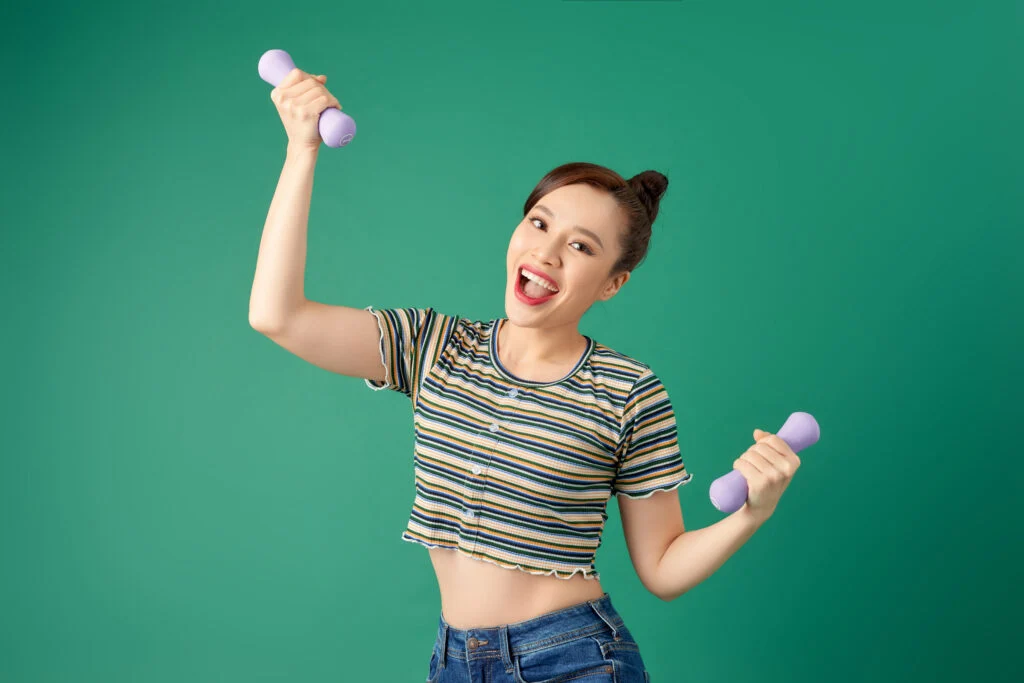
A significant portion of the discourse generated by Pike’s training involves a critique of how the mainstream media portrays female fitness. Gentilcore pointed out that digital media and stock photography often reinforce a sanitized version of strength. Common search results for "strong woman" frequently yield images of women lifting "dainty" or neon-colored weights that provide insufficient stimulus for actual strength adaptations.
This "pink dumbbell" paradigm suggests that women should avoid heavy lifting to remain feminine, a concept that Gentilcore and many in the fitness community label as an outdated social construct rather than a biological reality. From a physiological standpoint, women generally have significantly lower levels of testosterone than men—typically 15 to 20 times less—which makes the rapid development of extreme muscular bulk through natural training virtually impossible for the vast majority of the population.
Pike’s statement following her training—that her coach "celebrates the strength of everyone he trains"—underscores a move toward gender-neutral programming. In professional strength and conditioning, the variables of training (intensity, volume, and frequency) are determined by an individual’s injury history, biomechanics, and specific goals, rather than their chromosome makeup.
Chronology of the Collaboration and Industry Reaction
The timeline of Pike’s physical transformation coincides with the pre-production and filming phases of I Care a Lot. The training sessions took place in Boston, a city known for its high density of elite strength coaches and sports science facilities. Following the conclusion of filming, Pike’s public acknowledgement of Gentilcore’s methods served as a rare "behind-the-scenes" look at the labor-intensive nature of modern acting.
The reaction from the fitness industry has been overwhelmingly positive. Professionals in the field have lauded Pike for using her platform to normalize the sight of women engaging in heavy compound lifts. Historically, when male actors like Christian Bale or Henry Cavill undergo physical transformations, the focus is often on the "heroic" nature of their labor. Pike’s transparency provides a similar narrative for female performers, elevating the status of the "female action star" to one grounded in genuine athletic capability.
In her Instagram post, Pike thanked Gentilcore for pushing her to find "more than she knew she had," a sentiment that resonates with the psychological benefits of strength training. Clinical studies have shown that resistance training can significantly reduce symptoms of anxiety and depression, while improving self-efficacy and body image. For Pike, the physical strength was a conduit to the psychological strength required to play a "lioness."
Broader Implications for Public Health and Fitness Culture
The ripple effect of a high-profile actress endorsing heavy lifting cannot be understated. Celebrity influence remains one of the most potent drivers of public behavior in the health and wellness sector. When figures like Rosamund Pike demonstrate that lifting 100 pounds or more does not result in a loss of femininity but rather an increase in capability, it provides a powerful counter-narrative to the restrictive beauty standards that have historically dominated the fitness industry.
This shift is also reflected in the rise of competitive functional fitness and powerlifting among women. Over the last decade, participation rates for women in sanctioned powerlifting meets have seen exponential growth. This cultural movement prioritizes what the body can do over how the body looks, although the aesthetic benefits are often a secondary consequence of the performance gains.
Gentilcore’s assertion that "strong is a sentiment" suggests that strength is a subjective experience that evolves with the individual. For a professional athlete, it might be a world-record squat; for an actress, it might be the grit to carry a film; for an elderly individual, it might be the ability to climb stairs unaided. By de-linking strength from purely masculine or purely aesthetic associations, the fitness industry is becoming more inclusive and evidence-based.
Conclusion: The New Standard of Strength
The collaboration between Rosamund Pike and Tony Gentilcore represents more than a successful training cycle for a movie role; it is a microcosm of a larger cultural shift. As more women in the public eye embrace the barbell, the barriers to entry for the average woman are lowered. The focus is increasingly shifting toward longevity, bone health, and psychological resilience.
While the "lioness" Marla Grayson may be a fictional character, the physical foundations Pike built to portray her are grounded in the very real principles of strength and conditioning. As the film industry continues to demand more physically demanding roles from its lead actresses, the integration of professional athletic preparation will likely become the standard rather than the exception. Pike’s 100-pound deadlift is not just a personal best; it is a signal to the industry and the public that the definition of "strong" is being rewritten by those willing to pick up the weight.

