

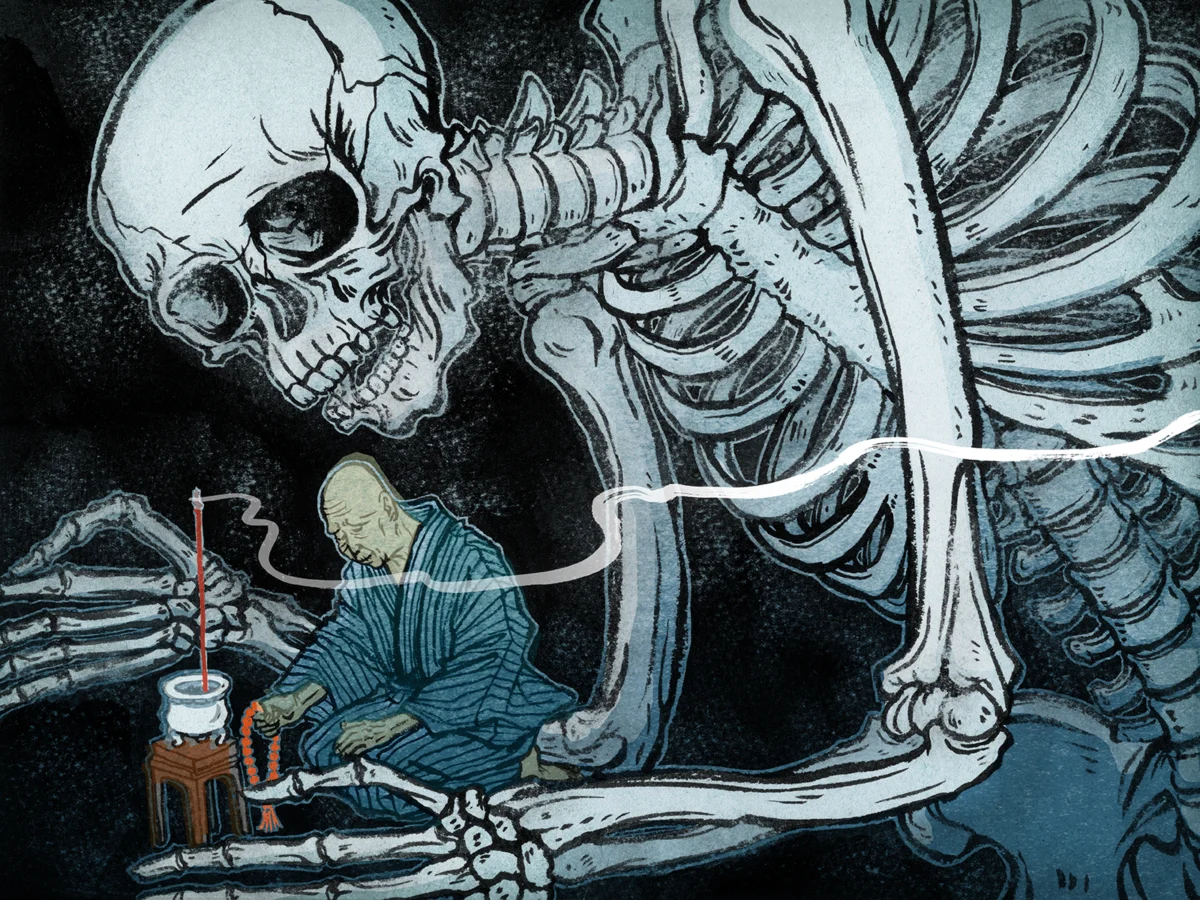
Hiromi Ito, a celebrated Japanese poet renowned for her unflinching explorations of pregnancy, childbirth, and female sexuality, is offering readers a profound and intimate journey through her latest work, Reading the Heart Sutra. This deeply personal reflection, translated into English for the first time by Jeffrey Angles, is being published serially by Tricycle magazine, with each monthly chapter providing a window into Ito’s contemplative process. The series delves into Buddhist texts, weaving them with the fabric of her own life as she navigates the complexities of motherhood, grapples with loss, and tends to her aging parents.
Ito’s work has long been characterized by its directness and emotional honesty. Her emergence in the Japanese literary scene in the 1980s marked a significant moment, challenging conventional narratives and bringing often-silenced aspects of female experience into public discourse. Reading the Heart Sutra continues this tradition, but with a focus that has shifted towards the profound realities of aging, impermanence, and the inevitable approach of death.
Navigating the Twilight of Life: Parental Care and Personal Reflection
The latest chapter of Reading the Heart Sutra opens with a palpable sense of urgency, a desire to accomplish something meaningful before it is too late, specifically while her father is still alive and capable of reading. This immediate concern sets a somber yet determined tone, reflecting the author’s deep engagement with her parents’ declining health.
Ito paints a poignant picture of her father, who lives alone. His days are largely consumed by sleep, leading him to remark, "I’m alive, but maybe I’m really dead—all I do the whole day is sleep." This sentiment, shared without malice, highlights the existential weight of his current state. He, like her mother, is in a liminal space, existing but seemingly waiting for the inevitable. This prolonged period of waiting, described as death "taking its time," underscores the often protracted and difficult nature of the end of life.
Her mother’s situation is particularly stark. Until three years prior, she managed all household duties, a typical division of labor for her generation, with her husband—a "good husband" in his way—leaving domestic responsibilities entirely to her. This changed when she began losing feeling and movement in her limbs. Despite various medical assessments, including potential strokes, neuropathy, or varicosis, a definitive diagnosis remained elusive. Ultimately, she was hospitalized and has not left since, confined to her bed.
Ito describes her mother as having been "difficult to be around," her life marked by unfulfilled desires and a tendency to project her frustrations onto those closest to her. However, her incapacitation has brought about a surprising shift. Unable to control her circumstances, she has found a measure of peace, becoming a more attentive listener, albeit sometimes disconnected. Her occasional, albeit tangential, advice now carries a different weight, a gentle echo from a life once lived with considerable friction.
The Quiet Transformation of a Mother
During Ito’s bi-monthly visits from California, she observes a subtle transformation in her mother. Each visit reveals a woman who is "a little more relaxed, a little more out of it, and a little quieter," as if undergoing a process of purification. This calming presence is a stark contrast to the mother Ito remembers, prompting moments of disbelief: "I go look, and sure enough, it is. She recognizes me and talks to me with nostalgia in her voice."
In these bedside encounters, Ito finds an unexpected confidante. She unburdens herself, sharing details about her husband, her daughters, and her father, whose behavior has regressed to that of a child seeking maternal affection since her mother’s hospitalization. This period offers a unique, albeit melancholic, opportunity for connection. Ito, often feeling isolated with her family concerns, finds solace in this one-sided, yet reciprocated, exchange. Her mother’s focus narrows to family matters, listening more intently than anyone else, even offering advice that, while sometimes misdirected, signifies a form of engagement. Ito likens this to whispering into a vessel that silently absorbs her words, yet remarkably, responds. It is only in this state of profound vulnerability that her mother, in Ito’s perception, is finally able to offer a unique form of support.
The Lingering Echoes of Past Grievances
As her mother’s dementia progresses, her ability to comprehend the intricacies of her daughter’s and granddaughter’s lives diminishes. Ito scales back their conversations to simple updates on well-being. Yet, a recurring theme emerges: her mother’s persistent complaints about relatives, often referencing events from decades past. These grievances—a sister-in-law’s words from thirty years ago, a feud with her mother-in-law from thirty-five years ago, a quarrel with her older sister fifty years ago—grate on Ito.
Her attempts to interject, to suggest exaggeration or the possibility of past kindnesses, are met with a continuous stream of grievances. This repetitive cycle of complaint, coupled with the knowledge of her mother’s impending death, creates an atmosphere of increasing tension. Ito admits to struggling to remain patient, her own sense of being "barely scraping by" contributing to her sharp retorts, "Mom, gimme a break. It’s time to forget all that."
The stark reality of the nursing home environment further amplifies these reflections. Surrounded by other elderly women in various states of incapacitation, some shouting uncontrollably, Ito observes the slow, drawn-out process of dying in contemporary society. Her mother, witnessing this, sometimes expresses a desire to die, quickly tempered by concern for her husband’s feelings. The poignant observation that her younger sisters, who once advised against dying first, are now outlived by their spouses, highlights the shifting dynamics of aging and mortality within the family.
The Unseen Threads of Kinship and Loss
A significant thread in Ito’s narrative is her relationship with her aunt, her mother’s older sister. This aunt, who had no children of her own, showered Ito with affection. Childhood memories are filled with visits to her aunt’s home, the wrenching goodbyes, and the comfort of a stuffed animal lent "until you come back next time." This act, perceived by Ito as a profound gesture of love and connection, was met with maternal disapproval: "My sister never acts like a grown-up, no matter how old she is." Yet, for young Ito, the lent toy, imbued with her aunt’s scent, was a vital link, a promise of continuity.
The aunt and her husband later moved to Osaka, severing contact with Ito for decades. This separation, a source of lingering regret, is framed by Ito through the lens of Buddhist teachings on karma: "I have created so much bad karma in my past."
A reunion years later reveals a frail, aged aunt. Visiting her ailing husband, who suffers from advanced Alzheimer’s, Ito witnesses the quiet dedication of a younger cousin who has taken on their care due to proximity. This realization triggers a deep sense of guilt in Ito, a feeling of having developed "bad karma" by leaving them to their own devices. The medical discussions about a gastrostomy for her uncle, a procedure Ito initially questions ("If he’s going to die, let him die. Dying is the natural course of things."), ultimately underscore the complex decisions surrounding end-of-life care, often made by those closest to the patient.
Despite the decades of separation, Ito’s infrequent calls from California elicit a brightening in her aunt’s voice, a testament to the enduring power of familial connection. This sentiment is echoed by the Buddhist concept of "avow and repent," suggesting a recognition of past oversights and a desire for reconciliation.
The chapter also touches upon the fading grip of time and memory, illustrated by a peculiar birthday discrepancy. Both her father and aunt, born in the same month and year, misstate their ages, a minor but telling detail in the twilight of their lives. Ito’s gentle correction is met with mild disinterest, highlighting how numerical age becomes less significant as one approaches the end of life. The question of "how long" they have left and the prospect of "lonely" years ahead weighs heavily on Ito.
The Enduring Power of Memory and Literary Legacy
Ito’s father, living alone, relies on a home helper for daily support. His interactions, particularly during Ito’s visits to Kumamoto, reveal a gradual re-engagement with conversation and a brightening of his demeanor. His days are filled with samurai dramas, novels, sumo, baseball, and the news—a constant reminder of "impermanence."
His engagement with Ito’s book, The Thorn Puller, which chronicles the challenges of caring for her family in California while attending to her elderly parents across the Pacific, offers a rare moment of connection. His comment that the book provided "a ray of hope" and made him feel "like we might be able to go on living forever" is interpreted by Ito with a nuanced understanding. While the book grapples with aging, his response indicates a deep-seated desire for continuity, a testament to his enduring will to live. This acknowledgment, though tinged with embarrassment for him having read about himself, signifies his continued presence and engagement with his daughter’s life.
However, this engagement proves fleeting. When The Thorn Puller garners significant literary awards, Ito’s attempts to share this achievement with her father are met with blank stares. The sounds of the words "prize" fail to register. He responds with more interest to details about historical figures from his favorite samurai novels, such as Hasegawa Heizō, than to his daughter’s literary triumphs. This disconnect highlights the increasing cognitive challenges of aging, where familial connections and intellectual engagement can become fragmented.
A particularly poignant observation is Ito’s father’s occasional use of "Mom" when referring to his wife, or her name, "Hiromi," when speaking of his daughters. This blurring of identities, while unsettling, prompts a profound realization: "Even if Dad forgets the identity of his 52-year-old daughter, he’ll never forget the 3-year-old he once held so lovingly in his lap." This memory of her as a child, a cherished image, offers Ito a measure of solace, a sense that this fundamental connection, at least, endures.
Confronting Mortality: Buddhist Teachings and Personal Solace
The overarching theme of death permeates Ito’s reflections. She finds herself drawn to any mention of mortality, questioning the prolonged, often agonizing, nature of modern dying. The lack of widespread contemplation on death, its meaning, and its process, leaves individuals "totally unprepared." She contrasts this with past eras and the expressions of resignation found in popular music, suggesting a societal shift away from traditional spiritual frameworks.
Ito notes her own lack of formal Buddhist education, having never learned the traditional incantations or verses associated with such contemplations. Yet, by "fumbling" her way through Buddhist texts, tracing them backward, she begins to find a pathway to understanding. The sutras, acting as ancient guides, offer a potential means to "look death in the face." However, her personal journey is complicated by a hard-won sense of self, a reluctance to let go of her identity, which she fears would leave her "completely undone."
The predicament of her parents and aunt—living but not fully alive, dying but unable to fully die—forces her to confront this paradox. They are, in her view, wandering through the bardo, the intermediate state between death and rebirth. This suspension, while indicative of continued life, prompts the question of what they need to prepare for the ultimate transition.
The Vow Verse: A Universal Plea for Peace in Death
It is within this context of existential inquiry that Ito discovers a profound "Vow Verse," attributed to Shandao, a significant figure in Chinese Pure Land Buddhism. This verse, originally from the Liturgy for Rebirth, is a prayer for a peaceful passage through death, asking that minds remain clear, suffering be alleviated, and a benevolent assembly appear. The verse’s historical context, aligning with the era of Xuanzang’s translation of the Heart Sutra and figures like Prince Shōtoku, brings a sense of historical weight and personal connection for Ito, who has a fondness for Japanese history and Chinese legends presented through manga.
The Vow Verse, with its poetic structure and universal themes, resonates deeply with Ito, a poet by profession. Its Sanskrit origin as a gāthā (poem) further enhances its appeal. She also encounters Shandao’s "Sunset Impermanence Verse," which vividly describes the fleeting nature of life and the urgent need for spiritual preparedness.
Ito paraphrases the Sunset Impermanence Verse, creating her own rendition titled "The Verse of Impermanence, the Setting of the Sun." This personal interpretation emphasizes the urgency of listening, the candle-like fragility of life, the cyclical nature of existence, and the imperative to confront death while still strong and sound of mind.
A Father’s End: Hope for Peace and Acceptance
The chapter culminates in Ito’s conversation with her father’s doctor, who outlines a probable trajectory of decline: increasing weakness, dependence on care, and eventual susceptibility to illness like pneumonia or choking. This clinical prognosis starkly contrasts with Ito’s heartfelt wish for her father’s final moments.
She reinterprets the Vow Verse, tailoring it to her father’s life and beliefs. Recognizing that concepts of the Pure Land or Buddha may not resonate with him, she focuses on the desire for a peaceful, composed, and suffering-free death. Her wish is for him to reflect on his life with acceptance: acknowledging his loneliness, his enduring love for his wife, his daughter’s efforts, and the inherent nature of life’s circumstances.
Ito acknowledges that a direct recitation of the original Vow Verse might be beyond her father’s comprehension or spiritual framework. Instead, she envisions a simplified, personal version, a "Vow Verse, to Arouse Aspiration," intended to bring him comfort and clarity as he faces his final breaths. This rewritten verse expresses a humble request for a peaceful transition, free from distress, with a calm heart, and a sense of being guided towards an afterlife where he can find the strength to help others.
The essay concludes with Ito’s deeply personal meditation on her father’s life and the hope for his peaceful passing. She emphasizes his resilience in navigating war, postwar reconstruction, and raising a family, deeming him a good father. Her ultimate desire is for him to meet death with a tranquil heart, a sentiment that encapsulates the core of her reflections on mortality, family, and the enduring search for meaning in the face of impermanence.

