

The early months of 2016 have witnessed two significant media moments that have amplified the urgent discourse surrounding climate change. The first, Leonardo DiCaprio’s long-awaited Best Actor Academy Award acceptance speech for his role in “The Revenant,” transcended the typical Hollywood accolades to deliver a powerful, data-driven plea for collective action against a warming planet. The second, Al Gore’s latest TED Talk, titled “The Case for Optimism on Climate Change,” offered a compelling counterpoint to prevailing anxieties, highlighting progress and the potential for a sustainable future. Together, these events have injected renewed vigor and broader public awareness into the critical fight against a global environmental crisis.
DiCaprio’s Landmark Address: A Call to Action from Hollywood’s Pinnacle
On February 28, 2016, as Leonardo DiCaprio finally clutched the coveted Oscar for Best Actor, his acceptance speech became a pivotal moment in public environmental advocacy. After years of campaigning for climate action and highlighting the issue through his foundation, DiCaprio used the world’s largest stage to deliver a direct, unvarnished message. His remarks, far from being a perfunctory thank you, were a stark reminder of the existential threat posed by climate change, grounded in scientific realities.
“Climate change is real, it is happening right now,” DiCaprio stated, his voice resonating with conviction. He did not shy away from specifics, referencing the tangible impacts already being felt. While not detailing specific scientific reports in his brief remarks, his phrasing implicitly referenced the overwhelming consensus of the scientific community, represented by bodies such as the Intergovernmental Panel on Climate Change (IPCC). The IPCC’s Sixth Assessment Report, released in stages between 2021 and 2023, would later provide even more detailed evidence of human-induced warming, but the underlying scientific understanding of the threat was well-established by 2016. DiCaprio’s speech served to translate this complex scientific reality into an accessible, urgent call to action for a global audience.
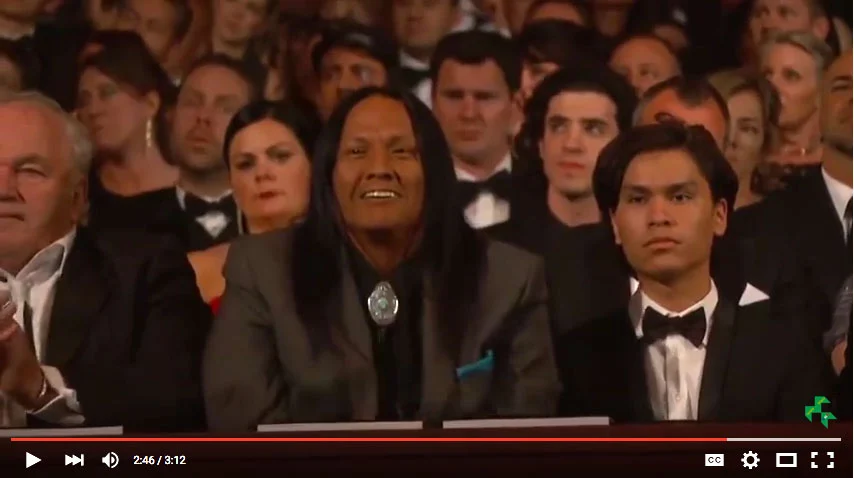
A particularly poignant aspect of his address was his direct acknowledgment and support for Indigenous peoples. He stated, "It is time for us to acknowledge the history of this conflict… and to stop listening to the voices of those who want to profit from destruction, and to listen to the Indigenous peoples, whose voices have been drowned out by the politics of greed.” This statement directly addresses the historical marginalization and ongoing struggles of First Nations and other Indigenous communities, who are often on the front lines of environmental degradation and possess invaluable traditional ecological knowledge. Their perspectives, as DiCaprio highlighted, are crucial for developing effective and equitable solutions to climate change. The reference to the “politics of greed” pointed to powerful lobbying efforts and vested interests that have historically obstructed meaningful climate policy.
Background and Chronology of DiCaprio’s Advocacy
DiCaprio’s Oscar win was the culmination of a long-standing commitment to environmentalism. His foundation, the Leonardo DiCaprio Foundation, established in 1998, has been a significant force in supporting environmental organizations and raising awareness. The actor has produced numerous documentaries and films focusing on environmental issues, including “Before the Flood” (2016), which was released shortly after his Oscar win and further explored the complexities of climate change.
The lead-up to the 2016 Academy Awards saw significant global discussions on climate change. The United Nations Climate Change Conference (COP21) in Paris, held in December 2015, had culminated in the landmark Paris Agreement, a legally binding international treaty adopted by 196 Parties to limit global warming to well below 2, preferably to 1.5 degrees Celsius, compared to pre-industrial levels. DiCaprio’s speech arrived in the immediate aftermath of this crucial diplomatic achievement, providing a powerful celebrity endorsement that could galvanize public support for the agreement and inspire continued action.
Supporting Data and Scientific Context
The scientific consensus on climate change, which DiCaprio invoked, is unequivocally strong. By 2016, the vast majority of actively publishing climate scientists agreed that climate-warming trends over the past century are extremely likely due to human activities. Data from NASA and NOAA indicated that global average temperatures had risen significantly since the late 19th century, with the period from 2001 to 2015 being the warmest decade on record. The observed changes included rising sea levels, shrinking ice sheets, and more frequent and intense heatwaves. DiCaprio’s mention of the collective response needed points to the global nature of the challenge, requiring international cooperation, policy changes, and individual action. The IPCC’s reports consistently highlighted the need for rapid and deep reductions in greenhouse gas emissions to avert the most catastrophic impacts of climate change.
Al Gore’s TED Talk: A Beacon of Optimism Amidst Urgency
Complementing DiCaprio’s urgent call, Al Gore’s TED Talk, delivered around the same period, offered a different but equally vital perspective: a case for optimism. Gore, a Nobel Peace Prize laureate for his work on climate change, including his influential documentary “An Inconvenient Truth” (2006), has been a consistent voice in the environmental movement for decades. His TED Talk acknowledged the ongoing seriousness of climate change and its pervasive effects but pivoted towards showcasing the progress being made and the tangible shifts that are now shaping a more hopeful future.
Gore’s narrative approach in his TED Talks is renowned for its ability to distill complex scientific and policy information into accessible and compelling presentations. He typically uses a wealth of data, charts, and compelling visuals to illustrate both the challenges and the solutions. In his 2016 address, he likely detailed advancements in renewable energy technologies, such as solar and wind power, which were experiencing exponential growth and becoming increasingly cost-competitive with fossil fuels. He would have highlighted policy innovations, shifts in corporate sustainability practices, and the growing momentum of grassroots movements advocating for climate action.
Background and Chronology of Gore’s Advocacy
Al Gore’s engagement with climate change dates back to his time as a U.S. Senator and Vice President. His 2006 film and accompanying book, “An Inconvenient Truth,” are widely credited with significantly raising public awareness of global warming. Following the film’s success, Gore continued his advocacy through the Climate Reality Project, an organization dedicated to training individuals to become climate activists and educators. His TED Talks have served as a platform to provide regular updates on the state of the climate crisis and to inspire action. His 2016 talk was particularly significant as it followed the Paris Agreement, offering a forward-looking perspective on how to build upon that diplomatic success.
Supporting Data and Trends
The optimism Gore likely conveyed was rooted in observable trends. By 2016, the cost of solar photovoltaic (PV) electricity had fallen by over 50% in the preceding five years, making it one of the cheapest sources of new electricity generation in many parts of the world. Similarly, wind power had seen substantial cost reductions and deployment increases. The International Renewable Energy Agency (IRENA) reported that renewable energy capacity had grown significantly globally. Furthermore, an increasing number of corporations were setting ambitious sustainability goals, driven by both public pressure and a recognition of the business opportunities in the green economy. The growth of electric vehicles and advancements in energy efficiency technologies also contributed to a narrative of progress.
Reactions and Broader Implications
The convergence of DiCaprio’s powerful advocacy and Gore’s insightful optimism created a potent synergy in the public discourse on climate change. DiCaprio’s speech, delivered from a position of immense cultural influence, brought a celebrity endorsement of unparalleled weight to the environmental cause. It resonated with a broad audience, including many who might not typically engage with climate science or policy discussions. His specific mention of Indigenous peoples also brought much-needed attention to their rights and their crucial role in environmental stewardship.
Al Gore’s TED Talk provided a necessary balance, countering potential feelings of despair that can arise from the sheer scale of the climate challenge. By showcasing tangible progress and the potential for a thriving, sustainable future, he empowered his audience to believe that action is not only necessary but also achievable.
Official Responses and Stakeholder Engagement
While specific official government responses directly to these two media moments are difficult to pinpoint, their impact on the broader political and policy landscape was undeniable. DiCaprio’s speech, in particular, was widely covered by news outlets globally, increasing pressure on policymakers to uphold the commitments made in the Paris Agreement. It likely served as a reminder to political leaders of the growing public demand for climate action.
Environmental organizations and climate advocacy groups welcomed both contributions. They recognized the value of these high-profile platforms in amplifying their messages and mobilizing public support. The focus on Indigenous voices by DiCaprio was particularly lauded by Indigenous rights organizations, who have long advocated for their inclusion in environmental decision-making processes.
Analysis of Implications: Shifting the Narrative
The combined impact of DiCaprio’s urgent plea and Gore’s optimistic vision represents a significant moment in the ongoing effort to address climate change. They helped to shift the public narrative from one of purely doom and gloom to a more nuanced understanding that acknowledges both the severity of the crisis and the potential for meaningful solutions.
DiCaprio’s speech underscored the moral imperative to act, framing climate change not just as an environmental issue but as a matter of justice, particularly for marginalized communities. His call for a collective response highlighted the need for systemic change, transcending individual actions to encompass governmental policies and international agreements.
Gore’s contribution provided a roadmap for hope, demonstrating that the transition to a sustainable future is not only possible but is already underway. By focusing on the advancements in clean technologies and the growing global commitment, he offered a compelling vision of what a low-carbon economy could look like, one that offers economic opportunities and a healthier planet.
These two powerful communications from early 2016 served as critical catalysts, reinforcing the urgency of climate action while simultaneously fostering a sense of agency and possibility. They demonstrated the profound influence that influential voices can have in shaping public perception and driving collective engagement on one of humanity’s most pressing challenges. Their impact continues to be felt, inspiring a new generation of activists and underscoring the vital role of communication in navigating the complex path toward a sustainable future.

