

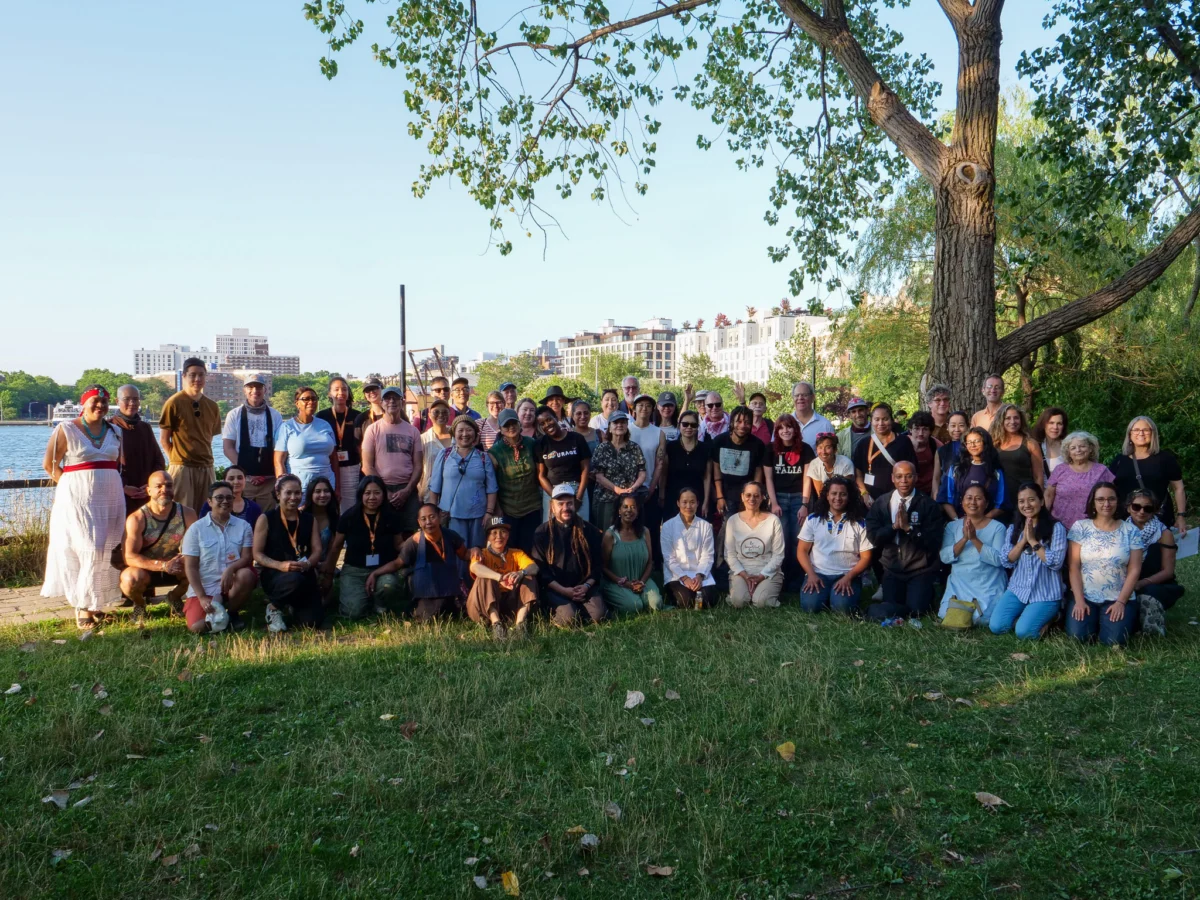
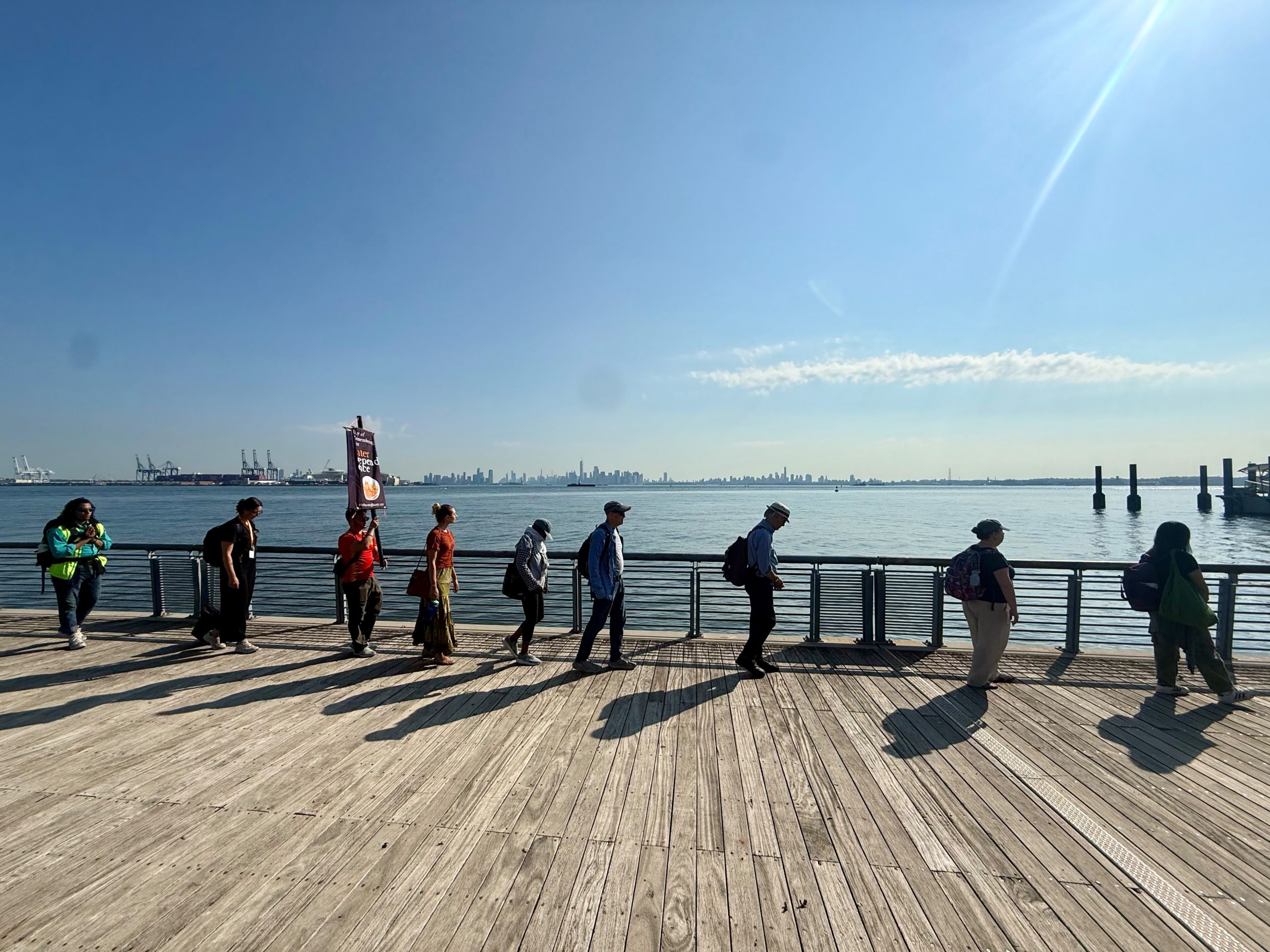
On July 12, a diverse group of approximately one hundred individuals embarked on a silent and solemn pilgrimage across New York City, culminating in a powerful demonstration of solidarity outside the Metropolitan Detention Center (MDC) in Brooklyn. This marked the third stop of the "Day of Remembering Our Interdependence" pilgrimage, an initiative spearheaded by the collective Mahasangha NYC. The event brought together participants from various Buddhist lineages and other faith traditions, uniting them in a multi-borough walk punctuated by moments of ritual, chanting, spoken reflections, and community building.
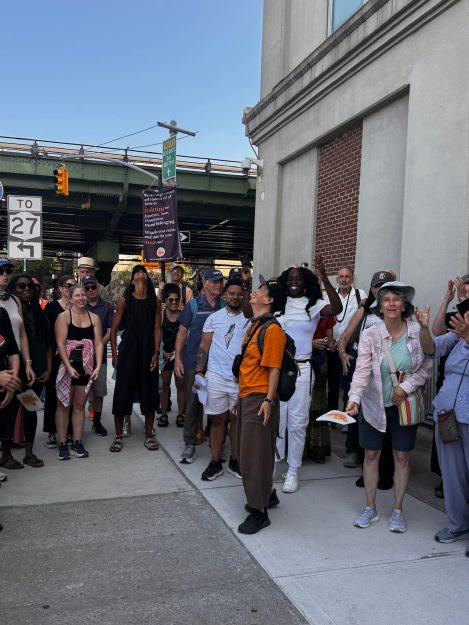
The pilgrimage’s journey brought them to a stark juxtaposition: a vibrant assembly of individuals standing in silent witness across the street from the imposing federal facility. The chain-link fence surrounding the MDC bore the poignant, handmade testaments of loved ones—signs declaring "Happy Birthday, Dad" and "We Love You"—a silent plea for connection and recognition from those held within. The MDC, the sole federal prison within New York City, currently houses around 1,200 individuals, a population that includes high-profile figures such as former Venezuelan president Nicolás Maduro. However, the facility’s notoriety extends beyond its inmate roster. Extensive reporting by The New York Times has documented the MDC’s "dreadful conditions, near perpetual lockdowns, and grave staffing shortages." In recent times, the center has become a holding place for hundreds of individuals detained by Immigration and Customs Enforcement (ICE) during intensified raids and immigration sweeps over the past eighteen months.
A Call for Peace Amidst Confinement
As Sister True Vow of Blue Cliff Monastery led the assembled pilgrims in a song, a resonant response emerged from within the detention center. The faint sounds of people inside banging on the narrow, fogged windows echoed the pilgrims’ presence, a muffled communication between two worlds separated by concrete and steel. The group’s collective chant, "May all live in peace, be protected and safe," was echoed in the heartfelt words of Dharma teacher Kaira Jewel Lingo. "Every human being in this building behind us is a human being worthy of our love and respect," Lingo declared, drawing a parallel between her own age and that of Lorenzo Salgado Araujo, a man tragically killed by ICE agents in Houston mere days prior, who were mistakenly targeting another individual.
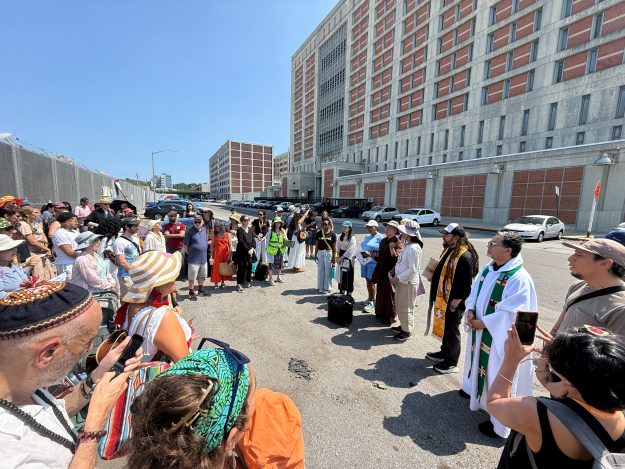
The rhythmic tapping from within the MDC continued as Father Adam Bucko offered a Christian prayer, followed by remarks from Rev. Juan Carlos Ruiz. Rev. Ruiz, who leads weekly vigils outside the MDC and engages directly with some detainees, shared firsthand accounts of the horrific conditions reported by individuals who have been released. Their descriptions painted a grim picture, with one individual reportedly remarking that the notorious Delaney Hall in Newark paled in comparison, seeming like "child’s play" in its relative leniency.
Acts of Care and Resilience
Amidst the somber reflections, a dedicated team of medics, identifiable by their red crosses, moved through the crowd, offering essential provisions. They distributed water, sunscreen, snacks, and personal fans, recognizing the potential impact of the day’s bright sun and high temperatures. Mara Phelan, a doctor and co-organizer of the pilgrimage, had proactively assembled this medical support team, anticipating the needs of participants who had been on their feet since early morning. These small acts of care underscored the pilgrimage’s underlying ethos of compassion and mutual support.
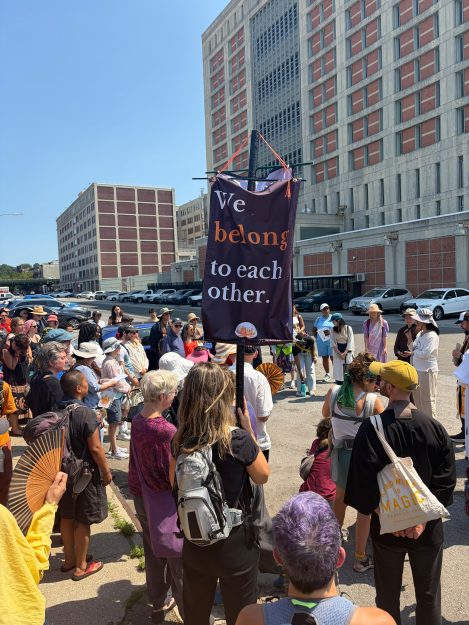
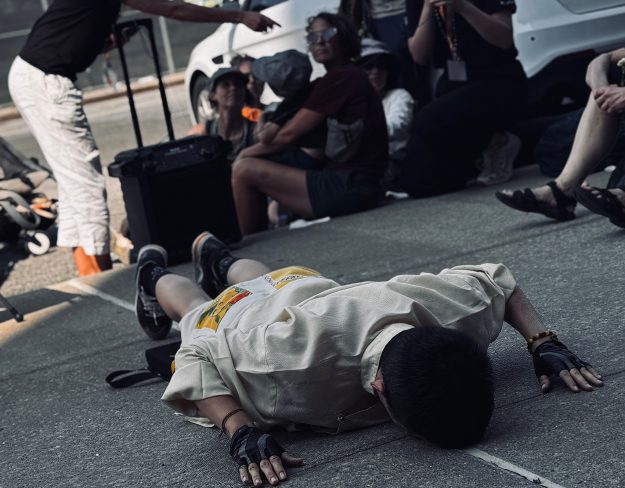
Artist and author Tenzin Mingyur Paldron then captivated the audience with a profound story of resilience. She recounted meeting a Tibetan woman who endured twenty-seven years of imprisonment by Chinese authorities. During her incarceration, the woman learned that the Dalai Lama was still alive, and she felt compelled to share this news with her fellow prisoners to offer them hope. However, due to strict isolation policies, communication was forbidden. Undeterred, she conveyed her message through song, rendering a well-known melody that included the line, "After the snowfall comes the warmth of the sun." Her fellow prisoners, though unable to speak, understood the poignant symbolism, experiencing a shared moment of reflection and quiet rejoicing that bewildered their guards. "They were trying to contain life," Paldron observed, her voice resonating with conviction, "And we are uncontainable." The artist concluded her address with a series of full-body prostrations before the MDC, accompanied by the group’s solemn chanting.
Genesis of a Spiritual Response
The genesis of the "Day of Remembering Our Interdependence" can be traced back to a gathering of friends in February. Many in the group expressed deep concern over the prevailing social and political climate. They found inspiration in the "Walk for Peace," a remarkable event where a monastic group walked 2,300 miles from Fort Worth, Texas, to the Lincoln Memorial in Washington, D.C., over 110 days. "It’s like call and response," explained co-organizer Dorotea Mendoza. "That was their call, what is our response?"
Through extensive discussions and collaborative ideation, a core group of about ten organizers, predominantly women of color, conceptualized a similar pilgrimage. Mirroring the "Walk for Peace," their intention was not to articulate a political agenda but to firmly assert their deepest values. "I wasn’t there trying to fix anything," Mendoza shared, reflecting on the experience of standing outside the MDC. "That in itself feels light."
Embracing Inclusivity and Inner Transformation
Some organizers, like Stephanie Cates, brought experience from activist circles focused on environmental justice and the Palestinian cause. However, Cates emphasized the crucial importance of "bringing others in as our own, even the people that I might consider my enemy, like an ICE agent." This sentiment of radical inclusion was a cornerstone of the pilgrimage. Milou Haskin, another organizer, articulated that the event was not about making demands but about an active declaration of interconnectedness. "We’re not actually waiting on anyone," she stated. "We want to insist on how much we love each other and [take] care of each other—for this little microcosm to embody all the things we want the world to be."
The "Day of Remembering Our Interdependence" resonated beyond New York City, inspiring similar walks that same weekend in Austin, Texas; New Orleans, Louisiana; and Troy, New York. Its emphasis on interfaith Buddhist engagement aligns with initiatives like the "May We Gather" memorials in Los Angeles and Antioch, California, which utilize ritual to draw attention to historical and ongoing anti-Asian violence. Furthermore, many participants are connected through established cross-lineage networks such as the Buddhist Council of New York and the Buddhist Action Coalition, demonstrating a growing movement of spiritually-rooted activism.
A Journey Rooted in Place and Intention
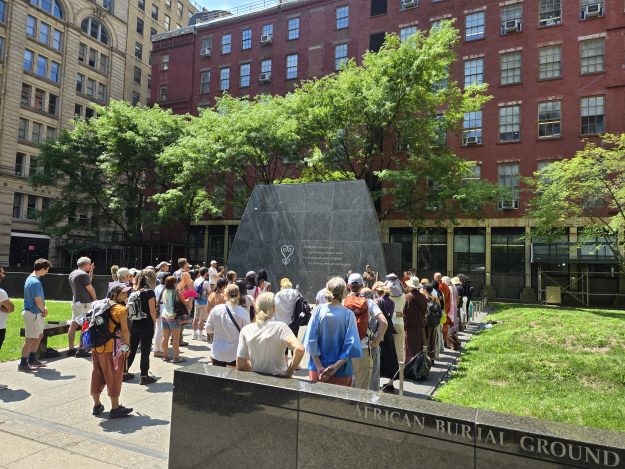
The New York City pilgrimage commenced at two distinct points: the 9/11 Memorial on Staten Island and the "Banana Kelly Double Dutch" sculpture in the Bronx, an iconic artwork by John Ahearn and Rigoberto Torres. Traveling via a combination of walking and public transit, the two groups converged later that morning at the African Burial Ground National Monument in Manhattan. There, Grandmother Clara Soaring Hawk and Owl Steven Dennison Smith, representatives of the Ramapo Munsee Lenape Nation, offered blessings, grounding the day in the history and spirit of the land. Following this solemn observance, the group paused for lunch in Brooklyn before proceeding to the MDC. Throughout the day, participants were invited to contemplate two guiding questions: "What stories does this place hold that I have not yet learned to hear?" and "What would it mean to meet this place with an open heart rather than certainty?"
The event’s website described it as a "Buddhist-led interfaith" walk where "all are welcome." Michael Shen, a volunteer medic who does not identify as a practicing Buddhist, found the experience deeply meaningful. "It was very nice to walk in silence and meditate on our interconnectedness," he commented. The sound of tapping on the MDC windows, he added, was "heart-wrenching" and "solidified the fact that there are humans in there." The experience has inspired him to consider attending the weekly vigils.
Culmination and a Vision for the Future
The day’s final destination was the Socrates Sculpture Park in Queens, where organizers had pre-emptively set up chairs and a generous spread of refreshments. As the sun began to set, casting a warm glow over the East River, the weary walkers gathered beneath the trees. The atmosphere was filled with more singing, and speakers underscored the profound interdependence between humanity and nature, while also honoring the Lenape, the Indigenous peoples of the land. Rev. James A. Lynch of the Buddhist Council of New York offered the merit of the day’s activities to "those who feel forgotten, abandoned, unseen, or lonely," among many others. Rev. Doyeon Park of the Won Buddhist community invoked the four great vows, including "Sentient beings are numberless; we vow to save them," as guiding principles for action, subsequently chanting them in Korean.
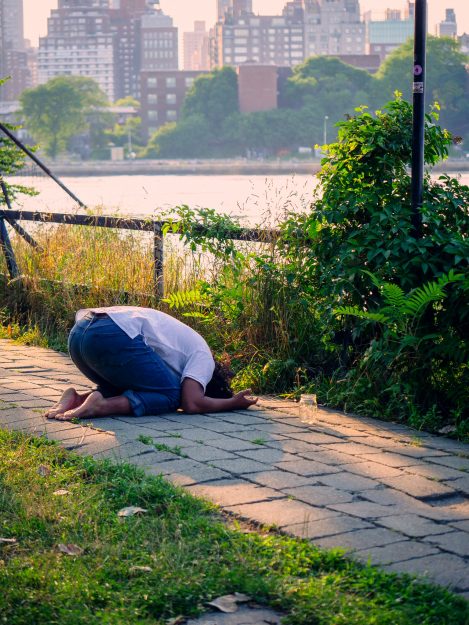
To formally conclude the pilgrimage, Mendoza held up a jar containing water collected from Staten Island and the Bronx. She then invited fellow organizer and environmental activist Matthew Menzies to lead a ceremony. Menzies shared his personal connection to the East River, having been born near its banks, and spoke of his Indigenous heritage as a way to acknowledge the complex tapestry of origins. "Your home flows within you," he declared, before pouring the collected water into the river, symbolizing the intermingling of waters from across the five boroughs.
Standing by the river as the day drew to a close, Phelan, overcome with emotion, shared her perspective. "I’d been in organizing spaces before, and something was always missing, so I came to the conclusion that organizing wasn’t for me," she confessed. While acknowledging the indispensable role of protests, Phelan felt the "Day of Remembering Our Interdependence" revealed what had been absent in her prior experiences. "I really needed the faith piece, I really needed the Buddhist spiritual piece, I really needed the love," she articulated. "It feels like coming home to find the space where I belong, and the people that I want to organize with." The pilgrimage, therefore, served not only as a public witness but also as a deeply personal journey of finding spiritual grounding and a sense of belonging within a community dedicated to compassionate action.

