

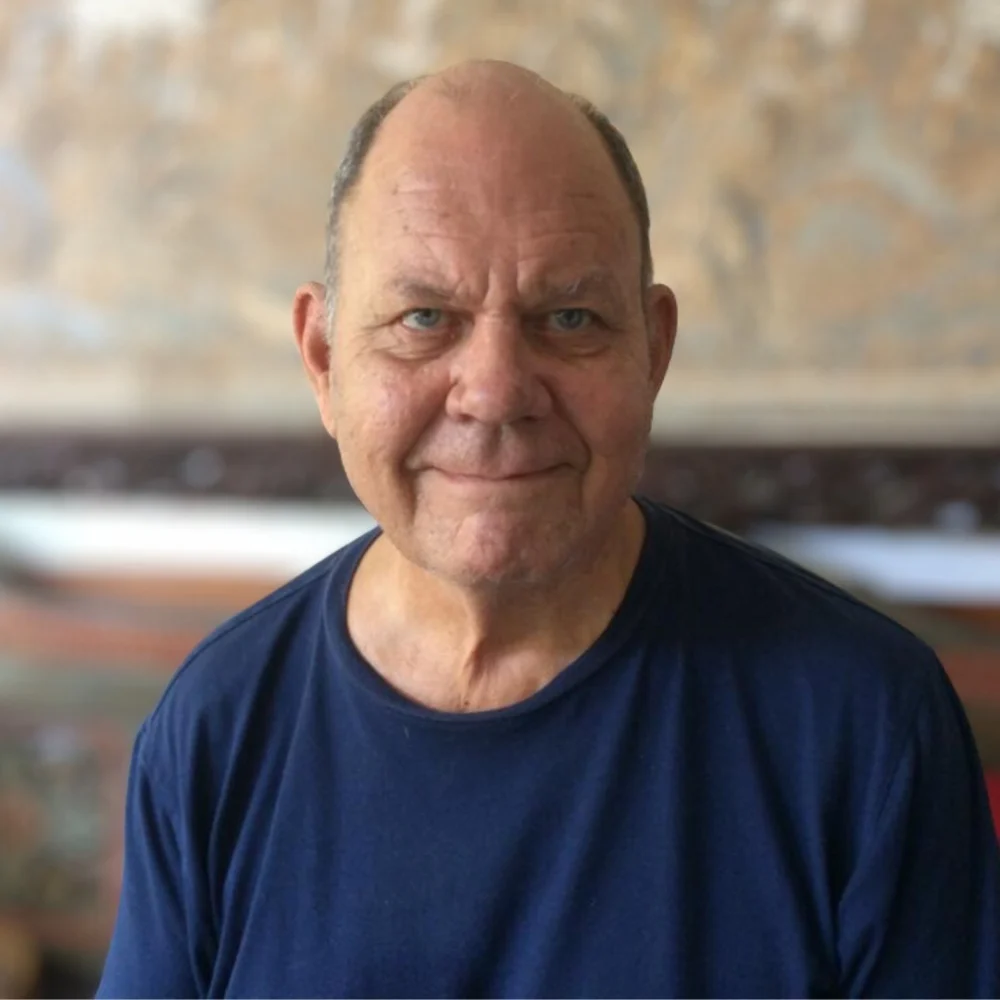
David Chadwick, a multifaceted figure whose life’s work profoundly shaped the understanding and preservation of Soto Zen Buddhism in America, passed away on February 23, 2026. He was 81. Chadwick, a Soto Zen priest, acclaimed writer, musician, poet, podcaster, historian, and avid traveler, was best known as the preeminent biographer of the influential Soto Zen master Shunryu Suzuki Roshi. His extensive documentation of the San Francisco Zen Center (SFZC), founded by Suzuki in 1961, and its associated institutions, particularly the Tassajara Zen Mountain Center (Zenshinji)—America’s first Zen Buddhist monastery—through cuke.com and the Cuke Archives, has cemented his legacy as a vital chronicler of this significant cultural and spiritual movement. Chadwick died in a hospital in Sanur, Bali, where he resided with his wife, Katrinka McKay, two weeks after his 81st birthday.
A Life Dedicated to Preserving a Legacy
Chadwick had been undergoing intensive treatment for Stage IV gastric nodal cancer, a formidable diagnosis that had spread to nearby lymph nodes. Despite the progression of his illness, his dedication to his archival work remained unwavering. Peter Ford, managing director of the Cuke Archives, shared in a poignant post on the SFZC’s Instagram page, "although his passing was not totally unexpected, it happened more quickly than we hoped." Ford elaborated on Chadwick’s tireless commitment, noting, "Chadwick was always working on various aspects of the archives." Even in his final days, when his strength waned and he could no longer continue chemotherapy, Chadwick meticulously sent corrections for the upcoming volume of his Tassajara Stories series. This ambitious project, conceived by Chadwick, was designed to "preserve the legacy of Suzuki Roshi and those whose paths crossed his."
The first volume of Tassajara Stories, titled Tassajara Stories: A Sort of Memoir/Oral History of the First Zen Buddhist Monastery in the West—The First Year, 1967, was published by Monkfish in 2025 to considerable acclaim within the Zen community. Book Two, which Chadwick was actively working on at the time of his death, was intended to cover the pivotal years of 1968 to 1971, culminating in Shunryu Suzuki Roshi’s cremation. A third volume was also planned, underscoring the scope of Chadwick’s vision for documenting this formative period.
The impact of Chadwick’s literary contributions was recognized by prominent figures. Former Governor of California, Jerry Brown, a frequent visitor to Tassajara and SFZC’s city center, described Tassajara Stories as "engrossing" and "alive." Actor-director Peter Coyote, himself a Zen priest who developed a friendship with Chadwick during his own time at SFZC in the 1970s, lauded Chadwick’s ability to "capture the wacky spirit, the dedication, and the courage required to leap into the unknown that characterized the earliest Zen students surrounding Suzuki Roshi."
A Larger-Than-Life Personality and Prolific Creator
Beyond his meticulous archival work, Chadwick was widely recognized for his larger-than-life personality. Described as brilliant, irrepressible, funny, and exceptionally creative, he approached every endeavor with an infectious enthusiasm. Nikko Odiseos, president of Shambhala Publications, which released a new edition of Chadwick’s memoir Thank You and OK!: An American Zen Failure in Japan, along with two volumes of Suzuki’s teachings edited by Chadwick, Zen is Right Here and Zen is Right Now, recalled, "What struck me about David was his curiosity." In a tribute on the Shambhala website, Odiseos poignantly summarized Chadwick’s essence: "a storyteller to his bones. It was a constant stream, always full of delight."
Chadwick’s literary output extended beyond biographical and historical accounts. His memoir, Thank You and OK!, even garnered mention in a PhD dissertation on American Zen literature, highlighting its scholarly significance. However, it was his 1999 biography, Crooked Cucumber: The Life and Zen Teaching of Shunryu Suzuki, for which Chadwick achieved widespread recognition. This biography is considered the definitive account of Shunryu Suzuki Roshi, a pioneering figure who introduced Zen Buddhism to America and is often regarded as its most influential proponent. The book’s title itself, "Crooked Cucumber," refers to a nickname given to Suzuki by his teachers during his novitiate, alluding to his "forgetful and unpredictable nature," and drawing a connection to the mischievous water spirit in Japanese folklore.
Chadwick’s own creative endeavors were diverse and often playful. His autobiographical novel, To Find the Girl from Perth, was praised by film producer Gaetano Kazuo Maida as "delightfully mischievous." Another of his unique works is The, The Book, a minimalist piece consisting of 80 pages entirely of the word "the" repeated, showcasing his experimental and whimsical approach to literature.
A Multifaceted Artist and Digital Archivist
Chadwick’s creative spirit also manifested in music, podcasting, and digital archiving. He hosted the Cuke Audio Podcast, featuring interviews with notable Zen Buddhists, and managed several websites dedicated to preserving Zen history. His extensive work as a songwriter, musician, and poet is showcased on defusermusic.com under the moniker "DC the mediocre, the bad, and the awful." This site features recordings of his rock bands, Defuser and Ballyuga, and albums with evocative titles such as Drake’s Nightmare, Moonfood, and Boat of Dreams. The site also lists over 1,250 songs, many accompanied by lyrics and raw self-recordings of Chadwick singing and playing guitar. A particularly revealing track, "I Hate Zen," written in 1971, five years into his practice, humorously captures the complex relationship many practitioners have with the path: "I hate Zen / even though it is my friend. / Just can’t win. / It follows me until the end."
Despite his self-deprecating tendency to call himself a "failed Zen student," Chadwick remained deeply connected to Soto Zen and the preservation of Suzuki Roshi’s teachings from the inception of his practice until his death. A remembrance published in SFZC’s Sangha News Journal underscored his dedication: "He worked for decades with volunteers to collect, edit, digitize, and freely share these materials, ensuring that the voice and presence of his teacher would remain accessible worldwide."
Chadwick’s legacy is characterized by a spirit of unfettered creativity and intellectual curiosity. A blurb for his memoir on the publisher’s website described him as "a Texas-raised wanderer, college dropout, bumbling social activist, and hobbyhorse musician"—a portrayal that, while accurate, somewhat overlooks his profound sixty-year engagement with Zen.
Roots of a Spiritual Seeker
David Reich Chadwick was born in Fort Worth, Texas, in 1945. His early exposure to spiritual and philosophical ideas was influenced by his father, a former reader in the Christian Science church who later embraced the New Thought Movement and Transcendentalism, both of which bore Buddhist undertones. His father’s belief in the power of mind, stating, "In our home, God was not an outside power, it was mind," left a lasting impression on young David.
After a brief period of college and involvement with the civil rights movement, Chadwick embarked on a year-long sojourn in Mexico, where he first encountered LSD. This experience, along with others involving psychedelics in San Francisco after his move there in 1966, led to what he described as "profound experiences." However, like many of his contemporaries, he came to realize that such altered states, while impactful, did not offer lasting transformation. It was through stumbling upon books on Zen that he found a more sustainable path towards self-cultivation and meditation.
Embracing the Path at San Francisco Zen Center
At the age of 21, in 1966, Chadwick arrived at the nascent San Francisco Zen Center, seeking guidance. Though Suzuki Roshi was in Japan at the time, Chadwick "plunged in," receiving preliminary meditation instruction from Katagiri Roshi. He committed to a year of practice, a period that ultimately evolved into a lifelong dedication.
Chadwick’s arrival coincided with a dynamic period of growth for the SFZC and the burgeoning American Zen movement. Over the next fifteen years, he ascended through the ranks of the organization, taking on increasingly significant roles. Suzuki Roshi’s initial purpose in San Francisco was to guide a Japanese American congregation, but the fervent engagement of his Western students inspired him to revitalize a tradition he felt was stagnating in Japan. Chadwick played a crucial role in the development of the Tassajara Zen Mountain Center, established in 1967 as a sanctuary for retreats and intensive practice. His tenure at Tassajara included positions as practice leader, assistant director, and director. When asked about his expectations for monastic life, Chadwick articulated a core Soto Zen principle: "One of the fundamental teachings from a Soto point of view is not to seek an end, not to seek a goal. . . [W]hat you are doing is learning how to practice, how to cultivate yourself, how to be somebody who awakens, and to accept yourself as you are." He also acknowledged the inherent paradox in spiritual study, noting that "if it’s not paradoxical, it’s not true, it’s not Buddhism," a sentiment that echoed Suzuki Roshi’s own teachings.
Suzuki Roshi’s approach, as remembered by Chadwick, emphasized the direct experience of practice over abstract notions of enlightenment. "He said practice is enlightenment," Chadwick recalled, and regarding spiritual transmission, he stated, "There’s nothing to transmit." When questioned about Suzuki’s teaching, people were often told, "He taught be yourself. He said, ‘All I have to teach you is zazen and practice.’" This seemingly simple directive belied the depth and richness of Suzuki Roshi’s legendary teaching stories, many of which are immortalized in Zen Mind, Beginner’s Mind.
Ordination, Service, and a Move East
Prior to Suzuki Roshi’s passing in 1971, he ordained Chadwick. Following Richard Baker Roshi’s succession as abbot of SFZC, Chadwick, then residing at Tassajara, was called upon to assist in the expansion of the Zen Center’s reach. He held various administrative and practice-related positions at SFZC’s City Center, Green Gulch Farm in Marin County, and the renowned vegetarian restaurant Greens in San Francisco. This period involved extensive travel and multifaceted responsibilities, often holding multiple roles simultaneously. He also dedicated six months to studying Japanese at a language school in Monterey, California.
By 1988, Chadwick felt the need for a change of pace. Having left Tassajara and gone through a divorce, he followed his ex-wife and son, Kelly, to Spokane, Washington. He then relocated to Japan for what he described as "voluntary exile and remedial Zen education." He and his second wife supported themselves by teaching English, and their son, Clay, was born during their time there. Chadwick spent six months at Shogoji, a Soto Zen temple in Kyushu, and explored other Zen centers and teachers.
The Genesis of a Biographer and Archivist
Chadwick remained in Japan until 1992. During a visit to Bali, his friend and literary agent, Michael Katz, encouraged him to document his experiences navigating Japanese culture, both within and outside monastic settings. Initially hesitant, Chadwick was persuaded when Katz suggested compiling his letters to family and friends, which ultimately led to the publication of Thank You and OK!.
Given Katagiri Roshi’s significant role in Chadwick’s spiritual journey—he referred to him as "my Zen uncle"—it felt natural to then focus on his primary teacher, Shunryu Suzuki Roshi. As Chadwick accumulated a substantial collection of materials related to Suzuki and the SFZC, often contributed by members of the sangha, he naturally assumed the role of archivist. This led to the creation of cuke.com and shunryusuzuki.com, which became the central hubs of the Cuke Archives.
In 2013, Chadwick relocated to Bali with his future wife, Katrinka McKay, whom he married on a Sanur beach in July 2015. He continued his creative pursuits, including his music, and diligently oversaw the Cuke Archives from his island home.
Richard Baker Roshi once remarked, "Years of Zen training gone to waste," a sentiment Chadwick often echoed about himself, referring to himself as a failure. However, his impact on countless individuals, whom he both helped and delighted, stands as a testament to the contrary. In a reflective post on cuke.com in 2020, Chadwick summarized his profound connection to the Zen path: "I marvel now how fortunate I was to have walked through that doorway [of the Zen Center], met Shunryu Suzuki, Dainin Katagiri, and all the inspiring fellow students, friends, and teachers through the years that followed."
David Chadwick’s multifaceted legacy—as a meticulous historian, a gifted storyteller, a dedicated musician, and a pioneering digital archivist—ensures that the vibrant history of American Zen and the profound teachings of Shunryu Suzuki Roshi will continue to inspire generations to come.
For further insights into David Chadwick’s life and work, readers are encouraged to explore his account of Katagiri Roshi’s funeral, an excerpt from Tassajara Stories, and Jeffrey Zaleski’s review of Thank You and OK!.

