

The global fitness and personal training industry has undergone a significant transformation over the last decade, evolving from a luxury service for athletes and the wealthy into a cornerstone of preventative healthcare for the general population. As of 2023, the global health and fitness club market is valued at over $96 billion, with personal training services representing a substantial and growing segment of that valuation. For the individual consumer, the decision to hire a personal trainer is often framed as a lifestyle choice, but from a socio-economic perspective, it represents a critical investment in human capital. While the purchase of a home or a vehicle involves substantial upfront capital, the long-term ROI on health—measured in reduced medical expenses, increased productivity, and extended longevity—arguably makes the selection of a fitness coach one of the most consequential financial and personal decisions an individual can make.
However, the lack of universal regulation in the fitness industry has created a "buyer beware" environment. With thousands of trainers operating across various platforms, from high-end boutiques to independent social media channels, the burden of due diligence falls on the consumer. To navigate this complex landscape, industry experts and veteran strength coaches emphasize a rigorous vetting process based on professional certification, methodological transparency, and interpersonal compatibility.
The Foundation of Professionalism: National Certification and Education
The primary filter for any prospective client must be the trainer’s formal education and professional credentials. In the United States and much of the international market, several "gold standard" organizations provide the necessary scientific foundation for safe and effective exercise prescription. These include the National Strength and Conditioning Association (NSCA), the National Academy of Sports Medicine (NASM), and the American Council on Exercise (ACE).
A certification from these bodies ensures that the trainer has passed a standardized examination covering human anatomy, physiology, biomechanics, and emergency procedures. For example, the NSCA’s Certified Strength and Conditioning Specialist (CSCS) credential is widely regarded as the benchmark for working with athletic populations, requiring a bachelor’s degree in a related field as a prerequisite. Conversely, NASM’s focus on the Optimum Performance Training (OPT) model provides a structured framework for corrective exercise, which is essential for clients returning from injury or dealing with sedentary-related postural issues.
Beyond the initial certification, the industry has seen a rise in specialized academies, such as Show Up Fitness CPT, which emphasize practical, hands-on experience over rote memorization of textbooks. The common denominator among reputable professionals is a commitment to continuing education. According to data from the Bureau of Labor Statistics (BLS), the employment of fitness trainers and instructors is projected to grow 14 percent from 2022 to 2032, much faster than the average for all occupations. This growth necessitates a higher standard of entry to distinguish legitimate professionals from hobbyists.
The Methodology of Assessment: Beyond the First Workout
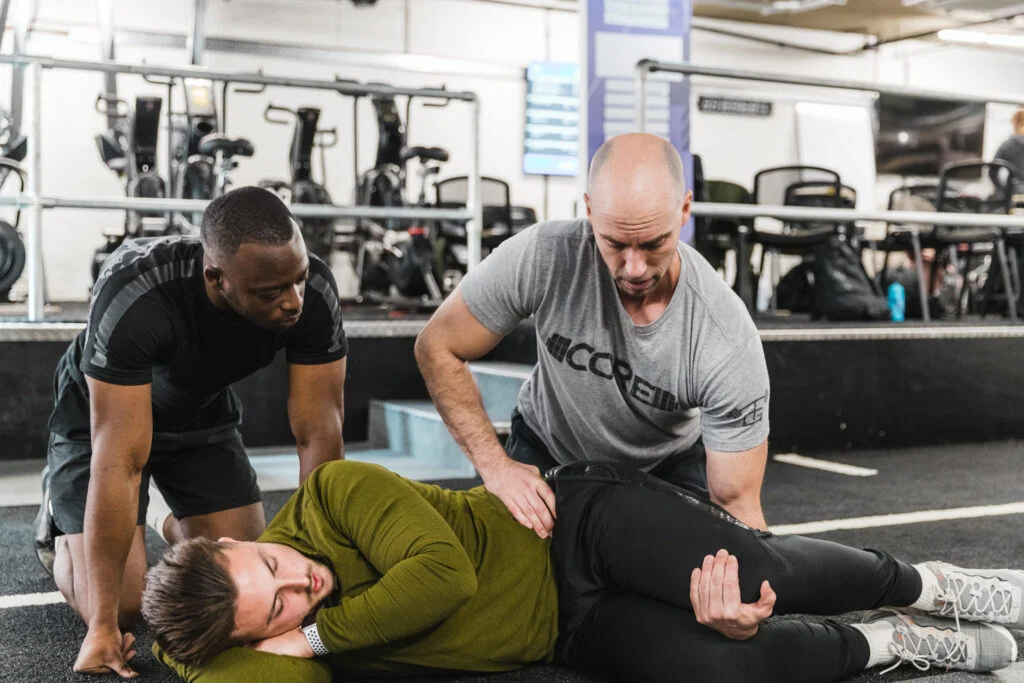
A critical differentiator between a high-level professional and an amateur is the presence of a formal "intake" or "assessment" session. In a professional setting, training does not begin with high-intensity exertion; it begins with data collection. A comprehensive assessment typically includes a review of the client’s medical history, previous injuries, current nutritional habits, and specific performance goals.
Furthermore, physical assessments such as the Functional Movement Screen (FMS) or specific joint-by-joint mobility tests allow the trainer to identify "speed bumps"—biomechanical inefficiencies that could lead to injury if ignored. A trainer who bypasses this stage to move immediately into a "sweat-inducing" workout is often prioritized by short-term optics over long-term safety. The industry consensus is clear: if a trainer does not assess, they are merely guessing. This phase is not just about physical readiness; it establishes the baseline from which all future progress is measured, providing the client with an objective map of their fitness journey.
Linguistic Clarity and the Rejection of Pseudoscientific Titles
The fitness industry is frequently criticized for its use of "word vomit" and nebulous terminology. Professionals advise consumers to be wary of trainers who adopt grandiose titles such as "transformation guru," "body architect," or "wellness shaman." These terms often serve as marketing veneers designed to obscure a lack of fundamental scientific knowledge.

A legitimate professional will typically use the titles "Personal Trainer," "Strength and Conditioning Coach," or simply "Coach." These titles carry specific professional connotations and are linked to established roles within the broader healthcare and athletic performance continuum. Linguistic clarity extends to how a trainer explains their programming. A qualified coach should be able to concisely explain the "why" behind every exercise. If a trainer relies on "muscle confusion" or other pseudoscientific buzzwords to justify a workout, it may indicate a lack of structured programming.
The Chronology of a Professional Training Engagement
To understand the value of a personal trainer, it is helpful to look at the typical lifecycle of a successful client-trainer relationship. This timeline illustrates how a professional engagement moves from data gathering to autonomous mastery.
- Phase I: The Discovery and Diagnostic (Weeks 1-2): This period is dedicated to the initial consultation, movement screens, and goal setting. The trainer establishes the client’s "starting line" and identifies any immediate contraindications to specific exercises.
- Phase II: The Foundation and Corrective Phase (Weeks 3-8): The focus shifts to mastering form and correcting movement patterns. The trainer prioritizes technical proficiency over heavy loading to ensure the client’s musculoskeletal system is prepared for future stress.
- Phase III: The Progression and Adaptation Phase (Months 3-6): Once a technical foundation is laid, the trainer introduces progressive overload. This is where physiological changes—such as hypertrophy, increased bone density, and cardiovascular efficiency—become most apparent.
- Phase IV: Maintenance or Advanced Specialization (6 Months+): The relationship evolves into a partnership. The client has developed a high degree of "physical literacy," and the trainer acts as a consultant for fine-tuning performance or preparing for specific events, such as a marathon or a powerlifting meet.
The Interpersonal Component: Soft Skills and Client Retention
While technical knowledge is non-negotiable, the efficacy of a personal trainer is also heavily dependent on their interpersonal skills. The psychology of behavior change is a major component of fitness coaching. Research suggests that the "therapeutic alliance"—the quality of the bond between a practitioner and a client—is a significant predictor of success in health-related interventions.
Consistency is the most critical variable in any fitness routine, and clients are more likely to remain consistent if they find their trainer personable and professional. This does not imply that a trainer should be a "friend" first; rather, they must possess the emotional intelligence to motivate, listen, and adapt their coaching style to the client’s personality. Professionalism also extends to aesthetics and conduct; industry veterans often point out that trainers who wear inappropriate attire, such as cut-off shirts, or who spend the session on their phones, undermine the credibility of the profession.
The Impact of Social Media and Digital Reconnaissance
In the modern era, a trainer’s social media presence often serves as their primary portfolio. However, consumers are urged to look past aesthetic "thirst traps" and performative displays of the trainer’s own physique. A professional’s digital footprint should ideally be a repository of educational content, client testimonials, and demonstrations of coaching proficiency.
If a trainer’s feed is dominated by self-promotion (the "me, me, me" syndrome) rather than client successes, it may indicate a lack of actual coaching experience. Prospective clients should look for "social proof"—evidence that the trainer has successfully worked with individuals who share similar goals or physical limitations. Connecting with a trainer’s current or former clients can provide invaluable insights into their reliability, punctuality, and ability to deliver results.
Broader Implications: The Trainer as a Healthcare Gatekeeper
The shift toward hiring personal trainers has broader implications for the global healthcare system. With the rise of non-communicable diseases such as Type 2 diabetes, hypertension, and obesity-related complications, the role of the personal trainer is increasingly being viewed as a frontline intervention. By improving a client’s strength, mobility, and cardiovascular health, trainers contribute to a reduction in the long-term burden on public health infrastructure.
Moreover, the professionalization of the industry, characterized by the rigorous standards discussed above, is moving the field toward a more integrated model where doctors may "prescribe" exercise and refer patients to certified trainers. This evolution reinforces the necessity of choosing a trainer based on scientific merit and professional conduct rather than social media popularity or marketing gimmicks.
In conclusion, while the search for a personal trainer may begin with a desire for physical change, the selection process must be governed by an objective analysis of credentials, methodology, and professional behavior. By treating the hire as a serious investment in long-term health, individuals can ensure they are not only reaching their fitness goals in the most efficient manner possible but are also doing so under the guidance of a qualified professional who views their health as a paramount responsibility. Just as one would not hire an uncertified accountant to manage their finances, one should not entrust their physical well-being to anyone less than a vetted, professional coach.

