


The profound teachings of Machig Labdrön, a pivotal figure in Tibetan Buddhism, offer a compelling framework for understanding and dismantling the roots of suffering. Her lineage, centered on the practice of "severance" (Tibetan: chöd), invites practitioners to cut through the illusion of a solid, independent self. This ancient wisdom, explored by author Charlotte Rotterdam in her recent work, emphasizes the concept of "realizing rootlessness" as a path to liberation. Through solitary retreats and contemplative exercises, practitioners are guided to loosen the grip of self-clinging, the fundamental misunderstanding that fuels our experience of separateness and dissatisfaction.
Machig Labdrön, who lived from 1055 to 1149, is revered as the “Wisdom Mother” for her groundbreaking teachings on chöd. This practice, which involves visualizing oneself as a spiritual offering and engaging with challenging emotions and situations, aims directly at severing the ego’s hold. The metaphor of a tree is central to understanding her approach: while one can trim the branches of ignorance and negative emotions, true liberation comes from severing the root – the mistaken belief in a permanent, independent self. This concept aligns with the Buddhist doctrine of anatta (no-self), which posits that there is no fixed, unchanging essence to an individual.
Rotterdam’s contemplation of Machig’s teachings during a retreat in a secluded natural setting highlights the experiential nature of this practice. Surrounded by the sounds of nature – the croaking of frogs, the rustling of deer in the meadow, the drumming of spring rain – she found resonance with the idea that true existence is relational and impermanent. The self, she elucidates, is not a solid, independent entity but rather a dynamic interplay of conditions, patterns, and relationships, much like a wave is inseparable from the ocean from which it arises. This realization of interdependent co-arising is the essence of understanding our "rootlessness."
The practice of realizing rootlessness is not an endorsement of nihilism or a denial of existence. Instead, it is a reframing of how we understand ourselves. The perceived "self" is often constructed through a collection of beliefs, preferences, and experiences – "who I am, what I do, what I believe, what I like, what I don’t like." These elements, while forming the perceived architecture of our identity, can also become "golden chains" that bind us to limitations and suffering. To realize rootlessness is to consciously release the tight grip of this self-definition, akin to a hand finally relaxing its futile attempt to grasp air.
Machig’s exhortation to "let go of whatever you grasp" is a direct invitation to embrace this state of non-attachment. The realization that both the self and all phenomena are ultimately rootless is presented not as a somber truth, but as liberating news. By releasing our tenacious hold on a seemingly solid, yet transient, sense of self, we open ourselves to a vaster, more empowered "groundless ground" of being. This is a state described as "without meeting and parting," suggesting an unceasing presence within the flow of existence.

The author’s experience underscores how embracing rootlessness can deepen our connection to the present moment and the natural world. Instead of striving to build a "mini empire of my life," the practitioner recognizes their transient nature, aligning with the ephemeral existence of other beings. This "resting" is not an escape from the movement of life, but a profound presence within it, fostering a greater sense of awareness and wakefulness.
The Nuance of Relative Roots
While the ultimate view emphasizes rootlessness, the teachings acknowledge the reality of relative roots. These include our connections to family, friends, beloved places, and even animals. The contemplation of trees, with their deep roots drawing sustenance from the earth, offers a nuanced perspective. Roots, in this context, can be seen as extensions of our being, connecting us to myriad forms of life. However, the invitation to rootlessness is to understand that these roots do not have an endpoint, nor do they firmly anchor us to a singular, solid base. The possessive stance of "This is mine, this is me" is challenged. Instead, the practice encourages extending our roots so deeply that they connect us with all beings, ultimately leading to a realization that the perceived ground is actually the groundlessness of our interconnected being.
When we cease to grasp at rooted solidity and release our hold on a fixed territory of identity, the question arises: what then? The answer lies in a profound state of relaxed resting. This is not a passive resignation but an active engagement with reality, resting in the "vast groundless ground" that is the source of all. This practice fosters an intimate realization of our non-aloneness, revealing that we are intrinsically part of all things, always and inextricably.
Experiential Practice: Resting in the Way of a Corpse
To provide a direct experiential taste of this concept, the teachings offer a specific contemplative exercise, attributed to Machig Labdrön herself. This practice is designed to guide individuals towards experiencing the "groundless ground" through a radical form of letting go.
Rest in the Way of a Corpse

This exercise is best performed in a lying-down position on a comfortable surface, allowing for complete bodily relaxation. Setting a timer for 20-30 minutes can help alleviate concerns about time. The instructions can be recited silently or guided by another person, with pauses between each stage.
-
Rest your body in the way of a corpse. This instruction encourages a complete release of muscular tension and physical holding. The body is allowed to be heavy, unmoving, and without any effort to maintain posture or control. The aim is to experience the body as inert, without the usual self-conscious awareness of its form or limitations. This mirrors the state of a deceased body, devoid of the animating force of egoic striving. The implications here are profound: by relinquishing the constant, often unconscious, effort to manage and control our physical presence, we begin to dismantle the physical underpinnings of self-identification. This practice can bring to light the subtle ways in which we hold tension in anticipation of external judgment or internal critique, revealing the somatic manifestation of self-clinging.
-
Rest in the way of being ownerless. This stage moves the practice to a deeper level of mental and emotional letting go. It involves releasing the sense of possession over one’s thoughts, emotions, memories, and even one’s very being. The practitioner is invited to perceive themselves as not belonging to anyone or anything, including themselves. This concept of "ownerless" directly challenges the ingrained notion of a personal self that owns its experiences and identity. In a world that often emphasizes ownership and entitlement, this exercise offers a radical counterpoint. Data from psychological studies on mindfulness and acceptance and commitment therapy (ACT) suggest that a reduced sense of ownership over thoughts and feelings can lead to decreased rumination and increased psychological flexibility. By cultivating this "ownerless" perspective, individuals can begin to detach from the narrative of a fixed self, recognizing that their experiences are transient phenomena rather than defining attributes. This can be particularly impactful in addressing issues like anxiety, where individuals may feel owned by their fearful thoughts, or depression, where they may feel owned by a pervasive sense of sadness.
-
Rest your mind in the way of the sky. This final instruction guides the practitioner to experience the vast, open, and unobstructed nature of consciousness itself. The mind is invited to be as spacious and unconfined as the sky, which holds everything within it without being affected, altered, or limited by what it contains. Clouds may drift through, storms may rage, but the sky remains fundamentally unchanged. This is the ultimate realization of emptiness and formlessness. The implications of this practice are far-reaching. Philosophically, it aligns with concepts of universal consciousness and the interconnectedness of all things. Neuroscientific research into meditation and contemplative practices has begun to illuminate the neural correlates of these states, showing changes in brain activity associated with increased self-awareness, emotional regulation, and a sense of unity. For instance, studies have indicated that long-term meditators may exhibit reduced activity in the default mode network, an area of the brain associated with self-referential thought and mind-wandering, which is often implicated in rumination and self-criticism. By resting the mind in this way, practitioners can cultivate a profound sense of peace and equanimity, recognizing the transient nature of mental phenomena without being entangled by them. This can lead to a significant reduction in stress and an enhanced capacity for creative problem-solving, as the mind is freed from the constraints of rigid identification.
The Source of All
The cumulative effect of these three stages is a profound experience of being fully present, unburdened by the constructs of a solid self. This is the "resting relaxed" that Machig Labdrön speaks of, a resting not outside of, but within, the dynamic flux of existence. The realization that we are not separate entities but rather expressions of a unified field of being can lead to a radical shift in perspective. This understanding fosters a deep sense of compassion, as the perceived boundaries between oneself and others dissolve.
The implications of embracing "rootlessness" extend beyond individual well-being. In a societal context, the persistent clinging to nationalistic identities, ideological dogmas, and rigid social hierarchies can be seen as manifestations of collective self-clinging. By understanding the impermanent and interdependent nature of all phenomena, including societal structures, we can foster greater empathy, understanding, and a willingness to engage in constructive dialogue and collaboration. The path of severance, therefore, offers not only personal liberation but also a potential pathway towards a more harmonious and interconnected world.
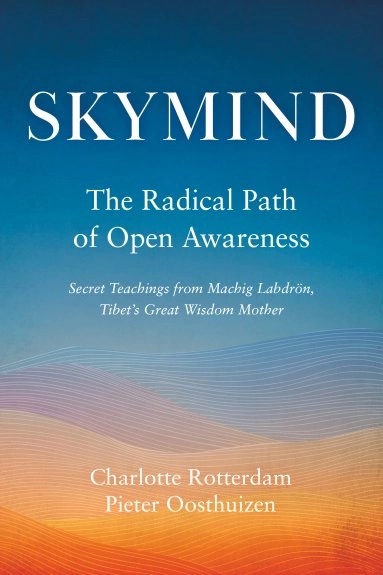
This practice is drawn from the teachings found in Skymind: The Radical Path of Open Awareness, Secret Teachings from Machig Labdrön, Tibet’s Great Wisdom Mother, © 2026 by Charlotte Rotterdam and Pieter Oosthuizen. The book’s publication offers a timely contribution to contemporary understanding of ancient Buddhist wisdom, making these profound teachings accessible to a wider audience. The continued exploration and dissemination of Machig Labdrön’s practices are vital in a world often characterized by division and anxiety, offering a path towards profound inner peace and a deeper connection to the entirety of existence.

