

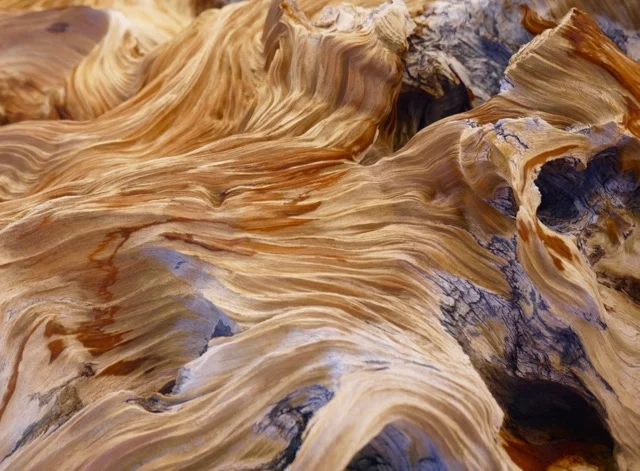
Over the past eighteen months, a profound dialogue has unfolded between the ecopsychology community and David Malinsky, a writer, photographer, and dedicated nature enthusiast. Malinsky, who affectionately refers to the ancient Great Basin Bristlecone Pines as "Old Friends in High Places," has been sharing his deeply contemplative observations of these venerable trees, offering a unique perspective on their enduring presence and the lessons they impart. His communications, rich with evocative prose and striking imagery, invite readers to explore the majestic beauty and profound wisdom embedded within these remarkable beings. This article delves into Malinsky’s insights, exploring the ecological significance of the Bristlecone Pine, the historical context of their discovery, and the broader implications of their resilience and longevity in an ever-changing world.
The Enduring Majesty of the Great Basin Bristlecone Pine
The Great Basin Bristlecone Pine (Pinus longaeva) is a species of conifer native to the higher mountains of the arid Great Basin region of the United States. These trees are renowned for their extraordinary longevity, with some individuals documented as living for over 5,000 years, making them some of the oldest known non-clonal organisms on Earth. Their ability to survive in harsh, high-altitude environments, characterized by extreme temperatures, scarce water, and nutrient-poor soils, is a testament to their remarkable evolutionary adaptations.
Malinsky’s correspondence, shared through the ecopsychology listserve, offers a lyrical exploration of these ancient trees. He describes them not merely as botanical specimens but as sentient beings, embodying a profound, slow-paced wisdom that transcends human temporal scales. His reflections often touch upon the philosophical implications of their existence, drawing parallels between the trees’ resilience and the human spirit’s capacity for growth and adaptation.
A Legacy of Discovery and Conservation
The scientific discovery of the Great Basin Bristlecone Pine’s extraordinary age is a relatively recent chapter in natural history. In the 1950s, dendrochronologist Edmund Schulman, working with the U.S. Forest Service, began studying Bristlecone Pines in the White Mountains of California. His research, which involved carefully extracting core samples from living trees and meticulously counting the annual growth rings, revealed individuals dating back millennia. One of his most famous discoveries was a specimen named "Methuselah," which was then estimated to be over 4,700 years old. This groundbreaking work revolutionized our understanding of tree longevity and the potential for long-term climate data stored within tree rings.
Following Schulman’s discoveries, there was a heightened awareness of the need to protect these ancient groves. While "Methuselah" is located in the Ancient Bristlecone Pine Forest in the Inyo National Forest, its exact location is kept secret to prevent damage. Other significant populations exist in the White Mountains of California and the Ruby Mountains of Nevada. Conservation efforts have been crucial in safeguarding these fragile ecosystems from the impacts of human activity, climate change, and disease.
Malinsky’s Contemplative Journey: "Old Friends in High Places"
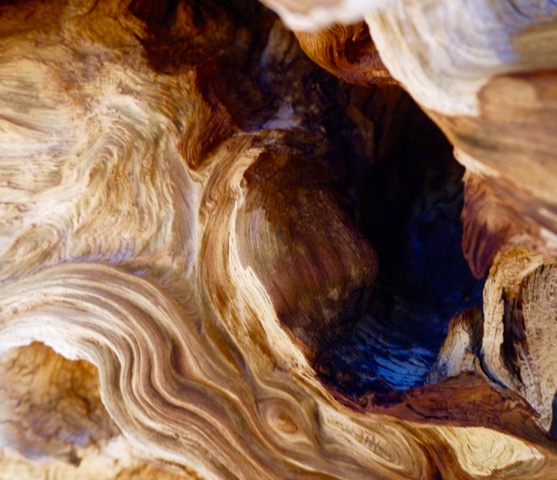
David Malinsky’s connection with the Great Basin Bristlecone Pines is deeply personal and philosophical. His writings reflect a journey of introspection prompted by his encounters with these ancient trees. He uses metaphors of archery and exploration to articulate his evolving understanding of life, purpose, and connection with the natural world.
One particular sequence from his communications, shared via the ecopsychology platform, encapsulates this sentiment:
"Daring to take a path towards what may be unknowable can be among the most noble pursuits of the human spirit. Known targets bring tangible opportunities for achievement, but also limitations; even a well-aimed arrow is forced to halt its arc, having reached a bullseye. Allow the arrow to be what it is, a tool for a particular purpose, but after your fingers release the bowstring do not let the confines of the arc define you. It was what you did, but only a small piece of who you are."
This reflection speaks to the human tendency to fixate on predefined goals, potentially limiting our capacity for broader discovery and self-understanding. Malinsky suggests that true growth lies in embracing the unknown and allowing our experiences to shape us beyond narrow objectives.
He further elaborates on this theme:
"Without narrowing the focus on the bullseye, there can be so much to see, much that will be missed if our sights are too confined. You do not have to reduce all of this to a single place; there is room in your consciousness for all of it, if you allow it in."
This passage encourages a more expansive perception, urging individuals to open their minds to a wider spectrum of experiences and possibilities, rather than confining their awareness to singular, predetermined outcomes.
The Journey of Self and Nature’s Embrace
Malinsky’s musings extend to the idea that venturing into the uncharted territory of existence is, in essence, a journey of self-discovery. He posits that the initial steps on such a path, which might seem directed towards a specific "Where," can miraculously transform into a profound exploration of "Who."
"It is in taking a path beyond established targets that you begin the journey of yourself, a path whose first steps may appear as though on the way to a ‘Where’, but as you venture will almost magically turn into as much a ‘Who’, person and place becoming one. When you feel something inside of yourself growing with each step, and your developing senses appreciating what surrounds the path even more, then you are on the verge of the most important discovery you can make, and any notions of maps can be discarded. Your path has no end, for both you and Nature are constantly evolving, and it is in that trust of Nature that you can place yourself, and explore the labyrinths ahead filled with the joy of anticipation, instead of trepidation."
This profound insight highlights the interconnectedness of personal development and the natural world. Malinsky suggests that by relinquishing rigid plans and embracing the evolutionary dance of both self and nature, we can unlock a continuous process of discovery, finding joy and anticipation in the unfolding journey rather than fear. The ancient Bristlecone Pines, with their millennia-long existence and slow, deliberate growth, serve as potent symbols of this enduring and evolving relationship.
Trusting the Darkness: A Metaphor for Growth
Malinsky’s reflections also address the concept of confronting uncertainty and perceived "darkness" in life. He proposes that rather than fearing these unknown aspects, we should approach them with an open spirit, recognizing their potential for illumination.
"Once you develop that trust, both of Nature and of yourself, when you come across what appears to be a darkness you do not fear. That darkness is only a place that is currently without illumination, and should you venture forward with an open spirit, your path may well take you to where it was intended to all along — the place where it is you that are the light."
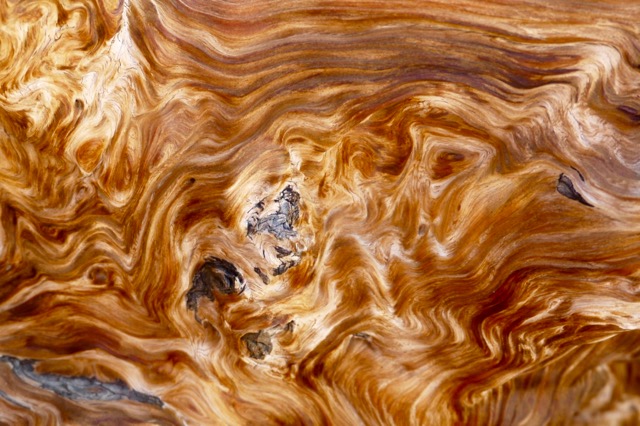
This powerful metaphor suggests that what we perceive as darkness or obstacles can, in fact, be opportunities for profound insight and personal transformation. By cultivating trust in both the natural world and our own inner compass, we can navigate challenges and emerge as sources of light and understanding. The Bristlecone Pines, thriving in the stark, often shadowed high-altitude environments, exemplify this capacity to find life and resilience even in seemingly inhospitable conditions.
The Ecological Significance and Future of Bristlecone Pines
The Great Basin Bristlecone Pine plays a vital role in its high-altitude ecosystem. Its ability to thrive on exposed slopes helps stabilize soil, preventing erosion in areas with sparse vegetation. Its resilience to drought and harsh conditions makes it a keystone species in an environment where few other plants can survive.
However, these ancient trees are not immune to modern threats. Climate change poses a significant risk, with rising temperatures potentially altering the delicate balance of their high-altitude habitats. Pests and diseases, while historically managed by the trees’ robust defenses, could also become more problematic with changing environmental conditions.
Scientific research continues to unlock the secrets held within the Bristlecone Pines. Dendrochronological studies, using their long-lived nature, provide invaluable data for understanding past climate patterns, volcanic activity, and even solar cycles. This historical climate record is crucial for informing current climate models and predicting future environmental changes.
Engaging with Nature’s Wisdom
David Malinsky’s dedication to sharing his experiences with the Great Basin Bristlecone Pines through the ecopsychology listserve highlights the growing interest in connecting with nature on a deeper, more philosophical level. His invitation for others to join the conversation by contacting him via email at [email protected] underscores the community’s desire to explore these profound themes collectively.
The "Old Friends in High Places" initiative, as represented by Malinsky’s work, serves as a reminder that nature offers not only ecological services but also profound lessons in resilience, longevity, and the interconnectedness of all living things. As we face increasingly complex environmental and societal challenges, the wisdom embodied by ancient species like the Great Basin Bristlecone Pine becomes ever more relevant, offering guidance and inspiration for navigating our own paths with greater awareness and trust. The ongoing correspondence and shared reflections are a testament to the enduring power of nature to inspire contemplation, foster personal growth, and connect us to something far greater than ourselves.

