

A recent wave of studies published in the Annals of Internal Medicine has ignited a significant debate within the scientific and public health communities. While these studies, on the surface, indicated a statistically significant association between reduced consumption of red and processed meats and a lower risk of mortality from all causes, cardiovascular disease, and cancer, their subsequent conclusions have drawn sharp criticism. The authors of these studies controversially advised the public to disregard existing dietary guidelines and continue consuming meat without significant limitation, a stance that starkly contrasts with the prevailing scientific consensus and has prompted accusations of industry influence and methodological bias.
Unpacking the Controversial Conclusions
The core of the controversy lies in the rationale provided by the research panel for their conclusions, which diverged sharply from established dietary recommendations. The panel cited three primary reasons for their unconventional stance:
1. The Primacy of Taste Preference: One of the most contentious justifications offered was the enjoyment derived from eating meat. The authors suggested that personal taste preferences should not be overridden by dietary guidelines. This argument has been met with widespread skepticism, with public health advocates pointing out that personal preferences for activities like smoking or excessive alcohol consumption do not negate the well-documented health risks associated with them, nor should they alter public health recommendations based on scientific evidence.
2. Methodological Departures: The GRADE Approach and its Limitations: The panel also justified their divergence by stating that other dietary guidelines did not employ the Grading of Recommendations, Assessment, Development, and Evaluation (GRADE) approach. However, critics argue that the GRADE system, largely developed for evaluating evidence from drug trials, was inappropriately applied to dietary and lifestyle interventions. This misapplication, it is argued, could potentially be misused to undermine recommendations on a range of public health issues, including exposure to secondhand smoke, air pollution, trans fats, and physical inactivity. The panel’s choice to adopt this framework for dietary guidelines, rather than established systems designed for such evidence, has been flagged as a significant methodological concern.
3. Downplaying the "Magnitude of Effect": Perhaps the most alarming reason cited by the panel was their assertion that the effects of meat consumption on health outcomes were of a "very small magnitude." In essence, the argument posited that even if red and processed meats contribute to diseases like heart disease, cancer, and diabetes, their impact is not substantial enough to warrant significant dietary changes, especially when weighed against the pleasure derived from their consumption. This perspective has been challenged as a deliberate attempt to minimize the documented risks, effectively downplaying the cumulative impact of dietary choices on long-term health and mortality.
A Timeline of Emerging Concerns
The studies in question were published in late September 2019. Almost immediately, a chorus of concern arose from nutrition scientists and public health organizations. The initial wave of media coverage highlighted the stark contrast between the observed statistical associations and the published recommendations.
By early October 2019, the critical analyses began to surface, questioning the methodology and the potential influences behind the conclusions. Reports emerged detailing the panel’s affiliations and funding sources, raising red flags about potential conflicts of interest. The criticisms centered on the selective exclusion of key studies and the reliance on specific datasets that may have skewed the results.
The Data Under Scrutiny: What Was Included and Excluded?
A significant point of contention has been the panel’s alleged cherry-picking of data. Critics contend that the researchers either omitted or inappropriately excluded substantial bodies of evidence that contradicted their desired conclusions. This includes:

- Exclusion of Major Trials: Prominent randomized controlled trials, such as the PREDIMED trial and the numerous studies contributing to the DASH diet recommendations, which clearly demonstrate the health benefits of dietary patterns lower in red and processed meats, appear to have been excluded.
- Mischaracterization of Effects: The panel’s reliance on the Women’s Health Initiative (WHI) study, which involved only modest reductions in meat consumption (averaging 1.4 fewer servings per week, equating to about half an ounce daily), has been highlighted. This modest reduction yielded only a modest impact on mortality related to breast cancer. Critics argue that extrapolating from such minimal changes to suggest no need for significant meat reduction is misleading and dangerous. The analogy drawn is that suggesting no need to reduce tobacco use based on modest reductions yielding only modest benefits would be similarly flawed and perilous.
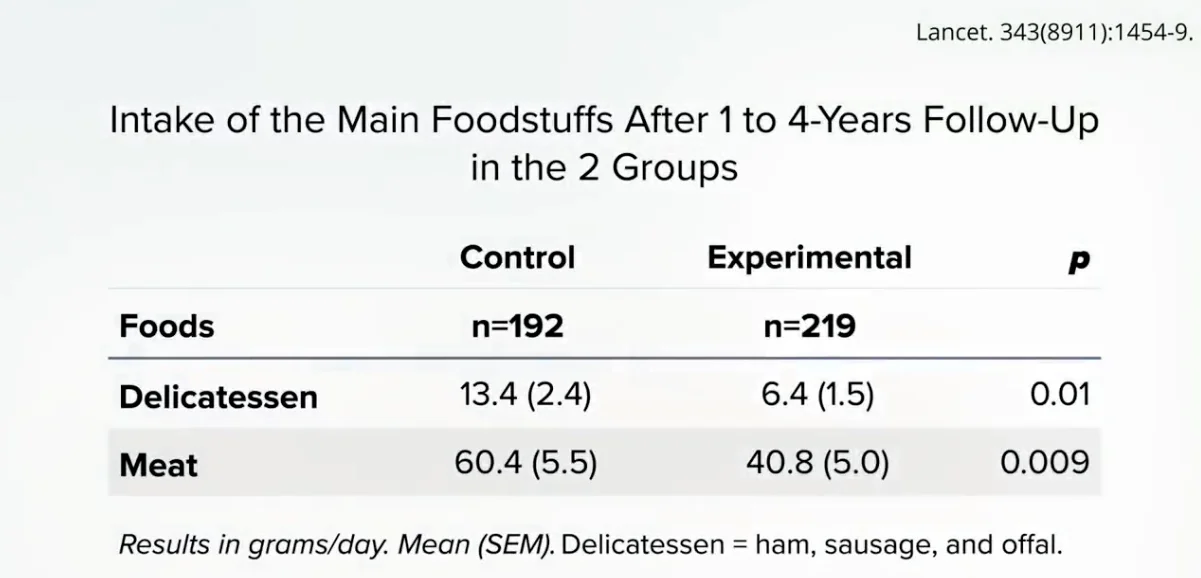
- Dismissal of "Implausibly Large" Effects: The Lyon Diet Heart Study, a landmark trial that randomized participants to a Mediterranean diet with significantly reduced meat consumption, reported a remarkable 70% reduction in all-cause mortality compared to the control group. The meat panel reportedly excluded this study, citing its reported "implausibly large treatment effect." This rationale has been interpreted by critics as a dismissal of findings that were simply too beneficial to align with the panel’s predetermined agenda.
Industry Affiliations and Funding
Further exacerbating concerns are the reported affiliations and funding of the research panel, dubbed the NutriRECS (Nutrition and Scientific Evidence Synthesis) meat panel. Reports indicate a partnership with Texas A&M AgriLife, an entity that receives substantial funding from the meat industry. The presence of individuals on the panel who are reportedly on the payroll of organizations supported by the meat industry has fueled accusations of a conflict of interest, suggesting that the panel’s conclusions may have been influenced by financial ties rather than purely objective scientific assessment. This alleged influence mirrors historical patterns where industry-funded research has been used to cast doubt on established health recommendations.
The Broader Health Implications: A Statistical vs. Real-World Impact
The panel’s emphasis on the "small magnitude" of effects, while statistically nuanced, has been criticized for obscuring the significant public health implications. Even moderate reductions in red and processed meat consumption, when analyzed across large populations, are associated with substantial health benefits:
- Reduced Total Mortality: Meta-analyses suggest that moderate reductions in red and processed meat consumption are linked to a 13% decrease in total mortality.
- Cardiovascular Health: A 14% reduction in cardiovascular disease mortality has been observed.
- Cancer Prevention: An 11% reduction in cancer mortality is associated with these dietary shifts.
- Diabetes Prevention: A significant 24% reduced risk of developing type 2 diabetes has been noted.
These figures, when viewed in the context of annual healthcare expenditures and preventable deaths, represent considerable public health gains. For instance, the chair of nutrition at Harvard has estimated that moderately reducing red meat consumption could prevent approximately 200,000 deaths annually. While the panel may characterize this as a "very small effect," the human cost to the families affected by these preventable deaths is immeasurable.
The magnitude of these benefits is comparable to the impact of interventions for conditions like high cholesterol, where statin drugs can reduce heart disease risk but may carry adverse effects, such as an increased risk of type 2 diabetes and little impact on cancer rates. A single dietary intervention that simultaneously addresses multiple major health risks would, in a pharmaceutical context, be considered a blockbuster drug.
Expert Reactions and Analogies
The controversial conclusions have prompted strong reactions from prominent figures in the nutrition and public health fields. Dr. Dean Ornish, a well-known advocate for plant-based diets, drew a stark analogy to smoking: "To say that small increases in meat consumption only cause small increases in the risk of disease doesn’t mean that eating meat is good for you. That’s like saying that smoking 24 cigarettes a day increases your risk of lung cancer only a little more than smoking 20 cigarettes a day—and being careful not to include any studies that compared smoking 24 cigs to smoking none—and then erroneously concluding that smoking isn’t that bad for your health."
The parallels drawn between the current debate over red meat and the historical struggle to establish the link between smoking and lung cancer are particularly striking. A quote from a 1959 paper, addressing similar skepticism about the evidence linking smoking to lung cancer, resonates with the current situation: "If the mountain of evidence they found had been made on a new agent, to which hundreds of millions of adults were not already addicted, and on one which did not support a large industry, skilled in the arts of mass persuasion, the evidence for the hazardous nature of the agent would be generally regarded as beyond dispute." This statement highlights how deeply entrenched industries can influence the perception and dissemination of scientific findings, even when the evidence is substantial.
The Broader Impact: Public Trust and Dietary Guidance
The implications of these flawed guidelines extend beyond individual dietary choices. They risk eroding public trust in scientific institutions and the process of developing dietary recommendations. When studies with apparent methodological biases and potential conflicts of interest lead to conclusions that contradict established health advice, it creates confusion and skepticism among the public.
The scientific community faces the challenge of clearly communicating the nuances of nutritional science while also holding researchers accountable for rigorous methodology and transparency regarding potential influences. The ongoing series of articles, of which this is the seventh, aims to explore how industries can impact dietary and health guidelines, underscoring the critical need for vigilance and critical evaluation of all published research, especially when it appears to serve specific commercial interests. The subsequent installment is set to delve into the quantifiable impact of dietary choices on lifespan, promising further insight into the true cost of dietary habits.

