

Sleep apnea often goes unnoticed in people with cancer, and a comprehensive 2026 review published in a leading medical journal argues that a closer, systematic look at the mouth, jaw, and nose could be a pivotal step in early detection. This groundbreaking review proposes the formal integration of a dental and airway examination into standard sleep testing protocols for adults undergoing cancer treatment or living with a cancer diagnosis, signaling a significant shift towards more holistic and interdisciplinary patient care.
The Silent Threat: Understanding Obstructive Sleep Apnea and Nocturnal Hypoxia
At its core, obstructive sleep apnea (OSA) is a pervasive sleep disorder characterized by repeated episodes of upper airway collapse or narrowing during sleep. This blockage leads to brief but critical interruptions in breathing (apneas) or significantly shallow breathing (hypopneas), forcing the brain to momentarily rouse the individual to restore airflow. While these awakenings are often too brief to be consciously remembered, their cumulative effect is profound, fragmenting sleep architecture and preventing restorative rest.
Each cessation of breathing triggers a cascade of physiological responses, most notably a drop in blood oxygen levels. When these desaturations occur repeatedly throughout the night, the condition is termed nocturnal hypoxia – a state of chronic, intermittent low oxygen during sleep. This intermittent hypoxia is not merely an inconvenience; it can impose significant strain on the cardiovascular system, contribute to systemic inflammation, and potentially exacerbate underlying health conditions.
Traditionally, sleep apnea severity has been quantified using the apnea-hypopnea index (AHI), which measures the number of apnea and hypopnea events per hour of sleep. However, the 2026 review, spearheaded by Mas Bermejo et al., critically points out a significant limitation of AHI: it can fail to identify individuals who experience relatively infrequent breathing events but nonetheless endure prolonged or profound periods of low oxygen saturation. For instance, a patient might have a moderate AHI but spend a substantial portion of their sleep time with dangerously low oxygen levels.
To address this diagnostic gap, the review strongly advocates for a more nuanced assessment that includes "hypoxic burden." This advanced metric provides a comprehensive measure of both the depth and duration of oxygen drops across the entire sleep period, alongside the total time spent below normal oxygen saturation thresholds. By incorporating hypoxic burden, clinicians can gain a clearer, more accurate picture of the physiological stress imposed by sleep apnea, particularly vital in the context of cancer patients whose systems may already be compromised.
The Unseen Epidemic: Sleep Disturbances and OSA in Cancer Populations
Sleep trouble is an alarmingly common, yet often overlooked, complaint within the cancer care continuum. A robust 2022 meta-analysis, synthesizing data from 160 studies involving a staggering 46,279 patients, revealed that a substantial 60.7% of individuals with cancer experience some form of sleep disturbance. This figure escalates even further in cases of advanced disease, where 70.8% of patients reported sleep difficulties across 20 dedicated studies. These statistics underscore the pervasive nature of sleep issues in cancer, highlighting a critical area for intervention.
While general sleep disturbances are widespread, direct measurement of obstructive sleep apnea in cancer patients has historically been less common, leading to underestimation. However, emerging research is beginning to illuminate the true prevalence. The landmark Sleep Apnea in Lung Cancer study, for instance, utilized home sleep testing and uncovered a striking finding: obstructive sleep apnea was present in 80% of newly diagnosed lung cancer patients. Furthermore, a concerning 50% of these patients exhibited moderate-to-severe apnea, often accompanied by significant overnight oxygen desaturation.
It is important to contextualize these figures; the review itself cautions against generalizing rates across all cancer types, stages, treatments, and testing methodologies. The prevalence of OSA can vary significantly depending on the specific tumor type (e.g., head and neck cancers directly impacting airways, obesity-related cancers), the stage of the disease, the nature of cancer treatments (which can induce weight gain or loss, muscle weakness, or neurological changes affecting airway control), and the diagnostic methods employed. Nevertheless, the high rates observed in specific cohorts, like lung cancer patients, serve as a stark indicator of a potentially widespread and undiagnosed problem within the broader cancer community.
The Confounding Overlap: Why OSA Symptoms are Often Misattributed in Cancer
One of the primary challenges in diagnosing sleep apnea in cancer patients lies in the profound overlap of its symptoms with those commonly associated with cancer itself or its treatments. The review meticulously lists the key symptoms indicative of OSA, which include chronic snoring, gasping or choking during sleep, morning headaches, persistent fatigue, impaired concentration and focus ("brain fog"), and excessive daytime sleepiness.
These symptoms mirror precisely what many cancer patients already report: the pervasive and debilitating "cancer-related fatigue," the cognitive impairment often dubbed "chemo brain," and generalized malaise. This unfortunate symptomatic convergence creates a significant diagnostic blind spot. When a cancer patient complains of tiredness or difficulty concentrating, these symptoms are frequently and understandably attributed to the cancer itself, the rigors of chemotherapy, radiation, or other treatments. Consequently, a treatable underlying breathing disorder, responsible for a substantial portion of their fatigue and cognitive dysfunction, often goes unrecognized and untested.
Adding to this complexity, the review highlights that the subjective experience of symptoms does not always correlate directly with the objective severity of nocturnal oxygen loss. A person might report only mild fatigue yet exhibit significant and clinically concerning oxygen drops during sleep. This disconnect further emphasizes the need for objective screening and diagnostic measures rather than solely relying on patient self-reporting, which can be influenced by the overwhelming burden of a cancer diagnosis.
The Mental Health Dimension: Untreated OSA’s Impact on Mood and Well-being
Beyond physical fatigue and cognitive deficits, untreated sleep apnea also casts a long shadow over mental health, a critical concern for cancer patients who already face heightened risks of psychological distress. Outside the specific context of cancer, robust evidence links OSA to mood disorders. A secondary analysis of the SAVE trial, a large-scale study involving over 2,400 individuals with moderate-to-severe sleep apnea and co-occurring heart or blood vessel disease, provided compelling insights.
Participants in the SAVE trial who were randomly assigned to continuous positive airway pressure (CPAP) therapy – a bedside machine that delivers pressurized air through a mask to keep the airway open during sleep – demonstrated significantly fewer depressive symptoms compared to those who received usual care alone. This finding was further reinforced by a pooled analysis of 20 randomized trials involving 4,255 participants, which similarly found a consistent benefit of CPAP in alleviating depressive symptoms. While these trials were not conducted specifically in cancer patients, the implications are profound, given the high prevalence of depression and anxiety among individuals facing a cancer diagnosis. Improving sleep quality and restoring normal oxygen levels could offer a vital pathway to enhancing mental well-being in this vulnerable population.
A Proactive Path Forward: The Proposed 5-Step Airway Check
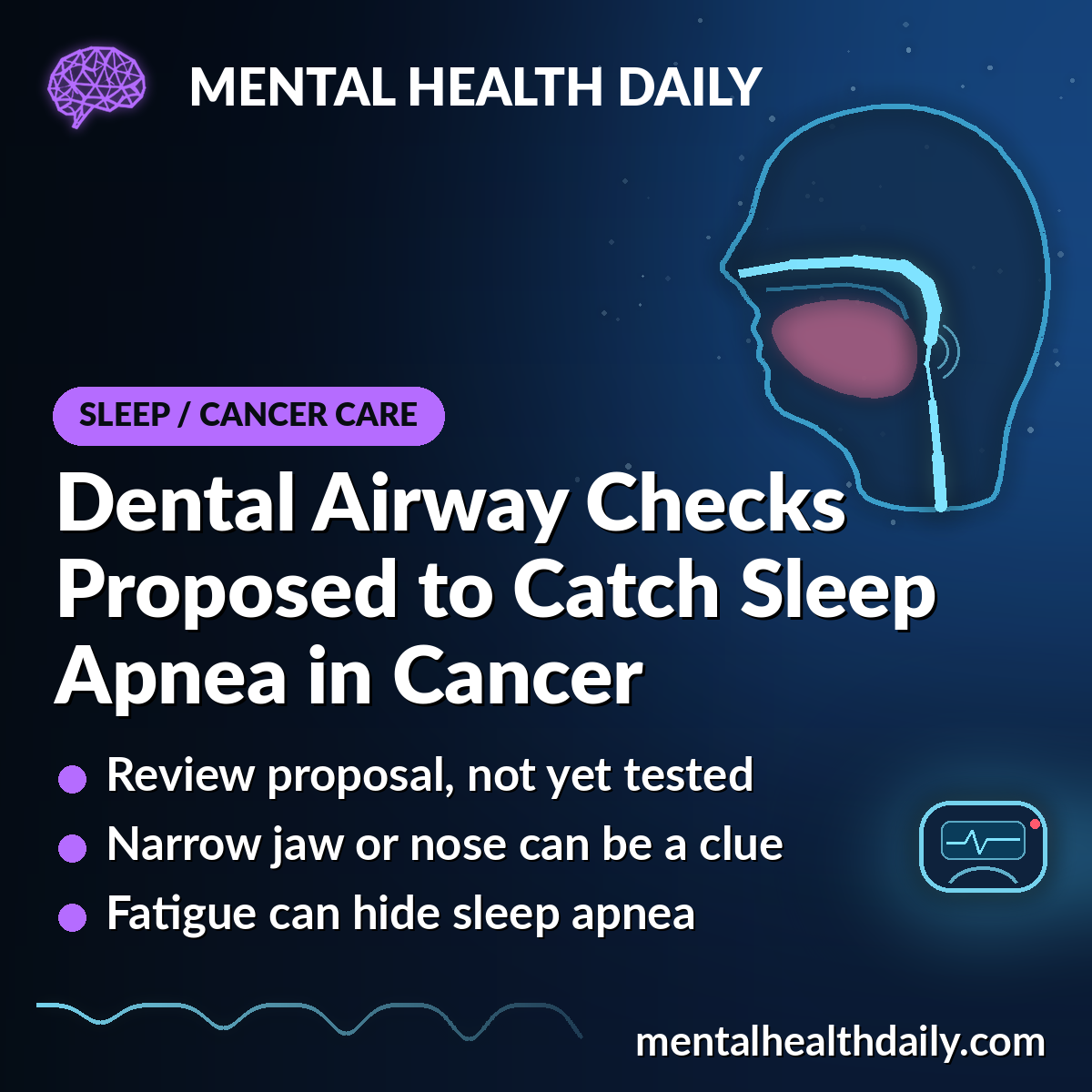
To address the pervasive issue of undiagnosed sleep apnea in cancer patients, the 2026 review proposes a comprehensive, five-step framework designed to complement, not replace, established sleep medicine guidelines and formal sleep testing. This framework aims to integrate a more proactive screening approach into existing care pathways:
- Symptom Screening: The initial step involves systematically inquiring about common OSA symptoms, including snoring, morning fatigue, headaches, poor concentration, and excessive daytime sleepiness. This formal screening ensures that these vital clues are not dismissed as generic cancer side effects.
- Dental and Craniofacial Examination: This is the novel and critical addition proposed by the review. It involves a detailed examination of the mouth, jaw, and facial structures by a dentist or trained healthcare professional. The goal is to identify anatomical features that predispose an individual to airway obstruction. This step leverages the unique expertise of dental professionals who routinely examine these areas.
- Airway Assessment and Overnight Sleep Study: If symptoms or anatomical findings suggest a high risk of OSA, the next step involves a more detailed assessment of the airway, potentially through imaging, followed by an overnight sleep study (polysomnography or home sleep apnea testing). Crucially, this study must track not only breathing events but also oxygen saturation levels to accurately determine hypoxic burden.
- Tailored Treatment Strategy: Based on the severity of OSA and the measured hypoxic burden, a personalized treatment plan is developed. This could range from simple interventions like nasal breathing exercises or oral appliances for mild cases, to CPAP therapy as the first-line treatment for moderate-to-severe sleep apnea.
- Reassessment of Overnight Oxygenation: Following the initiation of treatment, a follow-up assessment of overnight oxygen levels is recommended to ensure the effectiveness of the chosen intervention and to make any necessary adjustments.
This structured pathway represents a significant advancement, moving beyond a purely symptom-driven diagnostic approach to one that incorporates anatomical risk factors, particularly those visible during a routine dental examination.
The Dentist’s Critical Role: What the Dental Exam Seeks
Dentists and orthodontists possess a unique vantage point, regularly examining the oral cavity and craniofacial structures up close. This positions them ideally to identify anatomical anomalies that can contribute to airway crowding and collapse. The review explicitly outlines key features that examiners should assess: jaw development, palate shape, nasal breathing patterns, jaw position, tongue posture, and occlusal (bite) relationships.
Specific warning signs flagged by the review include:
- Narrow Upper Jaw (Maxilla): A constricted maxilla can reduce the volume of the nasal cavity and pharynx, leading to airway compromise.
- High and Narrow Palate: A high-arched, narrow palate can further reduce nasal airflow and displace the tongue posteriorly, narrowing the oral airway.
- Narrow Nasal Passages or Chronic Nasal Obstruction: Impaired nasal breathing forces mouth breathing, which can alter tongue posture and lead to airway collapse.
- Recessed Lower Jaw (Retrognathia/Retrogenia): A lower jaw positioned too far back can cause the tongue and soft tissues of the throat to collapse into the airway during sleep.
- Tongue-Tie (Ankyloglossia) or Abnormal Tongue Posture: A restricted tongue or one that habitually rests too low or too far back can obstruct the pharyngeal airway.
- Malocclusion (Bad Bite): Certain bite discrepancies can be indicative of underlying jaw development issues that impact airway dimensions.
According to the researchers, these anatomical features can collectively increase airway resistance, promote habitual mouth breathing, and ultimately fragment sleep. The review notes that such characteristics are frequently observed in adults with cancer across various tumor types, an observation described as "hypothesis-generating," awaiting formal measurement in clinical studies. This empirical observation, if validated, would lend strong support to the integration of dental screening.
Treatment Horizons: Tailoring Interventions for Cancer Patients
The proposed framework outlines treatment options carefully stratified by the severity of sleep apnea and the measured hypoxic burden:
- Mild Sleep Apnea with Low Hypoxic Burden: For these cases, simpler interventions such as promoting nasal breathing techniques (e.g., myofunctional therapy, nasal dilators) or the use of custom-fitted oral appliances (mandibular advancement devices that reposition the jaw forward) are often recommended.
- Moderate-to-Severe Sleep Apnea with Significant Hypoxic Burden: Continuous Positive Airway Pressure (CPAP) therapy is the established first-line treatment. By delivering a constant stream of air through a mask, CPAP effectively splints the airway open, preventing collapse. Other options might include positional therapy (avoiding back sleeping) or, in select cases, surgical interventions, though these are less commonly discussed in the immediate context of cancer care due to treatment priorities.
- Addressing Underlying Factors: Weight management, where appropriate, can also play a crucial role, as obesity is a significant risk factor for OSA.
It is important to reiterate that while these treatments are proven effective for OSA in the general population, the review itself does not present data on whether these interventions specifically alter fatigue, cognitive function, or mood in cancer patients. This remains a vital area for future clinical research.
The review also delves into the complex and emerging research linking intermittent low oxygen to cancer biology, exploring potential mechanisms by which hypoxia might influence tumor growth, metastasis, and treatment resistance. However, it explicitly states that a direct causal link between sleep apnea and cancer development or progression has not yet been definitively established. This ongoing area of research underscores the critical importance of diagnosing and treating OSA, not just for quality of life, but for potentially optimizing overall cancer outcomes.
Limitations and Future Directions
While the 2026 review offers a compelling and timely argument for a new paradigm in cancer care, it is essential to acknowledge its inherent limitations. As a narrative review, it synthesizes existing literature and expert opinion rather than presenting new clinical trial data. Its recommendations, particularly the proposed 5-step framework and the dental exam component, have not yet been rigorously tested in a prospective clinical study involving cancer patients. Consequently, the generalizability of its findings across all cancer types, stages, and patient populations requires further validation. The observations regarding craniofacial features in cancer patients are hypothesis-generating and need to be systematically measured and correlated with OSA diagnoses.
Implications for Patients and the Healthcare System
For individuals living with cancer, the message from this review is clear and empowering: symptoms such as loud snoring, gasping for air at night, morning headaches, or persistent, heavy daytime sleepiness should never be dismissed as merely "expected" side effects of cancer or its treatment. These are critical warning signs that warrant immediate discussion with the cancer care team. The established pathway to diagnosis remains an overnight sleep study, and crucially, sleep apnea has effective and readily available treatments.
The proposed integration of a dental exam that specifically screens for craniofacial features indicative of airway obstruction could add an invaluable layer of early detection, especially for patients who regularly see a dentist. This interdisciplinary approach – bridging oncology, sleep medicine, and dentistry – holds the promise of catching a treatable condition that profoundly impacts patient well-being.
The fundamental question that subsequent research must answer is whether building this comprehensive dental and airway exam into routine cancer care will significantly increase the identification of sleep apnea, and more importantly, whether treating it will translate into measurable improvements in cancer-related fatigue, cognitive function, mood, and overall quality of life for cancer patients. This 2026 review serves as a powerful call to action, urging the medical community to look beyond the immediate cancer diagnosis and embrace a more integrated approach to patient care that recognizes and addresses the often-hidden burden of sleep disorders. The potential benefits, both in terms of patient comfort and potentially optimized cancer outcomes, are too significant to ignore.

