


Nestled within the undulating embrace of the Allegheny Mountains in eastern Hampshire County, West Virginia, the Bhavana Society Theravada Buddhist Monastery stands as a testament to spiritual dedication and quiet contemplation. Sprawled across sixty acres of verdant woodland, this sanctuary, founded in the mid-1980s, offers a refuge for those seeking inner peace amidst the often-turbulent currents of modern life. Recently, the monastery hosted a four-day meditation retreat, a period marked by "noble silence" and intensive instruction in the Buddha’s Noble Eightfold Path, drawing individuals from various walks of life, including one writer grappling with profound personal loss.
A Sanctuary Amidst Nature’s Grandeur
The Bhavana Society, a Theravada Buddhist monastery, is more than just a place of worship; it is an immersive environment designed to facilitate deep introspection and spiritual growth. The landscape itself, characterized by stony, forested ridges and the quiet rustling of leaves, provides a natural backdrop conducive to meditation. The monastery’s accommodations, known as "kutis," are simple, individual huts scattered throughout the wooded acreage. These rustic dwellings, some dating back to the monastery’s inception, offer a sense of solitude essential for focused practice.
One participant, navigating the dimly lit paths after evening meditation, found his way to his kuti, named Panna. The name itself, derived from Pali—the canonical language of Theravada Buddhism—signifies wisdom and discernment, qualities considered fundamental to understanding the true nature of reality and achieving enlightenment. This pursuit of wisdom is particularly poignant for the writer, who is processing the recent suicide of his 36-year-old son. The metaphorical weight of this loss, experienced as stumbling blocks in the darkness, underscores the profound need for the calm and introspection offered by the retreat.

Guided by a Global Luminary
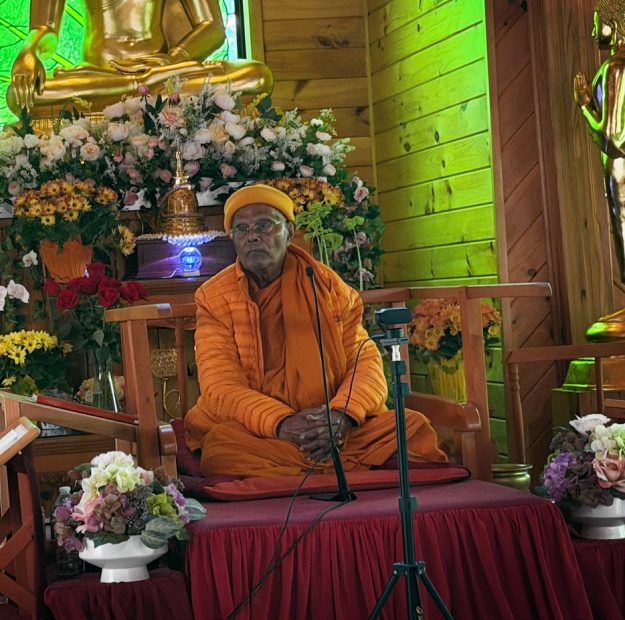
The retreat was led by esteemed guides, most notably Bhante Henepola Gunaratana, affectionately known worldwide as Bhante G. At 98 years old, Bhante G is a globally recognized author, a polymath, and a revered teacher of Theravada Buddhism. His presence lends significant gravitas to the Bhavana Society, which he founded. His teachings, rooted in decades of practice and scholarship, focus on core Buddhist principles, including the Noble Eightfold Path—Right Understanding, Right Thought, Right Speech, Right Action, Right Livelihood, Right Effort, Right Mindfulness, and Right Concentration.
The four-day retreat adhered to a strict schedule, commencing with a 5:30 a.m. meditation session in the sangha hall. The adherence to "noble silence" meant that communication among retreatants was minimal, often confined to hushed whispers during communal tasks or brief, apologetic murmurs during walking meditation. Even the simple act of acquiring morning coffee or tea from a shared refrigerator involved a low-toned exchange, a subtle reminder of the collective commitment to quietude.
The Practice of Dhamma and Daily Life
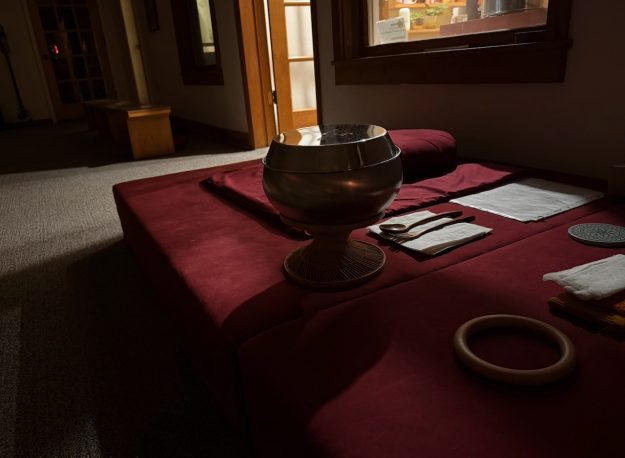
Communication within the monastery operates on a distinct level. While teachers engage in more audible instruction, retreatants submit questions about the day’s dhamma talks—the teachings of the Buddha—via a discreet box in the sangha hall. This hall also serves as a central hub where participants store their personal mugs and prepare for the day’s sustenance, which consists of two meals: breakfast and lunch.
The writer, acknowledging his own past struggles with mental health, including bouts of suicidality and a tendency to stray from the Buddhist path, emphasizes his lack of authoritative knowledge on Buddhist doctrine. Instead, he positions himself as a seeker, one who can deeply benefit from the immersive retreat experience offered at Bhavana. The ochre-red meditation cushions, a common sight in the hall, serve as tangible anchors for this journey of self-discovery.
A West Virginia Gem
A significant aspect highlighted by the writer is the remarkable presence of a world-renowned Buddhist leader in the seemingly unlikely setting of the West Virginia hills. Bhante G, approaching his 100th birthday on December 7, 2027, continues to be a beacon of clarity and guidance. His mind, though his delivery may have slowed with age, remains as sharp and pure as when the writer first encountered him in 1989.
At that time, the writer, then a newspaper reporter, was drawn to the story of a Buddhist forest monastery establishing itself in the remote West Virginia wilderness, a considerable distance from the nearest town of Wardensville and a two-hour drive from Washington D.C. The unique juxtaposition of Eastern spiritual practice within the Appalachian landscape captured his journalistic interest. The profound connection he felt with the place and its abbot, Bhante G, led him to serve on Bhavana’s board for nearly two decades, a personal chapter he reserves for another narrative.
Personal Grief and Universal Teachings
This particular retreat held a deeper, more personal significance for the writer, returning after a considerable absence from Bhavana. The recent, shocking suicide of his son casts a long shadow, making this a journey laden with "profound baggage." While not intending to dwell excessively on paternal anguish, the quiet of the monastery night often prompts reflection. In his journal, he attempts to articulate the complex emotions, contemplating a poetry chapbook titled "Letters to Luka," a tender nickname for his son.
His journal entries reveal the raw pain of grief, juxtaposed with the serene sounds of the natural world: the chorus of tree frogs, the hum of crickets, and the occasional, chilling hoot of an owl. He grapples with the desire to call out his son’s name, to reclaim him from the void, yet recognizes the inappropriateness of such an outburst within the sacred silence of the monastery. The ancient woods of Appalachia, with their own unbroken song, continue their timeless rhythm, indifferent to his profound sorrow.

The Subtle Language of Silence
The practice of "noble silence" fosters unique forms of communication among retreatants. Seated in close proximity on cushions and chairs, a deliberate two-foot separation maintained between individuals, a subtle exchange can occur. Men occupy the left side of the hall, women the right. The writer observes a fellow retreatant utilizing a wooden meditation bench, a tool that allows for subtle postural adjustments. After a meditation session concludes, marked by three bows to the central Buddha image, a whispered compliment about the bench elicits a smile and a reciprocal "namaste."
The following morning, the owner of the bench has relocated. A handwritten note is left on the writer’s cushion: "Friend, I won’t be using my bench for the next few hours. Please feel free to try it!!! Peace." This simple act of generosity, conveyed through a note, exemplifies the compassionate undercurrent that can thrive even within strict silence. The writer’s appreciation for the bench, and the kindness of its owner, prompts him to consider it as a potential Christmas gift for his father, a testament to the positive impact of such human connections.
The Scholar’s Work and the Power of Words
During his work hours, the writer assists Bhante G in the monastery library, copyediting a new manuscript tentatively titled "Seeing Things as They Are." This magnum opus delves into the sustained commitment to purpose and ethics required for deepening meditation practice on the path to enlightenment. Bhante G’s prolific literary output includes "What Why How: Answers to Your Questions About Buddhism, Meditation, and Living Mindfully," which has seen translations into several languages. His earlier work, "Mindfulness in Plain English," hailed by Jon Kabat-Zinn as a "masterpiece," has achieved widespread recognition with translations into nearly thirty languages.
Within the pages of Bhante G’s new book, the writer discovers passages on grief that profoundly resonate with his family’s loss. He shares these words with his wife and daughter and seeks permission from Bhante G to quote them at his son’s upcoming memorial gathering. The excerpt eloquently addresses the nature of sorrow, its origins in clinging, and the role of mindfulness in understanding and ultimately transcending grief. Bhante G writes: "Sorrow ordinarily arises because we cling to a person, an object, a position, an experience, or an idea of ourselves. When what we love changes, separates from us, or disappears, grief arises. Lamentation is the outward expression that may follow this sorrow… Mindfulness does not ask us to deny grief or pretend that loss is pleasant. It helps us know sorrow as sorrow. Clear comprehension then investigates the attachment, expectation, and perception that sustain it. We begin to understand that everything conditioned is subject to change and that clinging to what must change brings suffering." He further explains that as this understanding deepens, "Compassion can remain, love can remain, and responsibility can remain, but grasping gradually weakens. This is how the practice leads toward the surmounting of sorrow and lamentation."
Manual Labor as Contemplation
Beyond intellectual pursuits, retreatants engage in physical tasks to support the monastery’s upkeep. The writer is assigned the duty of clearing leaves and twigs from the paths and porches leading to the men’s kutis. Equipped with a small, almost whimsical broom, he navigates the hillside paths, passing by kutis named after significant figures and concepts in Buddhism, such as Rahula, Kalingaram, Lakhanna, Piti, and Sivali. The physical exertion leaves him breathless but deeply satisfied, describing it as perhaps the most rewarding work he has undertaken in recent memory.
A Return to the Cushion
As the evening draws near, the writer returns the broom to his kuti’s doorway, drawn by the quiet call of his meditation cushion. The retreat, a crucible of personal sorrow and universal wisdom, continues to unfold, offering a path towards healing and understanding amidst the serene beauty of the West Virginia mountains. The Bhavana Society, a vital center for Buddhist practice, continues to offer a sanctuary for those seeking solace, insight, and a deeper connection to themselves and the world around them.

