

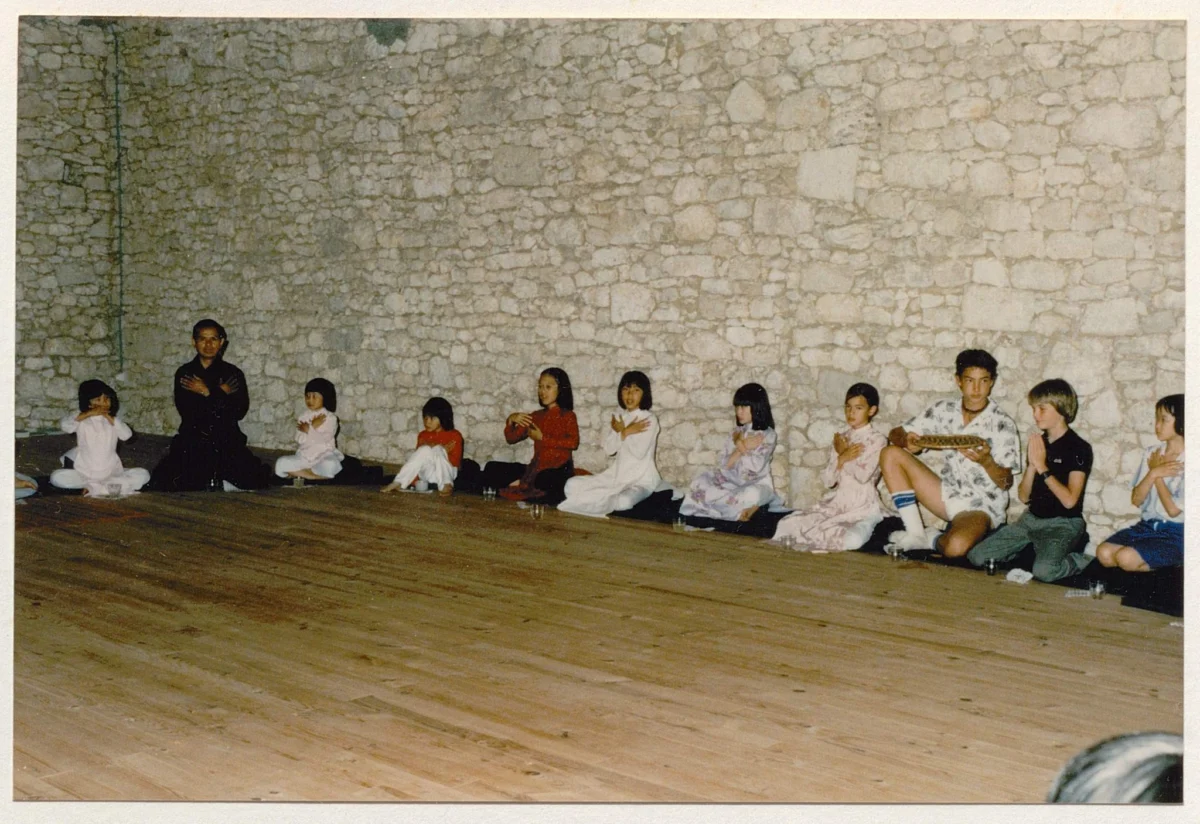
October 11, 2026, marks a significant occasion: the 100th anniversary of the birth of Thich Nhat Hanh, the globally revered Zen teacher, author, poet, and peace activist. This day, observed by his followers as a "continuation day" within the Plum Village tradition, transcends the conventional understanding of birth and death, reflecting the Zen teaching of impermanence and interconnectedness. Born in central Vietnam on October 11, 1926, Thich Nhat Hanh, affectionately known as Thây (Vietnamese for "teacher"), profoundly influenced contemporary Buddhism. His pioneering work in establishing the Plum Village tradition and the Order of Interbeing, coupled with his prolific authorship of over one hundred books, cemented his legacy. Crucially, he championed the concept of "engaged Buddhism," a transformative approach that reoriented Buddhist communities to actively address social, political, and environmental crises. In honor of this centennial milestone, Tricycle magazine has gathered reflections from teachers, writers, and students, offering a testament to his enduring impact on the landscape of global spirituality and activism.
A Life of Activism and Spiritual Innovation
Thich Nhat Hanh’s life was deeply intertwined with the tumultuous events of the 20th century. Born during a period of French colonialism and the ensuing conflicts in Vietnam, his teachings offered a beacon of clarity and resilience. Adrienne Minck-Chiu Lo, a historian and author, notes his extraordinary ability to "bring the dharma to the modern world" and to demonstrate "how to live with clarity of purpose even when all seems lost." For individuals who have experienced the devastation of war and displacement, Thich Nhat Hanh’s message offers a powerful testament to the possibility of healing, breaking cycles of violence, and fostering greater light for humanity.
The Essence of an Enlightened Teacher
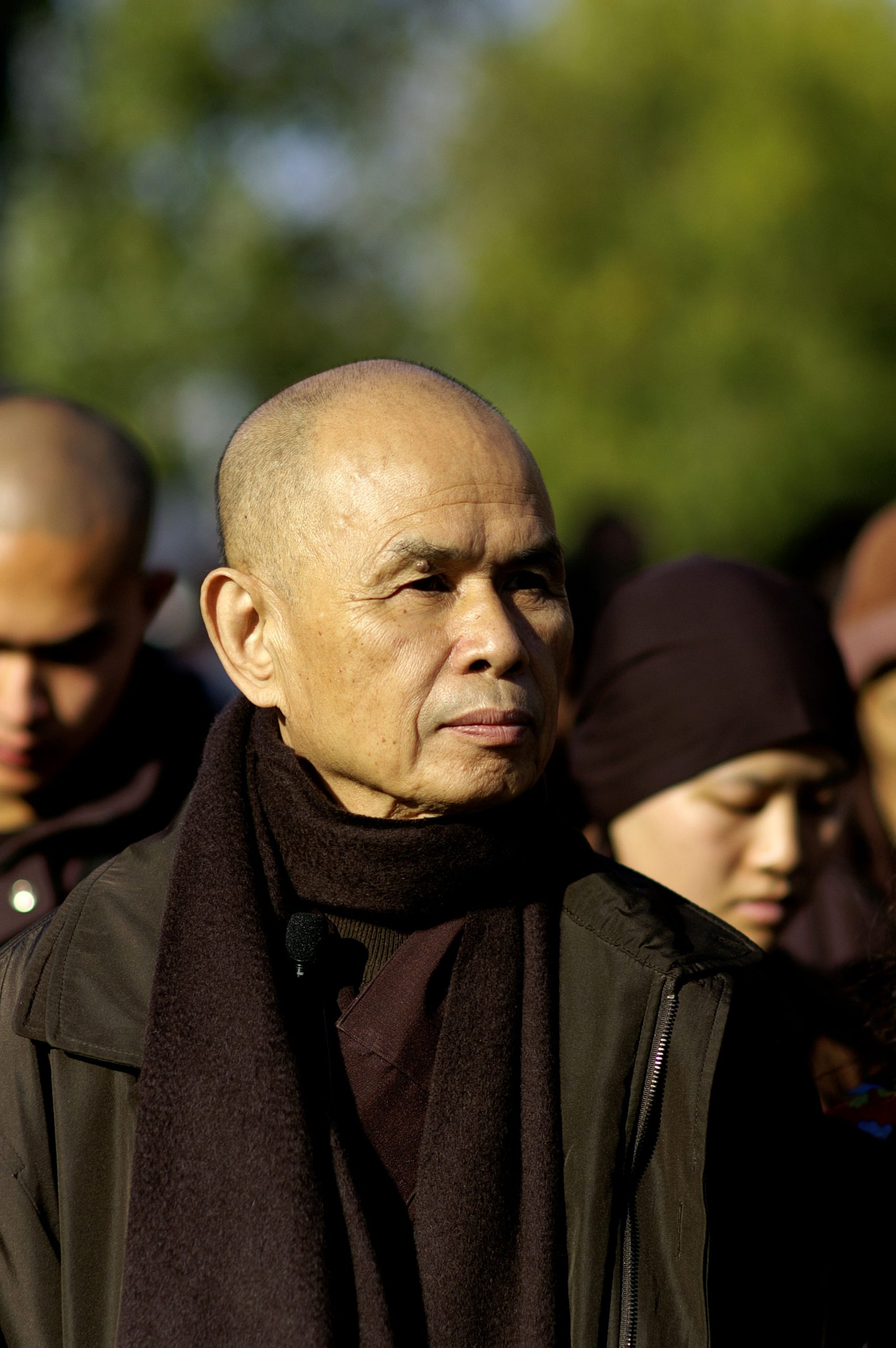
Bhikshuni True Virtue, the first Western European woman ordained by Thich Nhat Hanh, reflects on the profound nature of an enlightened teacher. She defines such a figure not as one to be revered, but as an individual whose boundless compassion and understanding guide others to discover their own inner teacher. These teachers possess the precious ability to cut through students’ obstacles and awaken them to truth through every thought, word, and action, ensuring all their endeavors are of benefit to the world. In the absence of Thich Nhat Hanh’s physical presence, his followers find refuge in his legacy, particularly the vibrant and expansive sangha he cultivated. His song, "In the here and now we are singing together," encapsulates this spirit of communal support and shared purpose.
The passing of a beloved teacher can spark concern about the future, yet the Plum Village tradition emphasizes that the successor is the sangha itself. Just as the Buddha had no single successor, Thich Nhat Hanh’s legacy is carried forward by each individual practitioner. His poem, "On the Edge of the Forest the Plum Trees Have Burst into Flower," poignantly illustrates his deep commitment to transmitting his teachings, even when students seem distant or unaware of the profound connection. Bhikshuni True Virtue expresses her gratitude, vowing to continue her teacher’s work by embodying the dharma in her daily actions.
Personal Encounters and Profound Love
Kaira Jewel Lingo, a dharma teacher and author, recounts her first encounter with Thich Nhat Hanh in 1997. A recent Stanford graduate, she felt adrift, seeking peace and clarity. Upon seeing Thây for the first time, she experienced an "unexplainable feeling of recognition and absolute trust." This led her to extend her initial two-week retreat to four months and, two years later, to her ordination as a novice nun.
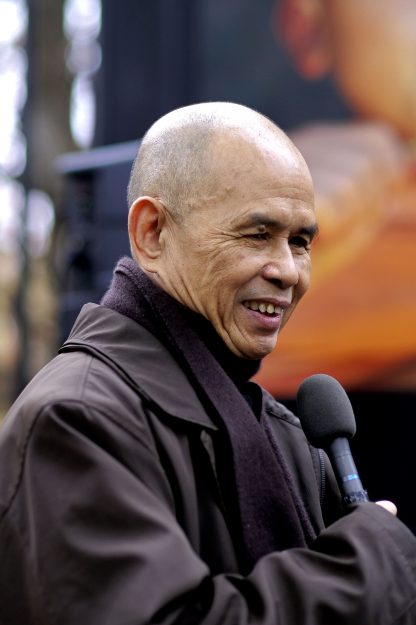
Lingo identifies love as Thây’s most important teaching. His unwavering love for his students, both monastic and lay, was palpable. She recalls a moment in 2003 during a pilgrimage in China when, overwhelmed by self-doubt, she met his gaze on a bus. Thây’s look, filled with immense compassion and love, physically impacted her, "burning away my attachment to my story and the seductive hooks that kept me bound up in the small self." This moment of grace taught her that awakening is possible in every moment, affirming innate goodness and worthiness.
Lingo also highlights Thây’s inclusivity. As the first Black monastic ordained by him, she felt deeply seen. When she and other students requested a retreat for people of color, he readily agreed, stating, "I am also a person of color." This led to the first-ever retreat of its kind in their tradition. He later included Lingo and co-organizer Larry Ward in his book, Together We Are One, with dedicated chapters. Another poignant memory involves a moment of self-consciousness about her racial identity, met by Thây’s resounding declaration, "Black is beautiful!" This direct teaching liberated her from self-imposed hang-ups, allowing her to love freely. Despite leaving monastic life, Thây’s teachings remain central to her path as a lay dharma teacher, inspiring her to offer the same boundless compassion and love he embodied.
The Enduring Presence of Thich Nhat Hanh
Sister Dang Nghiem from Deer Park Monastery offers a heartfelt address to Thây, acknowledging that while his physical form has returned to the Earth, his teachings and spirit continue to guide. She describes waking each morning with gratitude for the sangha he created, and how his teachings transformed her suffering into freedom and ease. The image of Thây walking peacefully, a practice she witnessed countless times, remains vivid. His cushion, still present in their meditation hall, serves as a silent reminder and a focal point for reflection. The practice of beginning gatherings with "Dear Thây, dear sangha" underscores the sacredness of his name.
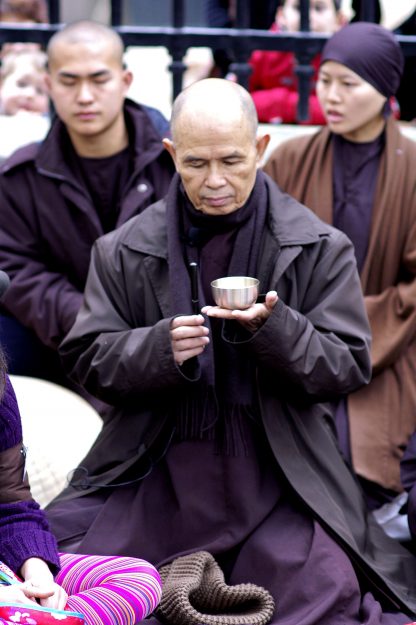
The Deer Park Sangha has expanded its initiatives in his honor, including a Long-Term Stay Program, the Action Wake Up program, the Happy Farm project, and the Thich Nhat Hanh School of Interbeing. To commemorate his 100th continuation day, six new novices were ordained in October. Sister Dang Nghiem emphasizes that the Plum Village tradition thrives because everyone continues Thây’s legacy, finding ease, peace, and freedom through his teachings. She highlights that his love, expressed through words of trust, compassionate gaze, forgiveness, and inclusiveness, continues to shine their path.
A Legacy of Engaged Buddhism and Social Justice
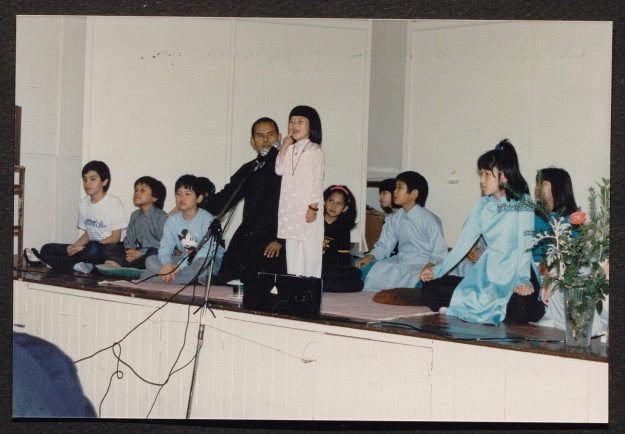
An Tran, author and Thien-Pure Land practitioner, reflects on Thich Nhat Hanh’s profound influence within the Vietnamese American diaspora. He recalls his childhood Sundays at Hoa Nghiem Pagoda, where the abbot often referenced "Master Lang Mai," Thich Nhat Hanh’s Vietnamese appellation. Tran notes Thây’s pivotal role in building and touring a network of Vietnamese Buddhist temples across the United States.
Tran’s political and social consciousness grew as he learned of Thich Nhat Hanh’s friendship with Martin Luther King, Jr. and his popularization of engaged Buddhism. He highlights Thây’s activism during the 1963 Buddhist Crisis in Vietnam, where he led a nonviolent resistance against the Diem dictatorship, demonstrating unwavering pacifist ideals. For Tran, seeing a peace activist from his homeland gain global reverence was deeply heartening. As he returned to exploring Buddhism in his young adulthood, he recognized the profound influence of Master Lang Mai’s didactic methods on Vietnamese Buddhist meditation. His academic interests in obscure Buddhist texts were met by Thich Nhat Hanh’s extensive lectures in Vietnamese, showcasing his scholastic brilliance and ability to synthesize diverse Buddhist philosophies with elegant simplicity. Tran concludes that no words can adequately honor the grand master, emphasizing the importance of embodying his teachings through mindful attention, as exemplified by the practice of "inviting the bell."
Renewing Buddhism Through Community and Inclusivity
Sister Dinh Nghiem, a Plum Village monastic for thirty-three years, shares her journey from initial fears to profound trust in Thich Nhat Hanh. She emphasizes that he taught her "everything I needed to learn and know for my spiritual growth." A particularly touching story recounts a reporter’s aggressive question during a talk on the Vietnam War. Thây’s calm response, using the metaphor of watering the roots of a tree, demonstrated his commitment to addressing the war’s origins in America. Jim Forest’s account reveals Thây’s profound emotional response to the reporter’s anger, which he processed through deep, slow breathing, embodying the ideal of representing the best of humanity even in the face of adversity. Sister Dinh Nghiem sees Thây as embodying the "three jewels" – Buddha, dharma, and sangha – in their most beautiful expression, inspiring her to live with the same dedication to practice and presence.
Sister Dinh Nghiem also highlights Thich Nhat Hanh’s revolutionary approach to community building. She notes that Plum Village has always welcomed children and teenagers, a rarity in Western Buddhist centers. Thây’s deep connection with young people, expressed through songs, plays, and stories, was evident from his youth. He also placed immense faith in lay practitioners, training university students and others who became vital members of the Plum Village community. The inclusion of lay practitioners in the three-month rains retreat and the transmission of lamps and gathas to lay dharma teachers were groundbreaking innovations in the West. Furthermore, Thây supported the restoration of the bhikshuni order in various traditions, ordaining Tibetan nuns and enabling the revival of the full ordination lineage for women. He established a unique community structure in Plum Village where abbots and abbesses, though not "bosses," are entrusted with caring for the community’s well-being, fostering a democratic and familial atmosphere. This revolutionized Buddhist community models, blending seniority with democratic principles.
Navigating Grief and Cultivating Joy
Peggy Rowe Ward, a dharma teacher, recounts the profound impact of Thich Nhat Hanh’s presence during her wedding at Plum Village. Thây guided her through pre-wedding nerves with a simple yet profound lesson: distinguishing between "excitement," which can fray nerves, and "joy," which nourishes the heart. She also shares moments of Thây’s gentle wisdom during his illness, when he quipped, "Perfect health is just an idea," and his compassionate response after her house was bombed, offering solace and redirecting her focus to her "work to do in the US." The Ward’s experience at Ground Zero after 9/11, where Thây led the sangha in a day of contemplative peace on the beach, illustrates his ability to foster deep connection and resilience amidst profound suffering. Thây’s repeated encouragement to "offer the dharma our way" and "not give in to despair" has become a guiding principle for their lives.

The Universal Language of Peace and Interbeing
Shantum Seth, a Buddhist teacher and pilgrimage guide, shares his transformative journey with Thich Nhat Hanh. Initially meeting him in 1987, Seth was struck by his "gentleness and deliberation" and his "extraordinary presence." Thây’s simple teachings on mindfulness infused him with a sense of peace he had long sought. His request for Seth to "bring the buddhadharma back to India" became a lifelong calling.
Their subsequent thirty-five-day pilgrimage through India, following the Buddha’s footsteps, was profoundly shaped by Thây’s unique perspective. Seth witnessed Thây’s ability to present the Buddha as a human being, accessible to all, and to imbue historical sites with vivid life through his storytelling. Thây’s teaching on interbeing, transmitted through a silent, hand-holding moment, underscored the profound interconnectedness of all existence. Seth’s decision to marry Gitu, rather than ordain, was met with Thây’s gentle guidance: "It does not matter what you do but how you do it." Later, Thây’s confidence in Seth’s readiness to become a dharmacharya marked a significant turning point, leading Seth to understand that his role was to carry forward the practice and understanding Thây had shared. His work leading annual pilgrimages for nearly forty years is a testament to Thây’s enduring influence.
Marisela B. Gomez, MD, a dharma teacher, physician-scientist, and activist, highlights Thich Nhat Hanh’s innovative teaching methods, particularly his use of spontaneous singing to illustrate the concept of anatta (nonself). By inviting students to sing without preparation, he helped them release ego and embrace the emptiness of a fixed self. Gomez expresses deep gratitude for his teachings, recognizing his profound impact on her understanding of nonself.
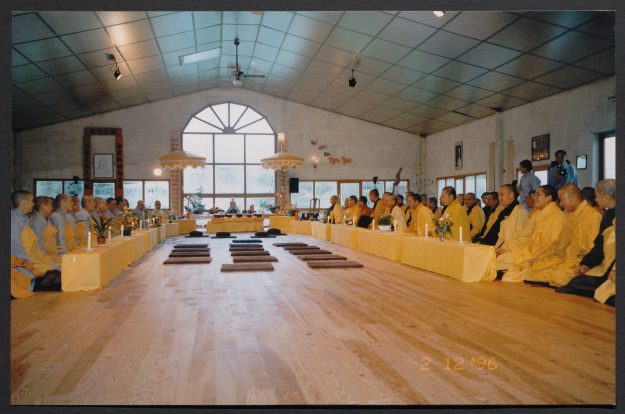
Brother Phap Luu, a Plum Village monastic, provides a biographical sketch of Thich Nhat Hanh’s early life, highlighting his departure from traditional monasticism, his early publications, and his efforts to build a unified Buddhist community amidst the divisions in Vietnam. His application for a Fulbright scholarship to Princeton Seminary is presented as an embodiment of his philosophy of not being a victim but understanding the nondual nature of victim and perpetrator. Brother Phap Luu recounts Thây’s secret plan for self-immolation in New York City as a catalyst for peace activism, a plan he abandoned upon his mentor’s counsel to become a voice for his colleagues in Vietnam. His subsequent exile and the establishment of Plum Village in France are depicted as the flowering of his commitment to rebuilding his sangha in the West.
Andrew Cooper, Tricycle’s features editor, recalls Thich Nhat Hanh’s 1982 talk on dependent origination, which he eloquently expounded as "interbeing." Cooper describes the profound silence that followed the talk, likening it to a cinematic moment where the audience was captivated by the "nature and truth of interdependence." Bradley Donaldson, a lay teacher and former monastic, first encountered Thich Nhat Hanh’s teachings through his book Touching Peace during the aftermath of 9/11. The book’s simple visualizations provided grounding and peace amidst chaos, leading Donaldson to a deep engagement with Thây’s writings and the practice of engaged Buddhism. He credits Thây with showing him "a different way to be. A way to be at peace and to help others do the same."
Ayo Yetunde, a community dharma leader, chaplain, and professor, connects Thich Nhat Hanh’s teachings to the complex geopolitical landscape, noting that October 7th holds significance for multiple tragic events. Her own 40th birthday coincided with the US bombing of Afghanistan in 2001, a period of profound personal distress. She found solace and a new perspective through Thich Nhat Hanh’s book Touching Peace, particularly its visualizations that fostered grounding and a sense of freedom. This encounter led to her deep involvement in mindfulness practice and engaged Buddhism scholarship.

The Continuing Resonance of a Beloved Teacher
The centennial of Thich Nhat Hanh’s birth is more than a commemoration; it is a vibrant testament to a life dedicated to peace, compassion, and the profound transformation of individuals and society. His teachings on mindfulness, interbeing, and engaged Buddhism continue to resonate, offering a path to navigate suffering and cultivate a more just and peaceful world. The collective voices of his students, gathered here, affirm that his legacy is not confined to the past but lives on in the hearts and actions of those he inspired. His "continuation day" is, indeed, a celebration of the enduring presence of his wisdom and love, a light that continues to guide generations.

