

The scientific literature on nutrition frequently faces criticism from corporate interests, particularly regarding the perceived questionable credibility of observational studies. While randomized controlled trials (RCTs) are the gold standard for assessing interventions like pharmaceuticals, their application to dietary research presents significant challenges, necessitating reliance on observational data. This article delves into the validity of this criticism, exploring the inherent limitations and unique strengths of different research methodologies in the complex field of nutrition, and examining how industry funding can influence scientific discourse.
The Challenge of Nutritional Research: Why Observational Studies Are Essential
The development of diet-related diseases, such as heart disease and various cancers, often unfolds over decades. This protracted timeline makes conducting long-term RCTs on diet exceedingly difficult. Practical hurdles include the inability to create convincing placebo diets for participants and the substantial challenge of ensuring adherence to assigned dietary regimens for the many years required to observe effects on hard clinical endpoints. Consequently, researchers must often turn to observational studies, which involve tracking large populations over extended periods to identify associations between dietary patterns and disease prevalence.
Despite the logistical complexities of dietary RCTs, a significant body of research suggests that the findings from observational population studies are remarkably consistent with those from randomized trials. A meta-analysis comparing data from these two study types revealed that, on average, the effects observed were not only in the same direction but also of similar magnitude in approximately 90% of the treatments examined. This indicates that observational data, when collected and analyzed rigorously, can provide valuable insights into the relationship between diet and health.
An illustrative, though complex, example often cited is the historical disparity in findings related to hormone replacement therapy (HRT). Early observational studies suggested that women taking certain HRT medications, like Premarin, experienced fewer heart attacks. However, subsequent RCTs indicated the opposite, raising concerns about the reliability of observational data. Upon closer examination, the discrepancy was found to be rooted in the timing of when the therapy was initiated, a factor not fully accounted for in the initial observational analyses. Once this temporal element was considered, the results from both types of studies were found to be more aligned, underscoring the importance of nuanced interpretation and comprehensive data analysis.
Differentiating Levels of Evidence: When Rigor Meets Pragmatism
Even if observational studies are considered to provide a lower quality of evidence compared to RCTs, it is crucial to consider the context and magnitude of the potential interventions. The level of certainty required for public health recommendations regarding diet may differ significantly from that needed for prescribing potent pharmaceutical drugs. Prescription medications, tragically, are a leading cause of death in both Europe and the United States, contributing to approximately 100,000 American deaths annually due to side effects, even when taken as directed. The inherent risks associated with pharmaceuticals necessitate an exceptionally high standard of evidence, typically demanding robust, randomized, double-blind, placebo-controlled trials to ensure that the benefits demonstrably outweigh the risks.
In contrast, advising individuals to consume more broccoli or reduce their intake of soda does not carry the same level of immediate or severe risk. While these dietary recommendations aim to promote long-term health and prevent chronic diseases, the potential harms of non-adherence or slight deviations are generally far less catastrophic than those associated with adverse drug reactions. Therefore, a pragmatic approach to dietary guidelines acknowledges that while scientific rigor is paramount, the practical application of evidence must also consider the feasibility of research and the relative risks and benefits of the recommendations themselves.
The Influence of Funding: Industry-Sponsored Research and Methodological Selectivity
A critical aspect of the debate surrounding the credibility of nutritional science lies in the influence of industry funding. A notable example involves a paper funded by the sugar industry that concluded that dietary guidelines advising sugar reduction were untrustworthy due to their reliance on "low-quality evidence." This critique effectively employed the methodology typically used for assessing pharmaceutical trials, a framework that many argue is ill-suited for evaluating complex dietary recommendations.
Critics contend that this represents an "inappropriate use of the drug trial paradigm in nutrition research." While proponents of this approach might argue that adherence to established grading systems, such as the GRADE (Grading of Recommendations Assessment, Development and Evaluation) system, is standard practice, the selection of such a system can be strategically employed. The GRADE system, widely used in medical research, assesses the quality of evidence for interventions. However, its application to nutrition, particularly when influenced by industry funding, has raised concerns about bias.
Alternative Frameworks for Nutritional Evidence Assessment
Recognizing the limitations of applying drug-centric assessment tools to nutrition, specialized frameworks have been developed. NutriGrade, for instance, is a scoring system specifically designed to evaluate and rank the evidence in nutrition research. A key feature of NutriGrade is its explicit consideration of funding bias, which can lead to a downgrade in the assessment of industry-funded trials. This approach directly addresses the concern that research outcomes might be influenced by the financial interests of the sponsors, a factor that the sugar industry paper seemingly overlooked or strategically circumvented.
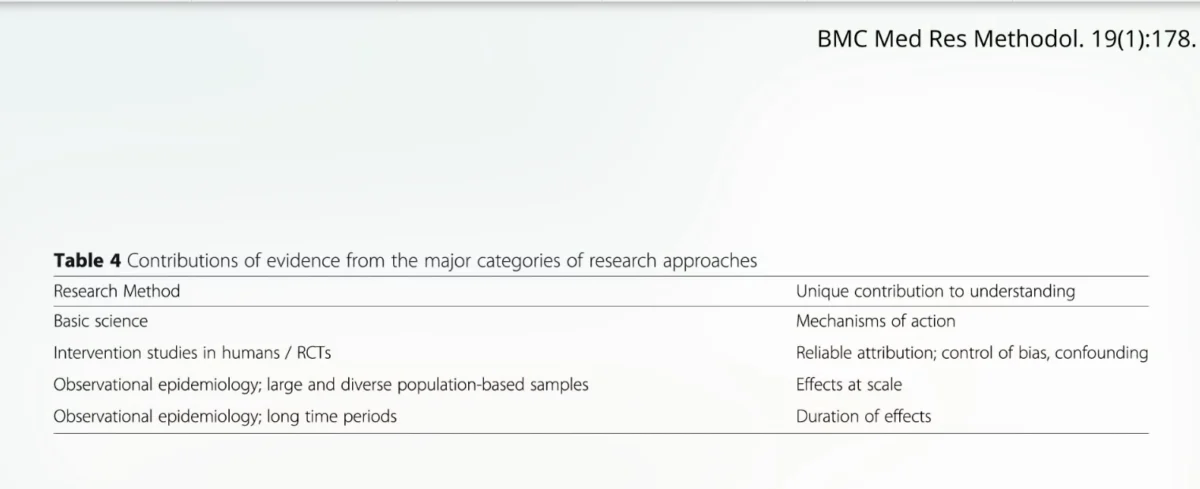
Another important development is the HEALM (Hierarchies of Evidence Applied to Lifestyle Medicine) framework. HEALM was created precisely because existing tools like GRADE are not always feasible or appropriate for addressing research questions that cannot be fully answered through randomized controlled trials. HEALM acknowledges that each research methodology—laboratory studies exploring precise mechanisms, RCTs proving cause and effect, and large-scale observational studies tracking populations for decades—contributes uniquely to our understanding of health and disease.

Synergy of Evidence: The Trans Fat Success Story
The trans fat saga serves as a compelling case study illustrating the power of integrating findings from diverse research methods. Initial laboratory studies demonstrated that trans fats increased risk factors for heart disease. Concurrently, extensive population-based observational studies revealed a direct correlation: individuals who consumed higher amounts of trans fats exhibited a greater incidence of heart disease. The convergence of evidence from these different research approaches created an undeniable case for the detrimental effects of trans fat consumption.
This robust scientific consensus ultimately led to the widespread removal of trans fats from the U.S. food supply. The public health impact has been substantial, with estimates suggesting that this action has prevented as many as 200,000 heart attacks annually. While it is true that no RCTs were conducted to directly link trans fat consumption to hard endpoints like heart attacks or mortality (as such studies would be ethically and practically impossible, requiring participants to consume excessive amounts of trans fats over many years), the overwhelming evidence from multiple sources was sufficient to warrant decisive public health action. This exemplifies the principle of not letting the pursuit of perfect evidence prevent beneficial interventions when lives are demonstrably at stake.
Public Health Imperatives: Navigating Uncertainty with the Best Available Evidence
Public health officials are tasked with making critical decisions based on the best available balance of evidence. This often involves synthesizing information from various sources, especially when direct experimentation is impossible or unethical. For instance, establishing tolerable upper limits for exposure to toxic substances like lead or polychlorinated biphenyls (PCBs) does not rely on randomized trials where children are deliberately exposed to varying levels of lead to observe neurological damage. Instead, public health authorities must draw upon all available data, including epidemiological studies, animal research, and toxicological assessments, to make the most informed approximations.
Similarly, in nutrition, even in the absence of RCTs, or when they are impractical to conduct, observational studies provide substantial evidence regarding the nutritional causes of many chronic diseases. For example, numerous observational studies have linked red meat consumption to an increased risk of colorectal cancer. If dietary guidelines for cancer prevention were to be evaluated solely through the lens of the GRADE system, designed for drug trials, a similar conclusion of "low-quality evidence" might be reached, mirroring the critique of the sugar industry-funded paper.
This pattern of industry influence is further highlighted by the involvement of an individual who helped conceive the sugar industry-funded study in subsequent research funded by a meat industry-affiliated institution. This individual subsequently became the lead author of a paper that, using GRADE methodology, concluded that existing dietary guidelines recommending reduced red and processed meat consumption were based on "low-quality evidence," thereby advocating for the dismissal of these recommendations. Such instances raise serious questions about the objectivity of research when industry interests are directly implicated in the design and interpretation of scientific findings.
The Irony of Inconsistency: Industry’s Role in Shaping Guidelines
An additional layer of irony surrounds the sugar industry-funded paper’s critique of dietary guidelines. The authors pointed to the inconsistency of sugar recommendations across various guidelines over a 20-year period as a reason to doubt their quality. However, it is important to note that guidelines are expected to evolve as scientific understanding advances. The critique overlooks the fact that recent guidelines have shown remarkable consistency. An exception was the 2002 Institute of Medicine guideline, which controversially suggested that up to a quarter of one’s diet could consist of sugar without leading to deficiencies. This outlier guideline received partial funding from an institute supported by major beverage and confectionary companies. Ironically, this same industry-funded institute is now using the very inconsistencies, partly influenced by its own funding, to argue that dietary recommendations are unreliable.
Broader Implications and Industry Impact on Public Health Discourse
The instances involving the sugar and meat industries underscore a broader trend where corporate interests actively seek to shape the scientific narrative and influence public health policies. By selectively applying research assessment tools designed for different contexts, or by funding research that produces favorable outcomes, these industries can cast doubt on well-established dietary advice. This tactic not only misleads the public but also undermines the efforts of public health organizations and researchers striving to promote healthier lifestyles.
The series of articles, including this one, aims to shed light on the complex interplay between industry funding, scientific methodology, and the formulation of dietary and health guidelines. By examining the specific tactics employed and the underlying motivations, this analysis seeks to equip readers with a more critical understanding of the scientific information they encounter. Future discussions will delve further into the recent publications concerning meat consumption, providing additional context and analysis.
Conclusion: A Call for Transparency and Methodological Appropriateness
The common corporate criticism of observational studies in nutrition, while touching on valid concerns about research quality, often represents a selective and self-serving application of scientific standards. While the rigor of randomized controlled trials is invaluable, particularly for pharmaceutical interventions, their limitations in dietary research are undeniable. Observational studies, when conducted with integrity and analyzed with appropriate nuance, provide essential insights into the long-term relationships between diet and disease.
The development of specialized assessment frameworks like NutriGrade and HEALM, which account for the unique challenges of nutritional science and explicitly address funding bias, offers a more appropriate path forward. Ultimately, safeguarding public health requires a commitment to transparency, the appropriate application of scientific methodologies, and a critical awareness of the potential influence of vested interests in shaping the scientific discourse. The robust integration of evidence from all credible sources, rather than the imposition of a one-size-fits-all evaluation system, is essential for crafting effective and trustworthy dietary guidelines.

