

A series of studies published in the Annals of Internal Medicine has ignited a firestorm of debate within the scientific and public health communities by suggesting that individuals need not significantly alter their red and processed meat consumption for better health outcomes. While the studies themselves identified statistically significant associations between lower intake of these meats and reduced risks of total mortality, cardiovascular disease mortality, and cancer mortality, the authors’ conclusions have been widely criticized for appearing to contradict established dietary recommendations and for allegedly downplaying the magnitude of the findings.
The core of the controversy lies in the panel’s recommendation to continue eating meat liberally, a stance that has been met with skepticism and alarm from numerous public health experts, nutritionists, and organizations. Critics argue that the panel’s methodology, reasoning, and subsequent conclusions are flawed, potentially misleading the public about crucial dietary choices that impact long-term health.
The Studies and Their Controversial Conclusions
The Annals of Internal Medicine publications, released in September 2019, stemmed from the work of the NutriRECS (Nutrition and Lifestyle Evidence Consortium) panel. This group of researchers reviewed existing scientific literature to develop new dietary guidelines specifically concerning red and processed meat. Their findings indicated that reducing meat consumption by just three servings per week could lead to a modest reduction in mortality. However, their ultimate conclusion—that people could largely continue their current meat-eating habits without significant health repercussions—diverged sharply from the consensus of major health organizations worldwide.
For instance, the Harvard T.H. Chan School of Public Health, in a critique of these studies, highlighted that even with the panel’s acknowledged findings of reduced mortality, the authors’ advice to disregard other dietary guidelines and maintain high meat intake was puzzling. The panel offered three primary justifications for their atypical recommendations: taste preferences, their methodological approach, and their interpretation of the "magnitude" of the health effects.
Questioning the Panel’s Rationale
1. The Role of Taste Preferences in Dietary Guidelines:
The panel suggested that the enjoyment derived from eating meat should be a significant factor in developing dietary guidelines. This argument has been met with strong opposition from public health advocates. They contend that personal taste preferences, while understandable, should not supersede scientific evidence when formulating public health recommendations. Analogies are drawn to other health behaviors, such as exercise, smoking cessation, and alcohol moderation, where individual preferences do not alter the established scientific consensus on their health implications.
2. The Application of the GRADE Methodology:
A second justification for the panel’s divergence from other guidelines was their use of the GRADE (Grading of Recommendations, Assessment, Development, and Evaluation) approach. The GRADE system, while a robust tool for evaluating evidence, is predominantly designed for assessing clinical trials, particularly those involving pharmaceutical interventions. Critics argue that its application to dietary and lifestyle research is inappropriate and can lead to the underestimation of evidence from observational studies, which often constitute the bulk of nutritional science. They posit that the panel’s choice to apply GRADE in this context may have been a deliberate strategy to discredit a wider range of evidence that pointed towards greater health risks associated with meat consumption. Concerns have been raised that this methodology could be "misused to undermine recommendations about secondhand smoke, air pollution, trans fats, or physical inactivity."
3. Downplaying the Magnitude of Health Effects:
Perhaps the most contentious aspect of the panel’s conclusions was their emphasis on the "very small magnitude" of the health effects associated with meat consumption. Even while acknowledging that meat consumption was linked to increased risks of heart disease, cancer, and diabetes, the panel’s framing suggested that these effects were not substantial enough to warrant significant dietary changes. This perspective has been sharply criticized by health experts who argue that even seemingly "small" effects, when aggregated across large populations, translate into a substantial public health burden.
Evidence of Bias and Exclusion
A significant line of criticism leveled against the NutriRECS panel concerns the alleged omission and exclusion of crucial scientific evidence. Several analyses suggest that the panel may have selectively reviewed studies, potentially favoring those that aligned with their preconceived notions or industry interests.
1. Exclusion of Landmark Studies:
The PREDIMED trial, a large randomized controlled trial demonstrating the benefits of a Mediterranean diet (which typically involves reduced meat intake) on cardiovascular health, was notably absent from the panel’s review. Similarly, hundreds of randomized controlled trials supporting the DASH (Dietary Approaches to Stop Hypertension) diet, which emphasizes fruits, vegetables, and whole grains while limiting red meat, were reportedly excluded.
2. The Lyon Diet Heart Study:
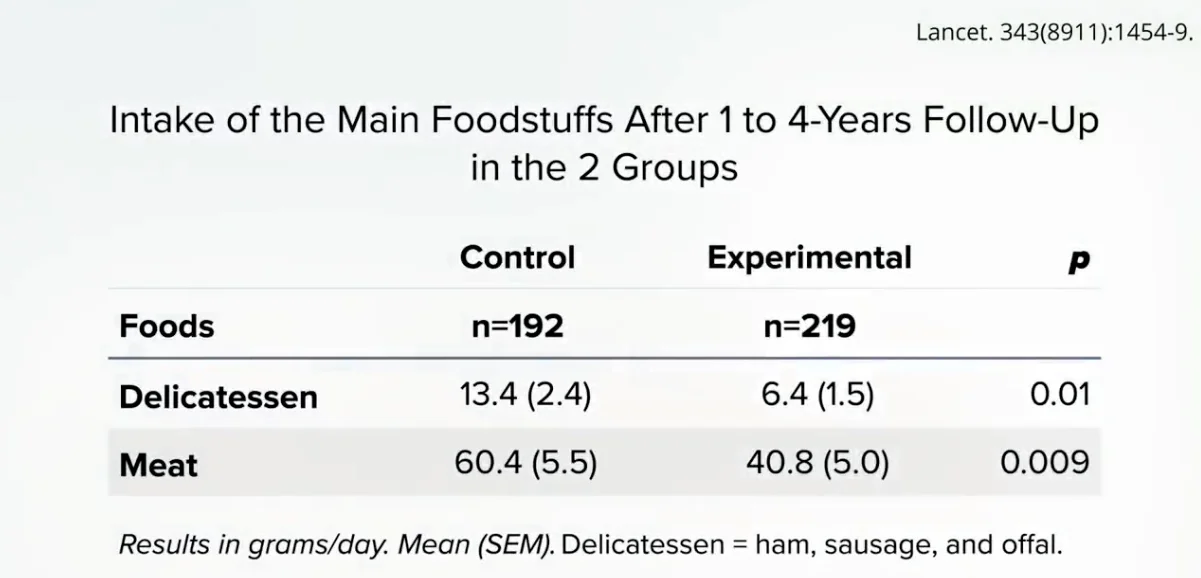
The Lyon Diet Heart Study, a pivotal research project that randomized participants to either a conventional Western diet or a Mediterranean diet with significantly reduced meat consumption, yielded dramatic results. The study reported a 70% reduction in all-cause mortality among those following the Mediterranean diet. The NutriRECS panel, however, excluded this study, citing its reporting of an "implausibly large treatment effect"—a rationale that critics interpret as the study being dismissed because it worked too well in demonstrating the benefits of lower meat intake.
3. Funding and Industry Ties:
Concerns about potential conflicts of interest have been amplified by the panel’s affiliations. The NutriRECS panel was reportedly partnered with and had individuals on the payroll of Texas A&M AgriLife, an organization that receives substantial funding from the meat industry. This financial relationship has led to accusations that the panel’s research and conclusions may have been influenced by industry interests, aiming to protect the economic viability of the meat sector rather than prioritizing public health.
4. Exclusion of Vegetarian Studies:
Further evidence of biased selection is the panel’s exclusion of research comparing the health outcomes of vegetarians to meat-eaters. The panel stated they were interested in "realistic decreases in meat consumption," such as reducing intake by three servings per week. The primary study they relied upon, the Women’s Health Initiative, showed only a modest reduction in meat consumption (approximately 1.4 servings per week, or about half an ounce per day), which yielded only modest health benefits. Critics argue that by focusing on such minimal reductions and excluding studies of more significant dietary shifts, the panel artificially minimized the observed benefits of reduced meat intake.

Expert Rebuttals and Analogies
Health professionals have been vocal in their criticism, employing analogies to illustrate the flawed logic presented by the NutriRECS panel.
Dr. Dean Ornish, a prominent advocate for plant-based diets, stated, "To say that small increases in meat consumption only cause small increases in the risk of disease doesn’t mean that eating meat is good for you. That’s like saying that smoking 24 cigarettes a day increases your risk of lung cancer only a little more than smoking 20 cigarettes a day—and being careful not to include any studies that compared smoking 24 cigs to smoking none—and then erroneously concluding that smoking isn’t that bad for your health."
The analogy to tobacco use has been particularly potent. Critics argue that if even modest reductions in smoking yielded only modest health benefits, it would be considered dangerous and inaccurate to conclude that there is "no need to reduce tobacco use for good health." They contend that the same logic applies to meat consumption.
The Magnitude of the Problem: Public Health Implications
Despite the panel’s efforts to downplay the significance of their findings, the data presented, even within their own meta-analyses, points to substantial health benefits from moderate meat reduction. Their own work indicated that dietary patterns with a moderate reduction in red and processed meat consumption were associated with:
- 13% lower total mortality
- 14% lower cardiovascular disease mortality
- 11% lower cancer mortality
- 24% reduced risk of type 2 diabetes
These figures represent clinically meaningful improvements that, if achieved through a widely adopted dietary change, would have a profound impact on public health. For context, these benefits are comparable to the effects of widely prescribed medications. Statin drugs, for example, can reduce heart disease risk but may increase the risk of type 2 diabetes and have limited effects on cancer. A single dietary intervention that simultaneously addresses multiple major health concerns would, in any other context, be hailed as a pharmaceutical blockbuster.
Dr. Walter Willett, Chair of Nutrition at Harvard T.H. Chan School of Public Health, estimates that moderately reducing red meat consumption could prevent an estimated 200,000 deaths annually. While the NutriRECS panel might characterize this as a "very small effect," for the 200,000 families affected, it represents a profound and life-altering difference.
The public health implications of the NutriRECS panel’s conclusions are significant. By suggesting that current meat consumption levels are largely acceptable, the panel risks undermining decades of scientific consensus and public health efforts aimed at promoting healthier dietary patterns. This could lead to continued high rates of diet-related diseases, placing an immense burden on healthcare systems and individuals alike.
Historical Parallels and Industry Influence
The controversy surrounding the NutriRECS studies echoes historical instances where powerful industries have influenced scientific research and public health messaging. The parallels drawn to the tobacco industry’s decades-long efforts to sow doubt about the link between smoking and lung cancer are striking.
A quote from a seminal 1959 paper on smoking and lung cancer, published after researchers faced similar challenges regarding "inadequate proof," resonates deeply with the current debate on meat consumption: "If the mountain of evidence they found had been made on a new agent, to which hundreds of millions of adults were not already addicted, and on one which did not support a large industry, skilled in the arts of mass persuasion, the evidence for the hazardous nature of the agent would be generally regarded as beyond dispute."
This sentiment highlights how the established norms of meat consumption and the economic might of the meat industry may create an environment where objective scientific evaluation is challenging, and where findings that deviate from industry interests are met with considerable resistance and scrutiny.
Broader Impact and Future Directions
The debate initiated by the Annals of Internal Medicine studies underscores the complex interplay between scientific research, industry influence, and public health policy. It emphasizes the critical need for transparency in research funding and methodology, as well as robust independent review processes for dietary guidelines.
As the public grapples with conflicting information, the onus remains on health professionals and journalists to critically evaluate scientific claims, consider the potential for bias, and communicate evidence-based recommendations clearly and effectively. The long-term health and well-being of populations depend on navigating these complex scientific landscapes with integrity and a steadfast commitment to public good. The ongoing discourse surrounding red and processed meat consumption serves as a potent reminder that scientific understanding is an evolving process, and that vigilance against vested interests is paramount in safeguarding public health.
The subsequent analysis of the NutriRECS panel’s work, including an examination of how smoking in the 1950s compares to dietary advice today, and a calculation of the life-years potentially lost due to meat consumption, are ongoing efforts to contextualize these findings and provide a clearer picture of their implications for individual and public health. This ongoing series aims to dissect how various industries impact dietary and health guidelines, providing a crucial lens through which to understand the challenges in establishing evidence-based health recommendations in a world influenced by significant economic and social forces.

