

The prevailing criticism leveled by industry-funded entities against the scientific nutrition literature often hinges on the assertion that observational studies, a cornerstone of dietary research, possess questionable credibility. While randomized controlled trials (RCTs) are the gold standard for assessing the efficacy of pharmaceutical interventions, their application to dietary science is fraught with inherent challenges. These complexities, however, do not invalidate the crucial role observational studies play in shaping our understanding of diet and disease.
The Limitations and Necessity of Observational Studies in Nutrition
The development of diet-related diseases, such as cardiovascular disease and certain cancers, can span decades. This protracted timeline makes it exceedingly difficult, if not impossible, to conduct long-term RCTs that meticulously track individuals over their lifetimes. Furthermore, the nature of diet presents unique logistical hurdles. Unlike pharmaceutical trials where placebos are standard practice, it is virtually impossible to create a convincing "placebo food." Equally challenging is maintaining participant adherence to strictly assigned diets over extended periods, especially when these diets deviate significantly from their usual eating patterns.
Given these constraints, researchers must rely on observational studies. These studies involve monitoring large populations, meticulously recording their dietary habits over many years, and correlating this information with the incidence of specific diseases. This approach allows scientists to identify potential associations between certain foods or dietary patterns and health outcomes.
Reconciling Observational and Randomized Trial Findings
A critical examination of the scientific literature reveals a surprising degree of concordance between findings from observational population studies and RCTs. On average, the effects observed in both types of studies tend to be in the same direction and of similar magnitude in approximately 90% of examined treatments. This suggests that despite the methodological differences, observational data often provides reliable insights into the impact of various dietary factors.
A notable example often cited in discussions of conflicting evidence is the historical disparity in findings regarding hormone replacement therapy (HRT). Early observational studies suggested that women taking Premarin experienced fewer heart attacks. However, subsequent RCTs revealed the opposite: HRT actually increased the risk of heart attacks. Upon closer inspection, it was determined that the discrepancies were largely due to differences in the timing of HRT initiation relative to the women’s menopausal status. When this crucial factor was accounted for, the findings from both observational and randomized trials aligned, underscoring the importance of nuanced interpretation.
The Hierarchy of Evidence and Risk Assessment
Even if observational studies are considered to provide a lower quality of evidence compared to RCTs, the level of certainty required for public health recommendations can vary significantly. The risk associated with dietary advice, such as encouraging the consumption of more broccoli or reducing soda intake, is inherently lower than the risks associated with prescribing potent pharmaceutical drugs. Prescription drugs, it is important to note, are a leading cause of preventable deaths in both Europe and the United States, surpassed only by heart disease and cancer. Annually, hundreds of thousands of individuals in the U.S. die from the side effects of prescription medications, even when taken as directed.
Consequently, the threshold for evidence required to justify the prescription of a drug must be exceptionally high, demanding rigorous, randomized, double-blind, placebo-controlled trials to ensure that benefits demonstrably outweigh the substantial risks. However, when the intervention involves simple dietary adjustments, such as reducing the intake of donuts, the same stringent level of proof is not necessarily mandated. The potential harm from such dietary advice is minimal in comparison to the potential harm from a drug with significant side effects.
Industry Influence and Methodological Misappropriation
The challenge to the credibility of nutritional science is often amplified by industry-funded research. A prime example is a paper, purportedly funded by the sugar industry, which concluded that dietary guidelines advising sugar reduction were untrustworthy due to their reliance on "low-quality evidence." This approach represents a significant misappropriation of the drug trial paradigm, attempting to impose a standard of evidence not suited to the complexities of nutritional research.
Critics of this industry-backed stance might argue that the authors were merely adhering to established evaluation frameworks, such as the GRADE (Grading of Recommendations Assessment, Development and Evaluation) system, which is widely used for assessing the quality of evidence for clinical practice guidelines. However, the selective application of such frameworks, particularly when they serve to undermine established public health recommendations, raises concerns about bias.
Fortunately, alternative evaluation tools exist that are specifically tailored for nutrition research. NutriGrade, for instance, is a scoring system designed to assess the evidence base for nutritional recommendations. A key feature of NutriGrade is its explicit consideration of funding bias, leading to a downgrade in the perceived quality of industry-funded studies. This built-in mechanism acknowledges the potential for financial interests to influence research outcomes, a factor conspicuously absent in the industry-favored approach.
The HEALM Framework and Holistic Evidence Assessment
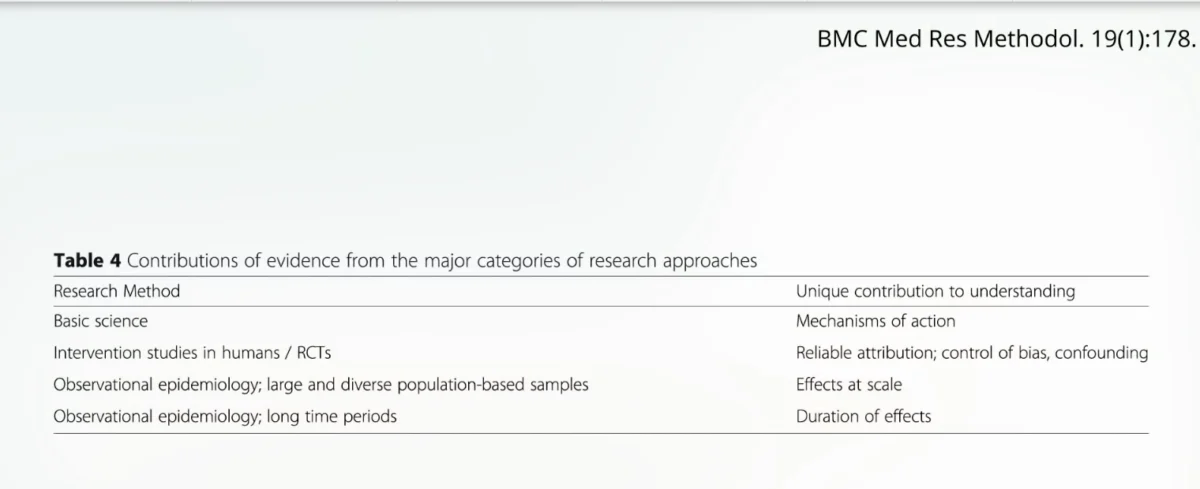
Another relevant framework is HEALM (Hierarchies of Evidence Applied to Lifestyle Medicine). HEALM was developed precisely because existing tools like GRADE are not always feasible for addressing complex lifestyle-related health questions that cannot be fully elucidated through RCTs alone. HEALM recognizes that each research methodology—from laboratory experiments exploring precise mechanisms to large-scale population studies observing long-term trends—contributes uniquely to our collective understanding of health and disease.

This multifaceted approach acknowledges that a comprehensive understanding of health often requires synthesizing evidence from diverse sources. Laboratory research can elucidate biochemical pathways, RCTs can establish causality for specific interventions, and extensive population studies can identify correlations and long-term trends across vast numbers of individuals.
The Trans Fat Success Story: A Testament to Diverse Evidence
The successful campaign against trans fats serves as a compelling illustration of how diverse scientific evidence can converge to effect significant public health improvements. Both RCTs and observational studies contributed to the understanding of trans fats’ detrimental impact on cardiovascular health. RCTs demonstrated that trans fats elevate risk factors for heart disease, while population studies revealed a direct correlation between higher trans fat consumption and increased incidence of heart disease.
The combined weight of this evidence built an irrefutable case against trans fat consumption. This scientific consensus ultimately led to the widespread removal of trans fats from the U.S. food supply, a public health triumph credited with preventing an estimated 200,000 heart attacks annually. It is crucial to acknowledge that RCTs examining hard endpoints like heart attacks and mortality related to trans fat consumption were never conducted. The ethical and practical impossibility of randomly assigning individuals to consume significant quantities of trans fats for decades precluded such research. This highlights the principle that "the perfect should not be the enemy of the good," especially when tens of thousands of lives are at stake.
Precautionary Principles in Public Health and Environmental Health
Public health officials are often compelled to make decisions based on the best available balance of evidence, even when that evidence is not as definitive as that derived from RCTs. This principle is also evident in the establishment of acceptable exposure limits for environmental toxins. For instance, determining tolerable upper limits for lead or polychlorinated biphenyls (PCBs) does not rely on RCTs where children are intentionally exposed to varying levels of lead to observe the subsequent development of cognitive deficits.
Instead, such decisions are informed by a comprehensive synthesis of evidence from multiple sources, including animal studies, epidemiological data, and toxicological assessments. This "best approximation" approach, drawing from the widest possible range of information, is essential when direct experimental manipulation is either unethical or impossible.
The Meat Industry and the Misapplication of GRADE
The pattern of industry-funded institutions challenging established dietary guidelines is not limited to the sugar industry. A meat industry-funded organization, for example, enlisted the same individual who helped design the sugar industry-funded study to author a paper questioning the dietary guidelines recommending reduced red and processed meat consumption.
Employing the GRADE methodology, this paper concluded that the evidence supporting these guidelines was of "low quality." This outcome is unsurprising, given that the GRADE system, when applied without considering the unique context of nutritional research and potential funding biases, can lead to conclusions that align with industry interests. The paper’s predictable finding that current guidelines were based on "low-quality evidence" directly contradicted the established scientific consensus on the link between red meat consumption and increased colorectal cancer risk, a conclusion often drawn from robust observational studies.
The Irony of Sugar Industry-Funded Guidelines Critique
An ironic twist in the sugar industry-funded paper’s critique lies in its use of the perceived inconsistency of sugar guideline recommendations over a 20-year period to question their validity. While it is natural for scientific understanding and, consequently, guidelines to evolve over time, the paper selectively highlighted variations to cast doubt on the overall quality of the recommendations.
However, the most recent guidelines have demonstrated remarkable consistency. The outlier was a 2002 Institute of Medicine guideline that suggested a quarter of one’s diet could consist of sugar without leading to deficiencies. This particular guideline was partially funded by an institute with deep ties to major beverage and confectionery companies. This same institute, now critical of the evolving recommendations, implicitly suggests that the inconsistencies (partially influenced by their own funding) render all guidelines untrustworthy. This self-serving argument overlooks the scientific progress and the growing consensus on the detrimental effects of excessive sugar consumption.
Broader Implications for Public Health and Scientific Integrity
The persistent efforts by certain industries to undermine established dietary guidelines through the selective application of evidence standards have significant implications for public health. By challenging the credibility of observational studies, these industries aim to sow doubt and delay or dilute public health interventions that could impact their profits. This strategy not only misinforms the public but also erodes trust in the scientific process itself.
The development of robust frameworks like NutriGrade and HEALM represents a crucial step in ensuring that nutrition research is evaluated through appropriate lenses, acknowledging the inherent challenges and the need for diverse methodologies. The scientific community, public health officials, and the public alike must remain vigilant against attempts to misrepresent scientific evidence for commercial gain. Ultimately, the integrity of dietary guidelines and the effectiveness of public health initiatives depend on a clear-eyed, evidence-based approach that respects the full spectrum of scientific inquiry, rather than one that is selectively applied to serve narrow interests.
This article is the third in an eight-part series examining the impact of industry on dietary and health guidelines. The preceding installments explored the corporate playbook used to undermine dietary recommendations and how the sugar industry manipulates scientific narratives. Future articles will delve into the recent controversial publications concerning meat consumption.

