

The initial foray into a fitness center can indeed feel like an expedition to an unfamiliar world. Amidst the clanking of weights, the hum of complex machinery, and the fluid movements of seasoned patrons, newcomers often find themselves grappling with a mix of curiosity and apprehension. Questions about equipment functionality, personal space, and the unwritten rules of the gym can quickly surface, creating a sense of being out of one’s element. However, this feeling is a universal starting point, a prelude to the gradual development of confidence and proficiency. The journey to gym mastery is not about innate knowledge but about consistent effort and a structured approach, and the following guidance aims to demystify the process for those embarking on their fitness journey.
The Foundational Importance of Structure in Fitness
A prevalent misstep for individuals new to gym environments is the absence of a well-defined plan. This can manifest as aimless wandering between machines, mirroring the exercises of others without understanding their purpose, or dedicating a significant portion of time to deciphering workout protocols. While this may feel like productive activity, it rarely translates into tangible progress. Extensive research consistently underscores the correlation between structured exercise routines and long-term adherence to fitness regimens. Studies, such as those published in the Journal of Sport and Exercise Psychology, indicate that individuals who follow structured programs are significantly more likely to maintain their commitment to training over extended periods. A pre-determined plan serves to mitigate decision fatigue, providing a clear direction and purpose for each gym session. This eliminates the need for on-the-spot decision-making and allows for an immediate transition into physical activity.
Furthermore, structural integrity in a workout regimen is paramount for physiological adaptation. The development of strength and muscle mass is intrinsically linked to the principle of progressive overload, a gradual increase in demand placed upon the body. This can involve incrementally adding weight, performing additional repetitions, or refining exercise technique. Without a structured approach, the ability to implement and track this progression becomes exceedingly challenging, hindering optimal results. For novices, this structure does not necessitate an intricate or advanced program. A foundational routine, centered around a few key compound movements performed two to four times per week, is more than sufficient to initiate noticeable improvements.
The Indispensable Role of the Warm-Up
The temptation to bypass the warm-up phase and immediately engage in the primary workout, particularly when time is a constraint, is a common tendency. However, these initial five to ten minutes are critical and can profoundly influence both physical performance and injury prevention. A comprehensive warm-up serves three primary objectives: to elevate heart rate and blood flow, preparing the cardiovascular system for exertion; to increase muscle temperature and elasticity, reducing the risk of strains and tears; and to activate the neuromuscular pathways, enhancing coordination and movement efficiency.
A well-rounded warm-up need not be elaborate. A simple, yet effective, routine can be tailored to individual needs, typically including dynamic stretches and light cardio. Examples of effective dynamic movements include arm circles, leg swings, torso twists, and walking lunges. Light cardio, such as a brisk walk on the treadmill or cycling at a moderate pace, further primes the body for the demands of the workout. By the conclusion of this preparatory phase, the body is optimally positioned to commence the main exercise session, signaling readiness for the intended physical exertion.
Mastering the Fundamental Movement Patterns
Observing individuals performing complex, multi-joint exercises in a gym setting can be impressive, but beginners are well-advised to prioritize foundational movement patterns before attempting more intricate sequences. These fundamental patterns serve as the building blocks of comprehensive strength training and encompass nearly all exercises performed in a fitness environment. They can be broadly categorized into four primary groups:
- Squatting: This involves bending the knees and hips to lower the body, engaging the quadriceps, glutes, and hamstrings. Examples include bodyweight squats, goblet squats, and barbell back squats.
- Hinging: This pattern focuses on movement at the hips, with a slight bend in the knees, primarily targeting the hamstrings and glutes. Deadlifts, Romanian deadlifts, and kettlebell swings are prime examples.
- Pushing: This category includes exercises where resistance is moved away from the body. It can be further divided into horizontal pushing (e.g., bench press, push-ups) and vertical pushing (e.g., overhead press, dips).
- Pulling: Conversely, this involves drawing resistance towards the body, with horizontal pulling (e.g., rows) and vertical pulling (e.g., pull-ups, lat pulldowns) being the primary distinctions.
Consistent training of these patterns fosters coordinated strength throughout the entire body, rather than isolating individual muscle groups. This holistic approach is why many effective beginner programs emphasize a select number of compound movements. By mastering these fundamental patterns, subsequent exercises and more complex movements become significantly more accessible and manageable.
Demystifying the Gym Floor: A Guide to Machine Training
For those who find the free-weight area intimidating, gym machines offer an excellent entry point into strength training. Machines are designed to guide the user through a fixed range of motion, simplifying setup and adjustments. This allows beginners to focus on the sensation of muscle engagement without the added complexity of maintaining balance or controlling momentum. This guided resistance can be particularly beneficial, as it mitigates the limitations that might arise from insufficient grip strength or core stability when using free weights. Instead of managing multiple demands simultaneously, individuals can concentrate on understanding the movement’s feel and identifying the primary muscles involved.
Several beginner-friendly machines are commonly found in most fitness facilities, providing a solid foundation for building strength and confidence:
The Leg Press: A Foundation for Lower Body Strength
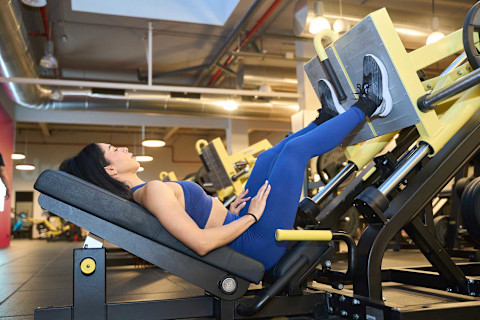
The leg press machine effectively targets many of the same muscle groups as a squat—namely the quadriceps, glutes, and hamstrings—while offering enhanced stability. The user positions themselves seated against the padded backrest, places their feet shoulder-width apart on the platform, and carefully lowers the weight until their knees achieve a comfortable bend. Subsequently, the platform is pressed away, extending the legs without fully locking the knees at the apex of the movement. This machine provides a secure method for developing lower-body strength, minimizing undue stress on the lumbar spine.
The Lat Pulldown: Building Upper Body Pulling Power
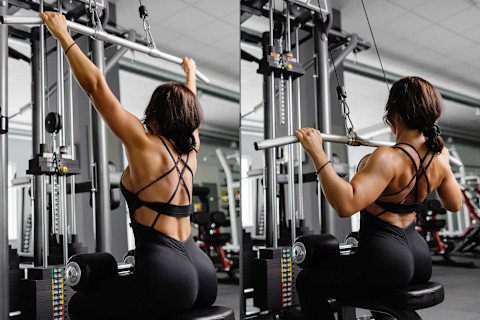
This machine is instrumental in developing the musculature of the back, including the latissimus dorsi, and cultivates the pulling strength essential for more advanced exercises like pull-ups. The user grasps the bar with a grip slightly wider than shoulder-width and pulls it down towards the upper chest. The focus should be on drawing the elbows downward and towards the sides, emphasizing the engagement of the upper back muscles rather than simply moving the bar. This controlled motion ensures that the intended muscles are effectively worked.

The Chest Press: Simulating Pushing Strength
The chest press machine replicates the biomechanics of a push-up but allows for the precise adjustment of resistance. The user should ensure their back remains firmly against the padded support. The seat height is adjusted so that the handles align with the mid-chest level, rather than being positioned too high near the shoulders. From this starting position, the handles are pressed forward until the arms are nearly extended, followed by a slow and controlled return to the initial pose. Emphasizing control during the eccentric (lowering) phase is as crucial as the forceful push.
Transitioning to Free Weights: An Expanded Toolkit
While machines offer valuable benefits, free weights—dumbbells and barbells—present additional advantages as individuals progress and become more comfortable in the gym environment. Free weights necessitate greater neuromuscular control and stabilization, thereby engaging a broader array of supporting muscles and fostering enhanced coordination. It is important to note that machines are not inherently inferior; they simply provide a more controlled and supportive environment, which is particularly advantageous for learning new movements or isolating specific muscle groups.
A pragmatic guideline for transitioning to free weights is to do so once a comfortable proficiency with the movement pattern has been established on a machine. This transition should be viewed as an expansion of one’s training repertoire rather than an arduous ascent to a more difficult modality. Many individuals find long-term benefit in integrating both machines and free weights into their routines, utilizing machines for targeted work and stability, and free weights for variety and the development of integrated strength.
Examples of this transition include:
- From Leg Press to Goblet Squat or Barbell Squat: Once comfortable with the leg press, introducing a goblet squat with a dumbbell or kettlebell, or progressing to a barbell squat, allows for greater core engagement and balance challenges.
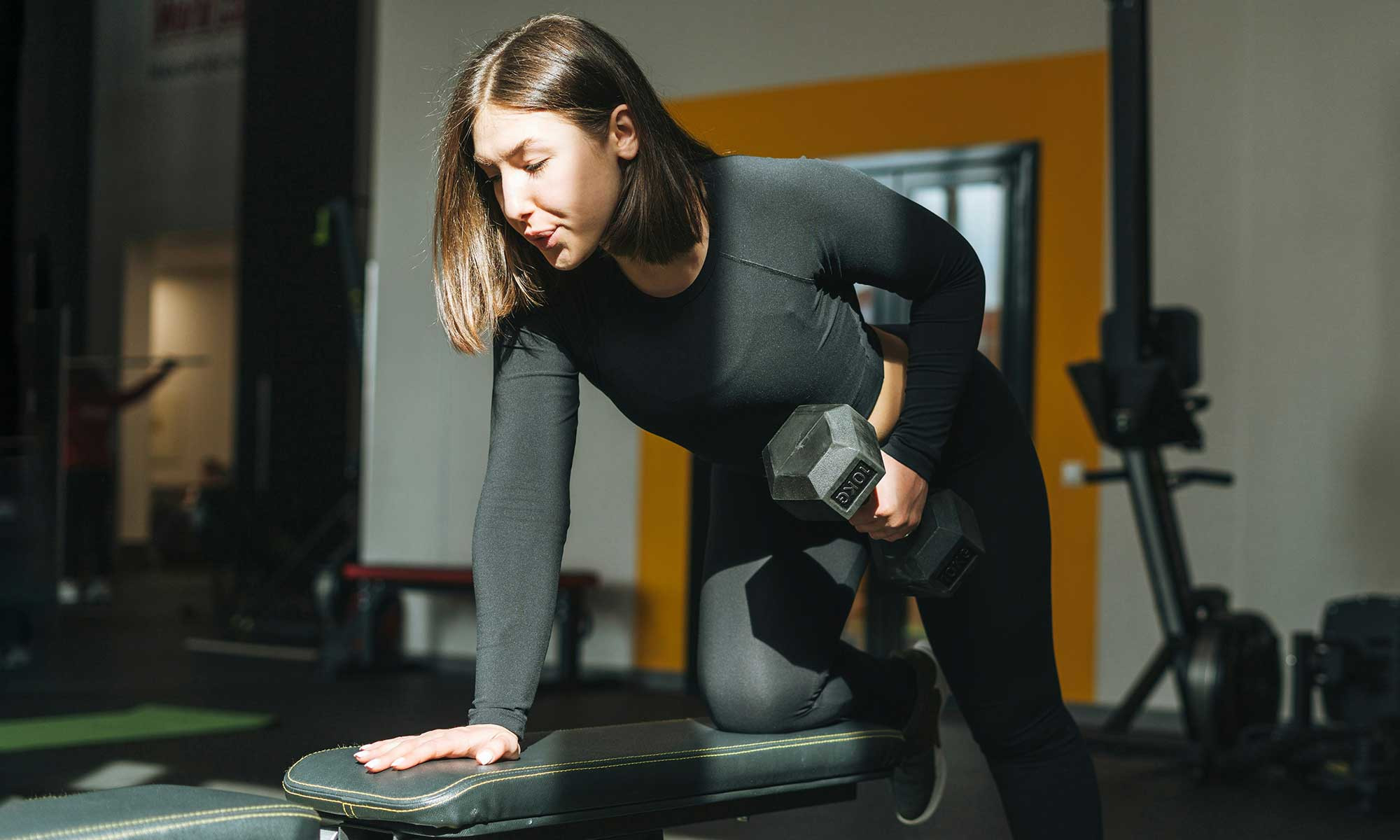
- From Lat Pulldown to Dumbbell Row or Barbell Row: After mastering the lat pulldown, incorporating dumbbell or barbell rows builds unilateral and bilateral pulling strength with increased stability demands.
- From Chest Press to Dumbbell Bench Press or Push-ups: Moving from the chest press to dumbbell bench presses or bodyweight push-ups introduces greater freedom of movement and requires more stabilization.
Understanding Reps and Rest Periods for Beginners
The array of advice on repetition schemes available online can be overwhelming. However, beginners benefit most from a straightforward approach that is sustainable and conducive to learning proper form. A generally effective and easy-to-adhere-to strategy for novices involves performing three to four sets of eight to twelve repetitions for most exercises. This rep range is optimal for simultaneously developing both muscular strength and hypertrophy (muscle growth) while providing ample opportunity to practice and refine technique.
The chosen weight should be challenging enough that the final few repetitions of each set demand significant effort, but not so heavy that form begins to deteriorate. If a set is completed with relative ease, and the individual feels capable of performing many more repetitions, the weight is likely too light. Conversely, if maintaining good form becomes impossible, it is perfectly acceptable to reduce the load. Prioritizing correct form over the amount of weight lifted is paramount for injury prevention and long-term progress. Rest periods between sets typically range from 60 to 90 seconds, allowing for adequate recovery without letting the heart rate drop too significantly.
Practical Gym Logistics: Preparation and Etiquette
Adopting a few straightforward habits can significantly streamline the gym experience from the outset. These are not contingent on existing strength levels but rather on being prepared and feeling comfortable within the gym environment.
Essential Items for Your Gym Bag
A comprehensive gym bag is not a prerequisite for effective workouts. A few essential items will suffice for most training sessions:
- Water bottle: Staying hydrated is crucial for performance and recovery.
- Towel: To wipe down equipment after use, maintaining hygiene for yourself and others.
- Appropriate workout attire and footwear: Comfortable clothing that allows for a full range of motion and supportive athletic shoes.
- Optional: Workout log or app: To track progress, exercises, weights, and reps, which is vital for progressive overload.
- Optional: Headphones: For personal motivation and focus.
Having a basic plan, even a short list of exercises, can significantly reduce uncertainty. This allows for a more purposeful progression through the workout, moving efficiently from one exercise to the next.
Adhering to Basic Gym Etiquette
While individual gym cultures may vary, a set of unwritten rules generally governs gym behavior, facilitating a harmonious environment for all users. Understanding and adhering to these norms ensures smooth integration into the gym community.
- Wipe down equipment: After use, all machines and benches should be wiped down with disinfectant spray and provided towels.
- Re-rack your weights: Ensure all weights, plates, dumbbells, and equipment are returned to their designated storage areas after use.
- Share equipment: In busy gyms, it is customary to allow others to "work in" (perform their sets) between your own sets on the same equipment.
- Respect personal space: Avoid standing too close to others who are exercising, and refrain from using multiple pieces of equipment simultaneously when others are waiting.
- Keep noise to a minimum: While effort is expected, excessive grunting or shouting can be disruptive.
- Avoid excessive phone use: Limit phone calls and prolonged scrolling, especially when occupying equipment.
If equipment is in use, it is perfectly acceptable to wait nearby or politely inquire about the number of sets remaining. Many gym-goers are accommodating and may even offer to let you share the equipment between their sets. Fundamentally, gym etiquette is rooted in basic courtesy. By cleaning up after oneself and respecting the space of others, one can easily integrate into the gym environment.
Navigating Common Beginner Pitfalls
While enthusiasm for a new fitness routine is commendable, commencing with excessive intensity can often lead to counterproductive outcomes. The initial surge of motivation may prompt an inclination to lift extremely heavy weights, train daily, or experiment with every available machine. However, individuals who achieve sustained fitness success typically adopt a more measured and patient approach. Awareness of common pitfalls can help mitigate setbacks.
Avoiding the Trap of Copying Advanced Lifters
It is natural to observe and emulate the routines of more experienced gym-goers. However, individuals performing highly advanced exercises or complex training protocols have typically accumulated years of dedicated training. For beginners, the primary objective should be learning correct movement patterns and establishing a solid foundational strength. While these basic movements may appear less visually striking, they are the bedrock of safe and effective long-term training. Rushing into advanced techniques can significantly increase the risk of injury, necessitating a gradual and progressive approach.
The Danger of "Too Much, Too Soon"
While a challenging workout can be satisfying, experiencing muscle soreness that persists for four to five days typically indicates an overly aggressive training intensity. The body requires adequate time to adapt to the stresses of strength training, particularly during the initial phases. For most beginners, two to four training sessions per week are sufficient. In fact, finishing a workout with the feeling that one could have performed slightly more is often a positive indicator of a well-paced and sustainable training regimen.
Prioritizing Recovery for Optimal Gains
Muscle development and strength increases are not solely the result of exertion during a workout; they are primarily achieved during the recovery period, when the body repairs and adapts to the training stimulus. Adequate sleep, proper nutrition, and designated rest days are integral components of the training process, not detriments to it. When these recovery elements are prioritized, the effectiveness of workouts is significantly amplified. Ultimately, consistency in training efforts tends to yield superior long-term results compared to sporadic bouts of extreme intensity. The overarching goal should be to cultivate a sustainable routine that fosters ongoing engagement.
The Takeaway: Embracing the Journey of Familiarity
The initial months in a gym setting are not defined by the ability to lift the heaviest weights or master every piece of equipment. Instead, this period is dedicated to building familiarity with the environment, understanding one’s physical capabilities, and developing comfort in movement. This involves learning the layout of the facility, becoming accustomed to navigating the space with one’s body, and discovering an inherent capacity for more than one might have initially believed.
Every experienced fitness enthusiast began with their own set of awkward first workouts and lighter weights. Over time, these incremental efforts accumulate, leading to increased strength, enhanced confidence, and the establishment of a routine that becomes genuinely enjoyable. Therefore, as one steps through the gym doors for the first time, it is crucial to remember that complete mastery is not an immediate requirement. The most critical step is simply to begin.

