

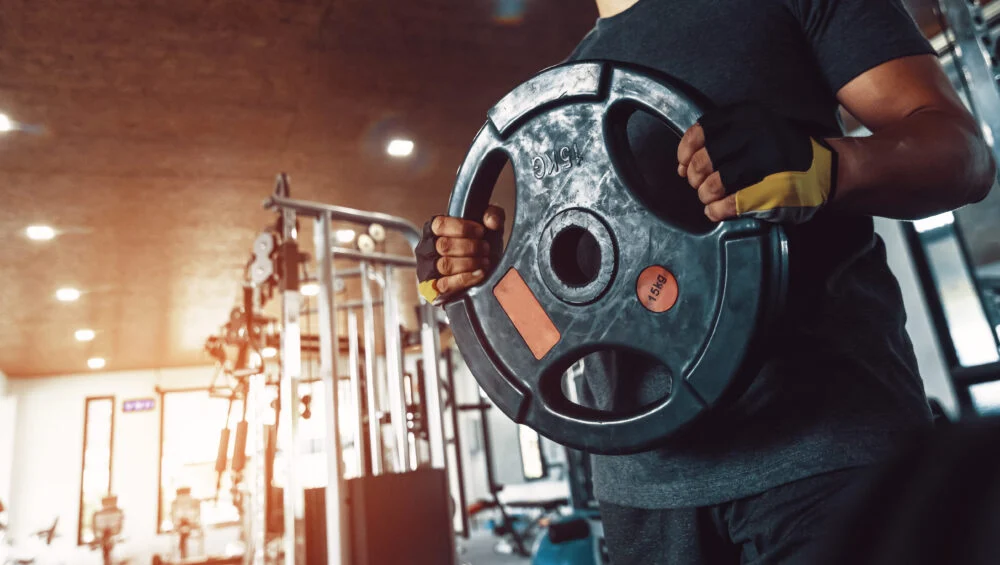
The pursuit of physical excellence through resistance training has long been governed by the principle of progressive overload, a concept that dictates the gradual increase of stress placed upon the body during exercise to stimulate physiological adaptation. However, recent developments in sports science and professional coaching methodologies suggest that the traditional "no pain, no gain" mantra may be counterproductive to long-term athletic development. Modern strength and conditioning experts are increasingly advocating for a shift away from constant maximal exertion, emphasizing instead the importance of submaximal loading and the distinction between "building" strength and "testing" it. This evolution in training philosophy highlights a growing consensus that while physical stress is a necessary catalyst for growth, the sustainability of an athletic career depends on the strategic management of intensity and the implementation of what are frequently termed "80% workouts."
The Physiological Basis of Stress and Adaptation
At the core of all strength training is the biological phenomenon known as General Adaptation Syndrome (GAS), first described by endocrinologist Hans Selye. The process involves three distinct phases: alarm, resistance, and exhaustion. When an athlete lifts heavy weights, the body enters the alarm phase, experiencing acute stress. During the resistance phase, the body repairs tissues and strengthens the central nervous system (CNS) to better handle future stressors. However, if the stressor is too frequent or too intense without adequate recovery, the athlete enters the exhaustion phase, commonly referred to in sports science as overtraining syndrome (OTS).
Professional strength coaches argue that the primary error among both amateur and experienced lifters is the attempt to remain permanently in the alarm phase. By consistently pushing for personal records (PRs) in every session, athletes risk accumulating CNS fatigue. Unlike muscular fatigue, which may dissipate in 24 to 48 hours, CNS fatigue can persist for weeks, manifesting as decreased power output, disrupted sleep patterns, and increased cortisol levels. Data from sports physiology clinics indicate that athletes who utilize autoregulation—adjusting intensity based on daily readiness—show more consistent progress over a 12-month period than those who follow rigid, high-intensity protocols regardless of their physiological state.
The Case Study of the High-Performance Plateau
The limitations of constant maximal exertion are often most visible in experienced trainees who have reached a performance plateau. In a recent professional observation, a high-level fitness instructor sought consultation after several years of stagnant progress in the "Big Three" lifts: the squat, bench press, and deadlift. Despite a high work ethic and a commitment to progressive overload, the athlete had reached a point where further gains were non-existent.
Analysis of the training logs revealed a "testing" mentality. Every session was treated as a competition against the previous week’s performance. If a specific weight was lifted for five repetitions in one week, the athlete felt compelled to increase the weight or the repetitions in the subsequent session. While this approach is effective for beginners, it eventually leads to a "double-edged sword" scenario for advanced lifters. The psychological and physical demand of constantly breaking records leads to a degradation in technique and an inability to recover. By shifting the focus to "building" strength—performing high-quality repetitions at submaximal intensities—the athlete was able to reinforce motor patterns and allow the endocrine system to recover, eventually leading to a breakthrough in performance.
The 80% Workout and the Rule of Consistency
A cornerstone of sustainable training is the "80% workout," a concept popularized by veteran strength coaches such as Paul Carter. This methodology posits that approximately 80% of an athlete’s training sessions should be challenging but not exhaustive. On a scale of one to ten, these workouts should register as an eight. They are characterized by "crisp" movements, technical proficiency, and the absence of total muscular failure.
Statistical analysis of elite powerlifters and Olympic weightlifters shows that the vast majority of their volume is performed at 70% to 85% of their one-repetition maximum (1RM). This "sweet spot" allows for sufficient mechanical tension to trigger hypertrophy and neurological adaptation without the high risk of injury associated with 95% to 100% efforts. The "80% workout" serves as the foundation of the training pyramid, providing the volume necessary to build the physical structure that will eventually support a new maximum effort.
Implementation of Autoregulation: RPE and RIR
To move away from the "always harder" mentality, professional programs have adopted objective metrics for subjective feelings. Two of the most prominent tools are the Rate of Perceived Exertion (RPE) and Reps in Reserve (RIR).
- Rate of Perceived Exertion (RPE): Originally developed by Gunnar Borg for aerobic exercise, the RPE scale was adapted for resistance training by coach Mike Tuchscherer. It allows athletes to rate the difficulty of a set on a scale of 1 to 10. An RPE 8 means the athlete could have performed two more repetitions.
- Reps in Reserve (RIR): This metric asks the athlete to estimate how many repetitions they had "left in the tank" before reaching failure.
The use of these tools acknowledges that human performance is not linear. Factors such as sleep quality, nutritional status, and external psychological stress significantly impact an athlete’s daily 1RM. For instance, if an athlete has experienced a significant life stressor or poor recovery, a weight that normally represents 75% of their max may feel like 90%. By using RPE or RIR, the athlete can adjust the load downward to maintain the desired training stimulus without overtaxing the system. This "easy" training is, in fact, highly productive because it ensures the athlete can return to the gym the following day in a recovered state.
Chronology of Strength Training Methodologies
The evolution of these concepts can be traced through several decades of athletic research:
- 1950s–1960s: The rise of Western Periodization, which focused on linear increases in intensity and decreases in volume over a set cycle.
- 1970s–1980s: The introduction of the Bulgarian Method, which emphasized high-frequency, near-maximal lifting. While successful for elite, genetically gifted athletes, it resulted in high injury rates among the general population.
- 1990s: The Soviet "Prilepin’s Chart" becomes widely known in the West, providing a data-driven framework for the number of repetitions and sets that should be performed at specific percentages of 1RM for optimal power development.
- 2000s–Present: The shift toward Autoregulation and "Submaximal Volume." Coaches like Tony Gentilcore and others emphasize that the goal of training is to stimulate, not annihilate.
Broader Implications for Longevity and Public Health
The move toward more sustainable training practices has implications beyond the realm of competitive sports. As the general population becomes more engaged in strength training for health and longevity, the risk of "gym burnout" and overuse injuries becomes a public health concern. The "always harder" approach often leads to chronic joint pain, tendonitis, and a eventual cessation of exercise.
By educating the public on the value of submaximal training, the fitness industry can promote long-term adherence. The psychological benefit of "easy" or "successful" workouts cannot be overstated; consistently completing sets with good form and energy reserves fosters a positive relationship with physical activity. Furthermore, for aging populations, the preservation of lean muscle mass is critical for metabolic health and mobility. Submaximal training provides the necessary stimulus for muscle preservation while minimizing the strain on aging connective tissues.
Expert Analysis and Industry Response
Industry experts suggest that the "Instagram-ification" of fitness has contributed to the misconception that every workout must be a "battle." Social media platforms often highlight only the most extreme efforts—heavy PRs, sets taken to absolute failure, and high-intensity interval training that leaves participants exhausted. This creates a skewed perception of what a productive training session looks like.
"The most successful athletes are those who can stay in the game the longest," says a lead researcher at a prominent sports science institute. "If you are constantly testing your limits, you are not giving your body the opportunity to actually expand those limits. You are simply measuring what is already there. Building strength requires a level of patience that is often at odds with modern fitness culture."
Professional organizations, such as the National Strength and Conditioning Association (NSCA), have begun incorporating more modules on autoregulation and recovery into their certification programs. This shift indicates a structural change in how trainers are taught to prescribe exercise, moving from a "more is better" philosophy to one of "optimal dose-response."
Conclusion
The transition from a "testing" mindset to a "building" mindset represents a maturation of the strength and conditioning field. By embracing the 80% workout and utilizing metrics like RPE and RIR, athletes can ensure consistent progress while mitigating the risks of injury and overtraining. The data is clear: the most effective way to become stronger is not to constantly push against the ceiling of one’s abilities, but to systematically raise the floor through high-quality, submaximal work. As the industry continues to evolve, the focus on sustainability and physiological recovery will likely become the standard for both elite performers and the general public seeking a healthier, stronger life. The mantra of the modern era is no longer "go hard or go home," but rather "train smart to train forever."

