

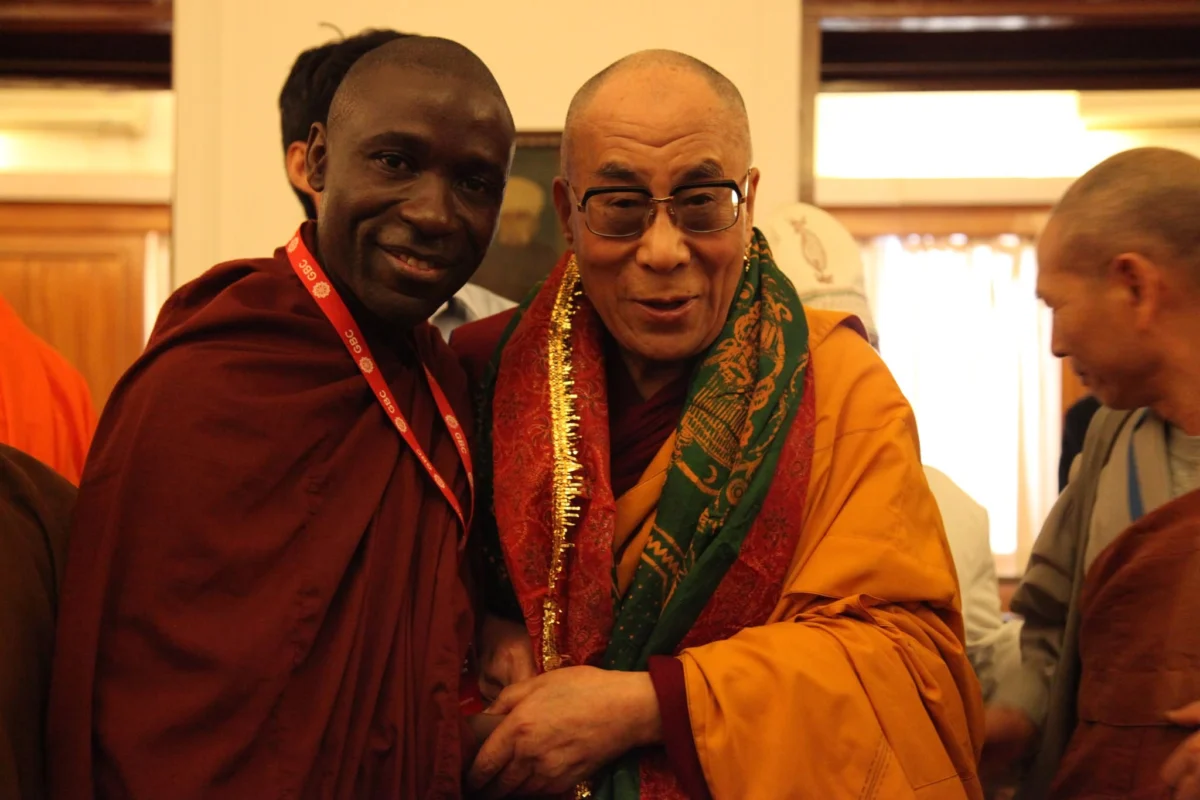
The Uganda Buddhist Centre (UBC), a beacon of spiritual growth and transformation in East Africa, has announced a significant initiative to permanently protect thirteen acres of vital wetland on the shores of Lake Nalubaale (Lake Victoria), the source of the Nile. This ambitious project includes the establishment of a new retreat center, which, if realized, would be the first of its kind on the African continent. To support this endeavor, Bhante Buddharakkhita, the founder of the UBC, recently concluded a tour of several prominent U.S. dharma centers, including the Barre Center for Buddhist Studies, Spirit Rock Meditation Center, and New York Insight, to raise awareness and solicit donations for this transformative undertaking. A crowdfunding campaign has been launched on Chuffed to galvanize support.
Genesis of a Vision: From Personal Peace to Continental Aspiration
The impetus for the Uganda Buddhist Centre and its expansive vision can be traced back to a profound personal experience in 1994. While attending a twelve-day Tibetan meditation retreat in India, practicing the lamrim (graduated path to enlightenment), Bhante Buddharakkhita experienced a deep sense of peace. This transformative moment sparked a desire to share this newfound tranquility with his homeland. "I said to myself, I wish I could go to Uganda and tell everybody about this," Buddharakkhita recounted in a recent interview with Leslie Booker, guiding teacher at New York Insight.
Initially, this aspiration materialized as the "Afro-Tibetan Friendship Society," a nascent organization formed by a newly committed Buddhist practitioner. Seeking guidance, Buddharakkhita wrote to His Holiness the Fourteenth Dalai Lama, requesting a private audience. After a six-month wait, he received an invitation for a five-minute meeting. Faced with such limited time, Buddharakkhita prepared two crucial questions. He asked for the Dalai Lama’s blessing to introduce meditation to Uganda and sought advice on how to achieve his grand vision of introducing the dharma to all of Africa.
The Dalai Lama’s response, while seemingly simple, held profound implications: "You should get friends. Get friends. Get friends. You must have friends." This advice, intended to emphasize the critical role of community and support in spiritual endeavors, initially left the young practitioner perplexed, especially given his isolation as an African student in India. He had hoped for more direct, perhaps even logistical, guidance.
Building Foundations: From Individual Practice to Community Empowerment
Buddharakkhita’s journey was far from linear. After completing his studies, he spent time in Tibet and then traveled through various African countries, sharing his ambitious project. However, he encountered widespread incomprehension. "Everyone was saying, How much money do you have to start a business? I said, None, I’m a meditator. What meditation? Medication? They couldn’t understand what meditation was," he recalled. This feedback led him to believe he wasn’t yet ready for his grand continental vision.
He then spent a year in South America before arriving in the United States in 1999. During this period of international travel and study, he began to cultivate the very "friends" the Dalai Lama had advised him to seek. He formed connections with influential Buddhist teachers such as Bhante Gunaratana, Joseph Goldstein, Sharon Salzberg, and Jack Kornfield. These relationships provided him with invaluable mentorship and support.
Returning to Uganda in 2005, Buddharakkhita established the Uganda Buddhist Centre with little more than an alms bowl and the support of his growing network of international friends. His initial strategy shifted from a continent-wide rollout to fostering a thriving Buddhist community within Uganda, believing that a strong local presence would naturally attract practitioners from across Africa. This approach mirrored the Buddha’s own method of training disciples and sending them to various regions to spread the teachings.
Organic Growth and Responsive Development
The development of the Uganda Buddhist Centre has been characterized by a remarkable responsiveness to the needs of the local community. What began as a simple intention to teach meditation evolved into a multifaceted organization addressing education, healthcare, and economic empowerment.
"I started training students from Uganda, Egypt, and all over Africa," Buddharakkhita explained. Initially, he provided financial assistance for students to attend other schools. However, he observed that many students would return having forgotten the dharma teachings due to prolonged absences. This led to a pivotal decision: to establish a school within the UBC itself, allowing children to receive both secular education and Buddhist instruction.
The first initiative was a preschool with twelve children, supported by Buddhist Global Relief and Bhikkhu Bodhi. The children not only learned dharma and meditated but also experienced a profound sense of peace. This success paved the way for the establishment of a primary school and, subsequently, a high school.
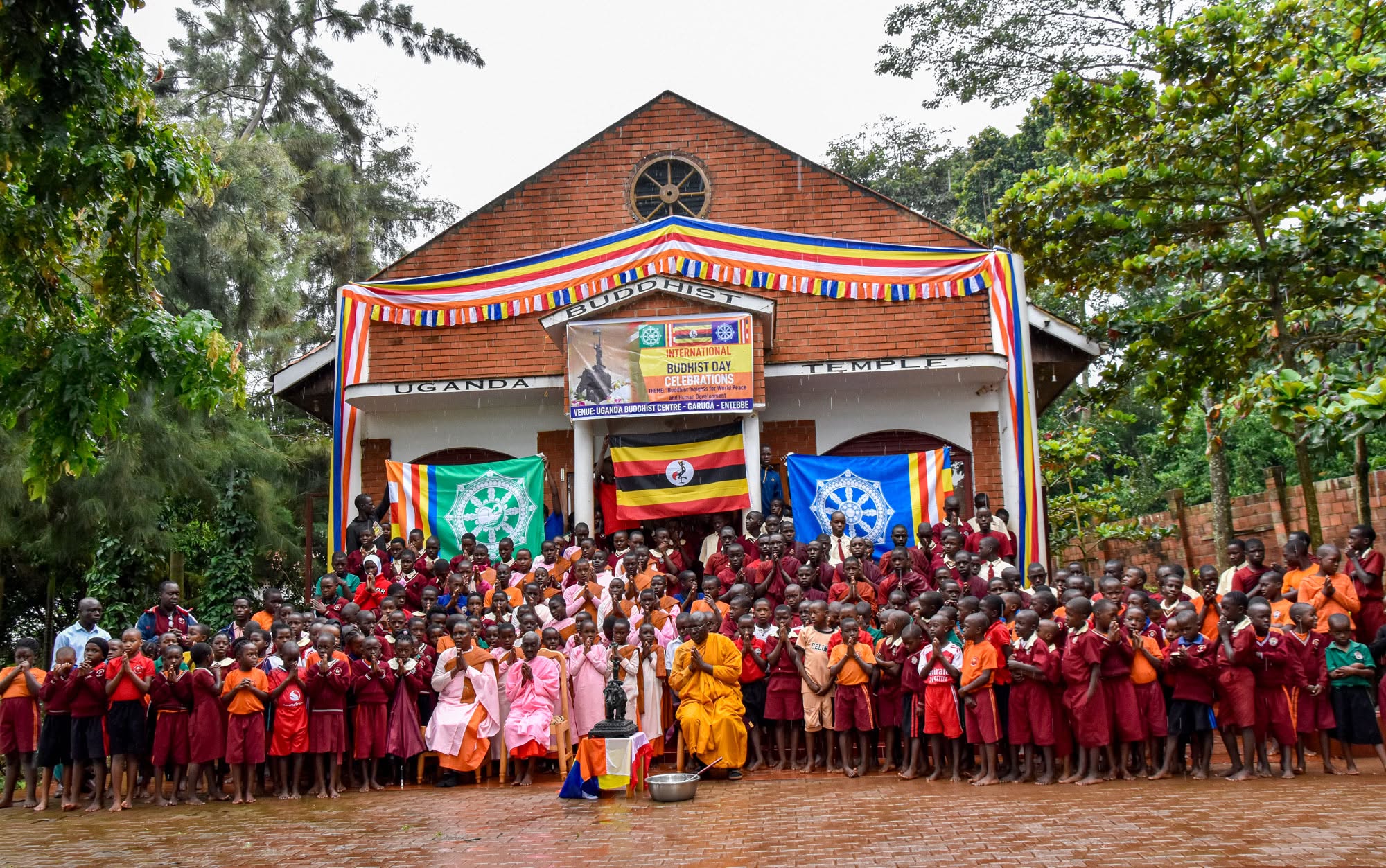
As the student population grew, so did the recognition of other pressing needs. The children began falling ill, prompting the creation of a medical center. Furthermore, the financial burden of school fees on impoverished parents became apparent. In response, Buddharakkhita launched a women’s empowerment project, equipping women with skills to earn income and support their children’s education. "It was just one thing leading to the other," he remarked, highlighting the organic and responsive nature of the Centre’s development.
Water as a Catalyst for Compassion and Community
Beyond educational and healthcare initiatives, the Uganda Buddhist Centre has made significant strides in providing access to clean water. Recognizing that the local population previously relied on Lake Victoria for water, which is often unhealthy, Buddharakkhita decided to demonstrate Buddhist compassion through action. "How about teaching by action? By precept. So then I say, OK, let me teach Buddha’s teaching, which is known for words about compassion, but we will do compassion in action," he stated.
The first borehole (well) was initially located at the temple, but fear prevented many villagers from accessing it. The well was subsequently moved outside the temple premises. As the need persisted, additional wells were constructed. The nearby school also faced water challenges, leading to the provision of boreholes for each educational institution. On a typical day, an estimated 2,000 people benefit from the clean water supplied by the UBC’s wells. This initiative not only addresses a basic human need but also serves as a tangible manifestation of the dharma, fostering trust and goodwill within the community.
The Future of Spiritual Practice in Africa: A New Retreat Center
The current initiative to acquire and protect thirteen acres of wetland on Lake Nalubaale represents a bold step towards establishing a permanent sanctuary for spiritual development. This land, situated at the source of the Nile, is of immense ecological and symbolic significance. The proposed retreat center aims to be a dedicated space for intensive meditation practice, learning, and community building, serving as a vital hub for Buddhist practitioners across Africa.
The vision for this center is to provide a conducive environment for individuals seeking to deepen their understanding and practice of the dharma, free from the distractions of daily life. It is envisioned as a place where the timeless teachings of the Buddha can be integrated into the lives of people from diverse backgrounds, fostering personal transformation and contributing to a more compassionate society.
The project’s success hinges on community support. The crowdfunding campaign seeks to raise funds for land acquisition, infrastructure development, and the establishment of sustainable operational models. The potential impact of such a center on the spiritual landscape of Africa is considerable, offering a much-needed resource for cultivating mindfulness, wisdom, and ethical conduct across the continent.
Enduring Wisdom: Spiritual Friendship and Wise Attention
In his conversation with Leslie Booker, Bhante Buddharakkhita also shared profound advice for integrating the dharma into everyday life. He emphasized the critical importance of spiritual friendship, echoing the Dalai Lama’s earlier counsel. Citing the Buddha’s teachings, he stated, "Having a spiritual friend is the entire spiritual life." He stressed the necessity of community, where such friendships can flourish. "If you don’t have a sitting group, create one," he urged.
Beyond external support, Buddharakkhita highlighted the significance of "wise attention," which he equated with following the Noble Eightfold Path. This internal discipline involves cultivating mindful awareness and ethical conduct. He underscored the foundational role of sila (ethical conduct), asserting that without this base, even extensive retreats would yield unsustainable results. "It’s just like warming your water but not boiling it. It cools down again," he illustrated.
His holistic advice encapsulates two essential pillars for sustained spiritual growth: an external foundation of spiritual friendship and community, and an internal commitment to daily practice, grounded in ethical conduct and wise attention. This dual approach, he believes, is crucial for navigating the "10,000 joys and 10,000 sorrows" of life with resilience and wisdom.
The Uganda Buddhist Centre’s ambitious expansion project represents a testament to the enduring power of compassion, vision, and community. As it seeks to protect a vital natural resource and establish a landmark retreat center, it offers a compelling model for the integration of spiritual practice with tangible community development, potentially shaping the future of Buddhism in Africa for generations to come.

