

The common criticism leveled by industry groups against scientific nutrition literature, specifically targeting the credibility of observational studies, warrants a closer examination. While randomized controlled trials (RCTs) are widely considered the gold standard for evaluating interventions, particularly pharmaceutical drugs, their application in nutrition research presents significant challenges. Dietary diseases often manifest over decades, making long-term RCTs prohibitively expensive and ethically complex. Furthermore, participants cannot be given a placebo diet, and adherence to strict dietary regimens over many years is exceptionally difficult. This necessitates reliance on observational studies, which track large populations and their dietary habits over extended periods to identify associations between specific foods and health outcomes.
However, the assertion that observational studies are inherently less reliable than RCTs, especially in nutrition, is often oversimplified and, in some instances, demonstrably manipulated by vested interests. A meta-analysis comparing data from population-based observational studies with RCTs revealed a remarkable concordance in findings. On average, the direction and magnitude of observed effects were similar in approximately 90% of the examined treatments. This suggests that, despite methodological differences, observational data can provide robust insights. A notable example that initially appeared to show a discrepancy involved hormone replacement therapy (HRT). Early observational studies suggested that women taking Premarin experienced fewer heart attacks, while subsequent RCTs indicated the opposite. Closer analysis revealed that the initial discrepancy was rooted in timing – specifically, when Premarin was initiated relative to menopause. Once this temporal factor was accounted for, both types of studies yielded consistent results, underscoring the importance of nuanced interpretation rather than outright dismissal of observational findings.
The Risk-Benefit Calculus in Health Recommendations
The argument for a lower threshold of certainty for dietary recommendations, compared to pharmaceutical interventions, is grounded in a pragmatic assessment of risk. Prescribing a drug carries inherent dangers; in Europe and the United States, adverse drug reactions are a leading cause of death, even when medications are taken as directed. Given the substantial risks associated with pharmaceuticals, the demand for rigorous, randomized, double-blind, placebo-controlled trials to substantiate benefits is entirely justified. The stakes are exceptionally high, and "playing with fire" necessitates irrefutable evidence.
In contrast, recommending increased consumption of nutrient-rich foods like broccoli or reduced intake of less healthy options such as soda does not carry the same level of immediate or severe risk. While long-term consequences of poor dietary choices are significant, the immediate hazards associated with dietary modifications are generally minimal. Therefore, the level of certainty required to support public health advice on diet can reasonably differ from that demanded for drug approvals. This distinction is crucial when evaluating critiques of nutrition science that apply the stringent evidentiary standards of drug trials to dietary recommendations.
Corporate Influence and the Misapplication of Methodologies
A case in point illustrating the problematic application of drug trial paradigms to nutrition research is a paper funded by the sugar industry that concluded dietary guidelines advising sugar reduction lacked trustworthiness due to "low-quality evidence." Critics argue this represents an "inappropriate use of the drug trial paradigm in nutrition research." While proponents of this approach might argue that the GRADE (Grading of Recommendations Assessment, Development and Evaluation) system, a widely used methodology for assessing evidence quality, necessitates such a classification, alternative tools exist.
NutriGrade, for instance, is a scoring system specifically designed to evaluate the quality of evidence in nutrition research. Crucially, NutriGrade incorporates a mechanism to account for funding bias, downgrading studies with industry sponsorship. This inherent bias may explain why industry-funded researchers opt for methodologies that, by design, devalue nutrition evidence.
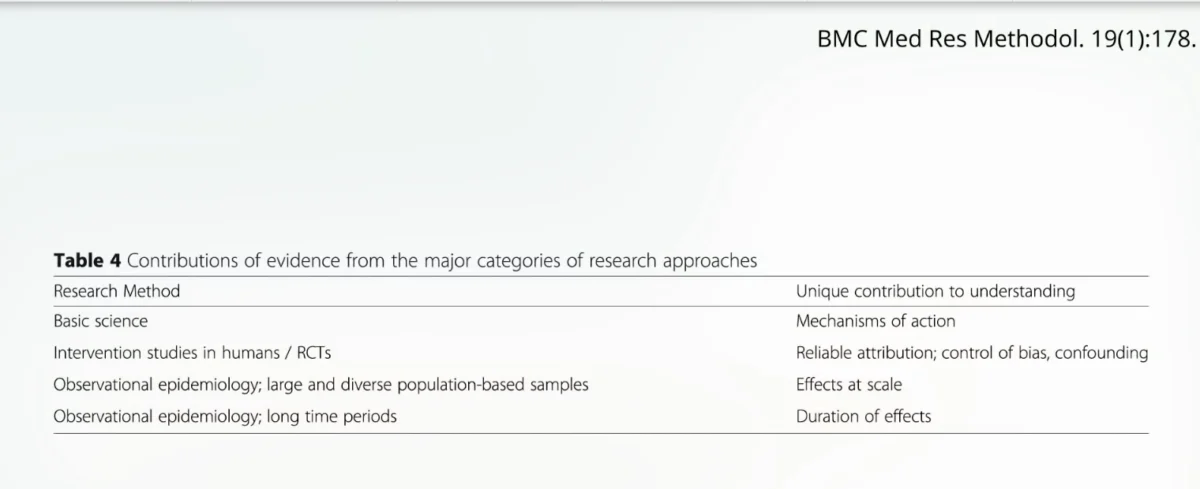
Similarly, the HEALM (Hierarchies of Evidence Applied to Lifestyle Medicine) framework was developed precisely because existing tools like GRADE are not ideally suited for questions that cannot be definitively answered through RCTs. This highlights an acknowledgment within the scientific community that diverse research methodologies, each with its unique contributions, are essential for a comprehensive understanding of health and nutrition. Laboratory studies can elucidate precise mechanisms, RCTs can establish cause-and-effect, and large-scale population studies can provide invaluable long-term insights into the health trajectories of hundreds of thousands of individuals.
The Trans Fat Success Story: A Testament to Observational Evidence
The story of trans fats serves as a powerful testament to the value of observational studies in informing public health policy. RCTs demonstrated that trans fats elevate risk factors for heart disease, while concurrent population studies revealed a clear correlation between higher trans fat consumption and increased incidence of heart disease. The confluence of these diverse evidence streams built an undeniable case against trans fat consumption. Consequently, trans fats were largely removed from the U.S. food supply, a public health triumph credited with preventing an estimated 200,000 heart attacks annually.

While it is true that RCTs examining hard endpoints like heart attacks and mortality related to trans fat intake were not conducted, this was due to practical and ethical impossibilities. Subjects could not be ethically randomized to consume daily doses of trans-fat-laden products for years on end. In such scenarios, where perfection is unattainable, a pragmatic approach prioritizing public health is essential. The principle of "letting the perfect be the enemy of the good" is particularly relevant when tens of thousands of lives are at stake.
Establishing Public Health Standards: A Multifaceted Approach
Public health officials are tasked with making critical decisions based on the best available balance of evidence. This often involves synthesizing data from a wide array of sources, even when RCTs are absent or infeasible. Consider the establishment of tolerable upper limits for exposure to environmental toxins like lead or PCBs. These standards are not derived from randomized experiments where children are deliberately exposed to varying lead levels and subsequently monitored for developmental damage. Instead, regulatory bodies draw upon all available evidence, including epidemiological data, animal studies, and mechanistic research, to establish the safest possible guidelines. This multi-pronged approach is indispensable for protecting public health when direct experimental manipulation is impossible.
Industry Tactics: Undermining Guidelines Through Methodological Objections
The pattern of corporate influence extends to other dietary recommendations. For instance, the association between red meat consumption and an increased risk of colorectal cancer is well-supported by observational studies. If these dietary guidelines for cancer prevention were subjected to the same GRADE methodology employed for drug assessment, the conclusion would mirror that of the sugar industry paper: "low quality evidence."
This predictable outcome has been exploited by industry-funded entities. A notable example involves a meat industry-funded institution that engaged the same researcher who helped design the sugar industry-funded study. This led to a paper that, using GRADE methods, declared the evidence supporting reduced red and processed meat consumption to be of "low quality," thereby challenging current dietary recommendations to limit meat intake. The paper’s authors, predictably, concluded that the evidence base was insufficient to warrant such restrictions.
The Irony of Sugar Industry Tactics
Adding another layer of irony to the sugar industry’s campaign is their use of perceived inconsistencies in sugar guidelines over time to question their overall quality. They pointed to a 20-year period where recommendations varied, suggesting a lack of scientific consensus. However, this inconsistency was partly influenced by an outlier guideline from 2002, which suggested that up to a quarter of daily caloric intake could be derived from sugar without causing deficiencies. This particular guideline was partially funded by an institute with strong ties to major sugar-consuming corporations, including Coke, PepsiCo, and various cookie and candy companies. The very industry that benefited from this outlier recommendation then used the subsequent evolution of guidelines, and the existence of such an outlier, to argue that all dietary advice regarding sugar is untrustworthy.
Broader Implications and the Path Forward
This series of analyses, including previous discussions on the corporate playbook behind undermining dietary guidelines and how "big sugar" twists the science, underscores a critical trend: the strategic deployment of methodological critiques by industries seeking to protect their products. The impact of these tactics is significant, potentially misleading the public and policymakers alike, and hindering efforts to promote healthier eating habits.
The challenge lies in developing and consistently applying robust frameworks for evaluating nutrition science that are both scientifically sound and resistant to industry manipulation. Tools like NutriGrade and HEALM represent steps in the right direction by acknowledging the unique nature of nutrition research and incorporating considerations such as funding bias.
The ongoing debate over dietary guidelines, particularly concerning sugar and meat consumption, highlights the complex interplay between scientific evidence, public health, and economic interests. As the public grapples with conflicting messages, it is imperative to understand the motivations behind these critiques and to rely on evidence-based assessments that prioritize genuine health outcomes over commercial agendas. The future of public health nutrition hinges on a commitment to scientific integrity and a vigilant approach to identifying and countering undue industry influence. The next installment in this series will delve deeper into the recent publications concerning meat consumption, further illuminating these critical issues.

