

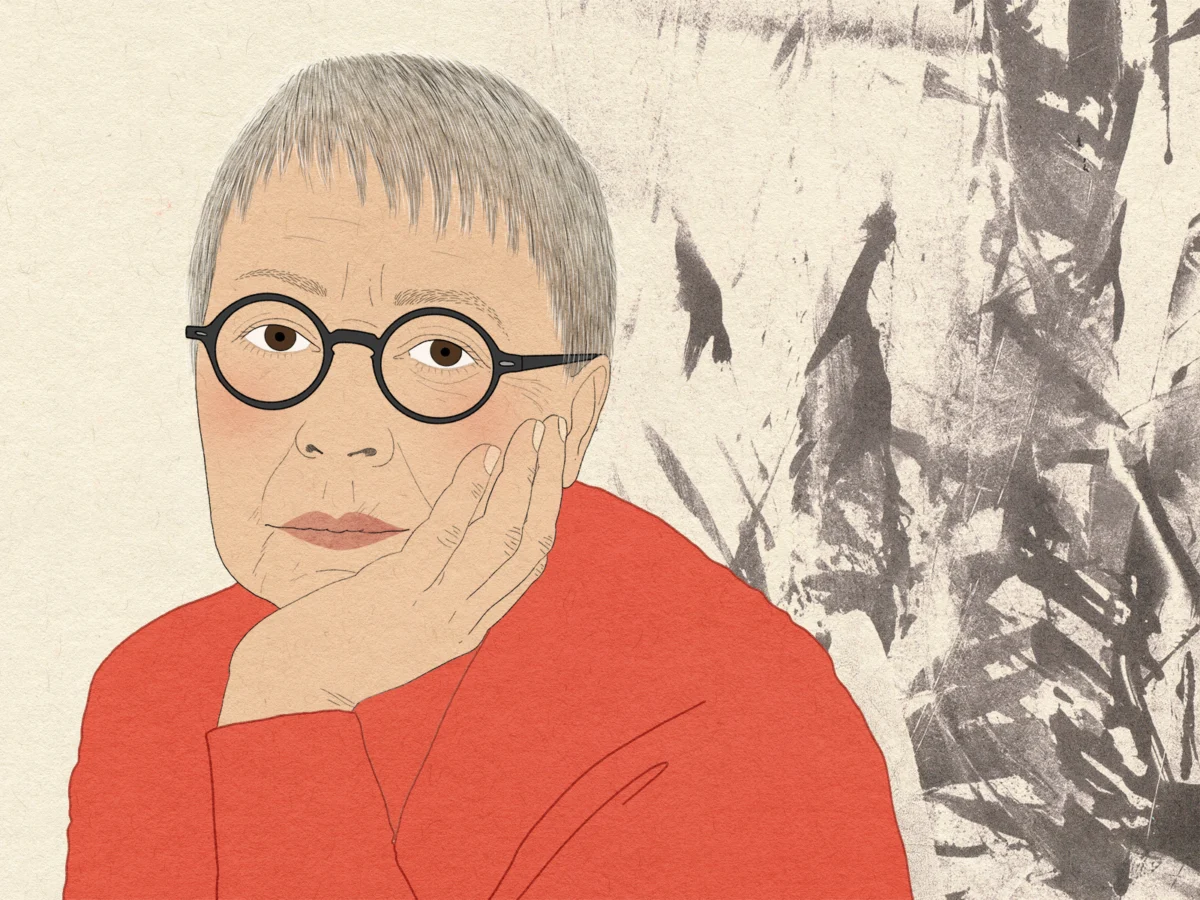
In Tibetan Buddhism, the concept of "bardo" signifies an intermediate state, a transitional phase between death and rebirth, and equally, the ongoing journey from birth to death. This profound philosophical framework, which explores themes of acceptance, interconnectedness, and impermanence, serves as the thematic core for Sigrid Nunez’s latest literary offering, It Will Come Back to You. The collection of stories, drawing from three decades of her published work, delves into these "between-states" as they manifest in various facets of human experience: the complexities of parent-child relationships, the dynamics of marriage and friendship, and the often-unpredictable currents of work and creativity. Nunez’s exploration illuminates the potential for discovering new perspectives and finding enduring happiness as individuals navigate the inherent flux of life.
Nunez, a distinguished author born in 1951 in New York City, has a prolific career marked by nine novels and a memoir, Sempre Susan, which intimately chronicles her relationship with the iconic writer Susan Sontag. Her literary achievements include the prestigious National Book Award for Fiction in 2018 for her novel The Friend, a work later adapted into a film starring Naomi Watts and Bill Murray. Furthermore, her 2020 novel, What Are You Going Through, was adapted by acclaimed director Pedro Almodóvar into the film The Room Next Door, featuring Tilda Swinton and Julianne Moore. It Will Come Back to You represents Nunez’s debut short story collection, a testament to her sustained engagement with narrative over a significant period. Her accolades extend beyond the National Book Award to include a Guggenheim Fellowship and the Rome Prize in Literature, underscoring her significant contributions to the literary landscape.
In a recent conversation, Nunez articulated her perspective on writing as a liminal experience, her lifelong preoccupation with mortality, and a whimsical reflection on a seemingly divergent career path.
The Writer’s Bardo: A State of Suspension
Nunez describes the act of writing itself as a profound "bardo," a desirable state of suspension where the self recedes. She draws a parallel to the words of artist Philip Guston, who, in turn, quoted John Cage: the initial stages of artistic creation are a crowded communion of past influences, present company, and future aspirations. However, as the creative process deepens, these external and internal voices gradually depart, leaving the artist in solitary communion with their work. "Then, if you’re lucky, even you leave," Nunez adds, signifying a state of pure creative flow, unburdened by ego or external judgment. This state of "forgetting oneself" is central to her understanding of the writer’s journey, mirroring the disorienting yet potentially illuminating nature of the Tibetan bardo.
Navigating the Literary Path: Persistence Through Uncertainty
The trajectory of Nunez’s writing career was not one of immediate acclaim. She candidly discusses the protracted period of obscurity, characterized by a lack of publication and financial instability. This phase was marked by a degree of public skepticism and personal resilience. "It took a long time for things to happen," she reflects. "I wasn’t getting published, wasn’t making money. There was a certain amount of humiliation to endure." She recounts instances of casual dismissal, such as a dentist inquiring, "Oh, you’re still writing? Haven’t you been working on that book for about fifteen years?" and a dinner party guest’s pointed question, "What name do you write under?" when she identified herself as a writer.
Her family, while supportive, harbored understandable concerns about her financial viability. A significant moment of doubt arose from a trusted boyfriend, a psychiatrist, who gently suggested, "Sometimes you have to give up a dream in order to move on." At nearly forty, facing considerable professional setbacks and emotional strain, this advice was a stark reminder of the precariousness of her chosen path. However, Nunez asserts, "I knew it was a loving thing to say and he wasn’t trying to sabotage me. And, of course, he was not wrong, but as it turned out, about me, he was wrong. I knew writing was what I was supposed to be doing." This unwavering conviction in her calling, even in the face of external and internal pressures, proved instrumental.
The Role of Self-Belief and Inherited Tenacity
Nunez attributes her ability to persevere through these challenges to a deep-seated self-belief and a less risk-averse disposition. "I became less and less risk-averse, and I thought, ‘Well, I’m not going to stop now.’" A significant realization emerged during an interview for The Paris Review, where she connected her own tenacity to her father, a Chinese-Panamanian gambler. "I realized I’d inherited that trait, that it was in my DNA to dare to keep writing even when I wasn’t having any success and so much time was passing. In other words, I was willing to gamble with my future and risk everything in the hope that I’d reach my goal in the end." This acknowledgment of an inherited predisposition towards risk-taking provides a compelling insight into her sustained commitment.
The journey was punctuated by small victories: a story accepted by a literary journal, a minor award, and affirming feedback from respected individuals. These incremental successes served as crucial motivators. Her debut novel, A Feather on the Breath of God, faced considerable editorial resistance, with numerous rejections before its eventual publication when she was 42, and release at 44—considered a late debut in the literary world. Following this, Nunez deliberately structured her life to prioritize her writing, taking on flexible employment such as proofreading and teaching English as a Second Language, and utilizing residencies to connect with a supportive community of fellow writers.
The Influence of Susan Sontag
A pivotal influence in Nunez’s career was Susan Sontag, who entered her life after Nunez completed her MFA at Columbia University. Sontag viewed writing as a sacred vocation, an "exalted and even heroic profession," demanding immense dedication and sacrifice, irrespective of financial or reputational rewards. Nunez states, "From her I felt that I was being given permission to do this unjustifiable thing of devoting my life to writing, while everyone else was concerned with how I was going to make a living and when I was going to find a husband and settle down." Sontag’s perspective provided Nunez with the validation to pursue her passion without the constant societal pressure to conform to conventional life milestones.
Contemplating an Exit from the Bardo
As Nunez approaches her mid-seventies, she openly contemplates a shift in her writing practice. "I’m thinking of stopping. Or limiting it, not writing as much as I have been, because it’s so all-consuming." This contemplation draws a parallel to Philip Roth’s decision to cease writing fiction, which allowed him to engage more fully with other life experiences. While Sontag famously abhorred the notion of retirement, Nunez acknowledges the allure of pursuing activities she previously forewent due to the all-encompassing nature of her writing. "She was famous for that. But I never could do it all. I feel like I’ve missed a lot."
The Ever-Present Shadow of Mortality
Nunez’s awareness of mortality is a lifelong companion, deeply rooted in her upbringing. Her mother, a refugee from Nazi Germany, experienced the profound realities of loss and survival during World War II. This background instilled a pragmatic view of death within the family. "Ours wasn’t a religious household, so we kids didn’t hear anything about people seeing each other again in heaven. Death was just a plain boiled fact of life." Her mother’s matter-of-fact recounting of war casualties and community deaths, devoid of overt emotional or theological discussion, shaped Nunez’s own early understanding of mortality.
"Death is always on my mind, and always part of my work," Nunez states. Yet, she distinguishes between the concept of death and the process of dying. While not fearful of the cessation of existence, she expresses significant apprehension regarding the manner of death, citing Susan Sontag’s protracted and difficult passing as an example of a dying process she wishes to avoid. "I don’t have what she had, this overwhelming terror of the dark. But who knows how I’ll feel when it happens to me." This nuanced perspective highlights a deep contemplation of the existential and the physical aspects of the end of life.
Regrets and Unfulfilled Desires: A Look Back
At 75, Nunez acknowledges the natural inclination to reflect on past choices and unfulfilled aspirations. "I think about regrets. I’m at a time when it’s natural to look back and think about what didn’t happen, whereas before I could think, ‘Well, such-and-such a thing could still happen.’" Her regrets range from the whimsical, like not learning to juggle, to the more profound: wishing she had learned more languages, spent more time in nature and traveling, and importantly, had more animals in her life.
The decision not to have pets in her later years stems from the profound grief of losing her long-lived cats and the difficulty of witnessing their suffering. However, she muses on an alternative life path: "When I think about what I might have done if I weren’t a writer—what would have made me a much happier, more fulfilled person—it’s doing some kind of work with animals." Her inherent patience with animals, contrasting with her experience with people, leads her to believe she would have excelled as an animal trainer or caretaker. She recalls a friend’s observation, suggesting she should have pursued a career similar to the "animal lady" who appeared on Johnny Carson’s Tonight Show, a notion that resonated deeply with her.
While Nunez expresses no significant regret about not having children, as she never encountered a partner with whom she wished to start a family, her longing for a life dedicated to animals remains a potent unfulfilled desire. This missed opportunity, she suggests, carries more weight than the absence of motherhood, particularly as she never envisioned raising a child as a single parent.
The Pursuit of Happiness in a Troubled World
In alignment with the Dalai Lama’s assertion that universal happiness is a fundamental human aspiration, Nunez addresses her current state of well-being amidst global turmoil. "Like so many people, I’m obsessed with current events, the sense of a world spinning out of control. The craziness and cruelty and corruption. Sometimes I feel like I’m drowning in it." She notes a palpable shift in the global climate compared to her lifetime, anticipating further crises, from geopolitical conflicts to environmental degradation.
Despite these anxieties, Nunez finds solace and purpose in her continued writing. "But I’m able to write, and when I’m writing, I’m able to feel like I’m doing what I should be doing despite all the bad things happening in the world." This sense of engagement and purpose, she believes, is crucial for navigating difficult times. Furthermore, she emphasizes the importance of humor and shared levity. "It’s important, as well, to have a sense of humor, to still be able to see the comic aspects in things, and to be around other people who can do that too." This perspective echoes the Dalai Lama’s own disposition, highlighting the profound human capacity for joy and resilience even in the face of immense suffering. Nunez concludes that embracing this capacity for laughter is, fundamentally, "the most human thing there is."

