

Recent scientific consensus unequivocally points to compound exercises as the most effective and time-efficient method for individuals aiming to elevate their physical fitness. In an era where time is a premium, these multi-joint movements offer a compelling solution for achieving comprehensive fitness goals, from strength and endurance to weight management and functional capacity, with a significantly higher return on investment compared to traditional isolation-based routines.
Understanding Compound Exercise: A Foundational Distinction
In the realm of physical training, exercises are broadly categorized into two principal types: compound and isolation. Isolation exercises, as their name suggests, concentrate on a single muscle group or joint movement. Examples include biceps curls, triceps extensions, and calf raises. While valuable for specific muscle hypertrophy or rehabilitation, their scope is inherently limited to a singular anatomical action.
Conversely, compound exercises engage multiple muscle groups and joints simultaneously, mirroring the natural movement patterns of the human body. A squat, for instance, activates the quadriceps, hamstrings, glutes, core, and lower back, involving movement at the hip, knee, and ankle joints. This fundamental distinction underpins their superior efficacy and widespread adoption in modern fitness protocols. The integration of several muscle groups into a single movement pattern not only optimizes the physiological response but also closely replicates the demands of daily life and athletic endeavors.
The Multifaceted Benefits: Unlocking Peak Efficiency
The advantages of incorporating compound exercises into a fitness regimen are extensive and scientifically substantiated, far surpassing the benefits offered by isolation exercises alone.
-
Superior Time Efficiency and Caloric Expenditure: Research consistently demonstrates that compound exercises are substantially more efficient at burning calories both during and after a workout. A meta-analysis published in The Journal of Strength & Conditioning Research highlighted that multi-joint exercises elicit a greater metabolic response compared to single-joint movements. This is primarily due to the recruitment of a larger total muscle mass, demanding more energy from the body. Moreover, the elevated intensity often associated with compound movements leads to a pronounced effect known as Excess Post-exercise Oxygen Consumption (EPOC), or the "afterburn effect," where the body continues to burn calories at an increased rate for hours post-workout to restore physiological balance. Some studies suggest this metabolic boost can be up to 3.5 times higher than that achieved through traditional, less intense isolation routines, making them ideal for individuals with limited time.
-
Enhanced Functional Strength and Real-World Application: Functional strength refers to the ability to perform everyday activities with ease and efficiency. Compound exercises are inherently functional because they train muscles to work synergistically, mimicking natural human movements like lifting, pushing, pulling, squatting, and bending. This integrated approach improves coordination, balance, and proprioception (the body’s awareness of its position in space), which are critical for both athletic performance and reducing the risk of injury in daily life. For instance, a deadlift, a quintessential compound exercise, directly translates to safely lifting heavy objects from the ground.
-
Significant Anabolic Hormonal Response: Engaging multiple large muscle groups simultaneously triggers a greater release of anabolic hormones such as testosterone and growth hormone. These hormones are vital for muscle protein synthesis, leading to increased muscle mass, strength development, and fat loss. This hormonal cascade is less pronounced during isolation exercises, making compound movements a more potent stimulus for overall physiological adaptation and body recomposition.
-
Improved Cardiovascular Health: The intensity and full-body engagement of many compound exercises elevate heart rate significantly, providing a substantial cardiovascular workout in addition to strength training benefits. Movements like burpees or thrusters can rapidly improve cardiorespiratory endurance, offering a dual benefit that streamlines workout routines and maximizes health outcomes.
-
Increased Bone Density: Weight-bearing compound exercises, such as squats and lunges, place mechanical stress on bones, stimulating osteogenesis (bone formation). This is crucial for maintaining bone density, particularly as individuals age, and can play a vital role in preventing conditions like osteoporosis.
-
Better Neuromuscular Coordination: The complexity of compound movements requires the nervous system to coordinate multiple muscles and joints effectively. This repeated practice enhances neuromuscular pathways, leading to improved balance, agility, and overall motor control.
The Evolution of Fitness Paradigms: A Shift Towards Integration
Historically, fitness methodologies often bifurcated, with bodybuilding favoring isolation exercises to sculpt individual muscles and athletic training focusing on multi-joint movements for performance. However, a significant shift began in the late 20th and early 21st centuries, driven by advancements in sports science and exercise physiology. Researchers and practitioners increasingly recognized the limitations of an exclusively isolation-focused approach for overall health and functional capacity.
The rise of functional fitness, cross-training, and evidence-based strength and conditioning solidified the central role of compound exercises. Fitness professionals, guided by organizations like the American College of Sports Medicine (ACSM), began advocating for integrated movement patterns that prepare the body for real-world demands, not just aesthetic appeal. This chronological evolution highlights a maturation in our understanding of human biomechanics and optimal training strategies, moving towards more holistic and efficient approaches.
Expert Perspectives: Unanimous Endorsement
Leading experts in exercise science and physical therapy uniformly endorse the integration of compound exercises. Dr. Eleanor Vance, an exercise physiologist specializing in metabolic efficiency, states, "For those seeking maximal results in minimal time, compound exercises are non-negotiable. They optimize metabolic expenditure and hormonal response, providing a comprehensive training stimulus that isolation movements simply cannot replicate."
Similarly, certified strength and conditioning specialists emphasize their role in injury prevention and rehabilitation. Marcus Chen, a physical therapist, notes, "By strengthening the entire kinetic chain and improving inter-muscular coordination, compound movements build a more resilient body. They are foundational for athletes and crucial for the general population to maintain mobility and mitigate common musculoskeletal issues." The consensus among practitioners and researchers underscores that a well-rounded fitness program must be built upon the bedrock of compound movements.
Core Compound Movements: Accessible and Effective
The beauty of many highly effective compound exercises is their accessibility, often requiring minimal to no equipment. This makes them ideal for home workouts or individuals new to structured exercise. Below are five foundational bodyweight compound movements, crucial for a full-body workout.
-
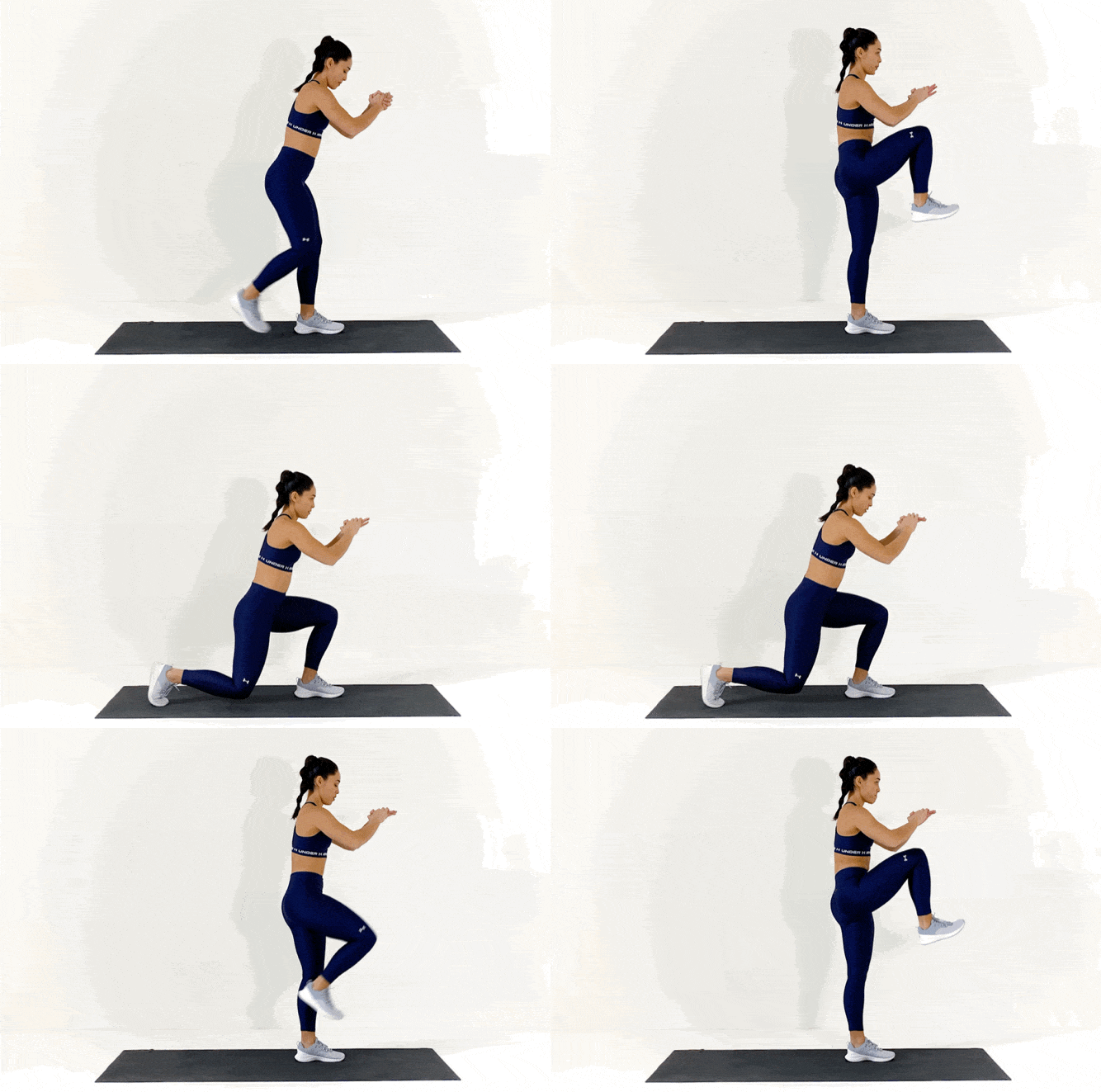
Reverse Lunge with a Knee Drive
- Muscles Engaged: Quadriceps, hamstrings, glutes, calves, core, hip flexors.
- Instructions:
- Start standing tall, feet hip-width apart.
- Step one leg back into a reverse lunge, lowering your hips until both knees are bent at approximately a 90-degree angle. Ensure your front knee is directly above your ankle and your back knee hovers just above the ground.
- Drive through the heel of your front foot, simultaneously bringing your back leg forward into a powerful knee drive, raising the knee towards your chest.
- Control the movement as you step the leg back down into the reverse lunge position.
- Pro Tip: Maintain an upright torso throughout the movement. For an added challenge, hold a dumbbell in each hand.
- Common Mistake: Leaning too far forward or allowing the front knee to collapse inward.
-
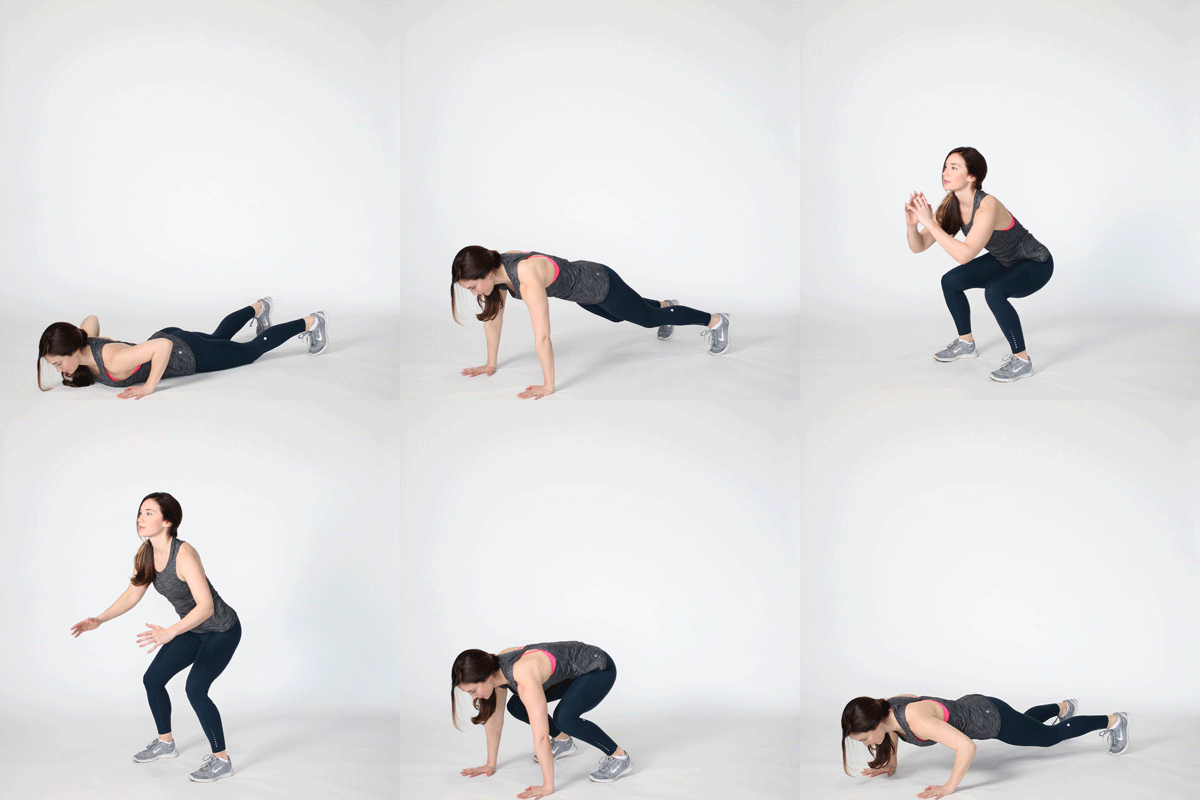
Burpees
- Muscles Engaged: Full body – pectorals, triceps, deltoids, quadriceps, hamstrings, glutes, core, calves.
- Instructions:
- Begin in a standing position.
- Drop into a squat position with your hands on the floor in front of you.
- Kick your feet back, landing in a plank position.
- Perform a push-up (optional, but highly recommended for full-body engagement).
- Immediately reverse the movement by jumping your feet back towards your hands.
- Explosively jump up into the air, reaching your hands overhead.
- Pro Tip: Focus on fluidity between each component. Engage your core throughout to protect your lower back.
- Common Mistake: Sagging hips during the plank/push-up, or not fully extending the jump.
-
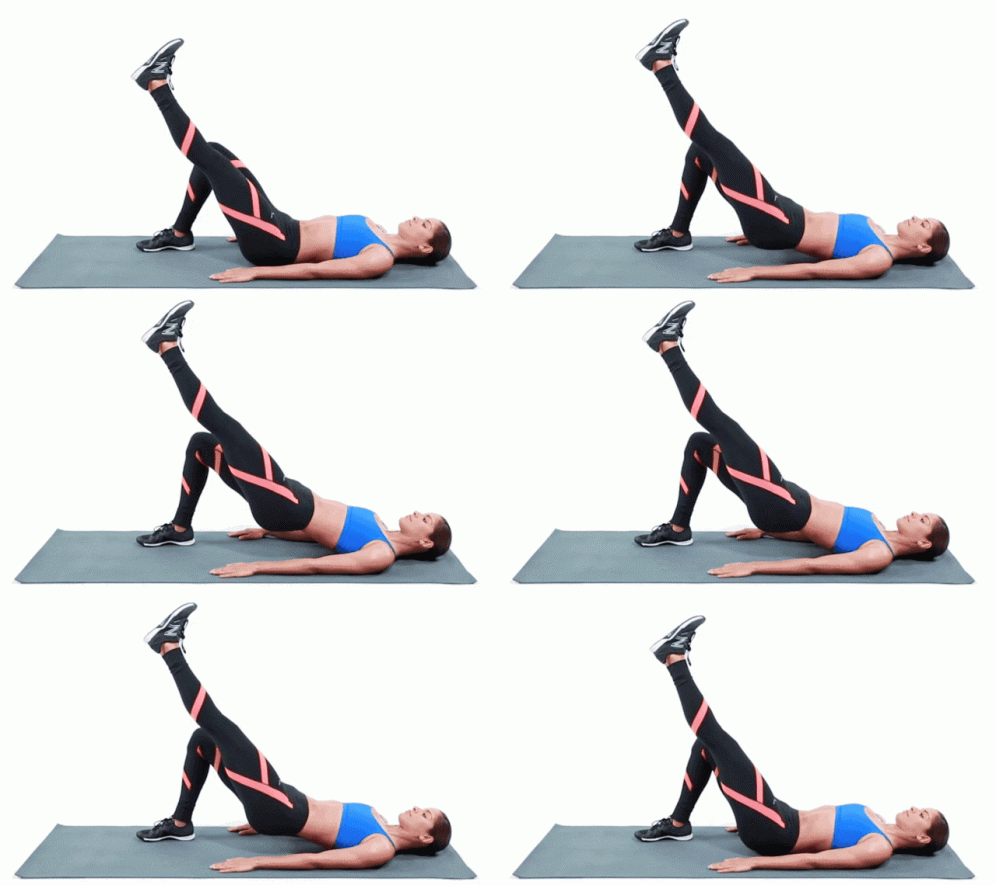
Single-Leg Bridge
- Muscles Engaged: Glutes, hamstrings, lower back, core stabilizers.
- Instructions:
- Lie on your back with your knees bent, feet flat on the floor hip-width apart, and arms by your sides.
- Extend one leg straight towards the ceiling.
- Engage your glutes and core, then lift your hips off the floor until your body forms a straight line from your shoulders to your raised foot.
- Hold briefly at the top, squeezing your glutes.
- Slowly lower your hips back down to the starting position.
- Pro Tip: Keep your core tight to prevent arching your lower back. Aim for 10-12 repetitions on each side.
- Common Mistake: Using momentum instead of muscle control, or allowing hips to drop unevenly.
-
Push-Up and Rotate
- Muscles Engaged: Pectorals, triceps, deltoids, core (obliques, rectus abdominis), back stabilizers.
- Instructions:
- Start in a high plank position, hands directly under shoulders, body forming a straight line.
- Perform a standard push-up, lowering your chest towards the floor.
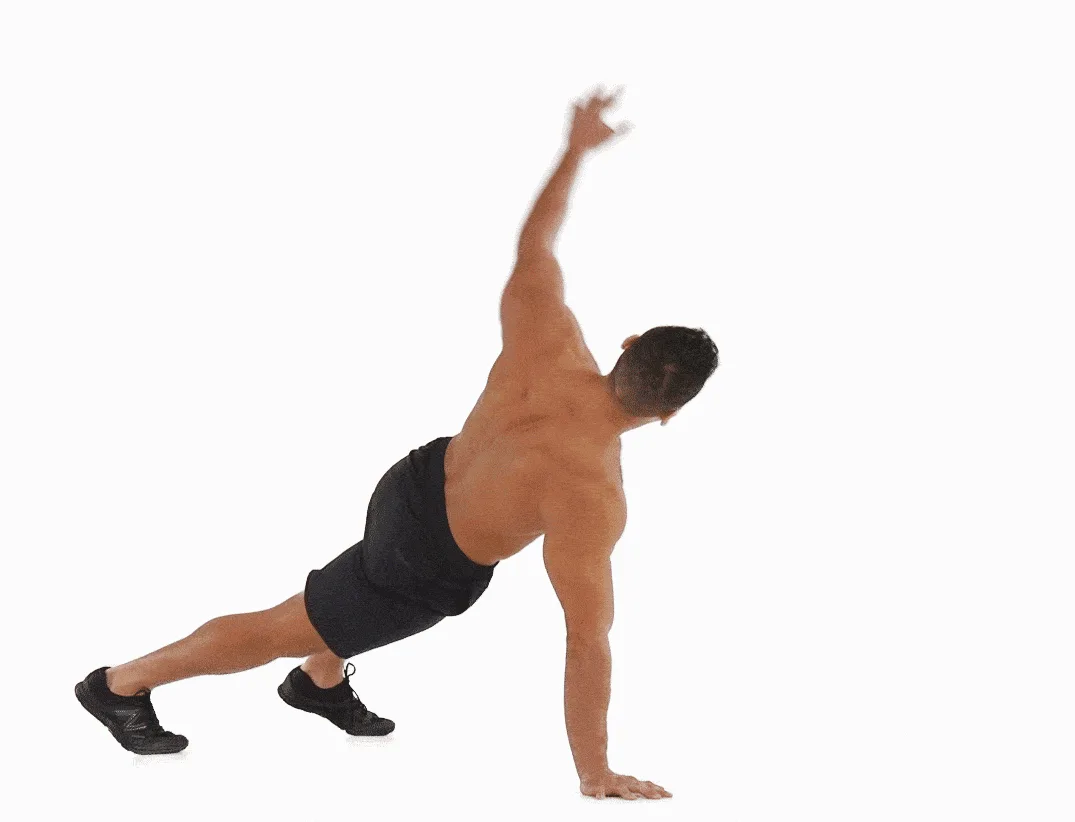
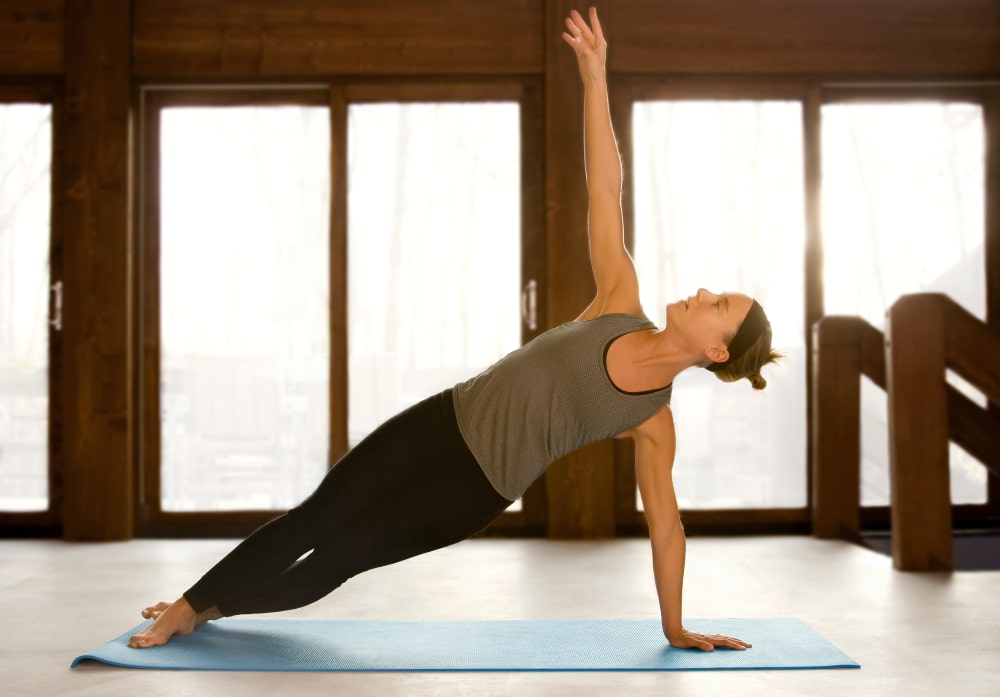
- As you push back up, shift your weight onto one hand and rotate your body, extending the opposite arm straight up towards the ceiling, forming a "T" shape with your body. Your gaze should follow your raised hand.
- Return to the plank position.
- Repeat on the other side, alternating for a total of 10-12 repetitions.
- Pro Tip: Keep your core engaged throughout the entire movement to stabilize your spine.
- Common Mistake: Allowing hips to sag during the push-up or rotate, or not achieving a full rotation.
-
Air Squat
- Muscles Engaged: Quadriceps, hamstrings, glutes, calves, core, lower back.
- Instructions:
- Stand with your feet shoulder-width apart, toes pointed slightly outwards.
- Keep your chest up and back straight, initiate the movement by sending your hips back as if sitting in a chair.
- Lower yourself until your thighs are at least parallel to the ground, or deeper if flexibility allows, ensuring your knees track in line with your toes.
- Drive through your heels to return to the starting standing position, squeezing your glutes at the top.
- Pro Tip: Focus on depth and control. For an added challenge, perform them slower (tempo squats) or add a jump at the top (jump squats).
- Common Mistake: Rounding the back, allowing knees to cave inward, or not reaching sufficient depth.
These exercises, when performed correctly and consistently, can form the backbone of an incredibly effective and efficient workout regimen, delivering significant gains in strength, endurance, and overall fitness in as little as 15 minutes.
Safety Protocols: Prioritizing Injury Prevention
While highly beneficial, compound exercises often demand precise technique due to the involvement of multiple joints and muscle groups. Improper form can increase the risk of injury. Adhering to stringent safety protocols is paramount.
- Mastering Form Over Weight/Speed: Always prioritize perfect form over attempting to lift heavier weights or perform repetitions too quickly. A well-executed movement is far more beneficial and safer than a sloppy one.
- Professional Guidance: For beginners, or those unsure about their technique, consulting an experienced certified personal trainer or physical therapist is highly recommended. They can observe your form, provide real-time feedback, correct imbalances, and teach proper movement mechanics, significantly reducing injury risk.
- Progressive Overload (Gradual Increase): Begin with bodyweight or very light resistance, gradually increasing the intensity, volume, or resistance as strength improves. A good starting point for most individuals is 10-15 repetitions per exercise, focusing on controlled movements.
- Warm-Up and Cool-Down: Always precede compound exercises with a dynamic warm-up (e.g., light cardio, dynamic stretches) to prepare muscles and joints. Conclude with a cool-down involving static stretches to improve flexibility and aid recovery.
- Listen to Your Body: Pay attention to pain signals. Sharp pain is an indicator to stop the exercise. Differentiating between muscle fatigue and joint pain is crucial.
Broader Implications: Reshaping Public Health and Fitness Industry
The scientific validation of compound exercises carries significant implications for public health initiatives, the fitness industry, and athletic development. For public health, the efficiency of these exercises offers a powerful tool to combat sedentary lifestyles and improve population-wide fitness levels, especially for individuals constrained by time. Fitness programs can be designed to deliver maximal benefits in shorter durations, increasing adherence rates.
Within the fitness industry, the emphasis on compound movements drives demand for functional training equipment and expertise in biomechanics. Personal trainers who can effectively teach and program these movements are increasingly valued. For athletic development, compound exercises remain fundamental, forming the core of strength and conditioning programs across virtually all sports, enhancing power, agility, and injury resilience. This paradigm shift signifies a move towards more intelligent, evidence-based approaches to physical conditioning.
Frequent Questions
-
What Are The Best Compound Exercises For Weight Loss?
For weight loss, the most effective compound exercises are those that engage the largest muscle groups and allow for high intensity, leading to significant caloric expenditure and EPOC. Examples include squats, deadlifts (even bodyweight or light resistance), burpees, lunges, and overhead presses. These exercises not only burn a substantial number of calories during the workout but also contribute to building muscle mass, which elevates your resting metabolism over time, further aiding fat loss. Incorporating a circuit of these exercises, as demonstrated in the provided video, can be exceptionally effective. -
What Are The Best Compound Exercises For The Legs?
The legs house some of the body’s largest and most powerful muscles, making compound movements exceptionally effective for lower body development. Premier choices include squats (bodyweight, goblet, barbell), lunges (forward, reverse, lateral), deadlifts (conventional, sumo, Romanian), and step-ups. These exercises comprehensively target the quadriceps, hamstrings, glutes, and calves, while also engaging the core for stability. Integrating a variety of these movements ensures balanced leg strength and development.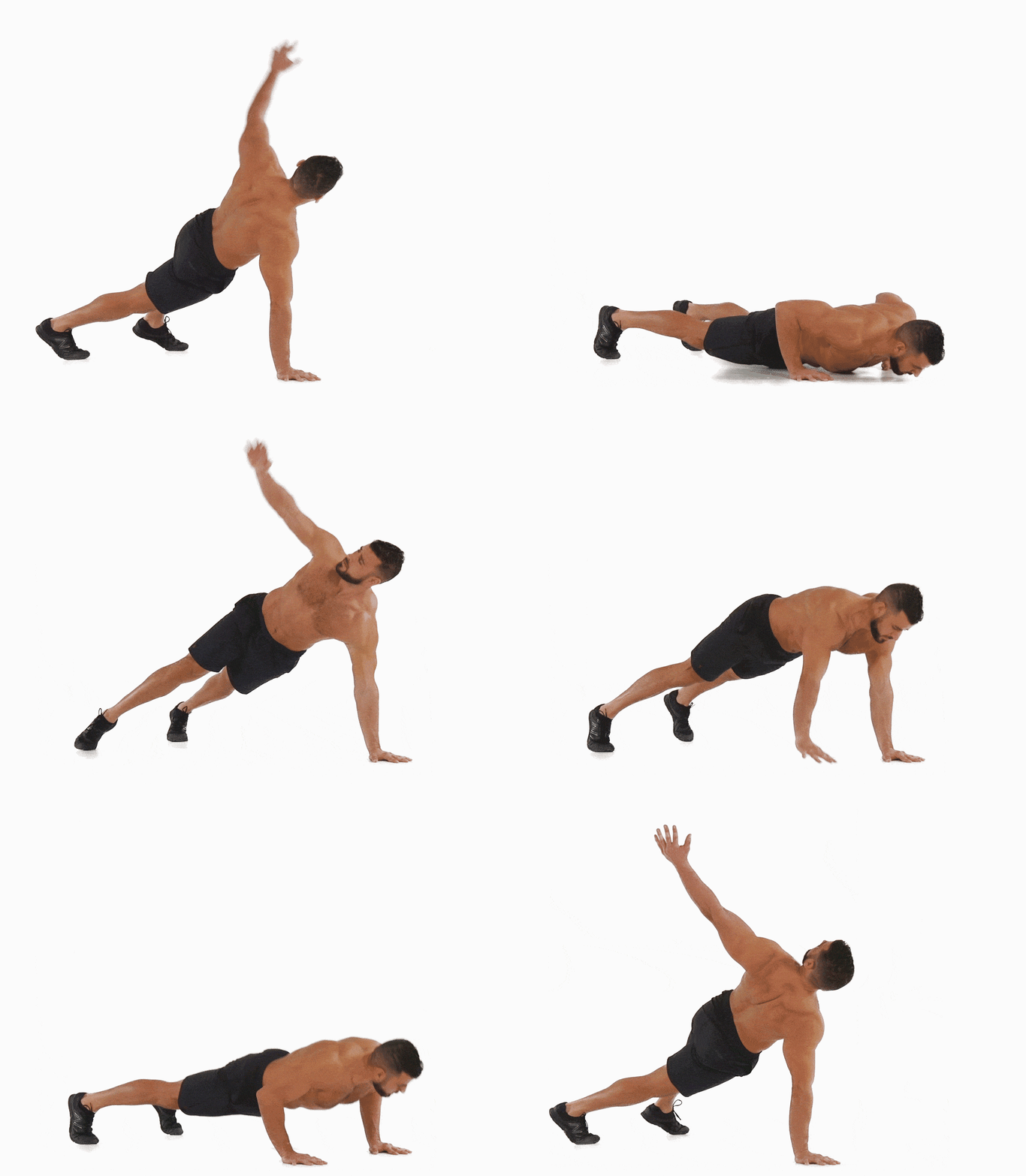
-
What Are The Best Compound Exercises For Back Pain?
For individuals managing back pain, carefully selected compound exercises can strengthen supporting musculature and improve posture, provided they are performed with impeccable form. Bodyweight squats are excellent for strengthening the lower back and glutes without excessive spinal loading. Bodyweight deadlifts, focusing on hip hinge mechanics rather than heavy lifting, can build crucial posterior chain strength. Other beneficial exercises include bird-dog and glute bridges, which enhance core stability and glute activation. It is crucial to consult with a healthcare professional or physical therapist before attempting exercises if experiencing chronic back pain. -
Compound vs. Isolation: When to Use Each?
While compound exercises form the foundation of an efficient and effective training program, isolation exercises still hold value. Isolation movements are useful for:- Addressing Muscle Imbalances: To specifically strengthen a weaker muscle group that might be lagging.
- Rehabilitation: To target and strengthen muscles post-injury without overloading surrounding joints.
- Bodybuilding/Hypertrophy: To further sculpt and grow specific muscle groups after compound movements have provided the primary stimulus.
- Beginner Activation: To teach individuals how to "feel" and activate a specific muscle before integrating it into complex movements.
Ideally, a well-rounded program integrates both, with compound exercises forming the bulk of the workout.
-
Can Beginners Start with Compound Exercises?
Absolutely. In fact, starting with compound exercises is highly recommended for beginners as it teaches fundamental movement patterns, builds functional strength, and establishes a strong foundation. The key is to begin with bodyweight variations and focus meticulously on mastering form. As proficiency increases, resistance can be gradually added. Professional guidance from a certified trainer can be invaluable during this initial phase to ensure proper technique and prevent injury.
Sources: Andrews E. (2015), Garber CE, et al. (2011), Hwang-Bo Kak, et al. (2013). Additional insights derived from established exercise physiology and strength & conditioning literature from organizations such as the American College of Sports Medicine (ACSM) and National Strength and Conditioning Association (NSCA).

