

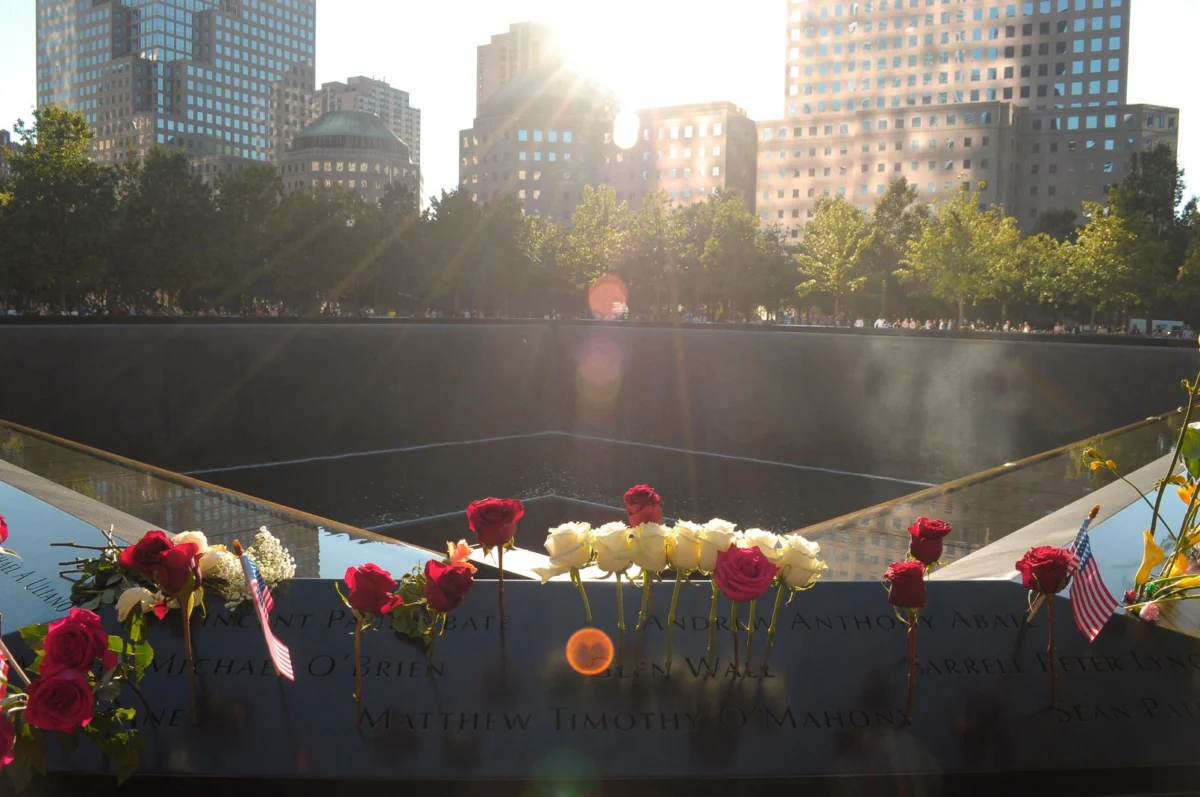
The morning of September 11, 2001, dawned crisp and clear over Manhattan, a seemingly ordinary Tuesday in early autumn. For many, it began with familiar routines: the aroma of coffee, the rumble of the subway, the gentle rhythm of meditation. Yet, this day would irrevocably alter the fabric of individual lives and the collective consciousness of a nation, prompting profound introspection and a reevaluation of deeply held beliefs.
The Unfolding Tragedy
At approximately 8:46 AM Eastern Daylight Time, the unthinkable occurred. American Airlines Flight 11, a Boeing 767 en route from Boston to Los Angeles, crashed into the North Tower of the World Trade Center in New York City. The impact, a violent rupture of the iconic skyline, was initially perceived by many as a catastrophic accident. Within minutes, however, the true horror began to crystallize.
As onlookers gathered, their faces tilted skyward in shock and disbelief, a second plane, United Airlines Flight 175, also originating from Boston, struck the South Tower of the World Trade Center at 9:03 AM. This second, deliberate impact confirmed that the events were not accidental but were acts of terrorism. The towers, once symbols of American economic might and architectural ambition, became infernos, spewing plumes of thick, black smoke against the clear blue sky.
The immediate aftermath was a scene of pandemonium and profound grief. Sirens wailed incessantly, their urgent cries slicing through the stunned silence that had descended upon the city. On the streets below, a collective tableau of horror unfolded. People, paralyzed by the unfolding tragedy, covered their mouths with trembling hands, while others desperately tried to reach loved ones via now-overloaded cellular networks. Large outdoor advertising screens, designed to broadcast messages of commerce and entertainment, instead replayed repeating videos of the towers’ collapse, a stark and devastating visual testament to the destruction.
The realization that the occupants of the towers, including thousands of office workers and first responders, might have been trapped and perished within the inferno brought a chilling wave of dread. The sheer scale of the destruction—tons of steel and glass collapsing—implied an unimaginable loss of life. The author’s poignant reflection on his former colleagues in Alcoholics Anonymous, potentially among the fallen firefighters, underscores the deeply personal impact of this national tragedy, highlighting the interconnectedness of lives often unseen in the bustling metropolis.
Disorientation and Dissociation
The sensory overload and the sheer impossibility of the events triggered a dissociative state in many, including the author. The world, once sharp and defined, became a watercolor wash, objects moving in discontinuous frames, sounds muffled. This psychological response, a protective mechanism against overwhelming trauma, rendered the immediate reality surreal, akin to a waking nightmare where speech and action felt impossible.
The city ground to a halt. Subways were closed, bridges became impassable, save for the 59th Street Bridge, which became a vital artery for those seeking to escape Manhattan and return home to Brooklyn. The arduous walk across the bridge, a journey of miles, was undertaken by many, their usual conversations about deadlines and clients rendered painfully irrelevant. The shared silence, punctuated by hushed whispers, spoke volumes about the profound shock and the fragile thread of shared humanity that held people together in the face of an unimaginable new reality.
The Long Shadow of Trauma
In the months following September 11, 2001, the nation grappled with the trauma of the attacks. For many, particularly those in New York City, the impact was immediate and profound. The author describes months spent in a daze, the crisis peeling back layers of self-discovery and confronting previously unacknowledged pain.
While many sought solace in alcohol and other substances, a path unavailable to the author due to his six years of sobriety in a Twelve Step community, he experienced what a psychiatrist would later diagnose as a “post-traumatic episode.” Without the option of numbing the shock with external substances, his raw nerves were exposed to every painful stimulus.
This period of intense vulnerability unearthed long-repressed memories from a childhood spent in a violent household. The sense of helplessness, powerlessness, and outright fear engendered by the terrorist attacks acted as a catalyst, reactivating buried traumas. The ghosts of his past, manifesting as feelings of low self-esteem and self-worth, rose to the surface. Voices of his father’s drunken rants, echoing with phrases of worthlessness, returned with relentless force, accompanied by the vivid sounds of domestic violence—breaking glass, the impact of flesh on flesh, the primal terror of childhood.
This psychological onslaught culminated in debilitating panic attacks, characterized by shaking, profuse sweating, and a churning stomach. In his mind, horror films played out, depicting a world of isolation and cosmic indifference. The very foundations of his reality were shaken, the illusion of certainty and safety shattered. The events of September 11 had revealed a world where nothing was guaranteed, where everything could vanish in smoke, prompting a deep existential questioning of his life’s purpose, particularly his career in advertising, which he now perceived as crafting "lies about happiness in bottles and boxes."
A Search for Meaning Amidst the Ruins
The subsequent months were a stark oscillation between numbness and self-hatred. The author recognized the immense healing required, an "ocean of pain to cross without drowning." His self-care regimen consisted of Buddhist center visits, Twelve Step meetings, and daily meditation. However, these practices, while grounding, felt insufficient to address the deeply shaken foundations of his being.
He found himself retreating to his office, seeking refuge from the semblance of normalcy that permeated the agency hallways. The bright, busy environment seemed a stark contrast to his internal turmoil. Seated before his computer, he encountered the pervasive advertising of the era—banner ads promising fleeting happiness through consumerism, slogans for products like "Emo-Numb" that seemed to mock his profound distress. The dissonance between his internal crisis and the superficial promises of advertising became acutely apparent. "This is what my life has become? Crafting slogans while the world burns?" he questioned, a sentiment that underscored his growing disillusionment with his profession.
His meditation practice, once a source of solace, became a battleground. Instead of observing his thoughts, he resisted them, craving the numbness of his former addiction. He recognized this as a form of "spiritual bypass," an avoidance of the deeply embedded fears and self-shaming voices that had haunted him since childhood.
The Path to Integration and Transformation
The turning point arrived with the realization that true healing lay not in avoidance but in embracing the pain. He began to understand that his practice offered not an escape from difficult experiences but a way to "be with it, no matter how painful it is"—to sit in the fire without being consumed.
This newfound understanding propelled him to seek further support. He found a Buddhist therapist whose office, scented with sandalwood, provided a safe haven for voicing deeply shameful thoughts and feelings. Through these sessions, he learned to locate anxiety not just in his mind but in his physical body—the stomach, chest, and shoulders. This practice allowed him to connect with the long-buried fear of a six-year-old boy, offering him the solace and security he had never received.
His rekindled studies in Buddhist teachings and his engagement with monks who embodied kindness and balance provided a much-needed anchor. He discovered a Buddhist community, populated by individuals who, like him, had grown up in challenging environments, often with backgrounds in punk culture and substance recovery. This community offered a sense of belonging, where his past was not a source of shame but a vital part of his journey.
Reimagining Purpose Beyond Profit
After fifteen years in the marketing profession, crafting campaigns for what he perceived as unnecessary products, the author experienced a profound shift in his values. The events of 9/11 had spilled "messy truth" onto the same screens where he had once pitched soda and SUVs. A seismic realignment of values occurred, prompting the gnawing question: "Does any of this matter?"
Inspired by the Buddha’s renunciation of a palace to seek meaning, the author began to detach himself from his career, an act he considered as radical as any historical renunciation. Even the concept of "quiet quitting" felt like a rebellion against the deceptions he had helped perpetuate. Each step away from the marketing world was a step towards rediscovering his authentic self, shedding the costume of his former identity.
The decision to walk away was fraught with fear, particularly the fear of financial insecurity, which had become a surrogate religion. Yet, an irresistible current pulled him forward, a force stronger than fear. He began to disentangle himself, selling his car, relinquishing his garage, and taking fewer soul-hollowing remote gigs. He learned to live with less, creating space for something new to grow.
His days transformed, now shaped by purpose rather than profit. He began teaching mindfulness to parolees from Rikers Island, guiding them to discover inner resources they never knew they possessed. He volunteered at an afterschool program, the laughter of children healing something ancient within him. He mentored recovering addicts, recognizing their shared journey through the fire. The pay was minimal, often nonexistent, but this new life nourished him in ways his former salary never could. He was building deep connections, a web of relationships based on authenticity, a stark contrast to the transactional exchanges of his past.
When asked what he does now, he struggles to articulate his role in a society obsessed with titles. "I try to help others find out who else they can be," he might say, acknowledging the inadequacy and the profound truth of those words. In essence, he was discovering this for himself, day by surprising day.
Ego Death and the Unraveling of Identity
The author’s journey illuminates the concept of ego death, the dissolution of a fixed, constructed sense of self. He describes building his life around a fortress of identities: his job title, relationship status, political views, a curated social media presence. These labels, once comforting and familiar, became unreliable when the world—and his perception of it—shifted dramatically.
Ancient philosophies, from Heraclitus to Laozi and the Buddha, recognized that clinging to the unreliable causes suffering. The author’s past experiences, from his first heartbreak to the profound existential crisis triggered by 9/11, served as stepping stones towards this understanding. He recognized that the self-narratives he had meticulously crafted—"I’m creative," "I’m bad with numbers," "I’ll never have a healthy relationship"—were not immutable facts but malleable stories.
The space between his old self and whatever came next became the arena for ego death, a terrifying yet potentially liberating free fall. This process, while disorienting, can also be a profound experience of freedom. Indigenous cultures and various spiritual traditions have long recognized the transformative power of stepping outside one’s known self, whether through vision quests, psychedelic experiences, or immersive therapy.
While some methods, like psychedelics, can offer rapid, explosive shifts in perception, they carry risks and require careful integration. Buddhism, on the other hand, offers a gentler, more sustainable path. Instead of a dramatic demolition of the self-concept, it involves a gradual process of seeing through it, brick by transparent brick. Through consistent meditation and visualization, the author learned to observe the impermanence of his physical sensations, emotions, and thoughts. He realized there was no solid, unchanging core to grasp.
The ego, rather than disappearing in a dramatic explosion, became transparent—a useful fiction, a convenient shorthand, a necessary but not ultimate construct. He learned to hold his labels and roles lightly, recognizing them as tools rather than absolute truths. This shift allows for fluidity, enabling him to navigate life’s inevitable changes without shattering, like water finding a new channel to the sea.
The events of September 11, 2001, served as a brutal, undeniable catalyst for this profound transformation. It shattered the illusion of certainty and safety, forcing a reevaluation of life’s priorities and the very nature of identity. In the aftermath, the author, like countless others, embarked on a journey of deconstruction and reconstruction, seeking a life defined not by external markers of success but by inner purpose, authenticity, and a deeper connection to himself and the world.

