

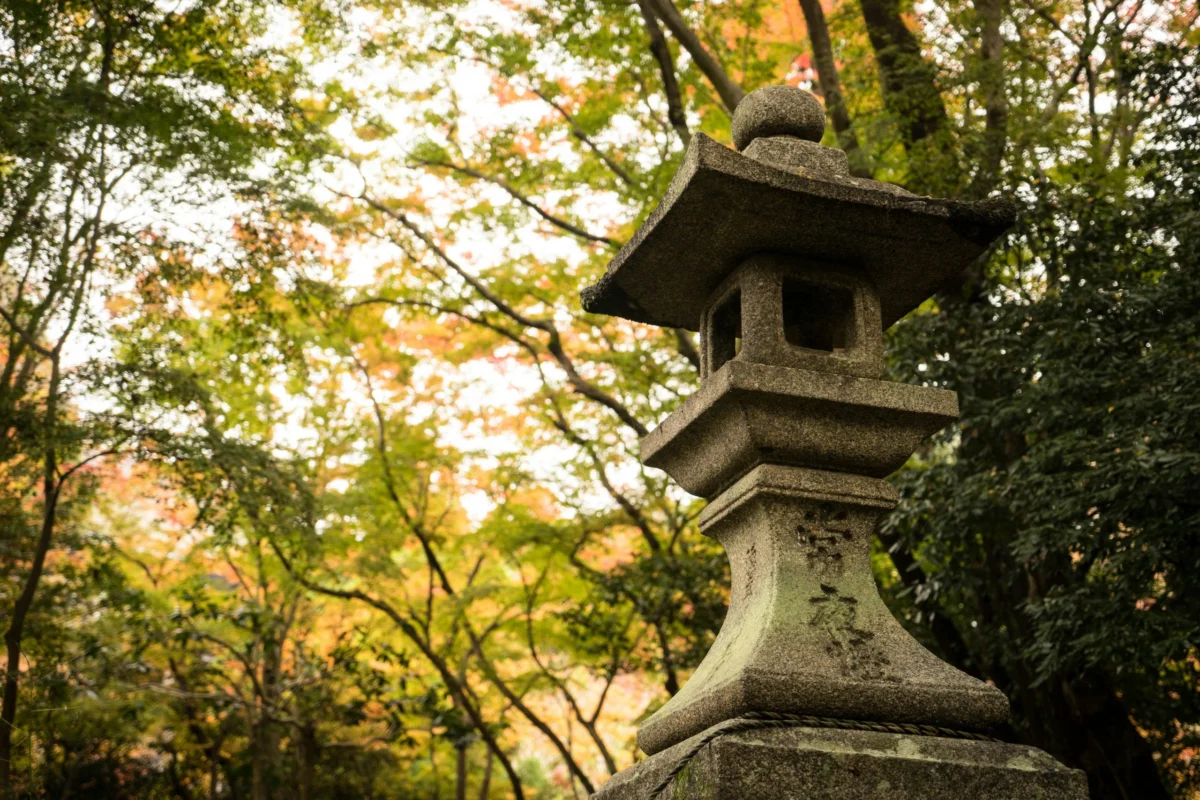
Daitoku-ji, a venerable temple within Kyoto’s Rinzai Zen school, is a sanctuary celebrated for its collection of tranquil subtemples. Among these, Juko-in stands out, renowned for the serene beauty of its main hall, its meticulously designed tea pavilion, and a singular stone lantern gracing its garden. Local tradition posits that this very lantern marks the final resting place of the iconic tea master Sen no Rikyu (1522–1591). Legend has it that Rikyu’s spirit continues to imbue the lantern, and those who press an ear against its cool stone can purportedly hear the faint, rhythmic sounds of him practicing the Way of Tea, even centuries after his passing. This enduring tale, a blend of historical reverence and spectral mystique, forms the basis of a compelling modern narrative, offering a contemporary lens through which to view the profound legacy and tragic end of one of Japan’s most influential cultural figures.
The narrative begins with Sen no Yoshiro, a boy born into a prosperous merchant family in the bustling commercial hub of Sakai. Eschewing the conventional path laid out by his father, Yoshiro found his calling within the hallowed grounds of Daitoku-ji in Kyoto. It was there, as a young monk, that he adopted the name Sen no Rikyu. While immersed in the study of sacred scriptures, Rikyu developed a profound fascination with the art of the tea ceremony, a practice that was experiencing a significant surge in popularity during his era. His exceptional dedication and innate talent for this refined discipline propelled him to mastery, eventually leading him to become the esteemed tea instructor for Toyotomi Hideyoshi, the most powerful and influential figure in Japan during the late Sengoku period.
Rikyu’s ascent to prominence, however, was not without its challenges. A fundamental divergence in philosophies regarding the essence of the tea ceremony emerged between Rikyu and his powerful patron, Hideyoshi. This philosophical rift came to a head when Hideyoshi, eager to showcase his immense wealth and power, commissioned the construction of an ostentatious, gilded tearoom within his castle. He then requested Rikyu to preside over a tea ceremony in this opulent setting. Rikyu, adhering steadfastly to his principles of wabi-sabi—a philosophy that embraces rustic simplicity, quietude, and imperfection—refused. He argued that such extravagant display was fundamentally antithetical to the refined aesthetic and profound spiritual depth that characterized his understanding of the Way of Tea. This refusal marked a critical turning point in their relationship, sowing the seeds of future conflict.
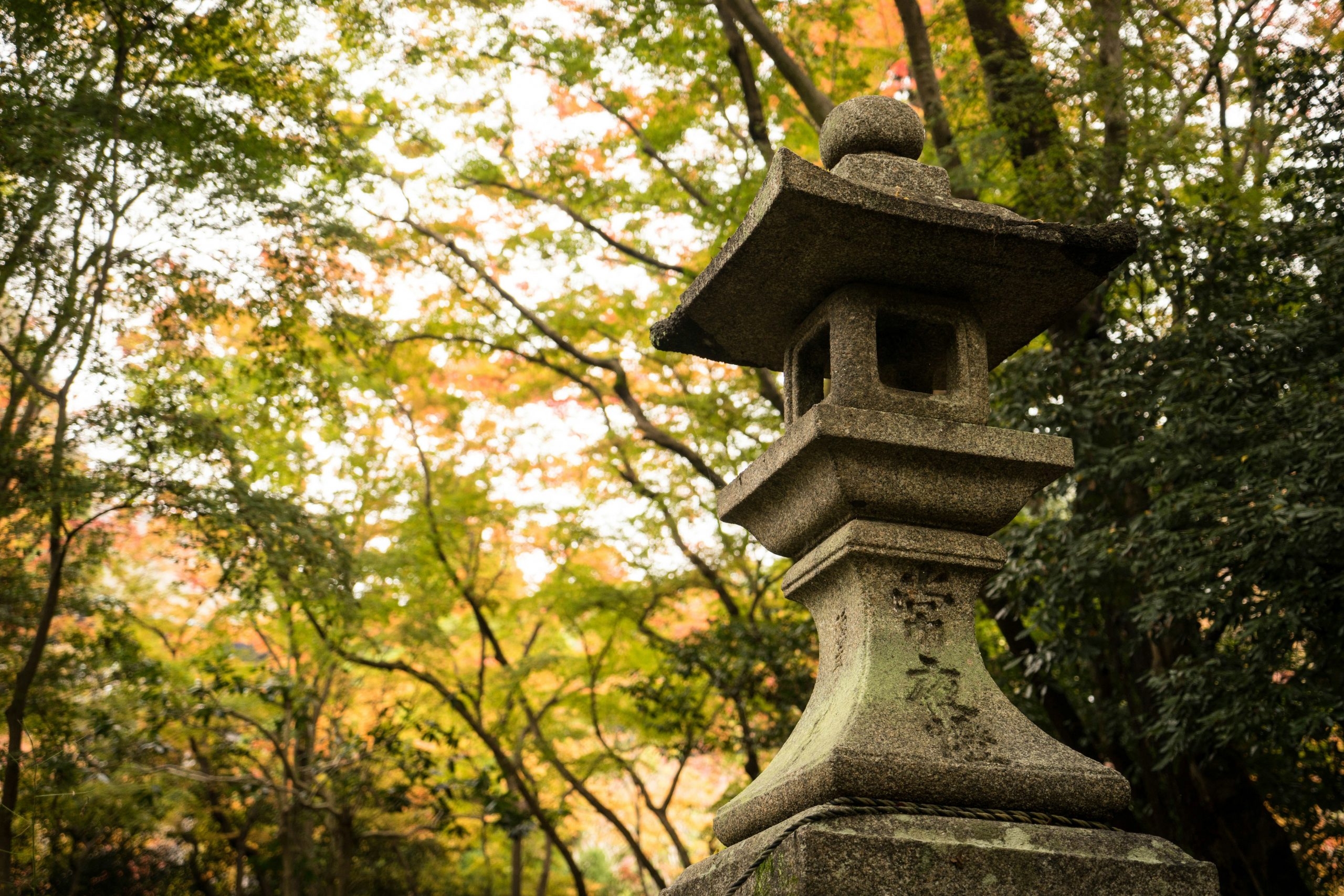
Following this significant disagreement, Rikyu departed from Hideyoshi’s castle, seeking a measure of solace and contemplation on the slopes of Mount Funaoka. He was accompanied by his most trusted disciples, their concern palpable as they observed their master’s evident distress. Though he maintained an outward composure, Rikyu was deeply troubled by the potential repercussions of defying Hideyoshi, a man whose wrath could be swift and devastating. As he walked, his mind consumed by these anxieties, his gaze alighted upon a weathered stone lantern, its ancient form standing sentinel amidst the natural landscape. The lantern, which may have stood for centuries, seemingly waiting for this precise moment, captivated Rikyu. After a prolonged period of silent admiration, he turned to his disciples and uttered words that would forever echo through the annals of Japanese tea culture: “Look carefully at this lantern. Remember it well, for when I die, I want it to serve as my tombstone.” His disciples, disturbed by the gravity of their master’s pronouncement, solemnly pledged to honor his wish, unaware of the tragic immediacy with which they would be called upon to fulfill it.
The foreboding prophecy soon materialized. A few months later, the abbot of Daitoku-ji, seeking to honor Rikyu’s immense contributions, commissioned a statue of the tea master and had it installed above the temple gate. News of this tribute reached Hideyoshi, who reacted with explosive rage. His fury stemmed from a perceived insult to his authority; he frequented Daitoku-ji and felt that having to pass beneath the effigy of a man of lesser rank was an affront. In a fit of pique and power, Hideyoshi issued a brutal decree: Rikyu must forfeit his life.
On the twenty-eighth day of the second month of the nineteenth year of Tensho (1591), Rikyu, ever obedient to the dictates of honor and duty, even in the face of injustice, complied with Hideyoshi’s command. He performed the ritual suicide known as seppuku, a dignified yet somber end befitting his stature. His severed head was publicly displayed on the First Avenue Bridge, a stark and chilling testament to Hideyoshi’s absolute authority and the precariousness of even the most esteemed positions. Rikyu’s body, however, was entrusted to his devoted disciples. They carried out his final wishes, burying him in the tranquil garden of Jukoin. True to their solemn promise, the disciples retrieved the weathered stone lantern from Mount Funaoka and transported it to Jukoin, placing it reverently atop Rikyu’s grave as his tombstone. It was at this moment of profound grief and solemn remembrance that the legend of the ghostly lantern began to manifest.
As the disciples stood by the newly marked grave, a peculiar sound reached their ears.
Shaka, shaka.
Startled, they strained to identify the source of this faint, rhythmic disturbance, searching the quiet garden but finding nothing out of the ordinary.
Shaka, shaka.
The sound persisted, a subtle, persistent whisper in the stillness. Upon closer examination, the disciples discerned its uncanny resemblance to the delicate, almost ethereal sound of a bamboo whisk, chasen, stirring matcha in a tea bowl.
Shaka, shaka.
One of the disciples, his voice tinged with disbelief, exclaimed, “It’s coming from the grave!” Hesitantly, he pressed his ear against the cool, unyielding surface of the stone lantern. The faint, unmistakable sound of Rikyu’s tea whisk continued to echo from within the earth. Even in the profound silence of death, Sen no Rikyu, the legendary tea master, appeared to be eternally engaged in the practice of his beloved Way of Tea, his spirit forever bound to the ritual and the artifact he had chosen as his final resting place.
Historical Context and Sen no Rikyu’s Enduring Influence
Sen no Rikyu’s life spanned a pivotal era in Japanese history, the late Sengoku period, a time characterized by civil war and shifting power dynamics. His mastery of the tea ceremony, chanoyu, transcended mere ritual; he elevated it to a profound philosophical and aesthetic practice, deeply intertwined with Zen Buddhism. Rikyu is credited with codifying many of the principles of wabi-cha, emphasizing simplicity, naturalness, and an appreciation for the imperfect and transient. This aesthetic profoundly influenced not only the tea ceremony but also Japanese art, architecture, and garden design.
His patronage by Toyotomi Hideyoshi, who unified Japan after the warring states period, placed Rikyu at the apex of cultural influence. However, this proximity to power also proved to be his undoing. The conflict between Rikyu’s minimalist aesthetic and Hideyoshi’s penchant for grandeur and ostentation represented a clash of ideologies. Hideyoshi’s ambition and desire for outward displays of power often conflicted with Rikyu’s pursuit of inner spiritual refinement. Historical accounts suggest that beyond the gilded tearoom incident, other political and personal frictions may have contributed to Hideyoshi’s ultimate decision to demand Rikyu’s death. Some theories propose that Rikyu’s influence over Hideyoshi’s son, or his perceived association with political rivals, played a role. Regardless of the precise confluence of factors, the result was the tragic execution of one of Japan’s most revered cultural figures.
The Significance of the Stone Lantern and the Legend
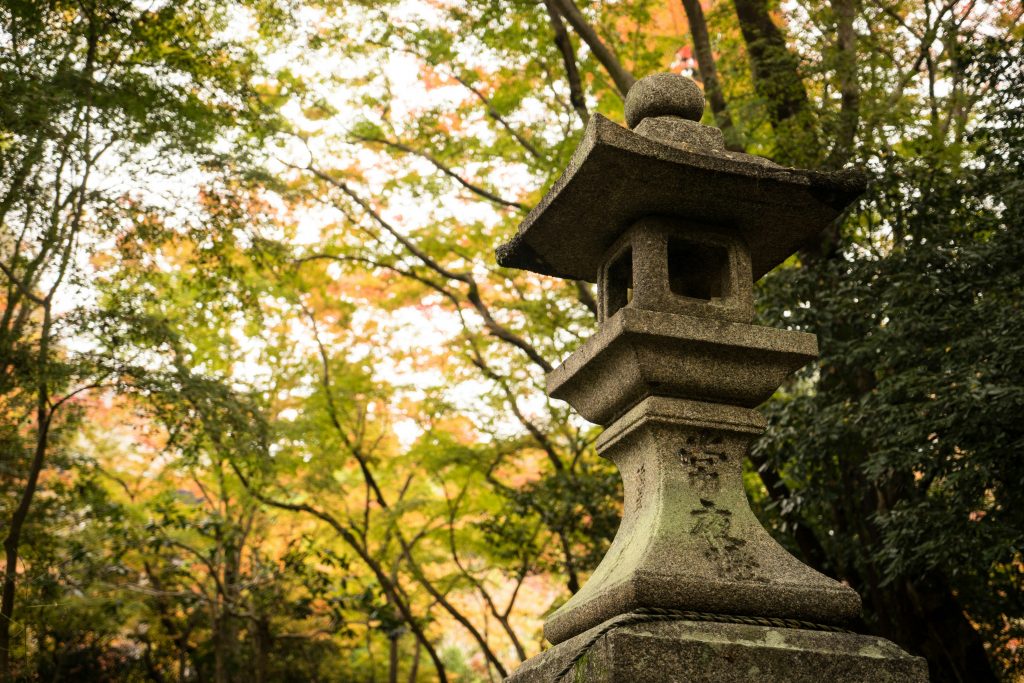
The stone lantern, or tōrō, in Japanese gardens typically serves an aesthetic and functional purpose, often illuminated to guide visitors or enhance the ambiance. In Rikyu’s case, the lantern took on a profound symbolic and spiritual dimension. By choosing it as his tombstone, Rikyu imbued it with his essence and his dedication to the Way of Tea. The legend of the disembodied chasen sounds emanating from the lantern transforms a historical tragedy into a poignant ghost story, speaking to the enduring power of passion and dedication.
This legend has resonated through centuries, becoming an integral part of Kyoto’s folklore and a testament to Rikyu’s indelible legacy. It suggests that true mastery and spiritual commitment transcend even death, with the practitioner continuing their lifelong devotion in the afterlife. The story serves as a powerful reminder of the spiritual depth that can be found in seemingly simple practices and the profound impact individuals can have on their cultural landscape.

Contemporary Resonance and Cultural Impact
The tale of Sen no Rikyu and his ghostly tea ceremony continues to captivate imaginations today. It is frequently retold in literature, art, and popular culture, serving as a gateway for many to explore Japanese history, philosophy, and aesthetics. The enduring popularity of the tea ceremony itself, which continues to be practiced and revered both in Japan and internationally, underscores the lasting influence of Rikyu’s teachings.
The legend’s inclusion in modern retellings, such as the one excerpted from Ghostly Kyoto, demonstrates its vitality and adaptability. By framing historical events within a supernatural narrative, contemporary storytellers can engage new audiences with the profound human drama and spiritual underpinnings of historical figures and their legacies. The continued fascination with the sounds emanating from the lantern serves as a powerful metaphor for the persistence of art, philosophy, and the human spirit, echoing through time and space. The story of Rikyu’s lantern is not merely a ghost story; it is a narrative about the enduring power of dedication, the spiritual dimensions of art, and the indelible mark that a life devoted to beauty and mindfulness can leave upon the world.

