

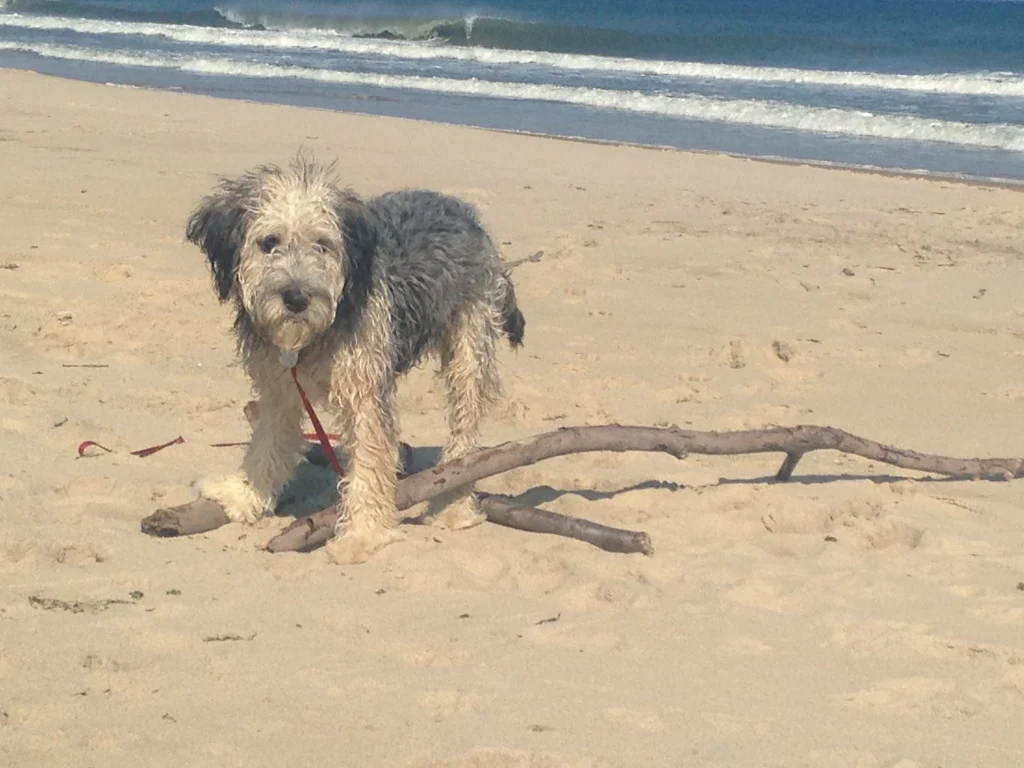
A profound quote from Taizan Maezumi Roshi, a renowned Zen Buddhist master, encapsulates a core human struggle: "Without a rope, people bind themselves. You do not think you are completely free, so you practice trying to liberate yourself. But what is binding you? Look around you. Nothing is binding you, and yet you cannot see it. You feel as if you are bound by something. Buddha calls this delusion. Your mind is not in the right place." This contemplation on self-imposed limitations and the elusive nature of freedom serves as a potent lens through which to examine our relationships with our canine companions and, by extension, our own existential quandaries.
The practice of dog ownership, particularly the ubiquitous use of collars and leashes, prompts a visceral question: are we, in our efforts to guide and control, inadvertently curtailing the very freedom we aim to protect for our pets? This is a sentiment that many pet owners, including myself, grapple with. The image of a dog, tethered and directed, can evoke a sense of unease, especially when contrasted with the perceived wildness and autonomy of their ancestors. However, the practical realities of urban and suburban life, coupled with the inherent dangers of an uncontrolled environment, necessitate a degree of restriction for the safety and well-being of domesticated animals.
The Dilemma of Protection and Autonomy
The initial impulse to question our role as dog guardians stems from an observation of their inherent spirit. Dogs, by nature, possess a remarkable capacity for willfulness and a deep-seated drive to explore and assert their individuality. As Maezumi Roshi suggests, this internal sense of being "bound" by external forces, even when those forces are designed for protection, is a complex psychological phenomenon. For a dog like Brooklyn, a rescue animal whose early life in South Carolina remains largely unknown, the transition from a potentially precarious existence to a life of domestic comfort and structured routine raises pertinent questions about what constitutes true freedom.
Brooklyn’s origins as a "street urchin" with a litter of siblings in the semi-wilds of South Carolina paint a vivid picture of an alternative life. Without human intervention, her existence might have been a constant struggle for survival: scavenging for food, navigating territorial disputes with other animals, and facing the harsh realities of an uncontrolled environment. While this hypothetical existence might be characterized by a raw, unfettered freedom, it would undoubtedly have been fraught with peril. The potential outcomes include malnutrition, injury, disease, and a life far removed from the comfort and security that domesticated dogs often enjoy.
The decision to rescue and adopt a dog, while undeniably an act of compassion, inherently involves a trade-off. We provide safety, sustenance, and companionship, but in doing so, we introduce a framework of rules and restrictions. This includes the introduction of collars and leashes, a controlled diet, and training designed to integrate them into human society. This societal integration, while beneficial for the animal’s ability to coexist with humans, represents a departure from their ancestral way of life.
The Dog Rescue Landscape: A Necessary Intervention
The global dog rescue movement, a cornerstone of animal welfare, operates on the premise that intervention is not only necessary but ethically imperative. Organizations worldwide dedicate vast resources to identifying, rescuing, and rehoming abandoned, abused, or neglected animals. According to the American Society for the Prevention of Cruelty to Animals (ASPCA), approximately 6.3 million companion animals enter U.S. animal shelters nationwide every year. Of these, about 3.1 million are dogs. While adoption rates are significant, with an estimated 4.1 million shelter animals finding homes annually, the sheer volume of animals requiring assistance underscores the scale of the problem.
The decision to neuter or spay rescued animals, a standard practice aimed at population control and the prevention of unwanted litters, further contributes to the debate about freedom. While this procedure eliminates the potential for future generations of dogs to experience the same hardships as their parents, it also removes the inherent biological drive and potential for them to reproduce and form their own family units. This aspect of animal welfare, while critical for managing stray populations, adds another layer of complexity to the definition of freedom in the context of domesticated animals.
The Enigmatic Freedom of Dogs
Despite the layers of human-imposed structure, dogs often exhibit a remarkable resilience and an apparent contentment that can be described as a form of freedom. Brooklyn, for instance, despite wearing a collar and leash, navigates her world with an uninhibited joy. Her ability to express her emotions – through enthusiastic greetings, playful barks, and moments of contented rest – suggests an internal freedom that transcends external constraints. This observation leads to a crucial distinction: freedom may not be solely defined by the absence of external limitations, but by the internal capacity to live fully and authentically within the circumstances one is given.
The analogy of the Tibetan monk, Palden Gyatso, who endured decades of imprisonment and torture, offers a powerful illustration. His claim that his greatest fear was losing compassion for his captors highlights a profound inner freedom. Even in the most dire of physical constraints, his ability to maintain a compassionate inner state rendered him, in a sense, freer than his tormentors. This perspective suggests that true freedom is an internal state, cultivated through our mindset and our response to our environment, rather than a purely external condition.
The Human Paradox: Bound by Choice and Perception
In contrast to the apparent freedom of dogs, humans, even in societies that espouse liberty, often find themselves wrestling with a pervasive sense of constriction. The quote from Maezumi Roshi, "Your mind is not in the right place," resonates deeply with this human experience. Despite the theoretical freedoms afforded by many societies, individuals frequently report feelings of anxiety, stress, and an overwhelming sense of being "bound" by invisible forces – societal expectations, personal insecurities, past traumas, or the relentless pursuit of an elusive future happiness.
The persistent human longing for "something else, something more" often fuels this internal struggle. We project our desire for freedom onto an imagined future state, believing that liberation will arrive once certain conditions are met. This can lead to a perpetual state of dissatisfaction, a continuous striving that prevents us from appreciating the freedom that may already be present. This internal conflict, this "sick human whisper," as the original text describes it, is a stark contrast to the immediate, present-focused existence of animals like Brooklyn.
Seeking the Gateless Gate: An Ongoing Inquiry
The fundamental question then becomes: how can humans cultivate the kind of inner freedom that dogs seem to possess so effortlessly? If, as Buddhist philosophy suggests, we are already free, why do we experience such profound limitations? This is the essence of the "gateless gate" in Zen Buddhism – an open door that we are free to pass through, yet often fail to recognize or utilize.
The koan of the goose in the bottle, a classic Zen riddle, offers a metaphorical hint: "Question: How do you get the live goose out of the bottle? Answer: There! It’s out!" This paradoxical answer suggests that the solution lies not in forceful extraction or complex maneuvering, but in a shift of perception, a recognition of the inherent possibility of release. The goose, in essence, is already free of the bottle’s constraints; the problem is in our conceptualization of the obstacle.
Applying this to human freedom, the implication is that our perceived limitations are often self-created illusions. The "rope" that binds us is not an external force but an internal construct of thought patterns, beliefs, and desires. To "free ourselves" is not about changing our external circumstances, which are often beyond our control, but about transforming our internal relationship with those circumstances. It is about recognizing that the freedom we seek is not a destination to be reached, but a state of being to be realized, here and now.
The journey towards this realization is ongoing and deeply personal. It involves mindful awareness, the cultivation of compassion, and the willingness to question our own assumptions about what it means to be free. While the path may be complex, the example of our canine companions offers a compelling reminder that a profound sense of contentment and freedom can be found not in the absence of constraints, but in the quality of our presence within them. The challenge for humanity lies in understanding and embracing this truth, in moving beyond the self-imposed boundaries of the mind and stepping through the open door of inherent freedom.

