

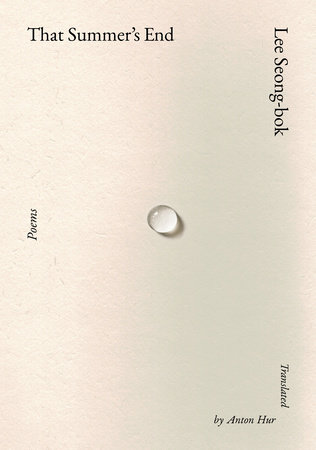
The acclaimed South Korean poet Lee Seong-bok, renowned for his profound explorations of existence, continues to captivate readers with his latest translated collection, That Summer’s End. This seminal work, meticulously rendered into English by Anton Hur, delves into the intricate tapestry of sorrow, impermanence, and the arduous process of letting go. Seong-bok masterfully weaves together threads of Seon Buddhism and French symbolism, creating poetic landscapes that resonate with a unique blend of Eastern contemplative philosophy and Western aesthetic sensibilities. His verses, characterized by their deliberate pacing and evocative imagery, invite readers into a contemplative space where the natural world serves as a mirror to the human condition.
In an insightful commentary accompanying the collection, Sarah Fleming, senior editor at Tricycle, eloquently describes Seong-bok’s poetic rhythm as akin to that of a mourner, moving "two steps forward, one step back." This rhythm, she notes, evokes "fluttering funereal banners and the colorful paper flowers," all while attuning the ear to "the sad singing and the sound of ghosts." This evocative description underscores the somber yet ultimately cathartic nature of Seong-bok’s work, where mourning is not an end but a passage, a necessary element in understanding the transient nature of life. The collection’s engagement with the natural world—mountains, rivers, trees, and falling blossoms—is not merely descriptive but deeply philosophical, serving as a conduit for his searching reflections.
The Synthesis of Seon Buddhism and French Symbolism
Lee Seong-bok’s unique literary voice is deeply rooted in a dual intellectual heritage. His immersion in Seon Buddhism, a contemplative tradition emphasizing direct experience and mindful awareness, provides a foundational framework for his meditations on impermanence (anicca). This Buddhist concept, central to understanding suffering and liberation, informs his patient observation of decay and renewal in the natural world. Simultaneously, his engagement with French symbolism, a literary movement that sought to express emotional and psychological states through evocative imagery and suggestion, lends his poetry a rich, often ambiguous, aesthetic dimension. This fusion allows him to explore abstract philosophical concepts through concrete, sensory details, creating a layered and resonant experience for the reader.

The symbolism inherent in French poetry, with its emphasis on suggestion rather than direct statement, aligns remarkably well with the nuanced approach of Seon Buddhism. Both traditions encourage an indirect path to understanding, valuing intuition and the unsaid over explicit declaration. Seong-bok, therefore, does not present didactic pronouncements on impermanence but rather invites readers to witness it through carefully chosen images and pauses. The effect is a poetry that is both intellectually stimulating and emotionally profound, offering not answers but avenues for contemplation.
The Rhythm of Mourning and the Natural World
Seong-bok’s poetry in That Summer’s End is characterized by its deliberate pacing, a conscious mirroring of the slow, often hesitant, rhythm of grief. This is evident in his repeated returns to specific subjects, sometimes unfolding over extended sequences. He lingers in spaces of silence and unknowing, creating a sense of contemplative stillness that allows for deeper introspection. As he himself states in Indeterminate Inflorescence, poems "are nothing more and nothing less than making gaps. We can breathe as much air as these gaps allow. These gaps are the truest human place." These "gaps," or caesuras, in his verse are not voids but fertile spaces where breath, reflection, and the reader’s own understanding can emerge. They are invitations to pause, to absorb the transient beauty and sorrow of existence, and to find solace in the shared human experience of navigating uncertainty.
The natural world, as depicted in the collection, is not a static backdrop but a dynamic participant in this cycle of impermanence. The crape myrtle, for instance, becomes a potent symbol of resilience and the cyclical nature of life. Surviving storms and continuing to "pour out a hail of red flowers," it embodies a tenacious spirit. The poet’s own despair, once described as bursting into "crimson" like the crape myrtle’s blossoms, finds a parallel in the tree’s enduring beauty. This mirroring suggests that even in the midst of personal turmoil, there is a possibility for renewal and a cessation of suffering, often brought about by an acceptance of life’s inherent transience.
Selected Poems and Their Thematic Resonance
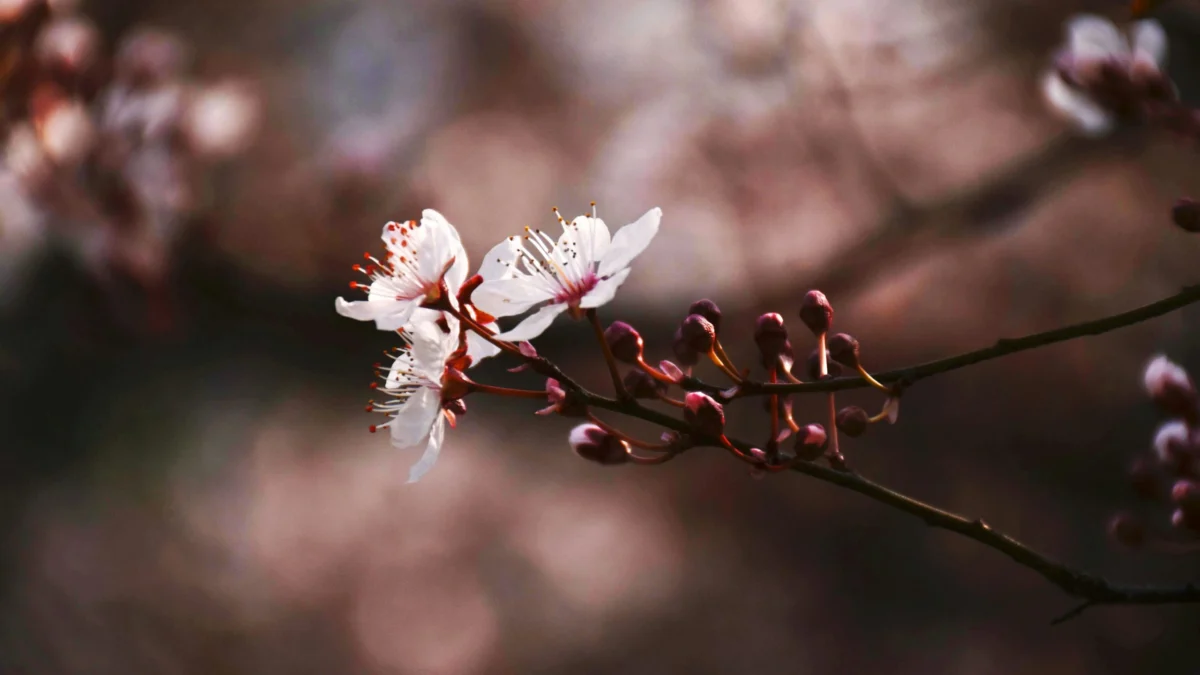
The collection offers several poignant examples of Seong-bok’s thematic concerns. In "Feeling," the poet draws a direct parallel between the emergence of emotions and the life cycle of a flowering bough: "a bough first blossoms / Is that how feelings come / a bough first drops its blossoms / Is that how feelings fall." This metaphor captures the ephemeral nature of emotions, their arrival and departure often as natural and inevitable as the blooming and shedding of petals. The subsequent image of "A droplet on a page / lingers long before / drying to a blot / a warp on paper / an indelible trace" further explores the lingering impact of experiences, even as they fade, leaving behind a permanent mark on the self.
"Sea" presents a stark and powerful personification of sorrow. The speaker’s initial non-response and subsequent lack of flight suggest a profound acceptance of sorrow’s presence. The journey through "pine forests" where "sorrow hid" and then "stepping forth" signifies the inescapable nature of grief. The imagery of sorrow’s "back a dark blue bend / in the river and white froth in its mouth" is particularly striking, evoking both the vastness of the sea and the turbulent energy of a river in flood. The final lines, "Even in turns and shattering, it waved," offer a complex portrayal of sorrow, suggesting that even in its most destructive phases, there can be a form of acknowledgment or even a strange greeting.
"Mountain Path 2" speaks to the recurring challenges and the feeling of being lost that often accompany life’s journey. The narrow path, obscured by acacia, and the "pathless forest" symbolize the uncertainties and perceived dead ends encountered. The poet’s repeated descent "trembling back down that hard / mountain path" and the realization that "Every time I thought the path was at an end it began / again" powerfully convey the cyclical nature of struggle and the resilience required to persevere. This reflects a core tenet of contemplative traditions: that progress is not always linear and that confronting obstacles can be a continuous process of self-discovery.
"Memories of a Very Overcast Day" evokes a somber atmosphere, with "Birds flock by as they cover this place with graves." The stark image of the sky being obscured by birds, a common motif in melancholic poetry, is linked to the presence of death and remembrance. The forceful act of staring "up at the sky / With the force of pushing a coffin lid" suggests a struggle to confront difficult truths or to find meaning in the face of mortality.
Finally, the titular poem, "That Summer’s End," offers a powerful testament to weathering despair. The enduring crape myrtle, which "survived / After the storm and the storm after that," becomes a symbol of strength and the capacity for renewal. The poet’s own experience of standing "in the centers of storms" and his despair bursting into "crimson" mirrors the flower’s vibrant display. The conclusion, "When its blossoms ruffled my narrow yard with blood, my despair came to an end," signifies a moment of catharsis, where the intensity of the natural world’s renewal becomes intertwined with the cessation of personal suffering.
Publication and Critical Reception
The translation of That Summer’s End by Anton Hur marks a significant contribution to the accessibility of Korean literature for English-speaking audiences. The collection, published by Alfred A. Knopf, an imprint of Penguin Random House, has been met with critical acclaim, lauded for its lyrical depth and philosophical resonance. The publication date of August 30, 2026, places it within a contemporary landscape of renewed interest in contemplative practices and literature that addresses existential concerns.
Early reviews highlight Seong-bok’s ability to evoke profound emotion through understated language and his unique synthesis of Eastern and Western literary traditions. Critics have noted the "gaps" in his poetry as particularly effective, allowing readers ample space for personal reflection and interpretation. The translation itself has been praised for its fidelity to the original Korean, capturing the nuanced rhythms and subtle imagery of Seong-bok’s distinctive voice. This careful rendering ensures that the profound philosophical underpinnings of the work are not lost in translation, making it a valuable addition to the global literary canon.
Broader Impact and Implications
Lee Seong-bok’s poetry, particularly in That Summer’s End, offers a timely and resonant exploration of themes that are increasingly relevant in contemporary society. In an era often characterized by rapid change, uncertainty, and a pervasive sense of existential anxiety, his meditations on impermanence and the art of letting go provide a gentle yet profound framework for navigating these challenges. The collection serves as a reminder that acknowledging sorrow and transience is not a sign of weakness but a pathway to a deeper understanding of life and a more resilient spirit.
The influence of Seon Buddhism and French symbolism in Seong-bok’s work also points to the potential for cross-cultural dialogue in the arts. By drawing from diverse intellectual and aesthetic traditions, he demonstrates how universal human experiences can be expressed through a multiplicity of cultural lenses. This enriches not only the literary landscape but also our broader understanding of human consciousness and the diverse ways in which meaning can be sought and found. The "truest human place" that Seong-bok identifies within the gaps of his poetry is a shared space, an invitation for all readers to engage with the quiet profundity of existence and to find solace in its inherent mystery. His work stands as a testament to the enduring power of poetry to illuminate the human condition and to offer a path toward greater wisdom and equanimity.

