

Today, ten years after the passing of Ma, a profound reflection on the practice of "touching the earth" unfolds against the serene backdrop of Plum Village’s New Hamlet in France. The author ascends Plum Hill, overlooking the tranquil monastic community and the undulating landscape beyond, seeking a day of solitary communion with nature. This personal pilgrimage is not merely an aesthetic appreciation of autumn’s gentle embrace but a deliberate engagement with a core practice within the Plum Village tradition, a tradition deeply influenced by the teachings of Zen Master Thich Nhat Hanh, affectionately known as "Thay."
The Practice of Touching the Earth: Reverence and Refuge
The practice of touching the earth, central to the Plum Village ethos, is described as a profound act of taking refuge in something solid, patient, and loving. It extends beyond a simple physical gesture of bowing before an altar, with practitioners touching their palms and forehead to the ground. Many may choose to prostrate fully or adopt a kneeling, child-like pose. The true power of this practice, as articulated by the author, lies not in its form but in the conscious remembrance that "Mother Earth is not an inanimate object—Mother Earth is a living bodhisattva who is always there for us." Thich Nhat Hanh himself personified this concept, referring to Earth as "Bodhisattva Gaia," the primordial mother who brings all beings into existence, nourishes them, sustains them, and ultimately welcomes them back.
This spiritual perspective imbues the earth with a sentient quality, capable of witnessing and retaining the entirety of terrestrial history. Bodhisattva Gaia, in this understanding, has preserved the deep compassion, insight, peace, and happiness of the Buddha and all ancestral teachers within her very being. The author poses a poignant question: does Mother Earth suffer witnessing humanity’s self-inflicted wounds – the conflicts, pollution, and destruction of her own body? The resounding answer, echoed from within, is a somber "Yes." Yet, as a bodhisattva, her love is characterized as relentless and her patience as formidable. She endures, waiting for humanity to awaken to the understanding that harming her is inextricably linked to harming ourselves.
Imprinting Wholesome Energies: A Symbiotic Relationship
The earth is not merely a passive observer but a recipient of human energy. Mother Earth witnesses countless enlightened beings who have walked her surface with peace, love, and freedom. She feels the presence of each individual, and every step taken with peace and stability imprints these wholesome energies upon her. This mindful interaction fosters a symbiotic relationship: Mother Earth nourishes and heals herself through the peace, love, and stability we imprint upon her. Consequently, when mindful, loving, and peaceful steps are taken, they serve not only for personal healing and nourishment but extend this benefit to Mother Earth, our parents, ancestors, and all sentient beings. The author vividly imagines these ancestors rejoicing with each mindful step, their spectral presence akin to loving parents celebrating a child’s first tentative strides.
This profound connection is deeply felt by the author during their solitary day on Plum Hill. With each step, there is an expression of deep gratitude to Mother Earth, whose warmth and aliveness are palpable beneath their feet. The healing presence of Mother Earth flows through the author’s body and mind, and this energy is consciously sent to Ma, now unified with the elements and the earth itself. The practice is accompanied by a silent mantra: "I am here for you" with the in-breath, and "I am grateful to you" with the out-breath.
Remembering Ma: A Legacy of Devotion and Practice
The author’s current reflection is intrinsically linked to the memory of Ma, who passed away ten years prior. Sitting on the plum orchard hill, gazing at the distant villages and the ever-changing canvas of the autumn sky, the author sends peace and love to Ma, finding solace in the transient beauty of the clouds, a visual testament to impermanence.
Ma’s life was characterized by a deep reverence for Buddhist monastics and practices. Even in childhood, her devotion was evident, and she dedicated a significant portion of her life to spiritual practice, living alongside monks and nuns. A poignant memory recounts a moment before Ma’s stroke, when she resided at Deer Park. Dressed in her formal gray robe, Ma approached the author, then a nun, with an invitation: "Do you want to go touch the earth to the Buddha with me?" This was an invitation to participate in the practice of touching the earth, a ritual of gratitude and humility performed before an altar.
The author, engrossed in study, politely declined, promising to join her another day. Ma, understanding and supportive of the author’s diligence, accepted the response with a smile and proceeded alone to the nuns’ meditation hall. Through the window, the author witnessed Ma’s devoted bowing, her daily practice of touching the earth before the Buddha. For Ma, this simple act offered profound comfort, a direct connection with the buddhas and bodhisattvas through a practice that engaged her entire being.

Later that day, during a shared walk in the oak grove, Ma eloquently described the transformative power of her practice: "Every time I breathe in as I touch the earth before the Buddha, I see a lotus blossoming in my heart. When I breathe out as I touch the earth, I smile to the Buddha." This simple yet profound expression conveyed Ma’s wholehearted love for the awakened ones, those who embody perfect compassion and wisdom.
Interbeing and Healing: The Continuity of Connection
The author reflects on their past life at Deer Park, often busy with communal activities or spending time with Ma, recognizing that Ma’s solitary practice provided a rare moment of personal solitude. Now, in Ma’s physical absence, the author carries forward her practice, touching the earth on her behalf. The act of touching the earth on the hill above New Hamlet is an endeavor to transmit peace and love to Ma, and crucially, to initiate a new beginning within oneself for Ma’s sake, believing that her suffering can be transformed through this personal transformation. "Transforming myself is transforming Ma," the author asserts, highlighting the interconnectedness of their beings.
Invoking Ancestral Wisdom: The Venerable Shariputra
Another restorative practice deeply ingrained in the Plum Village tradition, and highlighted by the author, is the invocation of ancestral presence. This practice proved vital during a period of intense emotional distress for the author, stemming from a rift with a close friend and fellow nun. The friend’s anger and subsequent refusal to communicate left the author deeply wounded, despite an outward appearance of composure.
Seeking solace one night, the author walked in the quiet fields surrounding the nunnery’s lotus pond. The darkness provided an undistracted space for introspection, allowing for the recognition and embrace of the pain. In this vulnerable state, the author felt the need for support from something larger and stronger than themselves. This led to the invocation of the Venerable Shariputra, a principal disciple of the historical Buddha, renowned for his wisdom and compassionate guidance. Thich Nhat Hanh often spoke of Venerable Shariputra with deep admiration, viewing him as an elder brother to all monastics.
Walking mindfully, as if in Shariputra’s presence, the author silently implored, "Dear elder brother Shariputra, please shed light on me so I can have clarity to embrace and understand my pain." This invocation, coupled with mindful steps and wholehearted touching of the earth, brought about a remarkable transformation. A sudden clarity illuminated the author’s mind, dispelling the pain and hurt, leaving only clarity and joy. The experience was so profound that it felt as if Venerable Shariputra were physically present, not as a distant historical figure but as a living presence within the author’s heart.
This experience reinforced Thay’s teachings: "Whatever you are looking for is already inside of you, including the Buddha." The author realized that Venerable Shariputra was not external but a continuation within themselves. The most compassionate and human path forward, they understood, was to accept, forgive, and love their sister without judgment or resentment. This internal shift brought a sense of lightness and joy, transforming not only the author’s emotional state but also subtly influencing their relationship with their sister. Without direct confrontation or attempts at resolution, the author’s internal change led to a reciprocal shift in their friend’s demeanor.
The Unifying Principle of Interbeing
The core insight that underpins these practices is the principle of "interbeing," a concept central to Thich Nhat Hanh’s teachings. It articulates the fundamental truth that "We cannot exist alone. Everything is in us. We are in everything." This interconnectedness extends to Mother Earth, our ancestors, and our loved ones. Earth is not merely beneath our feet; she is within us, as we are made of her elements. Similarly, a mother is not just an external figure but resides within her child, embodying their joys, sorrows, and life experiences.
This understanding of interbeing means that when one is healed, their loved ones, in a profound sense, are also healed. When one experiences happiness, the happiness carried within from loved ones comes alive. At moments of difficulty, the love and strength of beloved ones, both living and departed, can be called upon for solace and guidance. Touching the earth serves as a potent reminder of this deep connection – that the earth is in us, our beloved ones are in us, and in essence, "We are the earth. We are our mother. We are our ancestors."
A Solitary Retreat and a Shared Practice
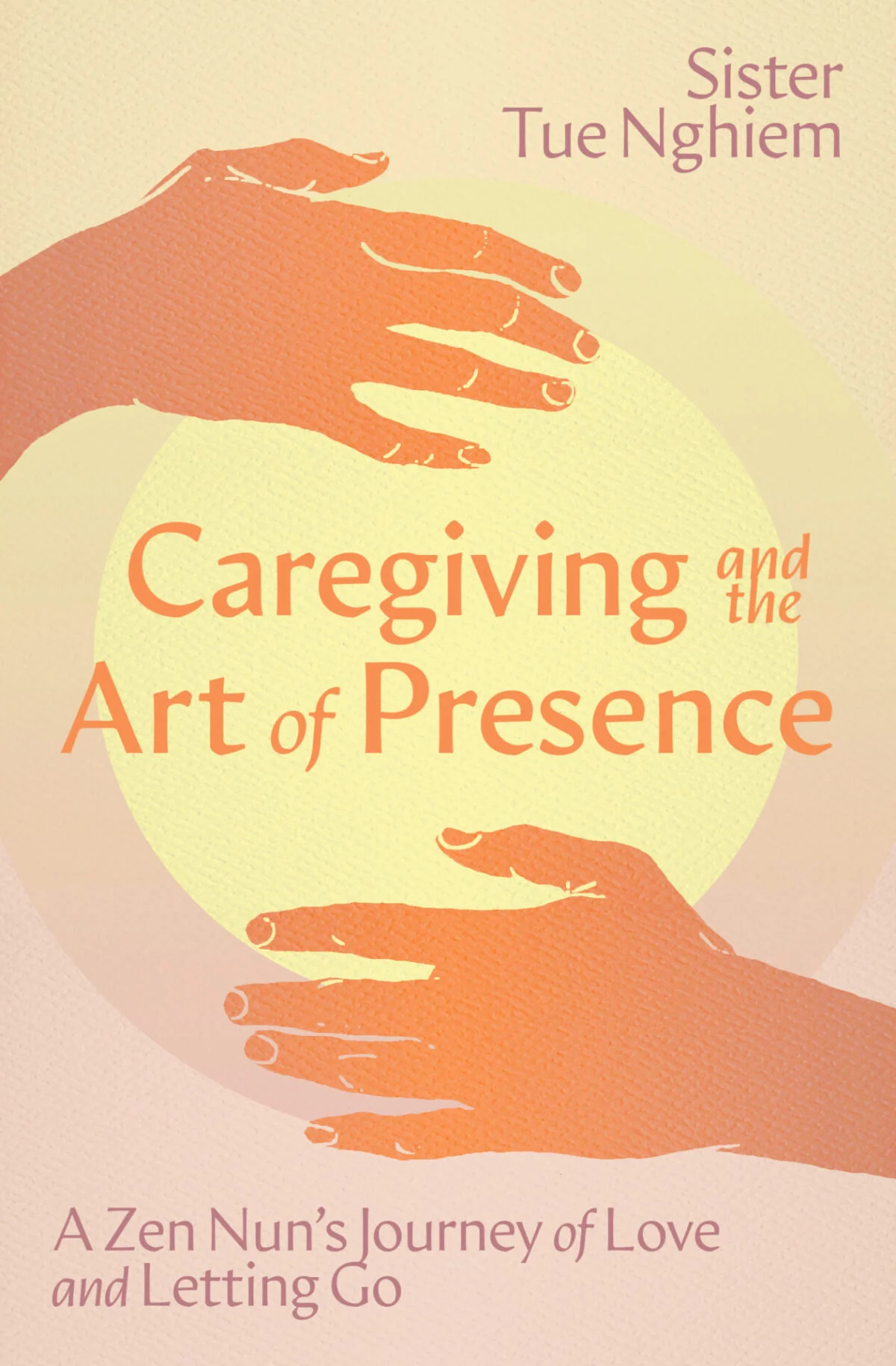
In the final days of a solitary retreat at New Hamlet, the author continues to touch the earth daily, extending this practice for Ma. The ritual involves breathing in, bringing palms to the forehead and heart while recollecting the name of a buddha or bodhisattva, and then breathing out with a smile as they bend to touch the earth. Three more breaths are spent resting on the earth in a child’s pose, followed by rising with an in-breath and standing tall with an out-breath. In this profound moment of connection, the author feels that Ma is indeed touching the earth with them, a testament to the enduring power of love and spiritual practice that transcends physical separation. The author’s new book, Caregiving and the Art of Presence: A Zen Nun’s Journey of Love and Letting Go, published by Parallax Press, further explores these themes of connection, loss, and spiritual resilience.

