

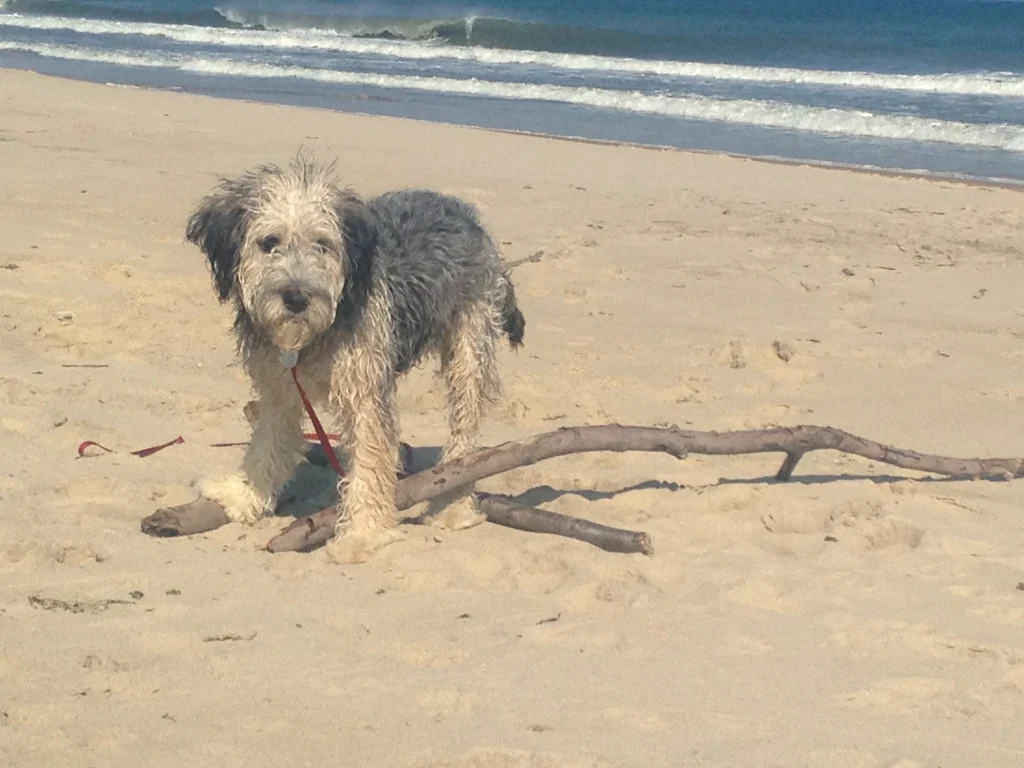
A poignant reflection on freedom, inspired by Zen Buddhism and observed through the lens of canine companionship, invites a deeper examination of our own perceived limitations. The wisdom of Taizan Maezumi Roshi, a renowned Zen master, offers a starting point: "Without a rope, people bind themselves. You do not think you are completely free, so you practice trying to liberate yourself. But what is binding you? Look around you. Nothing is binding you, and yet you cannot see it. You feel as if you are bound by something. Buddha calls this delusion. Your mind is not in the right place." This philosophical inquiry, prompted by the author’s observations of his dog, Brooklyn, delves into the dichotomy of freedom experienced by animals versus humans, even within restrictive human-imposed environments.
The Paradox of the Leashed Life
The article opens by grappling with the ethical implications of domesticating dogs, specifically the use of collars and leashes. The author admits to struggling with the notion that these practices, intended for control and safety, might inherently limit a dog’s freedom. He humorously notes the independent spirit of his own dog, Brooklyn, who often exhibits a willfulness that transcends human attempts at direction. This observation serves as a relatable entry point into a broader discussion about agency and autonomy.
Brooklyn, a rescue dog named after the borough where she now resides, offers a compelling case study. Her journey began as a stray in South Carolina, a stark contrast to her current life of comfort and security. The author contemplates what Brooklyn’s life might have been like had she remained in the "semiwilds"—a life potentially fraught with hardship, hunger, and danger, yet one that would have been entirely her own. This hypothetical scenario, while grim, highlights the trade-offs inherent in animal rescue and domestication.
The Rescue Dilemma: Security vs. Unfettered Existence
The author acknowledges the undeniable necessity and positive impact of the dog rescue movement. Statistics from the American Society for the Prevention of Cruelty to Animals (ASPCA) consistently show millions of animals entering shelters each year, with a significant portion euthanized due to lack of adopters. Rescue organizations play a vital role in reducing this number, providing medical care, rehabilitation, and ultimately, loving homes.
However, the article probes deeper, questioning what is fundamentally surrendered when a wild or stray animal is brought into a domestic setting. Beyond the immediate provision of safety from predators, starvation, and environmental hazards, there is the undeniable loss of natural social structures, familial bonds, and the unadulterated experience of an independent existence. The decision to spay or neuter, while crucial for population control and health, also severs the potential for the continuation of that animal’s lineage, a significant aspect of natural freedom.
The author poses a challenging question: Is the life provided through rescue, with its attendant restrictions and altered natural behaviors, unequivocally "better" than a potentially brutal but entirely self-determined existence? While the conveniences and safety of domestic life are apparent, the intrinsic value of an unbridled life, even with its inherent risks, is presented for consideration. This introspective analysis does not advocate for a return to leaving animals to fend for themselves but rather for a mindful appreciation of the sacrifices made in the name of domestication.
Canine Serenity: A Model of Internal Freedom
Despite the external constraints—collars, leashes, training commands, and house rules—the author observes in Brooklyn a profound sense of freedom that he finds deeply enviable. He describes her as "happy, at ease, fully herself, her spirit vibrant and unhindered." This leads to the central question: How does a creature, outwardly bound, achieve such an apparent state of internal liberation?
The Human Condition: Bound by Perception
The author then turns the lens inward, contrasting Brooklyn’s apparent contentment with his own internal experience. Despite living in a nation that ostensibly champions freedom, he frequently feels constricted, tense, and "knotted up." This sensation, he suggests, is akin to being bound by an invisible rope, an experience that mirrors the Buddhist concept of delusion, where perceived limitations are self-imposed.
He grapples with the core tenets of his own society, which often equates freedom with material possessions, external achievements, and the absence of overt governmental control. Yet, for many, this external freedom does not translate into internal peace or a sense of liberation. The article questions whether this feeling of being bound is a delusion, as Maezumi Roshi suggests, or if there are tangible, albeit unseen, forces that impede human freedom. The philosophical puzzle remains: how can one achieve freedom when the deepest spiritual truths suggest that freedom is already inherent?
The Internal Landscape: Where True Freedom Resides
The key, the author posits, lies in the internal state. Brooklyn, he argues, does not "feel" bound in the same way humans do, even when physically restrained. This suggests that freedom is less about the absence of external restrictions and more about the internal disposition with which one navigates those restrictions.
The story of Palden Gyatso, a Tibetan monk who endured 33 years of imprisonment and torture, serves as a powerful illustration. His greatest fear was not physical suffering but the loss of compassion for his captors. In this profound act of maintaining his humanity and inner peace amidst unimaginable cruelty, Gyatso achieved a form of freedom that transcended his physical confinement, a freedom his tormentors, despite their outward power, could never possess.
Embracing Agency Within Constraints
This leads to a crucial insight: true freedom may not be about altering our circumstances, which are often beyond our control, but about how we choose to act within those circumstances. Brooklyn exemplifies this by finding ways to express her authentic self despite her domestic limitations. Her enthusiastic barking, her playful resistance to direction on walks, and her uninhibited "zoomies" are all expressions of her spirit. These moments, the author argues, are not acts of defiance but expressions of her inherent freedom to choose how she engages with her world, even within the confines of a leash. The image of a dog digging its paws into the pavement, refusing to be moved, is presented as a potent symbol of civil disobedience and the fundamental human—and canine—desire for choice.
Brooklyn’s ability to express her emotions freely—wagging her tail when happy, moping when sad, demanding to be carried upstairs—further underscores her internal freedom. Her uninhibited play and contented rest demonstrate a capacity to inhabit the present moment fully, without the persistent yearning for "something else, something more" that often characterizes the human condition.
The Gateless Gate: A Human Challenge
The author concludes by acknowledging the apparent enlightenment of dogs, who seem to navigate life with an innate sense of freedom, while humans remain ensnared by their own mental constructs. He refers to the Buddhist concept of the "gateless gate," an open doorway to liberation that humans, despite being unbound, fail to enter. The question remains: how does one traverse this gate?
The article ends with a classic Zen koan, a paradoxical riddle designed to provoke insight: "Question: How do you get the live goose out of the bottle? Answer: There! It’s out!" This koan, the author notes, was his father’s favorite, suggesting a personal connection to its profound simplicity. The answer implies that the solution is not to force or manipulate but to recognize that the obstacle, the "bottle," is a construct. The goose is already free; it merely needs to be recognized as such. This points to the idea that liberation is not an external acquisition but an internal realization. The perceived constraints are often products of our own minds, and by shifting our perspective, we can find the freedom that has been present all along.
This nuanced exploration, weaving together Buddhist philosophy, personal anecdote, and broader societal observations, encourages readers to reconsider their own definitions of freedom and to seek liberation not in the absence of external constraints, but in the cultivation of an unburdened internal landscape. The journey from the leash to the open gate, it suggests, begins within.

