

The early months of 2016 have witnessed two significant media moments that have amplified the urgent conversation surrounding climate change, resonating deeply within environmental advocacy circles and the broader public. Leonardo DiCaprio’s long-awaited Academy Award win for Best Actor and former U.S. Vice President Al Gore’s compelling TED Talk have provided powerful platforms to underscore the existential threat of a warming planet and to offer visions of potential solutions. These events, occurring within weeks of each other, represent a convergence of cultural influence and established environmental leadership, injecting renewed energy into global efforts to address the climate crisis.
DiCaprio’s Historic Oscar Win and Climate Advocacy
Leonardo DiCaprio’s acceptance speech for his Best Actor Oscar, awarded for his performance in Alejandro G. Iñárritu’s survival epic The Revenant, transcended the typical Hollywood accolades. After a career marked by numerous nominations and a fervent dedication to environmental causes, his victory provided a global stage for his advocacy. The speech, delivered on February 28, 2016, directly addressed the escalating climate crisis, framing it not merely as an environmental issue but as a fundamental threat to human civilization.
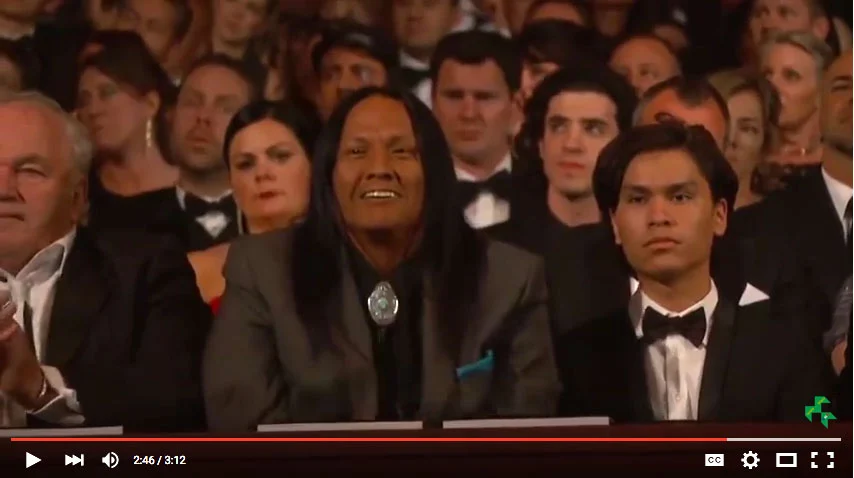
DiCaprio’s remarks were notable for their directness and specificity. He articulated the scientific consensus on climate change, emphasizing the irreversible damage already being inflicted upon the planet. Beyond a general warning, he called for collective action, highlighting the need for a unified global response. Crucially, he dedicated a significant portion of his speech to acknowledging and advocating for the voices of Indigenous peoples, stating, "It is time for us to acknowledge the history of this conflict… It is the people who are on the front lines of climate change who have been bearing the brunt of this, and they have been for far too long. It is time for us to hear their voices." This specific mention of First Nations and Indigenous communities underscored their disproportionate vulnerability to climate impacts and their often-overlooked wisdom in sustainable living and environmental stewardship.
The context of DiCaprio’s speech is important. The Academy Awards ceremony is one of the most-watched television events globally, offering unparalleled reach. DiCaprio, a prominent figure with a significant following, leveraged this platform with an uncharacteristic, forceful call to action. His involvement with environmental organizations, including his own Leonardo DiCaprio Foundation, has spanned years, supporting a wide array of conservation projects and climate advocacy initiatives. This Oscar win, therefore, was not an impromptu endorsement but a culmination of decades of his personal commitment to the cause.
Background and Chronology of Climate Change Discourse
The climate change discourse has a long and complex history. Scientific understanding of the greenhouse effect dates back to the 19th century, with early warnings about the potential impact of human activities on global temperatures. However, it wasn’t until the latter half of the 20th century that the issue gained significant public and political traction.
- 1970s-1980s: Growing scientific evidence and public awareness led to the establishment of organizations like the Intergovernmental Panel on Climate Change (IPCC) in 1988, which provides comprehensive scientific assessments on climate change.
- 1990s: The United Nations Framework Convention on Climate Change (UNFCCC) was adopted in 1992, establishing a framework for international cooperation on climate change. The Kyoto Protocol, adopted in 1997, set legally binding targets for reducing greenhouse gas emissions for developed countries.
- Early 2000s: Al Gore’s 2006 documentary An Inconvenient Truth and his subsequent Nobel Peace Prize in 2007 brought climate change to the forefront of global consciousness, highlighting the urgency of the situation.
- 2015: The Paris Agreement was adopted, a landmark international treaty with the goal of limiting global warming to well below 2, preferably to 1.5 degrees Celsius, compared to pre-industrial levels. This agreement marked a significant step forward, with nearly all nations committing to emissions reduction targets.
- Early 2016: The period in question, marked by DiCaprio’s Oscar speech and Gore’s TED Talk, occurred in the immediate aftermath of the Paris Agreement, a time of heightened expectation and a renewed focus on implementation.
Al Gore’s TED Talk: A Case for Optimism
Concurrently with DiCaprio’s Oscar moment, Al Gore delivered a powerful TED Talk in early 2016, titled "The Case for Optimism on Climate Change." This address built upon his prior advocacy, offering a nuanced perspective that acknowledged the severity of the climate crisis while championing the potential for positive change.
Gore’s presentation, delivered at the TED conference in Vancouver on February 17, 2016, began by reiterating the ongoing and escalating impacts of climate change. He presented compelling data illustrating rising global temperatures, intensifying extreme weather events, and the continued degradation of ecosystems. This foundational acknowledgement of the problem’s gravity served to underscore the importance of the subsequent optimistic outlook.
However, Gore then pivoted to showcase the tangible progress and innovations occurring worldwide. He highlighted advancements in renewable energy technologies, such as solar and wind power, and demonstrated how their declining costs and increasing efficiency are making them viable alternatives to fossil fuels. He discussed policy shifts, corporate commitments, and grassroots movements that are contributing to a global transition towards a more sustainable future. Gore’s message was one of empowerment, suggesting that while the challenges are immense, human ingenuity and collective will can indeed forge a path towards mitigating the worst effects of climate change and building a more resilient future. His vision emphasized that "what is now possible" and "what our future can hold" are shaped by the choices made in the present.
Supporting Data and Scientific Context
The urgency articulated by both DiCaprio and Gore is underpinned by extensive scientific data.
- Global Temperature Rise: The Intergovernmental Panel on Climate Change (IPCC) has consistently reported on the warming trend. For instance, the IPCC’s Fifth Assessment Report (AR5), released in 2013-2014, stated that global surface temperature has increased by approximately 0.85°C (1.53°F) from 1880 to 2012. By early 2016, preliminary data indicated that 2015 was the warmest year on record, further reinforcing the trend.
- Impacts of Climate Change: Scientific reports detail a wide range of observable impacts, including:
- Sea Level Rise: Global mean sea level rose by about 19 cm (7.5 inches) in the 20th century.
- Extreme Weather Events: Increased frequency and intensity of heatwaves, droughts, floods, and storms.
- Ocean Acidification: Absorption of atmospheric CO2 by the oceans leads to increased acidity, threatening marine life.
- Biodiversity Loss: Climate change is a significant driver of species extinction.
- Renewable Energy Growth: The International Renewable Energy Agency (IRENA) has reported significant growth in renewable energy capacity. In 2015, global renewable energy capacity reached over 1,800 GW, with solar and wind power showing particularly rapid expansion. The cost of solar photovoltaic (PV) power had fallen by over 50% between 2010 and 2015.
Reactions and Broader Implications
The impact of these two high-profile interventions was significant.
- Public Engagement: DiCaprio’s speech, amplified by his Oscar win, generated widespread media coverage and social media discussion. It reached an audience that might not typically engage with climate change news, making the issue more relatable and urgent. Many viewers and commentators lauded his courage in using such a prominent platform for advocacy.
- Environmental Organizations: Environmental groups largely welcomed both messages. They saw the speeches as powerful endorsements that could galvanize public support and pressure policymakers. The specific mention of Indigenous rights by DiCaprio was particularly significant for organizations working with these communities, highlighting their leadership in climate solutions.
- Policy and Political Landscape: While the immediate policy impact is difficult to quantify, these interventions contributed to the ongoing momentum towards climate action following the Paris Agreement. They reinforced the narrative that climate change is a critical global challenge requiring immediate and sustained attention from political leaders.
- The "Optimism" Factor: Al Gore’s focus on optimism provided a vital counterpoint to the often-overwhelming news of climate disaster. By highlighting solutions and progress, he aimed to combat climate fatigue and inspire continued engagement. This approach is crucial for maintaining public and political will for long-term climate action.
Analysis of Implications
The convergence of DiCaprio’s celebrity advocacy and Gore’s established expertise offered a potent combination in early 2016. DiCaprio brought a fresh, culturally relevant voice to the forefront, demonstrating that climate change is a concern that transcends specific demographics and interests. His willingness to speak truth to power, even on a platform traditionally focused on entertainment, resonated with many.
Gore’s TED Talk provided the data-driven, solution-oriented narrative that complemented DiCaprio’s passionate plea. By showcasing the viability of renewable energy and the progress being made, he offered a roadmap for action and instilled a sense of hope. This dual approach – highlighting the urgency of the problem while simultaneously offering pathways to solutions – is essential for effective climate communication.
The specific call-out to Indigenous peoples by DiCaprio was particularly noteworthy. It acknowledged a critical dimension of the climate crisis often overlooked in mainstream discussions: the disproportionate impact on vulnerable communities and the invaluable knowledge held by those with deep connections to the land. This broadened the understanding of climate justice and the need for inclusive solutions.
In conclusion, the early months of 2016 witnessed two seminal moments in the public discourse on climate change. Leonardo DiCaprio’s Oscar acceptance speech and Al Gore’s TED Talk, while distinct in their delivery and origins, converged to amplify the urgency of the climate crisis, underscore the need for collective action, and highlight the potential for innovative solutions. These events served as powerful catalysts, reinforcing the global commitment to addressing climate change and inspiring a renewed sense of possibility for a sustainable future. Their impact reverberated beyond the immediate news cycle, contributing to a sustained and intensified global dialogue on one of humanity’s most pressing challenges.

