

Recent advancements in exercise science underscore the profound efficacy of compound exercises for individuals seeking to optimize their fitness outcomes, particularly when time constraints are a significant factor. This approach, characterized by movements that engage multiple muscle groups and joints simultaneously, has been consistently demonstrated to deliver superior results compared to traditional isolation exercises, making it a cornerstone for comprehensive physical development.
Understanding the Mechanics: Compound Versus Isolation Training
In the realm of physical training, exercises are broadly categorized into two types: compound and isolation. The distinction lies in the number of joints and muscle groups activated during a movement. Isolation exercises, as their name suggests, focus on a single muscle group and typically involve movement at only one joint. Examples include bicep curls, triceps extensions, and calf raises. While these exercises can be beneficial for targeting specific muscle hypertrophy or rehabilitation, their scope is limited.
Conversely, compound exercises are multi-joint movements that recruit numerous muscle groups across different parts of the body in a coordinated fashion. A classic example is the squat, which engages the quadriceps, hamstrings, glutes, core, and lower back, all while involving movement at the hip, knee, and ankle joints. Other prime examples include deadlifts, overhead presses, and rows. The physiological demand of these movements is significantly higher, as the body must coordinate a complex interplay of muscles to execute the action, leading to a more comprehensive training stimulus. This multi-faceted engagement is the fundamental reason for their enhanced efficiency and effectiveness in achieving broad fitness goals.
The Multifaceted Advantages of Compound Movements
The scientific literature and practical application consistently highlight several compelling benefits of incorporating compound exercises into a fitness regimen, often making them a more efficient choice for overall physical development.
Enhanced Functional Strength and Coordination: One of the primary advantages of compound exercises is their ability to build functional strength. Unlike isolation movements that train muscles in isolation, compound exercises mimic natural human movement patterns, such as pushing, pulling, squatting, and lunging. This translates directly to improved performance in daily activities, sports, and occupational tasks. By training muscles to work synergistically, these exercises foster better intermuscular and intramuscular coordination, leading to a more resilient and capable body. For instance, the coordination required for a burpee, involving a squat, push-up, and jump, directly translates to agility and power needed in various athletic endeavors.
Superior Calorie Expenditure and Metabolic Boost: Due to the simultaneous engagement of multiple large muscle groups, compound exercises demand a much higher energy output than isolation exercises. This translates to a significantly greater calorie burn during the workout session. Furthermore, the intense physiological demand triggers a more pronounced "afterburn effect," scientifically known as Excess Post-exercise Oxygen Consumption (EPOC). During EPOC, the body continues to burn calories at an elevated rate for hours after the workout as it recovers and restores its physiological balance. Studies have indicated that well-structured compound exercise routines can lead to a metabolic expenditure that is up to 3.5 times more efficient in terms of calorie burn per unit of time compared to workouts primarily composed of isolation movements. This heightened metabolic response is crucial for effective weight management and fat loss. Moreover, the increased muscle mass stimulated by compound training further elevates the basal metabolic rate, meaning the body burns more calories even at rest.
Exceptional Time Efficiency: For individuals with limited time, compound exercises represent an optimal solution. By working multiple muscle groups concurrently, a comprehensive full-body workout can be achieved in a shorter duration. Instead of performing separate exercises for chest, shoulders, and triceps, a single push-up effectively targets all three. This efficiency allows for effective training even with constrained schedules, making fitness accessible to a broader demographic.
Improved Cardiovascular Health: Many compound exercises, especially when performed with minimal rest between sets or in circuit format, elevate the heart rate significantly. This cardiovascular demand contributes to improved endurance, strengthens the heart muscle, and enhances overall cardiovascular health, often blurring the lines between strength training and cardio. Movements like burpees and jump squats are particularly effective at boosting cardiorespiratory fitness.
Positive Hormonal Response: Intense compound exercises are known to stimulate a greater release of anabolic hormones such as growth hormone and testosterone. These hormones play critical roles in muscle protein synthesis, fat metabolism, and overall body composition improvement. This systemic hormonal response is generally less pronounced with isolation exercises.
Enhanced Joint Stability and Injury Prevention: By strengthening the muscles surrounding multiple joints, compound exercises contribute to greater joint stability. This comprehensive strengthening can help to protect against injuries by ensuring that no single muscle group is disproportionately weak, which might otherwise predispose a joint to stress or strain. Training movements rather than individual muscles promotes balanced development.
Implementing Compound Exercises: Key Movements for a Full-Body Workout
Achieving a comprehensive full-body workout with compound exercises does not necessarily require a gym or extensive equipment. Many highly effective compound movements can be performed with just bodyweight, making them accessible to nearly everyone. The following five exercises form an excellent foundation for a highly efficient and effective routine.
General Principles for Execution:
Before delving into specific exercises, it is crucial to emphasize the importance of proper form. Incorrect execution not only diminishes the exercise’s effectiveness but also significantly increases the risk of injury. Focus on controlled movements, engage the core throughout, and prioritize quality over quantity.
-
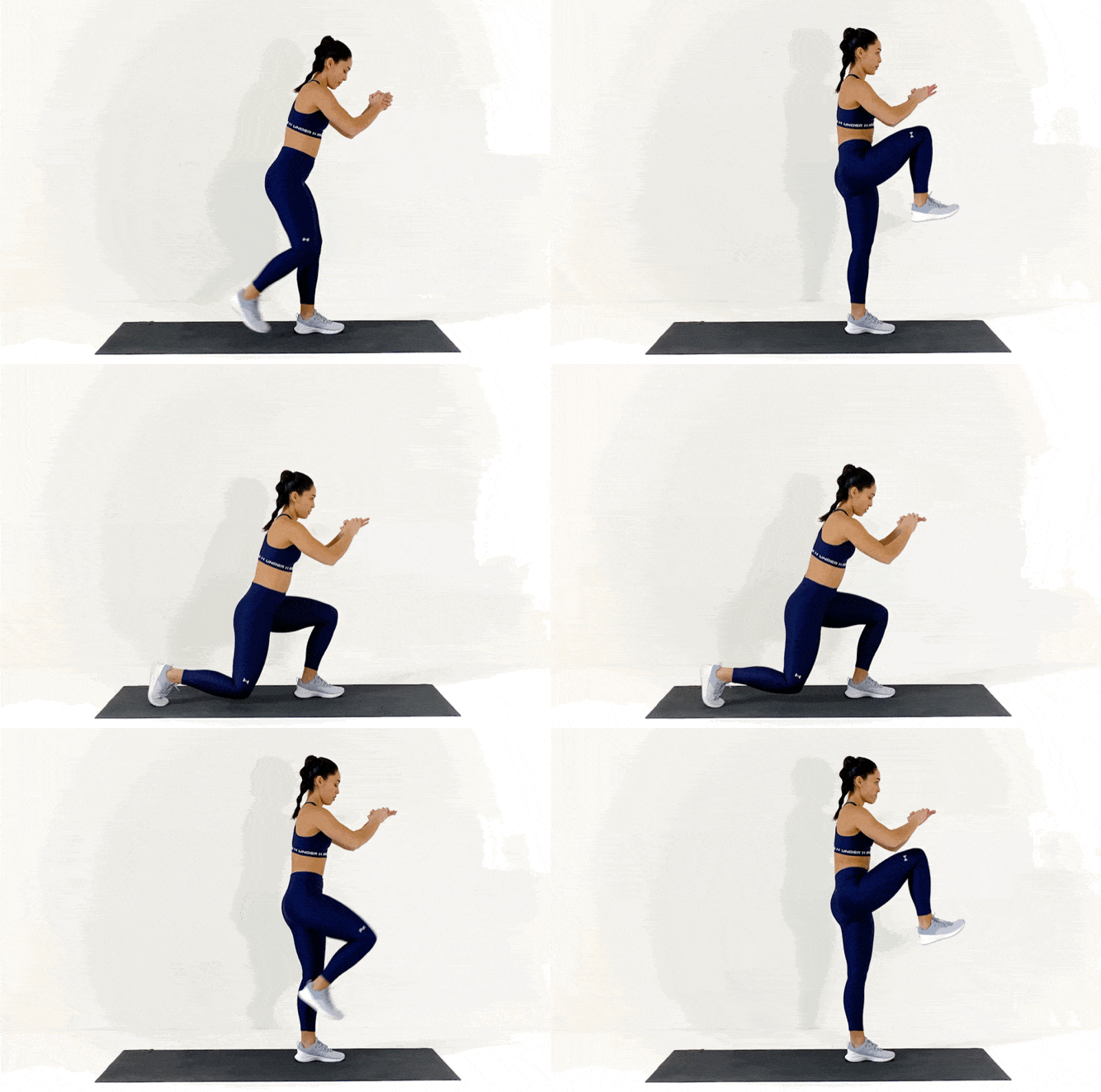
Reverse Lunge with a Knee Drive:
- Muscles Worked: Primarily targets the quadriceps, glutes, hamstrings, and hip flexors. It also engages the core for stability and balance.
- Execution: Begin standing tall, feet hip-width apart. Step one leg back into a reverse lunge, lowering until both knees are bent at approximately a 90-degree angle, with the front knee stacked over the ankle and the back knee hovering just above the ground. Drive through the heel of the front foot to powerfully return to the starting position, simultaneously bringing the back knee forward and up towards the chest in a controlled drive. This dynamic knee drive adds a powerful hip flexor and core engagement.
- Benefits: This movement builds unilateral leg strength, improves balance, and enhances hip mobility and power. The knee drive adds a cardiovascular and dynamic element.
- Modifications: For beginners, focus on a stable reverse lunge without the knee drive. For an added challenge, hold dumbbells in each hand or perform the knee drive with a jump.
-
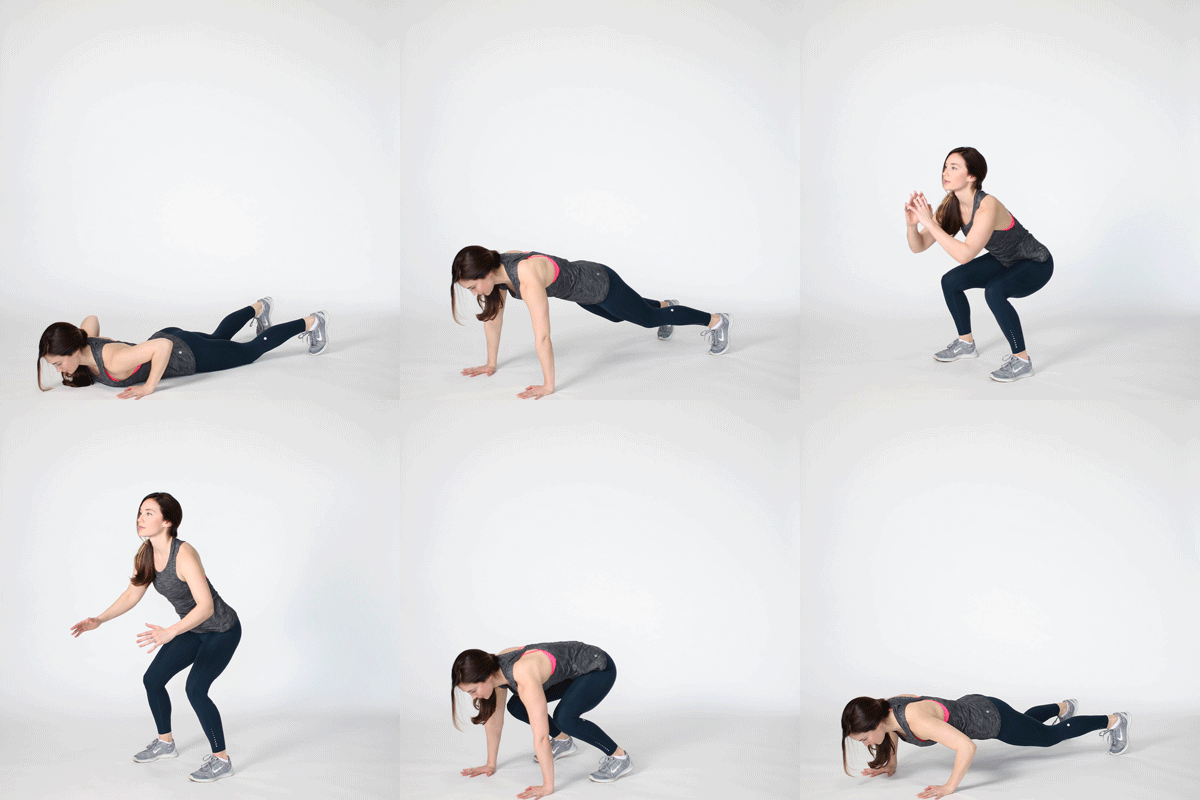
Burpees:
- Muscles Worked: A true full-body exercise, burpees engage the chest, shoulders, triceps (during the push-up), quadriceps, hamstrings, glutes (during the squat and jump), and the entire core musculature for stabilization.
- Execution: Start standing. Drop into a squat position with hands on the floor in front of you. Kick your feet back into a plank position. Perform a push-up (chest to floor or partial). Immediately jump your feet back to the squat position. Explode upwards into a jump, reaching your arms overhead.
- Benefits: Burpees are a metabolic powerhouse, significantly elevating heart rate and engaging virtually every major muscle group, making them excellent for cardiovascular conditioning, strength, and endurance.
- Modifications: Beginners can step their feet back instead of jumping, omit the push-up, or perform a half-burpee without the final jump. Advanced individuals can add a tuck jump or incorporate a weighted vest.
-
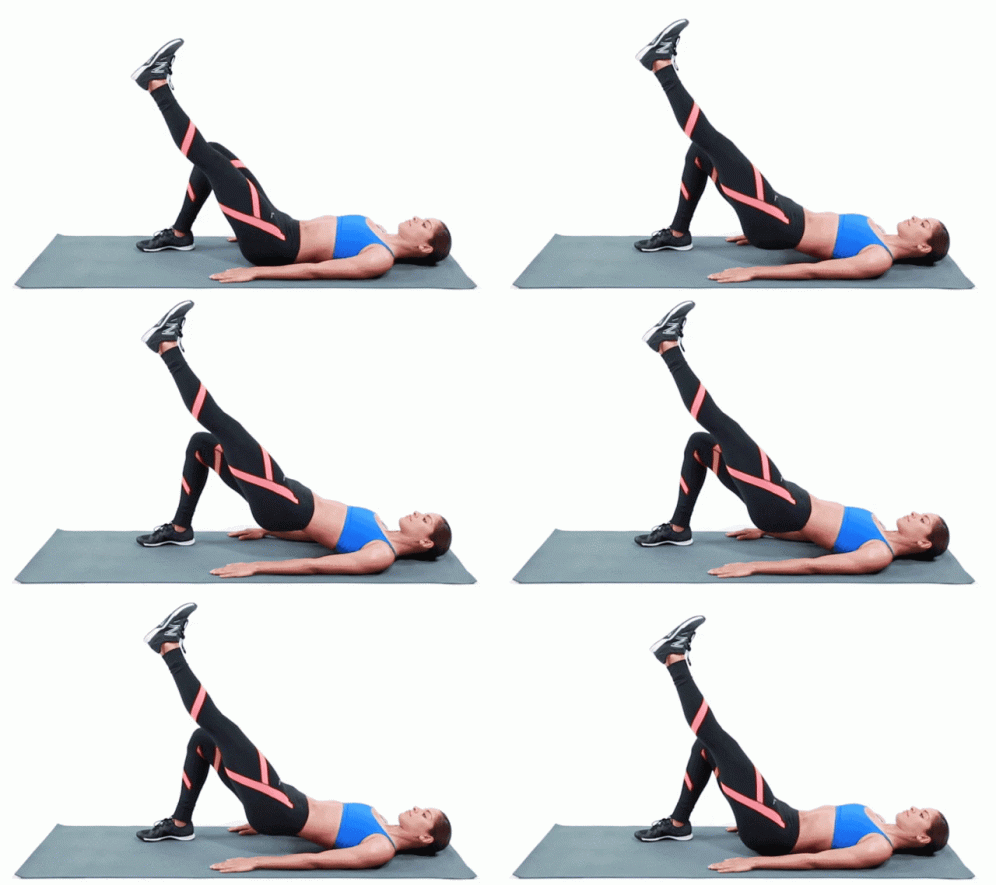
Single-Leg Bridge:
- Muscles Worked: Primarily targets the glutes and hamstrings, with significant engagement of the core and lower back stabilizers for maintaining balance.
- Execution: Lie on your back with knees bent, feet flat on the floor, and arms at your sides. Extend one leg straight up towards the ceiling. Engaging your core and glutes, lift your hips off the floor until your body forms a straight line from your shoulders to your knee of the bent leg. Hold briefly, squeezing the glutes, then slowly lower your hips back down.
- Benefits: This exercise builds unilateral glute and hamstring strength, improves hip stability, and strengthens the posterior chain, which is crucial for preventing lower back pain and improving athletic performance.
- Modifications: For less intensity, perform a two-leg bridge. To increase difficulty, place a light weight plate on the working hip or extend the working leg further away from the body. Repeat 10-12 times on each side.
-
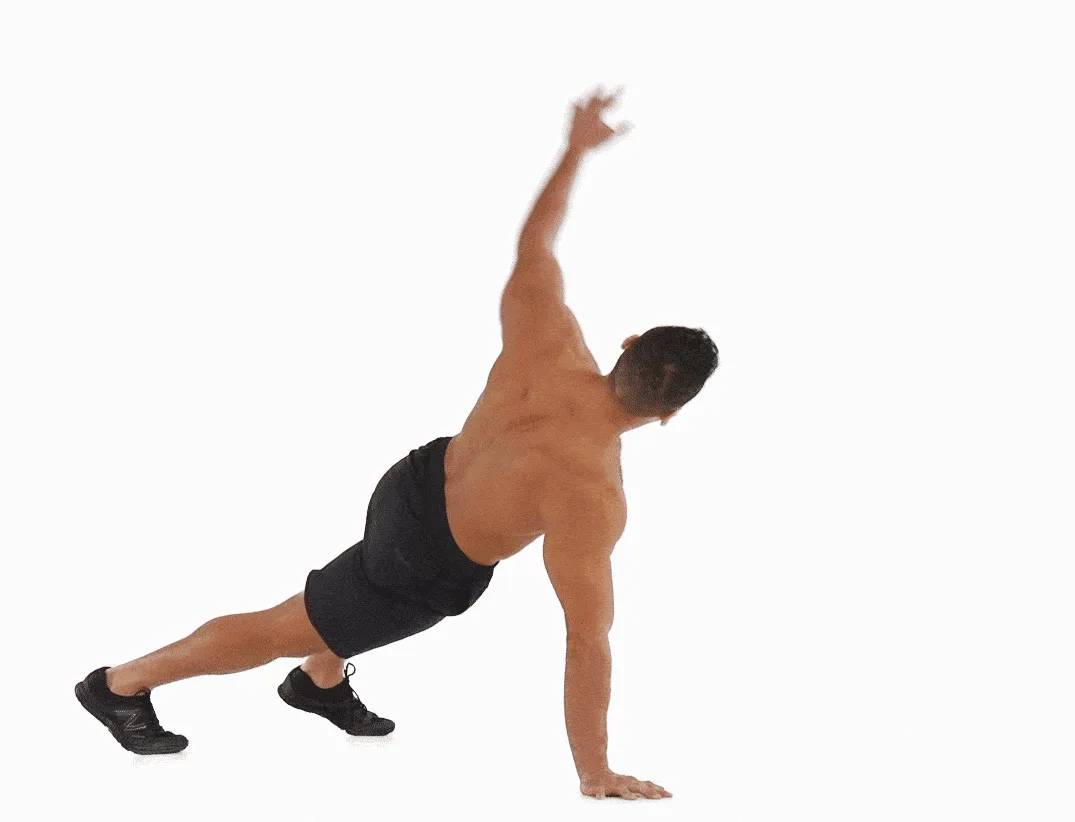
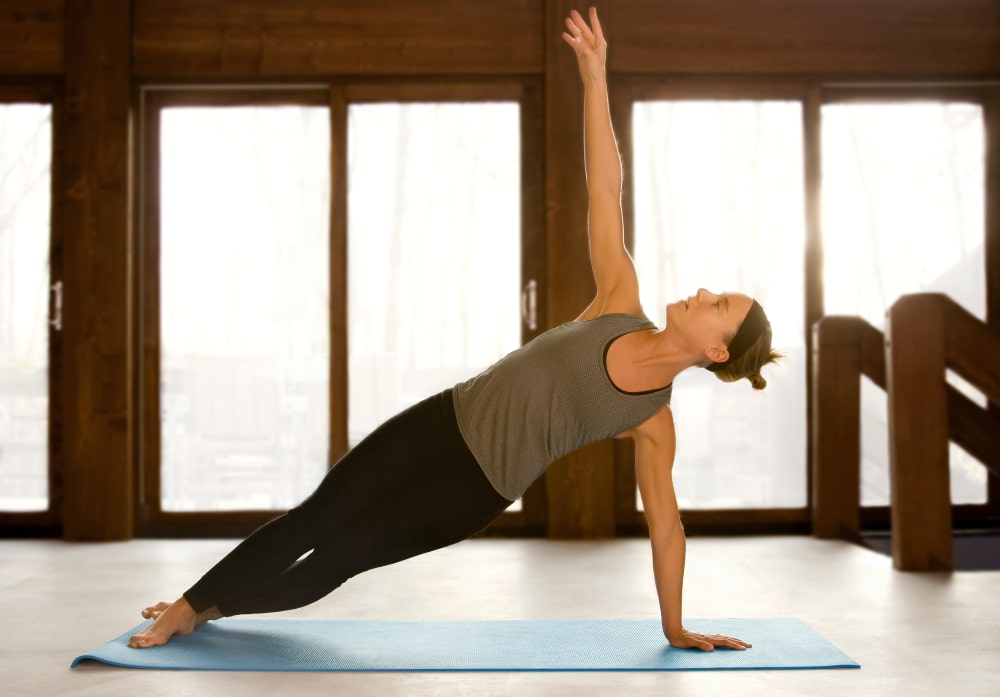
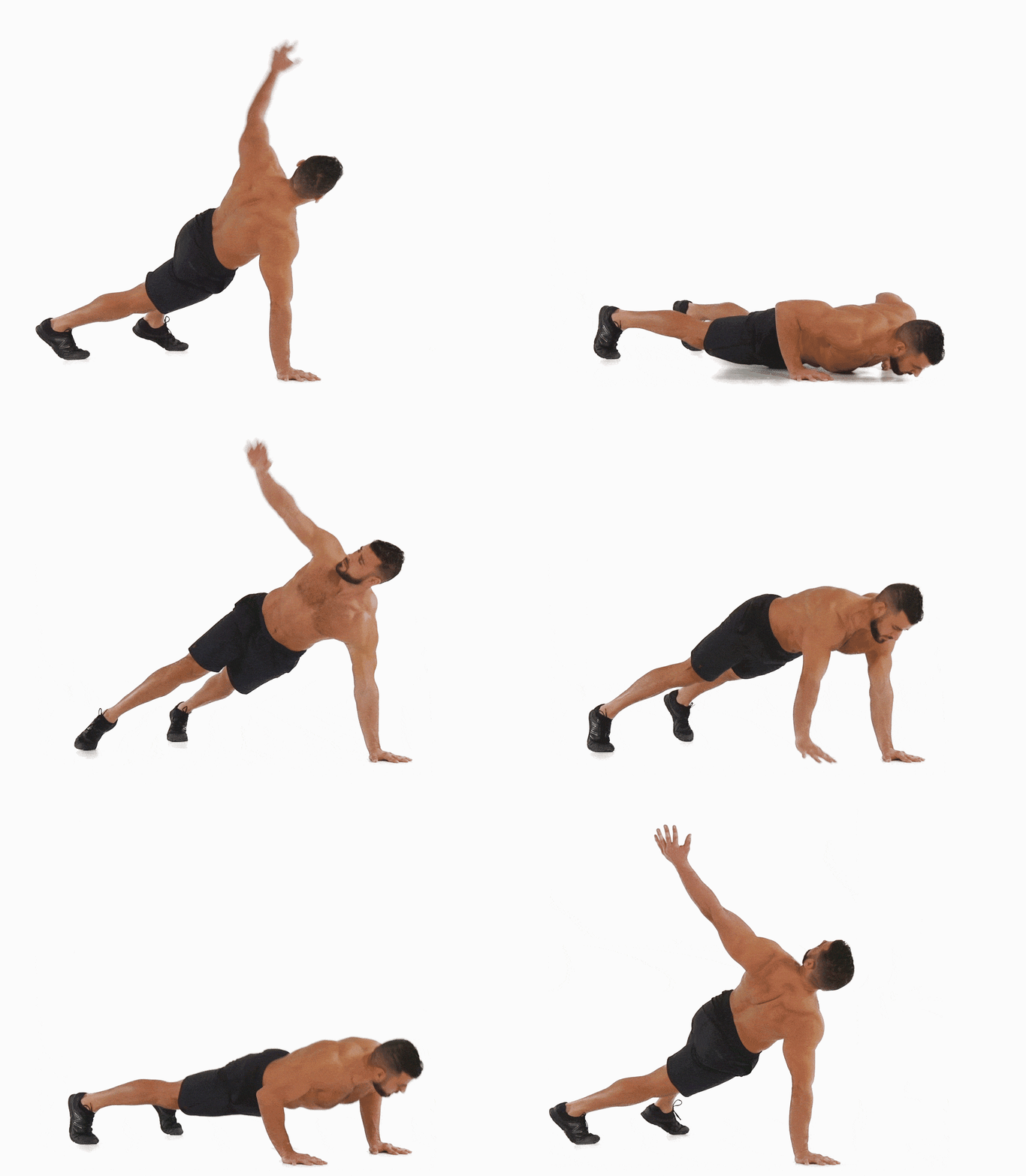
Push-Up and Rotate (T-Rotation Push-Up):
- Muscles Worked: Engages the chest, shoulders, and triceps (during the push-up), and heavily involves the core, obliques, and back stabilizers during the rotational component.
- Execution: Begin in a push-up position, hands slightly wider than shoulder-width apart, body forming a straight line. Perform a standard push-up. As you push back up, shift your weight onto one hand, rotate your torso, and extend the other arm straight up towards the ceiling, forming a "T" shape with your body. Your gaze should follow your raised hand. Return to the plank position and repeat on the other side.
- Benefits: This exercise not only strengthens the upper body but also significantly improves core stability, rotational strength, and shoulder mobility, making it a highly functional movement.
- Modifications: Beginners can perform push-ups on their knees before rotating or omit the push-up entirely, focusing on the plank and rotation. For a greater challenge, hold a light dumbbell in the rotating hand. Continue alternating sides for a total of 10-12 reps per side, ensuring the core remains engaged throughout.
-
Air Squat:
- Muscles Worked: A foundational compound movement that targets the quadriceps, hamstrings, glutes, calves, lower back, and core.
- Execution: Stand with feet shoulder-width apart, toes pointed slightly outwards. Keep your chest up, shoulders back, and core engaged. Initiate the movement by sending your hips back and down as if sitting in a chair. Lower until your thighs are parallel to the ground, or as deep as your mobility allows without compromising form. Ensure your knees track in line with your toes and do not collapse inward. Drive through your heels to return to the standing position, squeezing your glutes at the top.
- Benefits: The air squat is fundamental for building lower body strength, improving mobility, and enhancing cardiovascular endurance. It is a prerequisite for more complex movements and an essential pattern in daily life.
- Modifications: Beginners can squat to a chair for support. For an added challenge, perform jump squats, pause squats (holding at the bottom), or progress to goblet squats with a light weight.
Integrating a Compound Exercise Routine:
To maximize the benefits of these exercises, consider a structured approach. A typical full-body compound workout might involve performing 3-4 sets of 8-15 repetitions for each exercise, with 60-90 seconds of rest between sets.
- Warm-up: Always begin with a dynamic warm-up (e.g., arm circles, leg swings, light cardio) for 5-10 minutes to prepare the muscles and joints.
- Cool-down: Conclude with 5-10 minutes of static stretching to improve flexibility and aid recovery.
- Progressive Overload: To continue seeing results, the body must be progressively challenged. This can be achieved by increasing repetitions, adding sets, reducing rest times, increasing the range of motion, or incorporating external resistance (e.g., dumbbells, resistance bands) as strength improves.
Prioritizing Safety and Proper Form
While highly effective, compound exercises, especially due to their complexity and intensity, necessitate a strong emphasis on safety and correct technique to prevent injury and maximize benefits.
The Role of Professional Guidance: For individuals new to exercise or those with pre-existing conditions, consulting a certified personal trainer is highly recommended. An experienced professional can observe your form, identify potential weaknesses, teach new techniques, and, most importantly, spot potential problems before they lead to injury. They can also provide guidance on appropriate starting weights, repetition ranges, and progression strategies tailored to individual fitness levels and goals.
Importance of Form: Maintaining proper form is paramount. Incorrect technique not only compromises the effectiveness of the exercise by shifting the load away from the intended muscles but also places undue stress on joints, ligaments, and tendons. For example, rounding the back during a squat can lead to significant spinal stress. Focusing on controlled, deliberate movements and mastering the basic bodyweight versions before adding resistance is a critical safety measure.
Listening to Your Body: It is crucial to distinguish between muscle soreness (a normal response to exercise) and pain (an indicator of potential injury). Sharp, sudden, or persistent pain warrants immediate cessation of the exercise and, if necessary, medical consultation. Rest and recovery are integral components of any successful fitness regimen.
Breathing Techniques: Proper breathing is often overlooked but vital for compound movements. Typically, exhaling during the exertion phase and inhaling during the recovery phase helps stabilize the core and provides adequate oxygen to working muscles. The Valsalva maneuver (holding breath during exertion) can be used by experienced lifters for maximal lifts but should be approached with caution due to its impact on blood pressure.
Hydration and Nutrition: Adequate hydration and a balanced diet are fundamental for supporting strenuous compound exercise. They provide the necessary energy for performance and the building blocks for muscle repair and growth, significantly impacting recovery and overall progress.
Expert Perspectives and Broader Implications
The growing body of evidence supporting the efficiency and holistic benefits of compound exercises has significantly influenced modern fitness philosophy. Fitness professionals, including strength and conditioning coaches, physical therapists, and certified personal trainers, increasingly advocate for compound movements as the cornerstone of effective training programs. This shift reflects a broader understanding that fitness extends beyond aesthetics, encompassing functional movement, injury prevention, and long-term health. Public health recommendations for physical activity also increasingly emphasize multi-joint, multi-muscle activities that mimic daily life, aligning closely with the principles of compound training. The emphasis has moved from isolated muscle development, often seen in bodybuilding, towards a more integrated and functional approach to fitness that serves a wider range of health and performance goals.
Addressing Common Queries on Compound Exercises
What Are The Best Compound Exercises For Weight Loss?
For weight loss, compound exercises are particularly effective due to their high caloric expenditure and ability to build lean muscle mass. As discussed, they elevate the metabolism both during and after the workout. Exercises like burpees, air squats (especially jump squats), reverse lunges with knee drives, and push-ups contribute significantly to calorie burning. Incorporating these into a high-intensity interval training (HIIT) format can further amplify weight loss efforts by maximizing EPOC.
What Are The Best Compound Exercises For The Legs?
Legs benefit immensely from compound movements as they engage large muscle groups. Squats, in their various forms (air squats, goblet squats, jump squats), are unparalleled for developing the quadriceps, hamstrings, and glutes. Lunges (forward, reverse, lateral) are excellent for unilateral leg strength and balance. Bodyweight deadlifts or Romanian deadlifts (focusing on hamstring and glute activation) also provide comprehensive leg and posterior chain development. Step-ups are another effective compound exercise for the legs, especially when performed with a higher step.
What Are The Best Compound Exercises For Back Health?
For back health, compound exercises that strengthen the posterior chain and core stabilizers are crucial. Bodyweight squats, when performed with proper form, strengthen the lower back and improve posture. Bodyweight deadlifts (focusing on hinge mechanics) are excellent for reinforcing the muscles of the entire back and legs without excessive spinal loading. The single-leg bridge significantly strengthens the glutes and hamstrings, which are vital for supporting the lower back. Additionally, movements like push-up and rotates help strengthen the core and upper back, improving overall spinal stability. Exercises such as planks and bird-dog are also excellent for direct core stability, which is foundational for back health. It is imperative to prioritize form over load, especially when addressing back pain, and to consult a healthcare professional if pain persists.
How Often Should One Perform Compound Exercises?
For general fitness and muscle development, performing compound exercises 2-4 times per week is often recommended, allowing for adequate rest and recovery between sessions. Full-body workouts using compound movements on non-consecutive days (e.g., Monday, Wednesday, Friday) can be highly effective. The frequency should be adjusted based on individual recovery capacity, training intensity, and overall fitness goals.
Do Compound Exercises Require Special Equipment?
As demonstrated by the exercises outlined, many highly effective compound movements can be performed using only bodyweight. This makes them accessible regardless of access to a gym. However, as individuals progress, adding external resistance such as dumbbells, kettlebells, barbells, or resistance bands can provide further challenge and facilitate continued strength gains.
Conclusion
Compound exercises represent a highly efficient and scientifically supported method for achieving comprehensive fitness goals, particularly for individuals with limited time. By engaging multiple muscle groups and joints simultaneously, these movements offer a multitude of benefits, including enhanced functional strength, superior calorie expenditure, metabolic boosts, improved cardiovascular health, and a positive hormonal response. Prioritizing proper form, integrating these movements strategically, and seeking professional guidance when necessary are critical steps towards harnessing the full potential of compound training for a stronger, more resilient, and healthier body. Their ability to deliver extensive results in shorter durations solidifies their position as a cornerstone of any effective and sustainable fitness regimen.
Sources: Andrews E. (2015), Garber CE, et al. (2011), Hwang-Bo Kak, et al. (2013)

