

The following excerpt, drawn from Paula Arai’s book "Of Mud and Lotuses: Dreaming the Lives of Buddhist Women," offers a profound and deeply personal narrative from Saya, a Buddhist woman whose life experiences illuminate the often-unseen application of Buddhist principles in everyday existence. Through creative histories and interview-based nonfiction, Arai’s work explores the ingenuity and resilience of Buddhist women across time. This particular chapter centers on Saya’s candid account, shared in an interview, of navigating a deeply personal choice and its enduring impact, framed by her upbringing and the enduring wisdom of Buddhist ethics.
Saya leaned forward, her gaze direct and unwavering, as she began to share a story she had carried in silence for decades. "I have never told anyone this before," she stated, her voice steady. "I was in my 20s. I had an abortion." This confession, held close for over fifty years, was accompanied by her partner, who supported her through the procedure, requiring travel across state lines due to its unavailability in their home state. He remained by her side during her recovery. The decision, Saya emphasized, was mutual, born from a recognition that they were not yet prepared for the responsibilities of parenthood.
"We did not regret our decision," Saya affirmed. Yet, she confessed, the memory remains a constant, if not regretful, presence. "There’s not a day that goes by that I don’t think about it. It’s not that I feel shame, but it is so personal. Something unresolved lingers in me. There’s a dialogue inside me. There was a longing to connect, but I didn’t know how." Her decision to speak now is driven by the current sociopolitical climate. "I decided to share this because of the times we live in now. So many women are suffering. Girls who are raped must carry a baby, and they don’t know what is going on with their bodies. Women with complications in pregnancy die because doctors fearing jail wait until they do not hear a heartbeat before they will treat a woman. Since many will read your book, I wanted to share how dharma helped me in ways that I am only now learning how to articulate. It had been so deeply embedded in daily life that I didn’t have words to understand it, but I realize now that it has undergirded my whole life."
Saya’s connection to Buddhist principles was not through overt religious practices. Her family, immigrants from Japan in the early 1900s, adopted a discreet approach to their faith. Fearing potential discrimination, they eschewed explicit Buddhist artifacts, a caution stemming from their awareness of not fitting the dominant cultural image. This apprehension was amplified by the xenophobia they encountered, culminating in their forced internment during World War II. Despite the immense hardship and the loss of arable land, their farm was entrusted to a benevolent American who returned it upon their release, a testament to an unexpected act of kindness amidst systemic injustice.
Born shortly after the war, Saya was largely raised by her grandmother, her "Obachan." Life on the farm was characterized by abundance and a deep sense of community, encompassing extended family and neighboring farmers. This environment, though lacking explicit Buddhist iconography, was rich in the lived experience of dharma. "My Obachan was Buddhist, so I knew I grew up culturally Buddhist," Saya explained. "It recently became clear to me that I had actually been raised in the dharma. I was living it but not knowing it. It was just the way things were done." Obachan’s teachings were conveyed through her character and actions, embodying virtues such as honesty, diligence, reliability, integrity, generosity, dignity, and kindness.
The Enduring Strength of Gaman
A cornerstone of Saya’s upbringing, and a concept she now articulates as fundamental to her understanding of Buddhist ethics, is gaman. This Japanese term, often translated as patience or forbearance, transcends simple endurance. "Gaman got her through dark times, including the war and incarceration," Saya noted, referring to her grandmother. The depth of gaman lies in its implicit understanding of interconnectedness. It is not an individualistic stoicism but a recognition that one’s resilience contributes to the well-being of a larger whole. "Being patient or exhibiting fortitude is experienced as being an important part of a larger whole, which is integral to a relational notion of self. You are not alone. And you are not doing things just for yourself. Your actions affect others. So when you endure a difficult situation, you are enacting your respect and care for the greater whole."
Saya further elaborated on gaman as a mature response to unmet desires and a potent antidote to self-pity. It acknowledges limitations in circumstances and resources without succumbing to despair. "Gaman is a patience that stretches you. It is founded on a network of support. You do not have to have concrete knowledge of the past to draw on ancestral strength and wisdom because it is baked into current conditions." This concept underscores a profound respect for present conditions and an awareness of the ripple effects of one’s actions into the future. It is fueled by gratitude and a sense of moral responsibility. "Gaman has helped me see things from a bigger perspective, to know that I am not alone in my times of forbearance. It makes it easier to regulate my emotions as they course through me."
Nature as a Teacher: The Cycle of Life and Death
Saya’s formative years on a farm provided a profound education in the natural world, mirroring the cyclical nature of existence. The rhythms of planting, growth, and harvest, punctuated by births, deaths, and community gatherings, instilled in her a deep appreciation for the interconnectedness of all things. "To this day, gardening keeps me in touch with the natural dynamics of reality. That’s how I approach things. It guides how I process emotions. Nature flows with birth and death, and I am part of that." This intimate connection with nature shaped her approach to life’s challenges, fostering a nurturing disposition, particularly towards the vulnerable. "I want to care for the vulnerable seedlings and insects. I watch the interactions of insects moving around in the flowers. They show me how all things are interconnected."
This understanding of the circle of life proved invaluable as Saya navigated the complex and emotionally taxing role of caregiver for her aging father. As the eldest son, her father’s identity was deeply intertwined with his work on the farm. His forced early retirement due to illness was devastating. While he loved his children, his struggles with anger added another layer of difficulty to his care. Saya, raised to set a positive example for younger generations and to uphold the family name, felt a profound obligation to honor her elders. This sense of duty, deeply ingrained by her upbringing, made caring for him feel natural, despite the emotional strain.
Compassion in the Face of Dementia
The challenges intensified when Saya’s mother began to decline due to dementia. For two years, Saya slept in her mother’s bed, providing constant care and support. This period, though marked by her mother’s inherent sweetness, was also fraught with the difficulties of managing her obstinance and anger. Saya recounts instances of her mother’s confusion and distress, including a frightening episode where she threw her walker and accused a caregiver of attempting to harm her, leading to an emergency room visit. "It was like living in a hell realm for everyone."
During these trying times, Saya found solace and strength in the Buddhist teachings on compassion. "The dharma teachings on compassion were my armor, protecting me from erupting in frustration and shielding us all from anger." She drew strength from memories of her mother’s tender care, recalling childhood moments of profound comfort. "I wanted to give that to her, too. Being in touch with the circle of life was my liberation." This reflection underscores the transformative power of compassion, not only as a protective shield but as a bridge to empathy and reciprocal care.
Embracing Mizuko and the Metamorphosis of Life
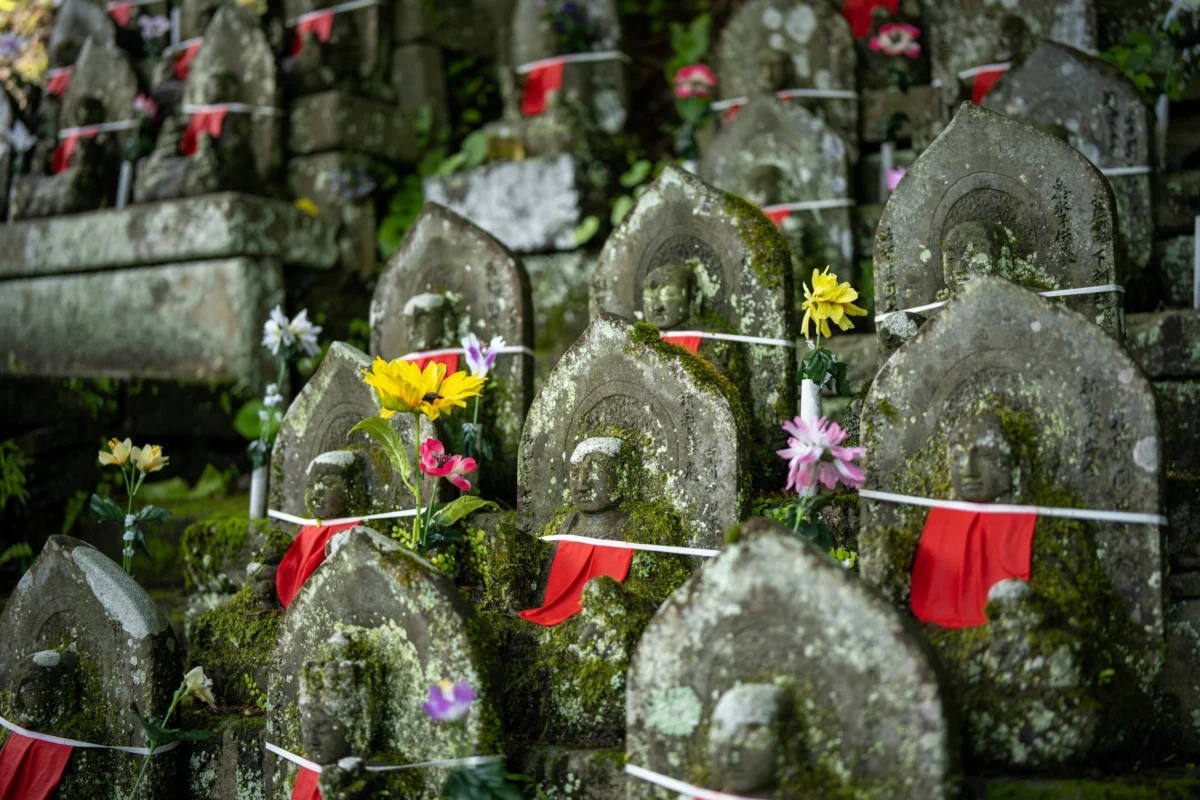
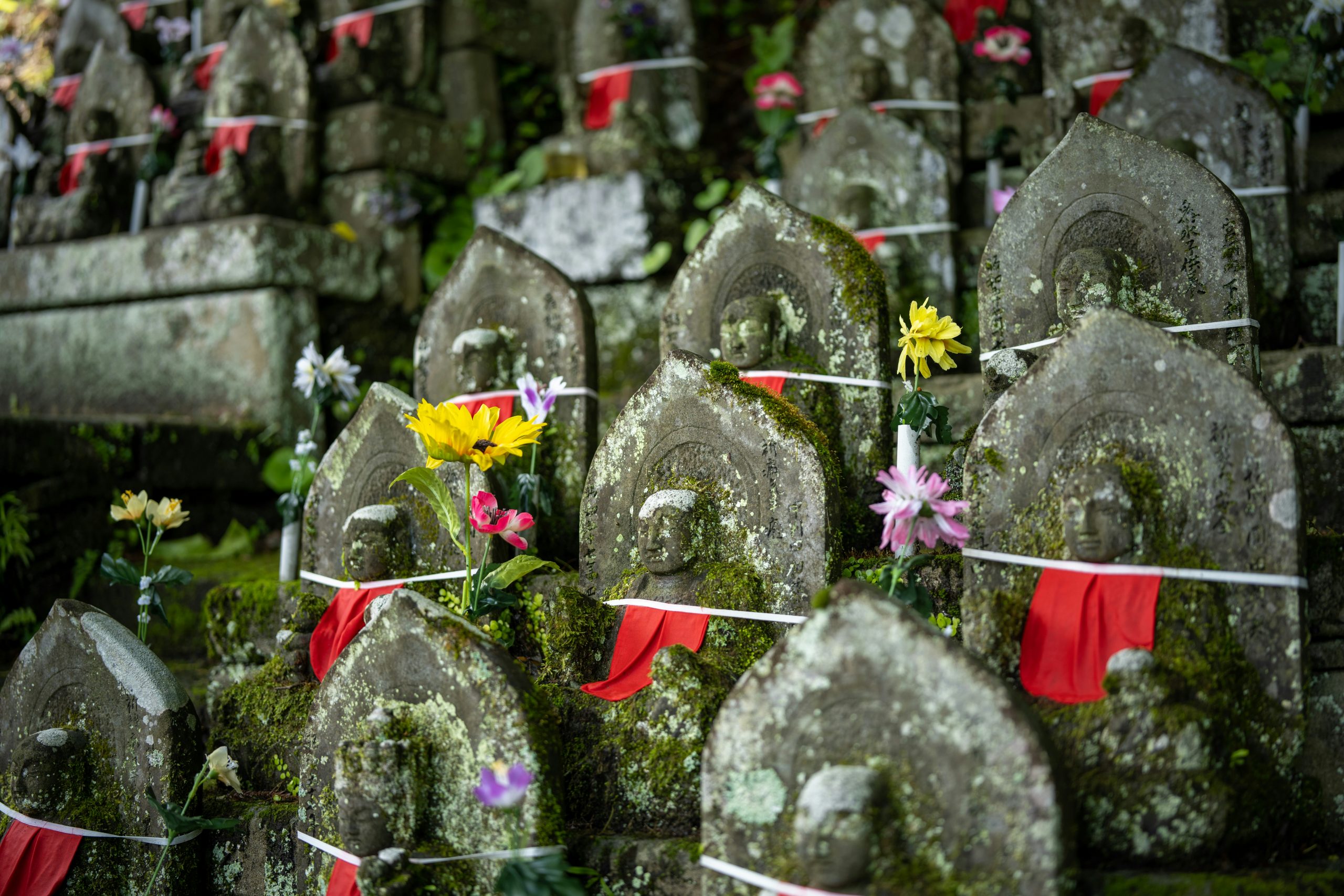
In her later years, Saya discovered a ritual that brought a profound sense of healing and connection to her past: the Japanese Buddhist mizuko ritual. This practice, designed to acknowledge and honor the loss of a child, particularly in utero, provided Saya with a framework for processing her abortion. "Here I am nearing the end of my seventh decade, and I finally found a way to communicate in a consciously healing way with my mizuko, my water child." The ritual involves simple acts of lighting a candle, offering incense and flowers, and a small treat, creating an embodied connection and expressing respect for both her mizuko and herself. She observes this ritual privately on the twenty-fourth of each month, an auspicious day for Jizo Bodhisattva, a compassionate figure known for guiding beings through different realms and offering solace to mizuko.
Saya finds a parallel to the mizuko ritual in her garden, observing caterpillars undergoing metamorphosis. "Caring for caterpillars in my garden and watching them change is a mizuko ritual for me. Not all of them make it. It happens before your eyes. It’s watching life and death. It happens in a short period of time." This contemplation of transformation, from vulnerable larva to winged insect, serves as a meditation on impermanence and the beautiful, often poignant, cycle of existence. "It is a sublime wonder to watch the wings expand as they drip dry before taking flight. Observing this phenomenon is a meditation on metamorphosis." As she ages, Saya remains acutely aware of her own place within this cycle, acknowledging the infirmities and diagnoses that affect her and her friends, reinforcing the understanding that "I am part of the circle of life and death."
Finding Home and Belonging
Following hours of conversation, Saya presented Paula Arai with a poem, a testament to her evolving spiritual journey. Penned after being honored as an elder in her sangha, the poem, titled "Buddha Was Asleep in Our Home," reflects a lifelong search for spiritual belonging. It speaks of an unspoken presence of the Buddha in her childhood home, not through icons but through the embodied actions of her family. "He lived in the hearts of my people. They embodied his way and shared his teaching."
The poem traces her journey from childhood unawareness to the discovery of prayer beads, symbolizing a deeper connection to her heritage. The "huge circle" of her life’s journey, a "long, winding circle called life," culminates in finding a "new home" and a "new family that lives with Buddha." In her later years, Saya embraces the visual representations of the Buddha, finding comfort and a sense of belonging in images that reflect her own presence. "And, I like all the images of the Buddha, especially the ones that look like I belong too. I found home. I’m so happy."
Arai notes the resonance of Saya’s poem with the Therigatha, ancient verses attributed to early Buddhist nuns. Saya’s narrative embodies a liberation from suffering rooted in historical injustices and personal choices. While the open expression of dharma now provides comfort, her life story illustrates that the most potent form of dharma is that which animates the heart and guides one’s actions. Her journey, marked by resilience, compassion, and a profound connection to the natural world, exemplifies the enduring power of Buddhist wisdom in navigating the complexities of human experience.

