

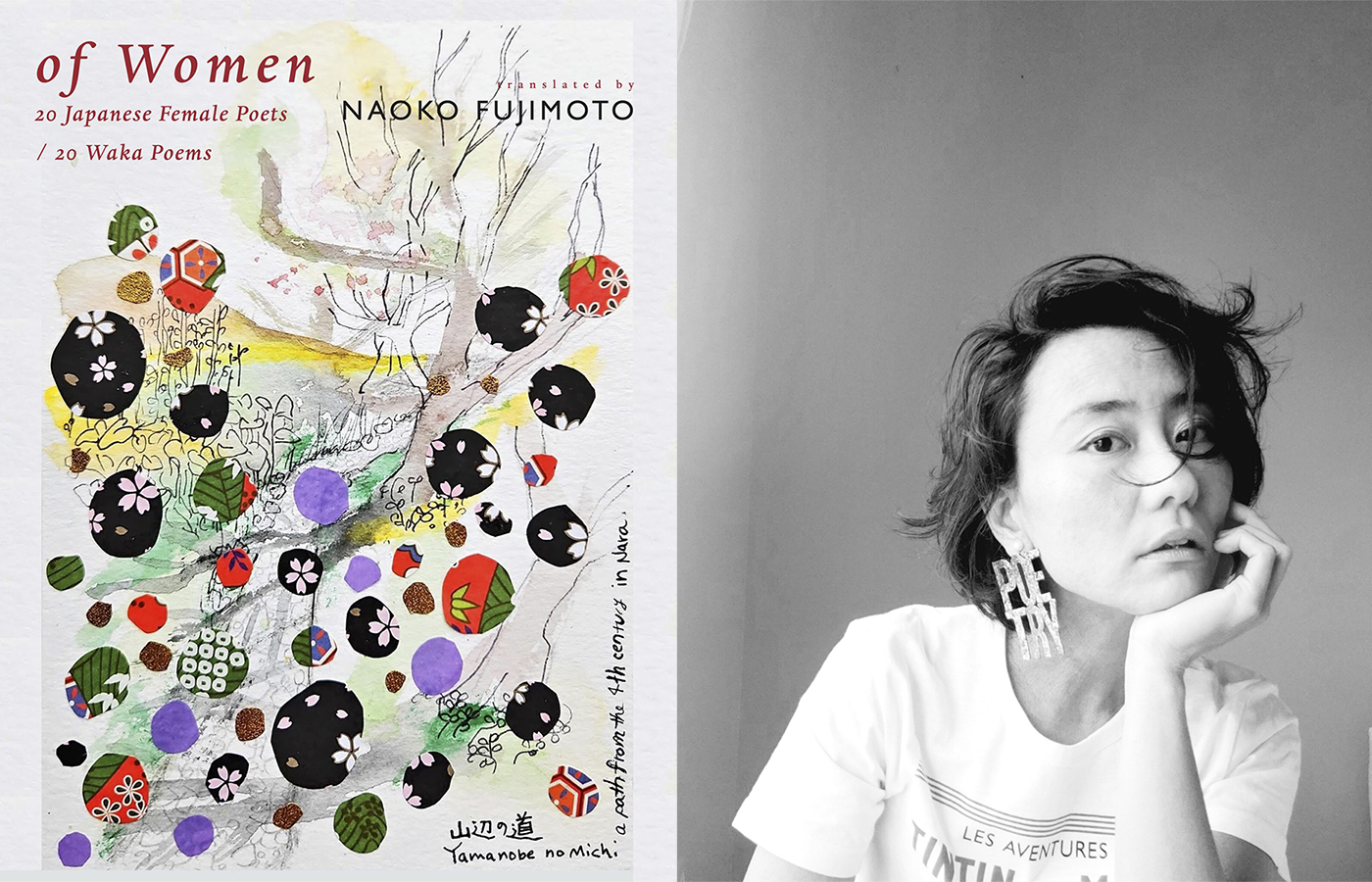
Between the 7th and 12th centuries, during the formative "long morning" of Japanese literature, women were not merely participants but architects of one of the world’s most sophisticated poetic traditions. The waka, a thirty-one-syllable lyric form meticulously crafted in a 5-7-5-7-7 syllable pattern, served as delicate vessels for profound emotion. These compact poems, small enough to be held in the palm, possessed the vast capacity to contain grief, longing, the nuances of weather, the weight of memory, the currents of politics, and the stirrings of desire. From this luminous tradition, translator Naoko Fujimoto has meticulously selected the voices of twenty women poets, offering a glimpse into a period when women stood at the very epicenter of Japanese literary culture.
Among these figures are luminaries whose names resonate even today. Sei Shonagon, whose The Pillow Book continues to dazzle with its incisive observations and sparkling wit, and Murasaki Shikibu, the visionary author of The Tale of Genji, often lauded as the world’s first novel, represent the pinnacle of this era’s female literary achievement. Yet, Fujimoto’s endeavor also illuminates the lives of poets whose presence is far more ephemeral, their names surviving only in fragmented records, marginalia, or under borrowed identities. Collectively, these women not only laid the foundational stones of Japanese literature but also forged the very concept of lyric interiority, a sensibility that would echo across centuries and continents, influencing literary expression far beyond Japan’s shores.
The very act of identifying these poets reveals a profound societal structure that often obscured individual identity. Many of these women’s true names were never formally recorded. They were frequently identified through their familial relationships – as someone’s daughter or someone’s mother – a linguistic practice deeply embedded in the possessive particle no (の), which defines identity through attachment rather than inherent selfhood. Some of the names by which we now know them are posthumous appellations, not names they claimed during their lifetimes; Murasaki Shikibu, for instance, is a designation bestowed after her death. Even the most fundamental biographical details often dissolve into a profound silence. Sei Shonagon’s death date remains unknown, lost to official records when the empress she served fell from political favor. Despite this systemic erasure and disappearance, their poems endure with an exquisite clarity, their artistic output surviving even as their personal lives fade into obscurity.
The waka form itself is a marvel of compression, capable of holding immense complexity within its concise structure. A single poem can encompass layered meanings, intricate seasonal codes, private allusions, the delicate protocols of courtly etiquette, subtle political tensions, and nuanced emotional subterfuge. These poems were woven into a dense cultural lattice that modern readers may find challenging to fully intuit. A direct, literal translation alone often fails to capture the full weight of this compression. To address this challenge, Fujimoto has employed a multifaceted approach in her translation project, aiming to provide not just the words but the world in which they were born.
A Tripartite Approach to Reviving Ancient Voices
Fujimoto’s translation project unfolds through a deliberate, threefold methodology designed to resurrect the nuanced spirit of these ancient poems for contemporary audiences.
Firstly, each waka is preceded by a short prose meditation, crafted in the spirit of haibun. This hybrid literary form, perfected by the renowned 17th-century poet Matsuo Bashō, blends prose and poetry. Fujimoto’s prose passages are not literal translations but rather "contextual illuminations," serving as lyrical bridges that situate each poem within its specific emotional, historical, and symbolic landscape. These meditations provide essential background, helping readers grasp the cultural underpinnings and implicit meanings that might otherwise be lost.
Secondly, Fujimoto’s translations embrace a dynamic visual and spatial narrative. In their original context, waka were not rigidly confined to five unvarying lines as they are often presented in English. During the Heian period, waka functioned as decorative text, its form influenced by calligraphy, architectural aesthetics, and the intimacy of personal exchange. The lineation of these poems was fluid, shifting freely. By restoring this mobility, Fujimoto seeks to move beyond mere historical replication. Her aim is "formal liberation," to recapture the vibrant, living breath that was arguably diminished when the poems were "standardized" into fixed structures. This approach acknowledges that the visual presentation of poetry is integral to its impact and meaning.
Thirdly, recognizing that the music of waka is inextricably linked to its meaning, Fujimoto presents each poem with its Romanized phonetic form alongside the original Japanese text. These sounds, described as subtle, compressed, and echo-filled, carry sonic textures that no translation, however skillful, can entirely replace. Furthermore, graphic and typographic elements are integrated into the work, guided by what Fujimoto terms "line-break hyperawareness." This approach, explored more fully in her book GLYPH: Graphic Poetry = Trans. Sensory, emphasizes the deliberate placement of line breaks as a crucial tool for conveying meaning and rhythm, enhancing the reader’s sensory engagement with the text.
Fujimoto expresses a profound wish: "to place the pressure of one finger on the lifeline," enabling English-language readers to encounter these poems with an intimacy, immediacy, and sensory charge akin to that experienced by Japanese readers. These are not to be regarded as mere historical artifacts or relics of a bygone era. Instead, they are presented as "living instruments of perception," capable of registering the ephemeral – weather, breath, shadow, intimacy, and the Buddhist concept of anicca (impermanence). They are poems that, in Fujimoto’s words, "listen." What history has systematically stripped away from these poets – their biographies, their faces, even their names – the poems themselves meticulously restore, albeit in a different form: as palpable feeling, as focused attention, and as radiant precision. Across a millennium, their voices persist, speaking with an enduring power.
A Glimpse into Lives Through Verse: Taikenmon’in no Horikawa
One such voice is that of Taikenmon’in no Horikawa, a poet whose work dates to the twilight of the Heian era, around 1142 CE. Her birth and death dates remain elusive, a common predicament for women of her time. Her husband passed away early, leaving her to raise their only son with the support of her father. Whispers suggest a possible relationship with the revered Buddhist monk and poet Saigyō Hōshi. She authored numerous love poems, though whether these were born from lived experience or imaginative projection remains unknown.
During the Heian period, maintaining long, lustrous hair was a significant marker of a woman’s beauty and social standing. Daily bathing was not yet a widespread practice, and women typically washed their hair using rice water. Some women even stored their long hair in boxes by their pillows to keep it neat overnight.
Taikenmon’in no Horikawa’s waka, presented here, is composed under the thematic umbrella of Koi no Kokoro. Koi signifies a feeling of affection and yearning towards an admirer, while kokoro represents the heart. It encapsulates a deep sense of longing, akin to koishi. The poem vividly portrays a woman so captivated by a lover’s visit that she becomes oblivious to her daily routines, symbolized by her forgetting her hair, a precious aspect of her identity and beauty. This profound immersion in love is further underscored by her eventual decision to become a nun and cut off her hair, a symbolic renunciation of worldly attachments.
The poem reads:
I breathe. I soak my finger in porcelain. Camellia oil turns amber on my boxwood comb. I trace the flower engraving on it. I breathe. Mornings, I brush my hair. Last night, you came. My hair weighed on your shoulders. Now I forget to breathe and brush.
My long black hair tangles
so does my heart—kokoro is distressed
will you seek me forever and ever after this I don’t know
naga karamu / kokoro mo shirazu / kurokami no / midarete kesawa / mono o koso omoe
(Long it tangles / my heart, too, unknowing / of my black hair / dishevelled, so much / I think of you.)
Taikenmon’in no Horikawa
The Shadow of Power: Gidousanshi no Mother, Takako
Another voice emerging from the silence is that of Gidousanshi no Mother, Takako, whose life concluded around 996 CE. Takako stands out as one of the most educated female poets of her era, yet her identity was largely subsumed by her maternal role. Scholars often portray her as an "unfortunate mother." Her son was earmarked for a significant role in governing Kyoto for the emperor, but his path was obstructed by the shrewd political machinations of Fujiwara no Michinaga. In a move of apparent retaliation, her son was eventually exiled from the capital.
Takako’s daughter, Empress Teishi, initially appeared to lead a life of privilege within the imperial palace. However, following her brother’s severe punishment, she made the profound decision to voluntarily withdraw from court life. She famously cut off her beautiful, long hair and became a nun, entering a clandestine order. Later, when the emperor brought Empress Teishi back to the palace, she continued her relationship with him despite her monastic vows. Her presence was not universally welcomed, particularly by Fujiwara no Michinaga, who held considerable sway. Some observers noted her frail appearance, drawing parallels to the fictional character of Genji’s mother in The Tale of Genji, suggesting that Empress Teishi’s son might embody certain characteristics of Genji himself.
Takako’s poem reflects a deep sense of weariness and disillusionment, tinged with the precariousness of her family’s position. The poem speaks to the broken promises and the struggle to maintain hope in the face of overwhelming adversity.
To my husband’s graveyard, I am just a woman. His brothers ask if I need more flowers or prospects, but never provide. We are family. We support each other. But they are men. They ignore my daughter and call my son a criminal. Other men bring me flowers after sundown.
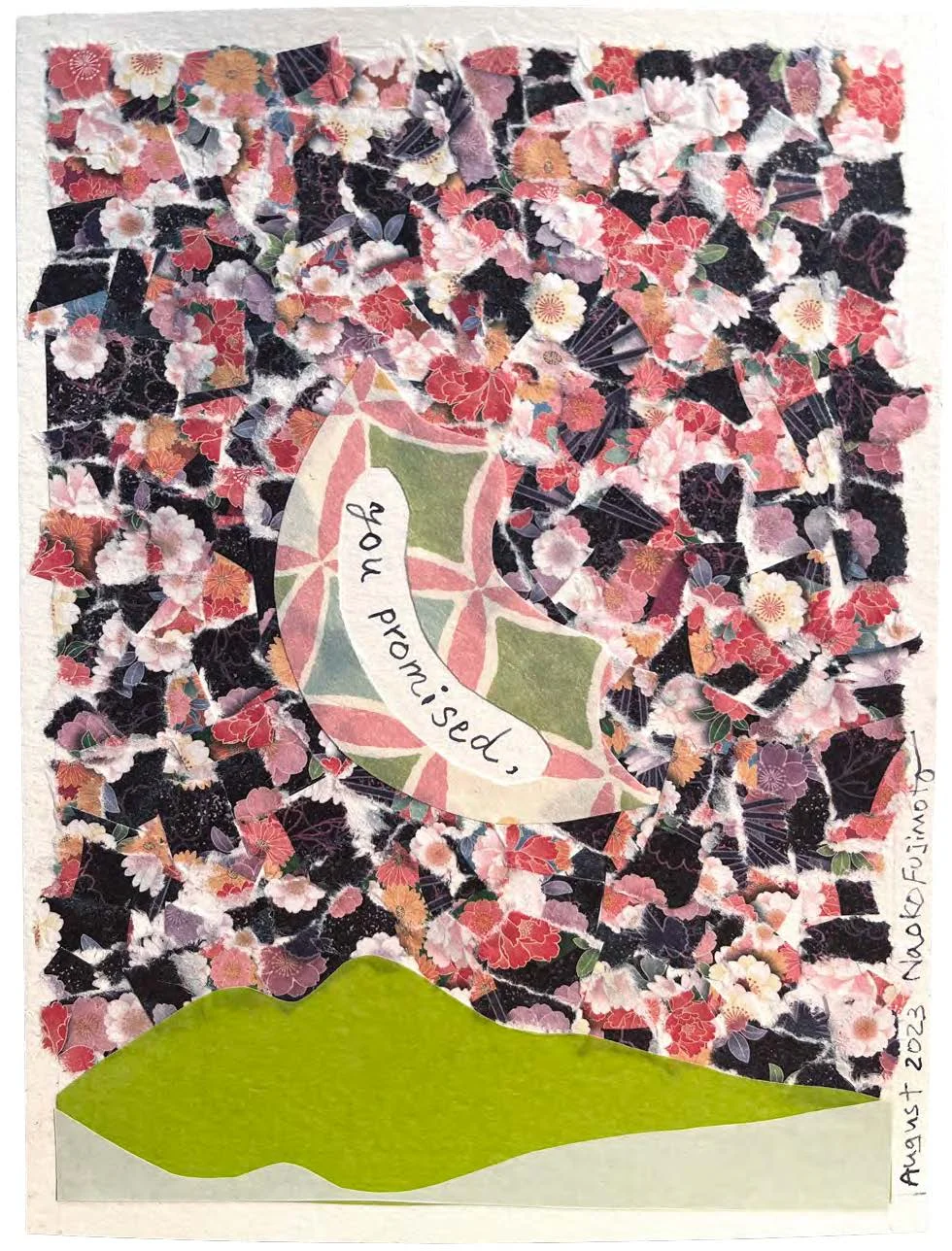
“I won’t forget you,”
you promised, but I don’t know how you stay this
optimistic.
How can I believe this certainty?
I long for my life to end today.
wasure ji no / yukusue made wa / katakere ba / kyou o kagiri no / inochi tomogana
(My life’s path / to its end is hard, therefore / let today be the limit / of my life.)
Gidousanshi no Mother, Takako
Broader Implications and the Enduring Power of Waka
The meticulous work of Naoko Fujimoto in translating and contextualizing these waka poems offers a crucial intervention in the understanding of Japanese literary history. It challenges the traditional, often male-centric, narratives by foregrounding the significant contributions of women poets during a period when they were central to the development of a sophisticated literary culture. The project highlights the challenges these women faced, including the loss of their names, the erasure of their biographies, and the societal constraints that often defined them by their relationships rather than their individual achievements.
The revival of the waka form, with its emphasis on sensory experience, emotional depth, and intricate cultural allusions, serves as a powerful reminder of poetry’s capacity to transcend time and cultural barriers. By employing a multimodal approach that includes prose meditations, visual presentation, and phonetic renderings, Fujimoto’s translation project not only makes these poems accessible but also imbues them with a vitality that resonates with contemporary readers. This endeavor underscores the enduring relevance of these ancient verses, demonstrating that they are not mere historical curiosities but living expressions of the human condition that continue to speak to us across a thousand years. The project ultimately enriches our understanding of literary history and celebrates the resilience and artistry of women whose voices, though historically marginalized, have profoundly shaped the landscape of world literature.

