


The landscape of diabetes management was dramatically reshaped in the early 20th century, long before the advent of insulin therapy. A groundbreaking dietary approach, spearheaded by German physician Carl von Noorden, centered on the humble oatmeal, offering a lifeline to individuals battling this chronic condition. Von Noorden’s research, published in 1903, proposed a revolutionary oatmeal-centric diet, a notion met with considerable skepticism from the medical establishment of the era. However, as documented in the findings of contemporary medical journals and later echoed in various health analyses, the overwhelming success of this dietary intervention gradually silenced critics and paved the way for a paradigm shift in diabetes care.
The initial resistance to von Noorden’s findings stemmed from a prevailing understanding of diabetes that was largely focused on caloric restriction and the perceived necessity of animal protein in the diet. The idea that a predominantly plant-based, high-carbohydrate food like oats could be beneficial, let alone life-saving, challenged deeply ingrained medical dogma. Yet, the tide began to turn as prominent physicians, notably Dr. James B. Herrick, a celebrated American physician and the first to describe the characteristic symptoms of sickle cell anemia, began to implement the oatmeal diet in their own practices. Herrick, initially a staunch doubter, was reportedly astonished by the dramatic improvements observed in his patients. This personal revelation led him to become a vocal advocate for the diet, culminating in his influential 1909 declaration that no child or adolescent diagnosed with diabetes should be denied the potential benefits of this "oatmeal cure."
The impact of von Noorden’s work resonated with other leading figures in diabetes research. Dr. Elliott Joslin, a pioneer in diabetes treatment and the founder of the world’s oldest and largest diabetes clinic, described the effects of the oatmeal diet as "sometimes magical." Joslin, who dedicated his career to understanding and treating diabetes, referred to the oatmeal cure as an "unsolved mystery" and "one of the greatest puzzles in diabetes" of his time. While the precise mechanisms remained elusive, early researchers did identify crucial dietary components. A key observation was the indispensable requirement to strictly exclude animal protein from the diet. This exclusion was found to be critical, as the presence of animal protein demonstrably "annihilates the favorable action of oatmeal-type diets." This insight, albeit anecdotal at the time, foreshadowed modern understanding of insulin resistance.
More than a century after von Noorden’s initial publications, contemporary scientific research has illuminated the underlying principles that made his oatmeal diet so effective. Modern studies confirm that a high intake of animal protein is indeed a significant contributor to insulin resistance, the primary driver of prediabetes and type 2 diabetes. Conversely, a diet rich in plant-based foods, including oats, has been shown to enhance insulin sensitivity, effectively reversing the pathological processes associated with these conditions. This scientific validation lends significant weight to the historical observations and underscores the enduring relevance of dietary interventions in diabetes management.
The efficacy of oats in managing blood sugar levels has been a subject of extensive scientific inquiry, and the evidence consistently points towards their beneficial role. Numerous randomized controlled trials, meticulously examining the impact of whole grains, including oats, have established a strong correlation between higher oat consumption and a reduced risk of developing diabetes. Further research, as highlighted in various nutritional analyses, has demonstrated that oats significantly improve both short-term and long-term glycemic control in individuals with diabetes. Beyond blood sugar regulation, these studies have also reported notable reductions in cholesterol levels, indicating a broader cardiovascular benefit.

The primary driver behind these salutary effects is attributed to a specific type of soluble fiber found in oats, known as beta-glucan. This fermentable fiber plays a crucial role in the physiological responses to oat consumption. One of the well-established mechanisms by which oatmeal lowers cholesterol involves its ability to positively influence the gut microbiome – the complex ecosystem of microorganisms residing in the digestive tract. By promoting the growth of beneficial gut bacteria, beta-glucan contributes to a healthier internal environment, which in turn can impact metabolic health.
The profound impact of fiber on metabolic health, particularly in the context of diabetes, cannot be overstated. Even modest amounts of dietary fiber, such as that found in oats and legumes, can yield significant benefits. The beneficial gut bacteria, often referred to as "good gut flora," utilize this fiber as a food source, fermenting it to produce short-chain fatty acids (SCFAs). These SCFAs possess potent anti-inflammatory properties, which are crucial for mitigating the chronic inflammation often associated with diabetes. Dozens of randomized controlled trials have provided robust evidence that the types of fiber present in oats and beans are instrumental in improving long-term blood sugar control for individuals with diabetes. The underlying principle is that dietary fiber selectively promotes the growth of specific gut bacteria that can help alleviate the symptoms and progression of type 2 diabetes.
Oat fiber itself acts as a prebiotic, effectively stimulating the proliferation of beneficial bacterial species such as Lactobacillus and Bifidobacteria. These probiotics are known for their positive contributions to gut health and immune function. Therefore, the historical success of the oatmeal diet can be attributed to a synergistic combination of factors: the absence of animal protein and fat, which exacerbate insulin resistance, and the abundance of prebiotic fiber, which nourishes beneficial gut bacteria and supports overall metabolic health. These elements, working in concert, explain why oatmeal-based diets became an integral part of clinical routines for diabetes management.
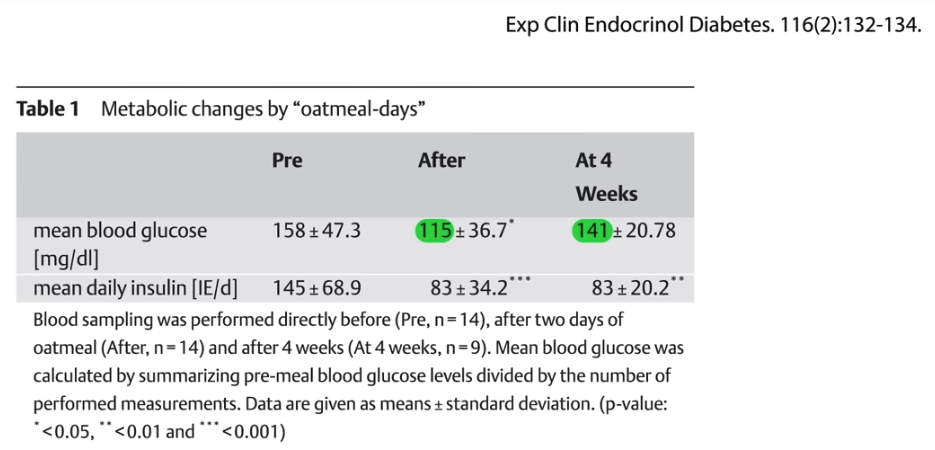
The speed at which individuals can experience positive outcomes from incorporating oatmeal into their diet is remarkably swift, according to clinical studies. Research suggests that a concentrated period of oatmeal consumption, even just a few days, can yield beneficial effects that persist for approximately a month. A notable randomized, controlled, crossover trial revealed that patients who consumed oatmeal experienced a significant reduction in insulin requirements – by approximately 40% – within just two days. This improvement was observed in comparison to individuals on a calorie-restricted diabetic diet alone. Furthermore, objective measures of long-term blood sugar control, assessed four weeks after the intervention, reflected these sustained benefits.
Subsequent studies have corroborated these findings, reinforcing the rapid and lasting impact of oatmeal. In one study, a mere two-day oatmeal intervention led to a substantial decrease in the required insulin dosage and a marked improvement in blood sugar levels, with beneficial effects extending for up to four weeks. For patients with uncontrolled type 2 diabetes, this two-day dietary regimen resulted in a 40% reduction in their insulin dose, accompanied by a near normalization of average blood glucose levels. Astonishingly, even after participants resumed their regular diets, researchers observed a significant and lasting reduction in insulin dosage and ameliorated mean blood sugar levels for several weeks post-intervention.
The broader implications of dietary fiber on the gut microbiome and metabolic health are further illuminated by studies involving plant-based diets. When individuals are placed on diets rich in oats, beans, fruits, vegetables, and nuts, there is a corresponding increase in the population of fiber-feeding gut bacteria. These bacteria, in turn, produce beneficial short-chain fatty acids. Within a month of adopting such a diet, fasting blood glucose levels have been observed to drop by approximately 25%. The degree of improvement in blood sugar control directly correlated with the abundance of these fiber-promoting gut bacteria. Specifically, when the diversity and number of SCFA-producing bacteria were higher, participants exhibited greater improvements in their hemoglobin A1c levels, a key indicator of long-term blood sugar management.
While the benefits of oatmeal are substantial, it is imperative to acknowledge potential downsides and necessary precautions. The potent effect of oatmeal-based dietary interventions on blood sugar levels necessitates close medical supervision. Physicians implementing such diets must be prepared to rapidly adjust or "deprescribe" blood sugar medications, as the risk of dangerously low blood sugar (hypoglycemia) due to overmedication is a real concern. Individuals who may have difficulty recognizing or reporting symptoms of hypoglycemia, such as those with advanced neuropathy or cognitive impairment, should undertake oatmeal interventions with extreme caution or under constant monitoring. The primary downside, therefore, is not a lack of efficacy but rather the potential for it to be too effective, underscoring the critical need for medical oversight during such dietary regimens.
The glycemic index (GI) of oatmeal, a measure of how quickly a food raises blood sugar levels, is an important consideration, and variations exist depending on the processing of the oats. Generally, whole grains are considered beneficial, but intact whole grains often offer superior advantages. Oat groats, which are whole oats with their inedible outer husks removed, represent a minimally processed form. Steel-cut oats, made by slicing oat groats into two to four pieces, are typically classified as a low-GI food, averaging below 55. Similarly, Scottish oatmeal, which is coarsely ground oat groats, and "old-fashioned" rolled oats, created by steaming and flattening groats, have a GI of approximately 55. These forms of oats are considered excellent choices for blood sugar management.
In contrast, instant oats undergo more extensive processing, including longer steaming and thinner rolling. This results in a higher glycemic index, scoring around 79. While still not as detrimental as many highly refined breakfast cereals, which can have GIs in the 80s or 90s, instant oats are less ideal for individuals closely monitoring their blood sugar. The degree of processing directly impacts the rate at which the carbohydrates in oats are digested and absorbed, thus influencing their impact on blood glucose levels.
Incorporating oatmeal into a balanced diet offers a wealth of culinary possibilities, transforming it from a simple breakfast staple into a versatile and health-promoting meal. Beyond its inherent nutritional benefits, oatmeal can be enhanced with a variety of toppings to suit diverse palates and dietary preferences. For those seeking a sweeter profile, a "chocolate-covered-cherry sensation" can be crafted using frozen dark red cherries, cocoa powder, dates, and nuts like walnuts or pumpkin seeds. This combination not only provides a delightful flavor but also adds antioxidants, healthy fats, and additional fiber.
The savory potential of oatmeal is equally vast and often overlooked. By sautéing greens and incorporating them into a "BROL" (Beans, Rice, Oats, Legumes) base, a nutritious and satisfying savory dish can be created. Exploring recipes for "savory oatmeal" reveals an expansive culinary landscape featuring ingredients such as mushrooms, herbs, curry spices, and roasted vegetables, offering endless avenues for flavorful and health-conscious meal preparation. This adaptability ensures that oatmeal can be enjoyed year-round, catering to both sweet and savory cravings while consistently delivering its well-documented health benefits.

