

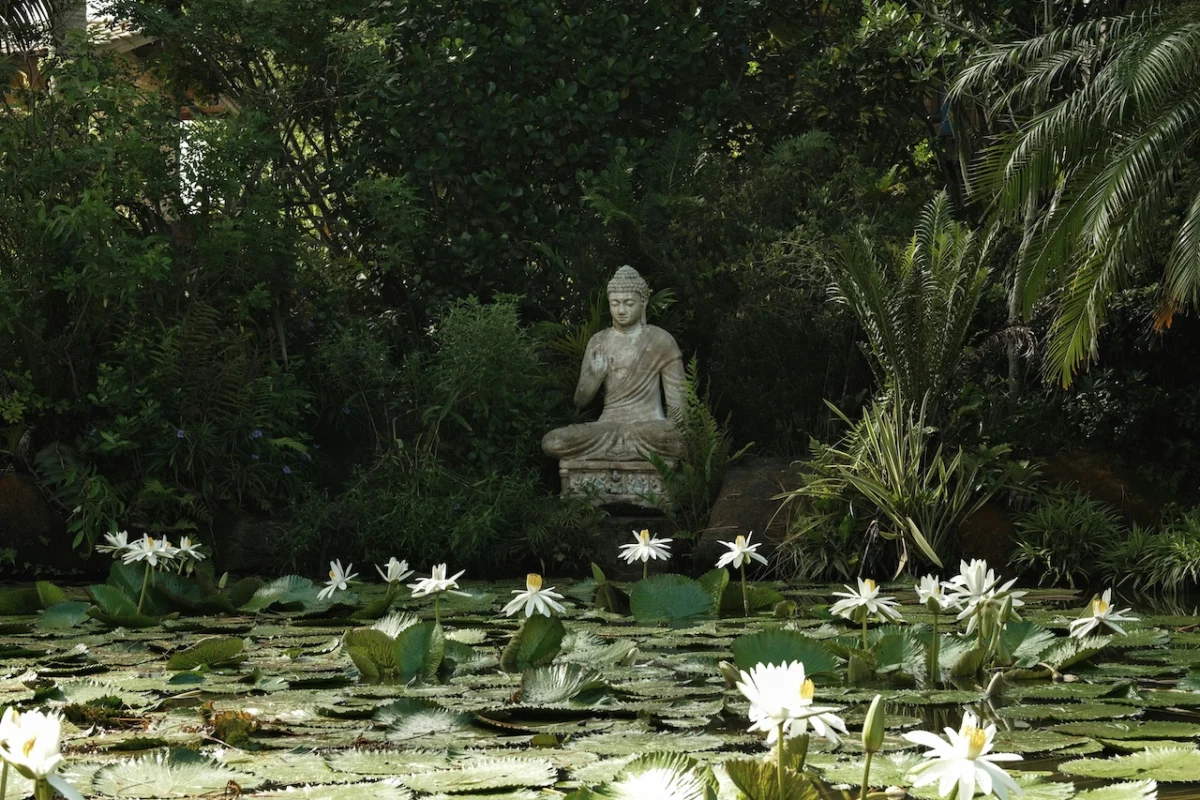
A recent dharma talk delivered at the Common Ground Meditation Center, titled "The Importance of Mindfulness in Difficult Times," has illuminated a profound aspect of human existence and offered a path toward navigating contemporary challenges. The speaker, drawing parallels between the Buddha’s own journey and the struggles faced by individuals today, emphasized the cyclical nature of suffering, known in Buddhist philosophy as dukkha, and highlighted the transformative potential of cultivating mindfulness, particularly in the face of adversity. The discourse, adapted from a 2025 talk, delves into the persistent human tendency towards greed, hatred, and delusion, and argues that true liberation lies not in the forceful eradication of problems, but in a deeper understanding and acceptance of them through mindful awareness.
The Unchanging Nature of Samsara and the Human Condition
The core of the discourse rests on the assertion that humanity has, since time immemorial, been caught in a cycle of suffering. Referencing a sutta from the Buddha’s lifetime, the speaker posited that the fundamental patterns of human behavior – causing harm to one another – remain consistent. This cyclical realm, termed samsara, is characterized by an inherent inclination towards negative states of mind: greed, hatred, and delusion. This inherent nature, the speaker suggests, makes it exceedingly difficult for individuals to accept circumstances as they are, leading to a perpetual struggle against perceived imperfections.
"We live in these very difficult times, and everything in us says, ‘I should be fixing this, changing this. I should do something to make it different from what it is, because there’s no way I could accept things as they are.’" This sentiment, the speaker acknowledged, is deeply relatable, even extending to a potential resistance towards any teaching that advocates for acceptance. The inherent human drive to alter and control one’s environment, particularly in the face of discomfort or perceived injustice, is a powerful force.
Personal Reflections on Aversion and the Illusion of Winning
The speaker offered a personal account of their own past tendencies, describing a volatile nature characterized by an aggressive pursuit of one’s desires. This behavior, while seemingly effective in the short term – eliciting compliance through guilt, shame, or forceful pressure – ultimately proved counterproductive. The internal narrative of needing to "win" or "get one’s way" perpetuates a state of conflict. This perspective is further elucidated by a reference to the Tibetan text, The 37 Practices of Bodhisattvas, which cautions that achieving one’s goals through anger merely creates more adversaries. The act of "winning" a battle, in this context, is revealed not as a true victory, but as a mechanism that fosters an ongoing need to fight, creating a perpetual shortage of perceived enemies.
The current global climate, characterized by widespread conflict and polarization, amplifies this dynamic. The speaker noted that in such an environment, the binary of "winning" or "losing" becomes the dominant framework, fueling a constant state of struggle that is described as "killing us." The fleeting relief experienced after a perceived victory is ultimately unsustainable, highlighting the ephemeral nature of satisfaction derived from external validation or conquest.
The Distinction Between Fleeting Ease and Wisdom-Born Serenity
A crucial distinction was drawn between the superficial ease of "getting our way" and the profound serenity that arises from wisdom. This latter form of ease is linked to the third Noble Truth of Buddhism: the cessation of dukkha through wisdom. Until individuals can discern between these two types of ease, the speaker argued, they will remain trapped in the repetitive cycle of samsara, experiencing a continuous oscillation between tension and temporary relief.
The Buddha’s Path: From Dissatisfaction to Enlightenment
The discourse then turned to the life of Siddhartha Gautama, the historical Buddha, as a prime example of this human struggle. His early life, characterized by privilege and sheltered from the harsh realities of existence, eventually gave way to a profound encounter with suffering. Witnessing old age, sickness, and death prompted an existential crisis, leading him to question his own mortality and the impermanence of all things. This profound dissatisfaction, a form of dukkha, propelled him to renounce his worldly life in search of answers.
His initial pursuit of spiritual attainment led him to master deep states of concentration, achieving states of bliss and profound absorption. However, he recognized that these experiences were transient and conditioned, offering no lasting solution to the fundamental problem of suffering. This realization prompted him to abandon the path of mere meditative absorption, seeking a more fundamental understanding of the human condition.
The Essence of the Buddha’s Inquiry
The speaker emphasized that the Buddha’s ultimate goal was not simply to eliminate problems or achieve a state of placid peace. Instead, his primary quest was to understand the root cause of his own difficulty in coping with the inherent challenges of life. "How come I’m having so much difficulty with things in life that are normal?" This question underscores the Buddha’s fundamental inquiry into the human experience of suffering.
Mindfulness as a Practice of Staying, Not Fixing
Following his enlightenment, the Buddha dedicated forty-five years to teaching and guiding others. His core practice, mindfulness, was presented not as the superficial, relaxation-oriented technique often depicted in popular media, but as a robust cultivation of awareness. This profound mindfulness involves the ability to remain present with difficult experiences, not through force or suppression, but through an attitude of kindness and gentle observation. The speaker asserted that there is much to be gained by staying with difficulty without attempting to immediately fix or change it.
This approach contrasts sharply with the common inclination, particularly for individuals who have historically faced systemic challenges and engaged in constant struggle for justice, to seek immediate solutions. The speaker, reflecting on their own journey as a Black woman, shared that the initial impulse upon encountering the dharma was to "learn that mindfulness, and move on," viewing it as a short-term remedy rather than a fundamental shift in perspective.
However, the true nature of mindfulness, as presented in the talk, transcends the idea of problem-solving. Relying solely on the ability to "fix" problems, the speaker argued, leads only to an endless cycle of addressing and re-addressing issues, without achieving genuine freedom. True liberation, the Buddha observed, lies beyond the mere management of problems.
Cultivating Mindfulness: Observing What Lies Beyond
The profound insight offered is that by "staying long enough to see what is on the other side of our problems, we’re cultivating mindfulness." This process involves developing the capacity to engage with dukkha in a gentle manner, allowing its true nature to be revealed. It is through this sustained presence that individuals can discover the profound liberation that awaits when they can simply bear witness to their difficulties.
The mind, in its tendency towards aversion, often deceives us into believing that staying with difficulty equates to surrender or weakness. It suggests that by not actively fighting or trying to change the situation, we are giving up. However, the speaker countered that this is a fundamental lie. There exists a capacity for freedom that lies beyond the constant effort to fix problems, and this capacity is accessible only through mindfulness.
The Satipatthana Sutra: A Framework for Cultivating Awareness
The power of mindfulness, the speaker explained, is not an abstract concept but is meticulously laid out in the Satipatthana Sutra. This foundational text outlines thirteen distinct practices designed to cultivate mindful awareness. These practices offer a diverse toolkit, ranging from focusing on the breath to observing the elements, engaging with bodily sensations, or practicing contemplation. The sutra’s approach is one of gentle exploration and experimentation: "Try this, try this, try this, try this, try this."
Even when faced with persistent aversion or anger, the Satipatthana Sutra encourages a practice of "sitting with" these states. This means observing the angry mind without judgment, understanding its texture and its nature. By engaging in these varied practices, the ultimate goal is to "take you out of it" – to shift from being consumed by the experience to observing it from a detached perspective.
Experiencing the Human Condition Beyond the Self
When one is no longer fully immersed in the immediacy of personal struggle, the speaker explained, they begin to experience the "human condition." This perspective shift reveals that the difficulties encountered are not solely individual burdens but are shared aspects of human existence. This realization fosters a sense of universality and diminishes the self-centered focus that often exacerbates suffering.
The Serenity Prayer and the Wisdom of Discernment
The discourse concluded by drawing a powerful parallel to the Serenity Prayer often recited in addiction recovery programs: "God grant me the serenity to accept the things I cannot change, the courage to change the things I can, and the wisdom to know the difference." This prayer, the speaker noted, embodies the essence of what begins to unfold through the practice of mindfulness. Individuals develop the ability to discern what aspects of their experience are within their influence and what aspects require acceptance and bearing.
This cultivated ability to bear witness to difficult circumstances, without the imperative to immediately alter them, leads to an opening of the eyes to the multifaceted nature of reality. This includes appreciating the brahmaviharas (loving-kindness, compassion, sympathetic joy, and equanimity), acknowledging the inherent joy and sadness in the world, and finding balance amidst it all. Ultimately, the talk served as a profound reminder that in times of immense global and personal challenge, the cultivation of mindful awareness offers not an escape from suffering, but a pathway to understanding and liberation.

